Casting Binder Granules
CN → US| HS Code | Tariff Rate | Origin | Destination | Doc |
|---|---|---|---|---|
| 3907912000 | 35.0% | CN | US | Official Doc |
| 3907914000 | 40.8% | CN | US | Official Doc |
| 3824100000 | 41.0% | CN | US | Official Doc |
| 3824999310 | 40.0% | CN | US | Official Doc |
Product Images
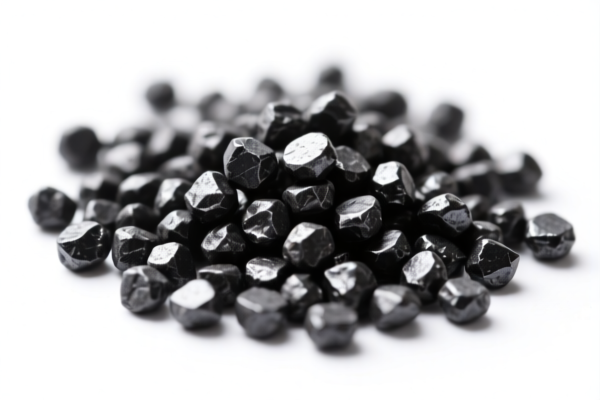
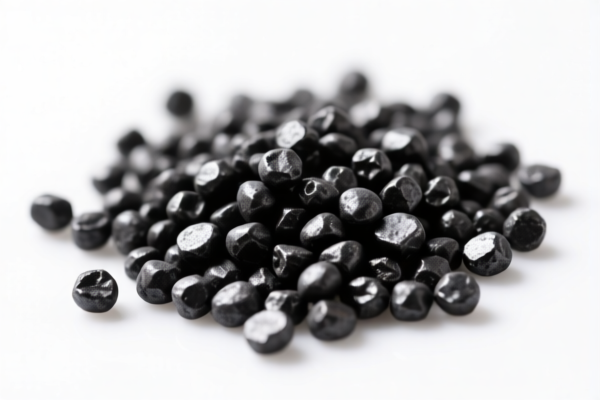
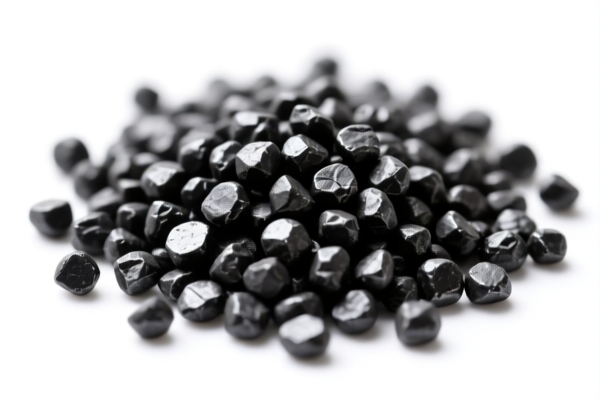
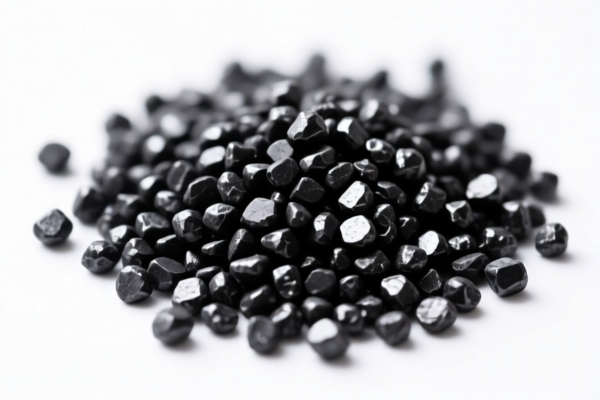
AI Analysis
🏭 Casting Binder Granules (Polymer Casting Binders)
🌐 HS Code Reference & Customs Clearance Guide | 2026 Latest Tariff Analysis | Strategic Compliance for Foundry Supplies 📌 I. Product Definition & Classification: Do You Really Know Your "Binder"?
Casting Binder Granules are essential materials used in the foundry industry, particularly for sand casting. They act as the "glue" that binds sand particles together to create molds and cores. In international trade, the classification depends heavily on whether the product is viewed as a chemical adhesive or a polymer raw material.
The key distinction lies in the primary function and chemical composition: * As an Adhesive (Chapter 35): If the primary function is bonding sand, it may be classified under heading 3506. * As a Polymer Resin (Chapter 39): If the product is primarily a specific type of polymer resin (like styrene or ethylene-based) in its primary form, it may fall under heading 39.
⚠️ Key Differentiation Point: - If the product is explicitly marketed and used as a foundry sand binder with binding properties → Lean towards 3506. - If the product is a generic polymer resin (e.g., pure Styrene polymer or Ethylene polymer) without specific binding additives listed → Lean towards 3901/3903.
📦 II. HS Code Classification Details (2026 Latest Tariff Authority对照)
| HS Code | Product Description | Application Scenario | Material/Form Match | Total Tax Rate |
|---|---|---|---|---|
3506.99.00.00 |
Adhesives Other (Polymer-based) | Foundry sand binding, general industrial bonding | Polymer Material, Binding Function | 37.1% |
3903.90.50.00 |
Other Polymers of Styrene | Styrene-based casting binders, primary form | Polymer (Styrene), No Conflict | 41.5% |
3901.90.90.00 |
Other Polymers of Ethylene | Ethylene-based casting binders, primary form | Polymer (Ethylene), Matches Form | 41.5% |
3901.90.55.01 |
Ethylene Copolymers | Ethylene copolymer binders, primary polymer form | Polymer (Ethylene Copolymer) | 41.5% |
3506.91.50.00 |
Other Adhesives (Other Category) | Polymer casting binders, classified under "Other" | Polymer Material, Specific Category | 37.1% |
🔍 Critical Reminder: - Chapter 35 (Adhesives) generally carries a lower base tariff (2.1%) but includes significant additional duties. - Chapter 39 (Polymers) carries a higher base tariff (6.5%) but applies the same additional duties, resulting in a higher total tax burden (41.5% vs. 37.1%). - Correct Classification is Vital: Misclassifying an adhesive as a raw polymer can lead to overpayment; misclassifying a polymer as an adhesive can lead to customs penalties for undervaluation or wrong declaration.
💰 III. 2026 Latest Tariff Rate Breakdown (Including Surtaxes & Policy Add-ons)
✅ Applicable Country: United States (US)
✅ Country of Origin: China (CN)
✅ Effective Time: From November 10, 2025 (including subsequent imports)
🎯 1. 3506.99.00.00 & 3506.91.50.00 —— Other Adhesives (Polymer-Based)
| Item | Content |
|---|---|
| Base Tariff Rate | 2.1% (Ad valorem) |
| Section 301 Surcharge (USITC) | +25.0% (From USITC Footnote related to Section 301) |
| IEEPA Surcharge | +10% (Targeting China/HK products, effective from Nov 10, 2025) |
| Total Tax Rate | 37.1% |
| Tax Calculation | CIF Value × 37.1% |
| De Minimis Exemption | ❌ Not Applicable (deny_de_minimis) |
| Legal Basis Path | IEEPA:9903.01.25 → IEEPA:9903.01.24 → USITC:3506.99.00.00 / 3506.91.50.00 → FOOTNOTE:Section 301 |
📌 Explanation: - The "Base Tariff 2.1%" is the standard WTO rate for other adhesives. - "Section 301 Surcharge 25%" is the additional tariff imposed on Chinese goods under the Trade Promotion Authority. - "IEEPA 10%" is the new additional tariff under the International Emergency Economic Powers Act targeting Chinese imports. - Total 37.1%: This is a high-cost category. Proper documentation is essential to prove the product's identity.
🎯 2. 3903.90.50.00 —— Polymers of Styrene
| Item | Content |
|---|---|
| Base Tariff Rate | 6.5% |
| Section 301 Surcharge (USITC) | +25.0% |
| IEEPA Surcharge | +10% |
| Total Tax Rate | 41.5% |
| Tax Calculation | CIF Value × 41.5% |
| De Minimis Exemption | ❌ Not Applicable |
| Legal Basis Path | IEEPA:9901.25 → IEEPA:9903.01.24 → USITC:3903.90.50.00 → FOOTNOTE:Section 301 |
📌 Note: - Styrene polymers are often used in casting, but if classified as raw polymers rather than adhesives, the base rate is higher. - Total 41.5%: This is 4.4% higher than the adhesive classification. Ensure you are not over-classifying if the product is functionally an adhesive.
🎯 3. 3901.90.90.00 & 3901.90.55.01 —— Polymers of Ethylene & Copolymers
| Item | Content |
|---|---|
| Base Tariff Rate | 6.5% |
| Section 301 Surcharge (USITC) | +25.0% |
| IEEPA Surcharge | +10% |
| Total Tax Rate | 41.5% |
| Tax Calculation | CIF Value × 41.5% |
| De Minimis Exemption | ❌ Not Applicable |
| Legal Basis Path | IEEPA:9901.25 → IEEPA:9903.01.24 → USITC:3901.90.90.00 / 3901.90.55.01 |
📌 Note: - Ethylene-based polymers follow the same tax structure as styrene polymers. - If the casting binder is ethylene-based, verify if it meets the definition of a "copolymer" (
3901.90.55.01) or general ethylene polymer (3901.90.90.00). Both carry the 41.5% rate.
🛠️ IV. Customs Clearance Practical Advice (Real-World Pitfall Avoidance)
✅ 1. Documentation Checklist (Mandatory)
| Document | Required | Description |
|---|---|---|
| ✅ Product Specification Sheet | ✔️ | Must detail chemical composition, binding strength, and application method. |
| ✅ Material Safety Data Sheet (MSDS) | ✔️ | Essential for hazardous materials classification and safe handling. |
| ✅ Product Photos (with Labels) | ✔️ | Clear view of granule form, packaging, and ingredient list. |
| ✅ Commercial Invoice | ✔️ | Must accurately describe as "Polymer Casting Binder" or "Foundry Sand Adhesive". |
| ✅ Packing List | ✔️ | Details net/gross weight, dimensions, and number of packages. |
| ✅ Certificate of Origin (CO) | ✔️ | Required to determine eligibility for any potential exemptions (though none apply here). |
✅ 2. Declaration Tips (Key Mnemonics)
🔥 "Function First, Form Second, Name Precise, Tax Down!"
| Scenario | Correct Declaration | Wrong Practice |
|---|---|---|
| Polymer Casting Binder (Granules) | Use 3506.99.00.00 if primarily for bonding |
Misdeclare as 3903.90.50.00 → +4.4% extra tax |
| Raw Styrene Resin (Not for binding yet) | Use 3903.90.50.00 |
Misdeclare as 3506.99.00.00 → Risk of penalty for false classification |
| Ethylene Copolymer Granules | Use 3901.90.55.01 |
Generic "Plastic Granules" → Delays & inspections |
| Adhesive Mixed with Sand | Declare as mixture/adhesive | Split declaration → Complex & risky |
✅ 3. Special Case Handling
| Scenario | Handling Advice |
|---|---|
| OEM Custom Binders | Provide customer specs and chemical formula to prove "binding function" for 3506 classification. |
| Multi-Component Binders | If the product is a blend of polymers and binders, consult a customs broker to determine the "essential character" for classification. |
| Hazardous Materials | If the binder contains volatile organic compounds (VOCs), ensure EPA and DOT regulations are met alongside HS Code. |
| Origin Verification | Ensure the "Country of Origin" is correctly stated as China to apply the correct surtaxes (25% + 10%). |
🌍 V. Global Market Clearance Comparison (2026 Latest)
| Country/Region | Recommended HS Code | Tariff Rate | Certification Requirements | Notes |
|---|---|---|---|---|
| 🇺🇸 USA | 3506.99.00.00 |
37.1% | No specific FDA/CE, but MSDS required | High surtaxes (25% + 10%) |
| 🇨🇳 China | 3506.99.00.00 |
~10-15%* | N/A | Lower domestic tariff |
| 🇪🇺 EU | 3506.99.00 |
~6-7% | REACH Registration | No Section 301/IEEPA surtaxes |
| 🇯🇵 Japan | 3506.99.00 |
~5-7% | JIS Standards | Competitive market |
📌 Conclusion: - USA has the highest total tax burden (37.1% - 41.5%) due to additional surtaxes. - EU and Japan offer significantly lower total tariffs (~6-7%) but require strict regulatory compliance (REACH, JIS). - Strategy: For US imports, ensure the lowest possible HS Code (
3506) is justified to save ~4.4% compared to39xxcodes.
📌 VI. Common Errors & Pitfall Avoidance (Lessons Learned)
❌ Error 1: Classifying "Casting Binder" as "Plastic Granules" (39xx)
👉 Consequence: Higher base tariff (6.5% vs 2.1%) → Total tax increases by 4.4%.
❌ Error 2: Ignoring IEEPA 10% Surcharge
👉 Consequence: Under-declared tax → Penalties, delays, and back-taxes.
❌ Error 3: Mislabeling as "Non-Hazardous" without MSDS
👉 Consequence: Customs holds shipment for safety review → Delay in clearance.
❌ Error 4: Using generic terms like "Adhesive" without specifying "Polymer Casting"
👉 Consequence: Customs may suspect undervaluation or misclassification → Audit risk.
✅ Correct Practice:
"Polymer-Based Foundry Sand Casting Binder Granules, Model XYZ, MSDS Attached, For Industrial Use Only, HS Code 3506.99.00.00"
🎯 VII. Conclusion: Precision Classification Saves Money!
🎯 Remember:
🔹 "Adhesive or Polymer? It’s 4.4% apart!"
🔹 "China Origin = 35%+ Tax, Plan Ahead!"
🔹 "Documentation is Key: MSDS + Spec Sheet = Smooth Clearance!"
📌 Pro Tip:
If your casting binder is originating from Vietnam, Mexico, or Malaysia, you may avoid the US surtaxes, reducing the total tax to just the base rate (~6.5% for polymers, ~2.1% for adhesives).
Recommendation: Apply for an Advance Ruling from US Customs (CBP) to confirm the correct HS Code before shipping.
📣 Act Now:
📞 Contact a Professional Customs Broker + Provide Product Specs + Apply for HS Code Advance Ruling
🚀 Ensure Smooth Clearance, Maximize Profit, and Stay Compliant!
✨ Professional Clearance Starts with Accurate Classification!
💼 Every Percentage Point Counts in International Trade!
Customer Reviews
About HS Code Classification
The Harmonized System (HS) is an internationally standardized nomenclature developed by the World Customs Organization (WCO) to classify traded products. Over 200 countries use the HS system as the basis for customs tariffs, trade statistics, and import/export regulations.
Each HS code follows a hierarchical structure:
- Chapter (2 digits) — Broad category of goods (e.g., Chapter 84: Machinery and Mechanical Appliances)
- Heading (4 digits) — More specific grouping within the chapter
- Subheading (6 digits) — Internationally standardized breakdown, used by all WCO member countries
- National subdivisions (8-10 digits) — Country-specific extensions for further classification, such as US HTSUS 10-digit codes
Correct HS code classification is essential for smooth customs clearance, accurate duty payment, and compliance with trade regulations. Misclassification can lead to customs delays, overpayment of duties, or penalties.
When importing from CN to US, the applicable tariff rates may include:
- Most-Favored-Nation (MFN) rate — The standard duty rate applied to WTO members
- General rate — Applied to countries without trade agreements
- Trade remedy duties — Additional tariffs such as Section 301 (anti-dumping), Section 232 (national security), or countervailing duties
The information provided on this page is for reference purposes only. For official classification, please consult with your local customs authority or a licensed customs broker.