Casting Dispersant
CN → US| HS Code | Tariff Rate | Origin | Destination | Doc |
|---|---|---|---|---|
| 3824999397 | 40.0% | CN | US | Official Doc |
| 3911909150 | 41.5% | CN | US | Official Doc |
| 3824100000 | 41.0% | CN | US | Official Doc |
| 3911909110 | 41.5% | CN | US | Official Doc |
| 3815190000 | 35.0% | CN | US | Official Doc |
Product Images



AI Analysis
🏭 Casting Dispersant (Chemical Agents for Foundry Processes)
🌐 HS Code Reference & Customs Clearance Guide | 2026 Latest Tariff Analysis | Professional Clearance Strategy
📌 I. Product Definition & Classification: What is a "Casting Dispersant"?
A Casting Dispersant is a specialized chemical additive used in the foundry industry. Its primary function is to improve the flow, stability, and separation of solid particles (such as silica sand, binders, or metallic powders) within casting molds or cores.
In international trade, the classification depends heavily on its chemical composition and specific function: * General Chemical Agents: If it acts as a general dispersion aid without a specific catalytic or adhesive role → Falls under Chapter 38. * Polymer/Resin Additives: If it is derived from synthetic polymers or resins → May fall under Chapter 39. * Binder Modifiers: If it modifies the properties of mold/core binders → Falls under Specific Binder Categories. * Catalyst Support: If it functions as a carrier for catalysts in chemical reactions → Falls under Chapter 38 Catalysts.
⚠️ Key Classification Point:
- If it is a general chemical mixture for dispersion → 3824
- If it is a polymer-based additive → 3911
- If it is a catalyst support → 3815
- If it modifies binders → 3824.10
📦 II. HS Code Classification Details (2026 Latest Tariff Authority Comparison)
Based on the provided data, here are the five potential HS Codes and their logical justifications:
| HS Code | Product Description | Justification from Data | Applicable Scenario |
|---|---|---|---|
3824.99.93.97 |
Chemical Agents (General) | "Belongs to chemical preparations, fits the definition of chemical products and preparations under other categories." | General-purpose dispersant for foundry sand. |
3911.90.91.50 |
Preformed Products of Synthetic Polymers | "Inferred as chemical agent class primary shape products, belongs to unlisted chemicals under Chapter 3911." | Polymer-based dispersants or resin-like additives. |
3824.10.00.00 |
Mold/Core Binder Preparations | "Fits the consistency of preparations for molding or core binding used in casting processes." | Dispersants specifically modifying binder viscosity/stability. |
3911.90.91.10 |
Other Polymer/Resin Additives | "Dispersant inferred as polymer or resin additive, belongs to other chemical products not specified elsewhere." | Specific resin-bound dispersants not listed in 3911.90.91.50. |
3815.19.00.00 |
Prepared Catalysts & Supports | "Metal dispersants belong to chemical preparations, fitting the category of chemical preparations in other catalyst supports." | Catalyst-supporting dispersants in metal processing. |
🔍 Key Reminder:
- The distinction between 3824 (Chemical Preparations) and 3911 (Polymer Products) is critical.
- 3824.10 is narrower and specifically targets binders, while 3824.99 is broader.
- 3815 is highly specific to catalyst functions, which may not apply to standard sand dispersants.
💰 III. 2026 Latest Tariff Rate Details (Including Surtaxes & Policy Additions)
✅ Applicable Country: United States (US)
✅ Origin: China (CN)
✅ Effective Date: From November 10, 2025 (including subsequent imports)
🎯 1. 3824.99.93.97 — Chemical Agents (General)
| Item | Content |
|---|---|
| Base Tariff | 5.0% (ad valorem) |
| Section 301 Surtax | +25.0% |
| 122 Clause Tariff | +10.0% |
| Total Tariff Rate | 40.0% |
| Tax Calculation | CIF Value × 40% |
| De Minimis Eligibility | ❌ Not Eligible (High-risk category) |
| Legal Basis Path | USITC:3824.99.93.97 → Section 301: Footnote 9903.88.01 → 122 Clause: IEEPA Add-on |
📌 Explanation:
- Base 5%: Standard MFN rate for general chemical preparations.
- +25% Section 301: Standard USITC surtax for Chinese-origin goods under Chapter 38.
- +10% 122 Clause: Additional surtax under IEEPA for specific chemical categories.
- Total: 40% is a significant cost factor for general chemical imports.
🎯 2. 3911.90.91.50 — Polymer/Resin Primary Shape Products
| Item | Content |
|---|---|
| Base Tariff | 6.5% (ad valorem) |
| Section 301 Surtax | +25.0% |
| 122 Clause Tariff | +10.0% |
| Total Tariff Rate | 41.5% |
| Tax Calculation | CIF Value × 41.5% |
| De Minimis Eligibility | ❌ Not Eligible |
| Legal Basis Path | USITC:3911.90.91.50 → Section 301: Footnote 9903.88.01 → 122 Clause: IEEPA Add-on |
📌 Note:
- Higher base rate (6.5%) due to polymer classification.
- Same surtax structure applies.
- Total: 41.5% is the highest among the general chemical/polymer options.
🎯 3. 3824.10.00.00 — Mold/Core Binder Preparations
| Item | Content |
|---|---|
| Base Tariff | 6.0% (ad valorem) |
| Section 301 Surtax | +25.0% |
| 122 Clause Tariff | +10.0% |
| Total Tariff Rate | 41.0% |
| Tax Calculation | CIF Value × 41.0% |
| De Minimis Eligibility | ❌ Not Eligible |
| Legal Basis Path | USITC:3824.10.00.00 → Section 301: Footnote 9903.88.01 → 122 Clause: IEEPA Add-on |
📌 Explanation:
- Specifically for binding agents. If your dispersant modifies binder properties, this is the most accurate fit.
- Total: 41.0% is slightly lower than general chemical agents but still high.
🎯 4. 3911.90.91.10 — Other Polymer/Resin Additives
| Item | Content |
|---|---|
| Base Tariff | 6.5% (ad valorem) |
| Section 301 Surtax | +25.0% |
| 122 Clause Tariff | +10.0% |
| Total Tariff Rate | 41.5% |
| Tax Calculation | CIF Value × 41.5% |
| De Minimis Eligibility | ❌ Not Eligible |
| Legal Basis Path | USITC:3911.90.91.10 → Section 301: Footnote 9903.88.01 → 122 Clause: IEEPA Add-on |
📌 Note:
- Identical rate to3911.90.91.50.
- Use this if the product is a specific resin additive not covered under the broader "unlisted chemicals" of 3911.90.91.50.
🎯 5. 3815.19.00.00 — Prepared Catalysts & Supports
| Item | Content |
|---|---|
| Base Tariff | 0.0% (ad valorem) |
| Section 301 Surtax | +25.0% |
| 122 Clause Tariff | +10.0% |
| Total Tariff Rate | 35.0% |
| Tax Calculation | CIF Value × 35.0% |
| De Minimis Eligibility | ❌ Not Eligible |
| Legal Basis Path | USITC:3815.19.00.00 → Section 301: Footnote 9903.88.01 → 122 Clause: IEEPA Add-on |
📌 Critical Insight:
- Lowest Total Tariff: 35.0%.
- However, this is ONLY applicable if the dispersant functions as a catalyst support (e.g., carrying a chemical agent that catalyzes a reaction).
- Warning: Misclassifying a general dispersant as a catalyst support can lead to customs penalties, audits, and retroactive duties. Only use this if the product’s primary function is catalytic support.
🛠️ IV. Customs Clearance Practical Advice (Battle-Tested Pitfall Guide)
✅ 1. Documentation Checklist (Non-Negotiable)
| Document | Required | Description |
|---|---|---|
| ✅ Technical Data Sheet (TDS) | ✔️ | Must clearly state chemical composition, function (dispersant vs. catalyst vs. binder), and concentration. |
| ✅ Safety Data Sheet (SDS) | ✔️ | Required for chemical clearance. Must match the declared HS Code. |
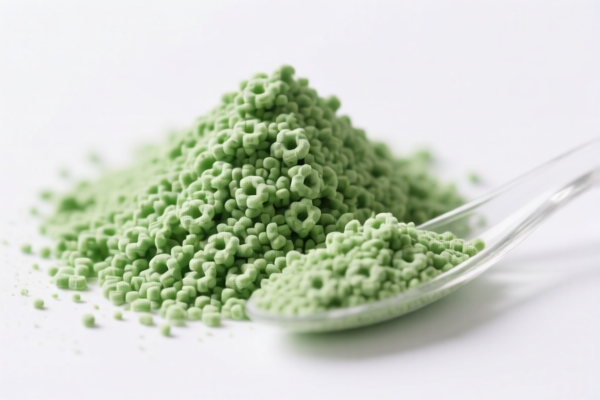
| ✅ Product Photographs | ✔️ | Show packaging, labeling, and physical form (liquid, powder, granules). |
| ✅ Composition List | ✔️ | Detailed % of each chemical component. Critical for determining Chapter 38 vs. 39. |
| ✅ Commercial Invoice | ✔️ | Must include HS Code, description, and unit price. |
| ✅ Certificate of Origin (CO) | ✔️ | For US origin verification and potential duty drawbacks. |
| ✅ Packing List | ✔️ | Net/gross weight, packaging type. |
✅ 2. Declaration Strategy (Key Mantras)
🔥 “Function First, Composition Second, Name Precise, Tax Right!”
| Scenario | Correct Declaration | Wrong Approach |
|---|---|---|
| General Dispersant | "Chemical Dispersant for Foundry Sand, Not a Catalyst" → 3824.99.93.97 |
Calling it "Catalyst" → 3815 (Risk of fraud investigation) |
| Binder Modifier | "Foundry Binder Additive for Mold Stability" → 3824.10.00.00 |
Calling it "General Chemical" → Overpaying by 1% |
| Polymer-Based | "Synthetic Polymer Dispersant Agent" → 3911.90.91.50 |
Calling it "Resin" → 3907 (Different tax bracket) |
| Catalyst Support | "Prepared Catalyst Support for Metal Casting" → 3815.19.00.00 |
ONLY if functionally proven. Otherwise, high risk. |
✅ 3. Special Cases Handling
| Situation | Handling Advice |
|---|---|
| OEM/Custom Formulation | Provide detailed formulation. Customs may challenge the HS Code. Pre-Ruling is recommended. |
| Liquid vs. Powder | Ensure the physical state matches the HS Code description. Some codes are specific to solid forms. |
| Mixed Shipments | If shipping with other chemicals, declare each HS Code separately. Do not bundle under one code. |
| Origin Change | If produced in Vietnam/Mexico/Thailand, check for IEEPA exemptions. Rates may drop to 0-5%. |
🌍 V. Global Market Comparison (2026 Latest)
| Country/Region | Recommended HS Code | Tariff (China Origin) | Certification | Notes |
|---|---|---|---|---|
| 🇺🇸 USA | 3824.99.93.97 |
40.0% | SDS, TDS | High surtaxes apply. 3815 at 35% if catalyst support. |
| 🇨🇳 China | 3824.99.93.97 |
~6-10% | CCC (if applicable) | No Section 301 or 122 Clause. |
| 🇪🇺 EU | 3824.99.93.97 |
6.5% | REACH, SDS | No additional surtaxes. |
| 🇬🇧 UK | 3824.99.93.97 |
6.5% | UKCA, SDS | Post-Brexit rules apply. |
| 🇦🇺 Australia | 3824.99.93.97 |
5% | AICIS | No surtaxes. |
📌 Conclusion:
- USA is the most expensive market due to 301 and 122 Clause surtaxes.
- EU/UK/Australia have significantly lower tariffs but stricter chemical registration (REACH/AICIS).
- China has moderate tariffs but requires CCC for some chemical products.
📌 VI. Common Mistakes & Pitfalls (Lessons Learned)
❌ Mistake 1: Misclassifying a general dispersant as a catalyst to save 5%.
👉 Consequence: Customs audit, penalty, and forced payment of back duties + interest.
Reality: The function must be catalytic support, not just dispersion.
❌ Mistake 2: Declaring as "Other Chemicals" without a specific HS Code.
👉 Consequence: Customs may assign a higher duty code automatically, leading to unexpected taxes.
❌ Mistake 3: Ignoring the 122 Clause.
👉 Consequence: Underpaying by 10% on all Chapter 38/39 goods.
Reality: The 122 Clause applies to many chemical products from China.
✅ Correct Approach:
"Foundry Sand Dispersant, Chemical Composition: [List], Function: Dispersion Agent, Not a Catalyst, HS Code: 3824.99.93.97, Origin: China"
🎯 VII. Conclusion: Professional Declaration Saves Money!
🎯 Remember the Mantra:
🔹 "Function Defines Code, Code Defines Tax."
🔹 "Catalyst Support = 35%, General = 40%, Polymer = 41.5%."
🔹 "Don't Guess, Just Pre-Rule!"
📌 Pro Tip:
If your Casting Dispersant is originating from Vietnam, Mexico, Thailand, or Malaysia, you may qualify for IEEPA Exemptions, reducing the total tariff to 0-5%.
Recommendation: Apply for an Advance Ruling from US Customs and Border Protection (CBP) before shipping to avoid clearance delays.
📣 Immediate Action:
📞 Contact a Professional Customs Broker + Provide Product TDS/SDS + Apply for CBP Advance Ruling
🚀 Let your Casting Dispersant clear smoothly, efficiently, and profitably!
✨ Professional Clearance Starts with Accurate Classification!
💼 Every Cent of Cost Should Be Precisely Calculated!
Customer Reviews
About HS Code Classification
The Harmonized System (HS) is an internationally standardized nomenclature developed by the World Customs Organization (WCO) to classify traded products. Over 200 countries use the HS system as the basis for customs tariffs, trade statistics, and import/export regulations.
Each HS code follows a hierarchical structure:
- Chapter (2 digits) — Broad category of goods (e.g., Chapter 84: Machinery and Mechanical Appliances)
- Heading (4 digits) — More specific grouping within the chapter
- Subheading (6 digits) — Internationally standardized breakdown, used by all WCO member countries
- National subdivisions (8-10 digits) — Country-specific extensions for further classification, such as US HTSUS 10-digit codes
Correct HS code classification is essential for smooth customs clearance, accurate duty payment, and compliance with trade regulations. Misclassification can lead to customs delays, overpayment of duties, or penalties.
When importing from CN to US, the applicable tariff rates may include:
- Most-Favored-Nation (MFN) rate — The standard duty rate applied to WTO members
- General rate — Applied to countries without trade agreements
- Trade remedy duties — Additional tariffs such as Section 301 (anti-dumping), Section 232 (national security), or countervailing duties
The information provided on this page is for reference purposes only. For official classification, please consult with your local customs authority or a licensed customs broker.