Casting Hardener
CN → US| HS Code | Tariff Rate | Origin | Destination | Doc |
|---|---|---|---|---|
| 3814005090 | 41.0% | CN | US | Official Doc |
| 3209100000 | 40.1% | CN | US | Official Doc |
| 3824999397 | 40.0% | CN | US | Official Doc |
| 3209900000 | 40.9% | CN | US | Official Doc |
| 3909310000 | 41.5% | CN | US | Official Doc |
Product Images
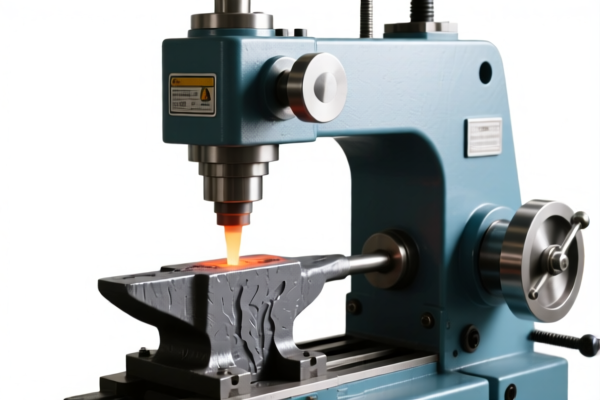
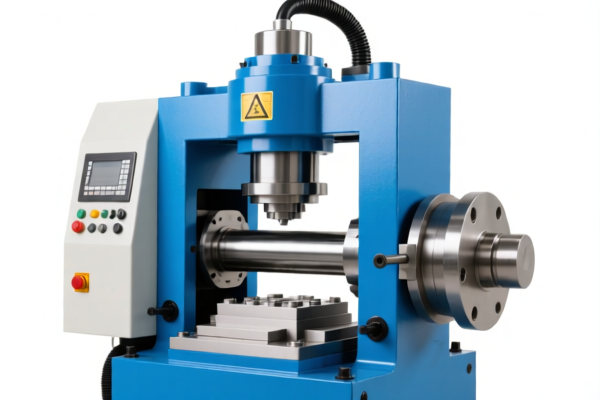
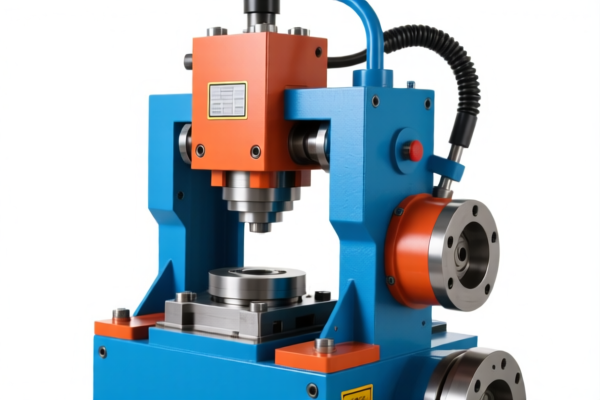
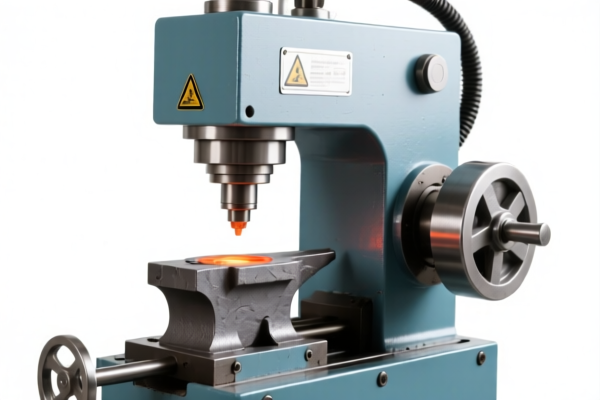
AI Analysis
🧪 Casting Hardener (Curing Agent)
🌐 HS Code Reference & Customs Clearance Guide | 2026 Latest Tariff Analysis | Professional Strategy
📌 I. Product Definition & Classification: What is a "Casting Hardener"?
A Casting Hardener (also known as a Curing Agent or Hardening Agent) is a critical chemical component used in casting processes (such as epoxy, polyurethane, or resin casting). It initiates the chemical reaction that transforms liquid resin or polymer into a solid, durable material.
In international trade, its classification depends heavily on its chemical composition and primary function: * Is it a solvent/diluent? → Falls under Chapter 38 (Miscellaneous Chemical Products). * Is it a paint/coating component? → Falls under Chapter 32 (Tanning or Dyeing Extracts; Paints, Varnishes). * Is it a raw polymer/isocyanate? → Falls under Chapter 39 (Plastics and Articles Thereof).
⚠️ Critical Distinction:
- If the product is primarily used to thin or dilute other resins → HS 3814.00.
- If the product is a reactive resin/isocyanate itself → HS 3909.31 or 3209.90.
- If it is a general chemical preparation not fitting specific categories → HS 3824.99.
📦 II. HS Code Classification Details (2026 Latest Tariff Alignment)
Based on the provided data, here are the five potential HS Codes for Casting Hardener, along with the logical reasoning for each classification.
| HS Code | Product Description | Classification Logic (Why?) | Tax Rate |
|---|---|---|---|
3814.00.50.90 |
Organic Compound Solvents & Thinners | Summary: Based on the use as a curing agent, it is inferred as an organic chemical synthesis compound. It fits the category of Organic Composite Solvents and Thinners. | 41.0% |
3209.10.00.00 |
Paints/Varnishes Based on Polymers | Summary: Belongs to chemically modified polymer coatings/varnish components. Fits the characteristics of Paints/Varnishes based on polymers. | 40.1% |
3824.99.93.97 |
Miscellaneous Chemical Products | Summary: Belongs to chemical products and preparations of the chemical or allied industries. Fits the catch-all logic for other categories. | 40.0% |
3209.90.00.00 |
Other Paints/Varnishes | Summary: Belongs to chemical synthetic substances used for coating or resin modification. Fits the characteristics of Synthetic Polymers or Chemically Modified Natural Polymers. | 40.9% |
3909.31.00.00 |
Isocyanates (MDI Type) | Summary: Isocyanate-type hardener. Material matches Poly(methylene phenyl isocyanate). Fits the basic attributes of MDI-based products. | 41.5% |
🔍 Key Insight:
The tax rates range from 40.0% to 41.5%. The slight difference depends on whether the hardener is classified as a solvent/thinner (3814), a coating component (3209), a general chemical (3824), or a raw polymer/isocyanate (3909).
💰 III. Detailed Tax Breakdown (2026 Latest Tariffs)
✅ Applicable Country: United States (US)
✅ Origin: China (CN)
✅ Effective Time: 2025+ (Current Trade Environment)
🎯 1. 3814.00.50.90 — Organic Composite Solvents & Thinners
| Item | Detail |
|---|---|
| Base Duty | 6.0% |
| Section 301 Duty | +25.0% |
| Section 122 Duty | +10.0% |
| Total Rate | 41.0% |
| Calculation | CIF Value × 41.0% |
| De Minimis? | ❌ No (Subject to high tariffs) |
| Legal Path | Base: 6% + 301: 25% + 122: 10% |
📌 Explanation:
- This code is used if the hardener is primarily a solvent or diluent. - The 25% Section 301 tariff and 10% Section 122 tariff are heavily applied to Chinese chemical imports.
🎯 2. 3209.10.00.00 — Paints/Varnishes Based on Polymers
| Item | Detail |
|---|---|
| Base Duty | 5.1% |
| Section 301 Duty | +25.0% |
| Section 122 Duty | +10.0% |
| Total Rate | 40.1% |
| Calculation | CIF Value × 40.1% |
| De Minimis? | ❌ No |
| Legal Path | Base: 5.1% + 301: 25% + 122: 10% |
📌 Explanation:
- If the hardener is part of a coating system or contains chemically modified polymers, it falls here. - Slightly lower base rate (5.1%) than3814, but still high due to additional tariffs.
🎯 3. 3824.99.93.97 — Miscellaneous Chemical Products
| Item | Detail |
|---|---|
| Base Duty | 5.0% |
| Section 301 Duty | +25.0% |
| Section 122 Duty | +10.0% |
| Total Rate | 40.0% |
| Calculation | CIF Value × 40.0% |
| De Minimis? | ❌ No |
| Legal Path | Base: 5.0% + 301: 25% + 122: 10% |
📌 Explanation:
- This is the lowest total tax rate (40.0%) in the dataset. - Used when the product is a generic chemical preparation that doesn’t fit strictly into solvents or paints. - Strategy: If your product is a custom chemical mix, argue for this category to save 0.5%–1.5% compared to others.
🎯 4. 3209.90.00.00 — Other Paints/Varnishes
| Item | Detail |
|---|---|
| Base Duty | 5.9% |
| Section 301 Duty | +25.0% |
| Section 122 Duty | +10.0% |
| Total Rate | 40.9% |
| Calculation | CIF Value × 40.9% |
| De Minimis? | ❌ No |
| Legal Path | Base: 5.9% + 301: 25% + 122: 10% |
📌 Explanation:
- Similar to3209.10, but for non-polymer-based or less specific chemical preparations. - Higher base rate than3209.10due to less specific classification.
🎯 5. 3909.31.00.00 — Isocyanates (MDI Type)
| Item | Detail |
|---|---|
| Base Duty | 6.5% |
| Section 301 Duty | +25.0% |
| Section 122 Duty | +10.0% |
| Total Rate | 41.5% |
| Calculation | CIF Value × 41.5% |
| De Minimis? | ❌ No |
| Legal Path | Base: 6.5% + 301: 25% + 122: 10% |
📌 Explanation:
- If your hardener is MDI (Methylene Diphenyl Diisocyanate), this is the most accurate technical classification. - However, it has the highest total tax rate (41.5%) due to the higher base duty (6.5%). - Risk: Customs may demand technical data sheets (TDS) to prove it is strictly MDI.
🛠️ IV. Customs Clearance Practical Advice
✅ 1. Preparation Checklist (Non-Negotiable)
| Document | Required? | Purpose |
|---|---|---|
| ✅ Material Safety Data Sheet (MSDS) | ✔️ | Critical. Proves chemical composition, hazard class, and proper shipping name. |
| ✅ Technical Data Sheet (TDS) | ✔️ | Explains the chemical function (e.g., is it a solvent, resin, or isocyanate?). |
| ✅ Certificate of Analysis (COA) | ✔️ | Confirms purity and active ingredients (e.g., MDI content). |
| ✅ Commercial Invoice | ✔️ | Must clearly state "Casting Hardener" or "Isocyanate Curing Agent", NOT generic "Chemical". |
| ✅ Product Photos | ✔️ | Show packaging, labels, and any hazard symbols. |
| ✅ FDA Registration (if applicable) | ✔️ | If used in food-contact casting molds, FDA compliance is required. |
✅ 2. Classification Strategy (How to Choose)
| Scenario | Recommended HS Code | Why? |
|---|---|---|
| Generic Chemical Mix | 3824.99.93.97 |
Lowest Tax (40.0%). Best if composition is complex or not purely isocyanate. |
| MDI-Based Hardener | 3909.31.00.00 |
Most Accurate. If 100% MDI, use this despite higher tax (41.5%) to avoid misclassification penalties. |
| Solvent-Based Hardener | 3814.00.50.90 |
If the product is primarily a diluent/thinner for resins. |
| Coating-Related Hardener | 3209.10.00.00 |
If the hardener is sold as part of a paint or varnish system. |
🔥 Pro Tip:
- If you want the lowest tax, argue for3824.99.93.97(40.0%) by describing the product as a "Chemical Preparation for Casting" rather than a specific polymer. - If you want accuracy and compliance, use3909.31.00.00if it is MDI. Misclassification can lead to heavy fines.
✅ 3. Common Mistakes & Pitfalls
❌ Mistake 1: Declaring as "General Chemical" without MSDS
👉 Result: Customs detainment, demand for testing, potential rejection.
❌ Mistake 2: Under-declaring Value
👉 Result: Severe penalties, 4x fine, and blacklisting.
❌ Mistake 3: Using wrong HS Code for MDI
👉 Result: If declared as 3824 but found to be 3909, you may face back taxes + penalties.
❌ Mistake 4: Ignoring Section 122 & 301 Tariffs
👉 Result: Assuming base duty is final → Budget blowout. Total tax is 40%+.
🌍 V. Global Market Comparison
| Country | HS Code | Tariff | Notes |
|---|---|---|---|
| 🇺🇸 USA | 3824.99.93.97 |
40.0% | Includes Section 301 (25%) + Section 122 (10%) |
| 🇨🇳 China | 3824.99.93.97 |
5.0% | No additional tariffs. Lower cost for importers. |
| 🇪🇺 EU | 3824.99.93.97 |
5.3% | No additional tariffs. REACH compliance required. |
| 🇬🇧 UK | 3824.99.93.97 |
5.3% | Post-Brexit tariffs apply. |
📌 Conclusion:
- USA is the most expensive market for Casting Hardeners due to trade war tariffs. - China, EU, and UK have much lower base duties (~5%). - Strategy: If exporting to the US, consider supply chain diversification (e.g., assemble in Vietnam or Mexico) to avoid Section 301/122 tariffs.
📌 VI. Final Recommendations
-
Get a Pre-Ruling:
Apply for a US Customs Ruling before shipping. Provide MSDS and TDS to confirm the exact HS Code. This saves time and money on potential disputes.
-
Use the Lowest Valid Code:
If your product is not pure MDI, argue for
3824.99.93.97(40.0%) to save 1.5% compared to MDI classification. -
Prepare for High Costs:
Budget for ~40% total tax. Factor this into your pricing strategy.
-
Compliance is Key:
Ensure MSDS is up-to-date and matches the declared product. Any discrepancy can lead to seizure.
🎯 Conclusion: Precision Saves Money!
🎯 Remember:
🔹 "HS Code is King, Tax is Queen. Misclassification is Death."
🔹 "US Tariffs are High (40%+), Plan Ahead."
🔹 "MSDS is Mandatory, No Excuses."
📌 Action Item:
📞 Contact a Customs Broker + Provide MSDS/TDS + Apply for Pre-Ruling.
🚀 Let your Casting Hardener pass smoothly, save costs, and maximize profits!
✨ Professional Clearance Starts with Accurate Classification!
💼 Every Percent of Tax Saved is Pure Profit!
Customer Reviews
About HS Code Classification
The Harmonized System (HS) is an internationally standardized nomenclature developed by the World Customs Organization (WCO) to classify traded products. Over 200 countries use the HS system as the basis for customs tariffs, trade statistics, and import/export regulations.
Each HS code follows a hierarchical structure:
- Chapter (2 digits) — Broad category of goods (e.g., Chapter 84: Machinery and Mechanical Appliances)
- Heading (4 digits) — More specific grouping within the chapter
- Subheading (6 digits) — Internationally standardized breakdown, used by all WCO member countries
- National subdivisions (8-10 digits) — Country-specific extensions for further classification, such as US HTSUS 10-digit codes
Correct HS code classification is essential for smooth customs clearance, accurate duty payment, and compliance with trade regulations. Misclassification can lead to customs delays, overpayment of duties, or penalties.
When importing from CN to US, the applicable tariff rates may include:
- Most-Favored-Nation (MFN) rate — The standard duty rate applied to WTO members
- General rate — Applied to countries without trade agreements
- Trade remedy duties — Additional tariffs such as Section 301 (anti-dumping), Section 232 (national security), or countervailing duties
The information provided on this page is for reference purposes only. For official classification, please consult with your local customs authority or a licensed customs broker.