Casual Cotton Handbag
CN → US| HS Code | Tariff Rate | Origin | Destination | Doc |
|---|---|---|---|---|
| 6307908940 | 17.0% | CN | US | Official Doc |
| 6307909891 | 24.5% | CN | US | Official Doc |
| 4202920805 | 42.0% | CN | US | Official Doc |
| 4202929336 | 52.6% | CN | US | Official Doc |
| 6307908940 | 17.0% | CN | US | Official Doc |
Product Images
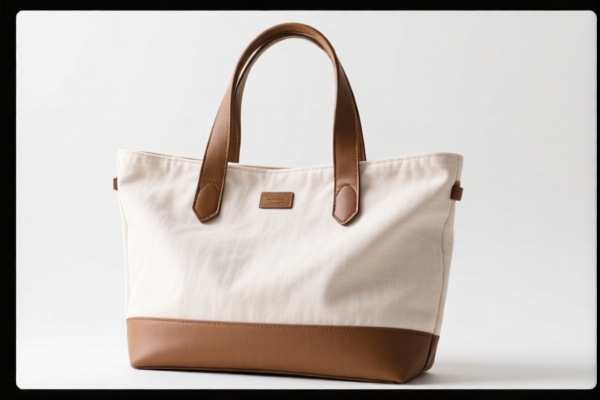
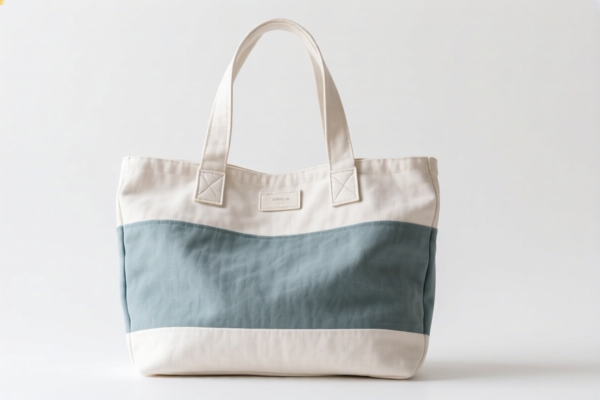
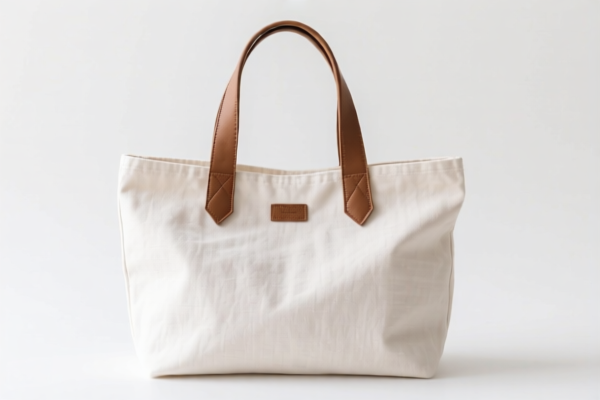
AI Analysis
👜 Casual Cotton Handbag (棉质休闲托特包/手提包)
🌐 HS Code Reference & Customs Clearance Guide | 2026 Tariff Analysis | Professional Clearance Strategy
📌 Product Definition: What is a "Casual Cotton Handbag"?
A casual cotton handbag refers to a container primarily made of cotton textile materials, designed for carrying personal items in a non-formal context. It typically includes Tote Bags (open top, two handles) or Shoulder-less Handbags (structured, often with zippers or snaps).
⚠️ Critical Classification Distinction: - Textile Accessories (6307): General textile articles, including casual bags that do not fit specific "trunk" or "saddlebag" definitions. Often lower duty. - Other Made-up Articles (4202): Handbags specifically classified under "containers" with textile surfaces. Often higher duty due to trade restrictions. - Food/Bev Bags?: Some broad interpretations might misclassify cotton bags as "food containers," leading to extreme tariffs. Avoid this misclassification unless explicitly applicable.
📦 II. HS Code Classification Details (2026 Latest Tariff Data)
Based on the provided data, here are the 4 possible HS Codes and their corresponding tax implications for shipments from China to the US.
| HS Code | Product Description & Summary | Key Characteristics |
|---|---|---|
| 6307.90.89.40 | Cotton Casual Tote Bag "Cotton material, tote shape, fits 'finished consumer good' characteristics under Other category." |
✅ Lowest Duty Option - Material: Cotton - Type: Tote/General Textile Accessory |
| 6307.90.98.91 | Cotton Casual Tote / Shoulder-less Cotton Handbag "Other made-up articles, cotton material, no conflict." |
⚠️ Moderate Duty - Material: Cotton - Type: Other made-up textile articles |
| 4202.92.08.05 | Cotton Casual Tote Bag "Cotton material, tote shape, fits 'Food or Beverage Bag' attributes." |
❌ High Risk / High Duty - Misclassification Risk: Often flagged if not strictly a food container - Type: Broad "Other Container" |
| 4202.92.93.36 | Shoulder-less Cotton Handbag "Cotton material, handbag shape, outer surface is textile material, other containers." |
❌ Highest Duty Option - Material: Cotton - Type: Specific Handbag Container |
💰 III. 2026 Latest Tariff Rate Breakdown (Detailed)
✅ Applicable Country: United States (US)
✅ Origin: China (CN)
✅ Applicable Time: Current 2026 Tariff Structure
🎯 1. HS Code 6307.90.89.40 — Best Case Scenario
Description: Cotton Casual Tote Bag (General Textile Article)
| Item | Details |
|---|---|
| Base Duty Rate | 7.0% |
| Section 301 Additional Duty | 0.0% |
| Section 122 Duty | 10.0% |
| Total Effective Tax Rate | 17.0% |
| Tax Calculation | CIF Value × 17% |
| De Minimis Eligibility | ⚠️ Check: Typically, Section 301 goods are excluded from de minimis (Section 321) if value > $800. However, if Section 301 is 0%, verify if Section 122 blocks it. Usually, high-volume B2B requires full entry. |
| Legal Basis Path | USITC:6307.90.89.40 → Section 301: Exempt/0% → Section 122: 10% |
📌 Explanation:
- This is the most favorable classification for cotton tote bags. - 0% Section 301 is critical for cost-saving. - The 10% Section 122 duty is a specific levy often applied to certain textile or general merchandise imports.
🎯 2. HS Code 6307.90.98.91 — Alternative Textile Classification
Description: Other Made-up Cotton Articles
| Item | Details |
|---|---|
| Base Duty Rate | 7.0% |
| Section 301 Additional Duty | 7.5% |
| Section 122 Duty | 10.0% |
| Total Effective Tax Rate | 24.5% |
| Tax Calculation | CIF Value × 24.5% |
| De Minimis Eligibility | ❌ No (Due to Section 301 surcharge) |
| Legal Basis Path | USITC:6307.90.98.91 → Section 301: 7.5% → Section 122: 10% |
📌 Explanation:
- If the bag is deemed an "Other made-up article" rather than a specific "Tote," it attracts 7.5% additional duty. - Still lower than the 4202 category, but 7.5% higher than6307.90.89.40.
🎯 3. HS Code 4202.92.08.05 — Risky Classification
Description: Cotton Bag (Food/Beverage Bag Attribute)
| Item | Details |
|---|---|
| Base Duty Rate | 7.0% |
| Section 301 Additional Duty | 25.0% |
| Section 122 Duty | 10.0% |
| Total Effective Tax Rate | 42.0% |
| Tax Calculation | CIF Value × 42.0% |
| De Minimis Eligibility | ❌ No |
| Legal Basis Path | USITC:4202.92.08.05 → Section 301: 25% → Section 122: 10% |
⚠️ Warning:
- This code is often used for bags classified as "containers" for food/beverage. - If your product is a standard fashion tote, do NOT use this code unless it is specifically marketed/sold as a grocery/food carrier. Misclassification here leads to high penalties.
🎯 4. HS Code 4202.92.93.36 — Worst Case Scenario
Description: Shoulder-less Cotton Handbag (Specific Handbag Container)
| Item | Details |
|---|---|
| Base Duty Rate | 17.6% |
| Section 301 Additional Duty | 25.0% |
| Section 122 Duty | 10.0% |
| Total Effective Tax Rate | 52.6% |
| Tax Calculation | CIF Value × 52.6% |
| De Minimis Eligibility | ❌ No |
| Legal Basis Path | USITC:4202.92.93.36 → Section 301: 25% → Section 122: 10% |
📌 Explanation:
- This is the highest tariff bracket. - It classifies the item as a structured "Handbag" under Chapter 42 (Leather/Travel Goods), which often carries higher base duties and full Section 301 penalties. - Avoid if you can classify as6307(Textiles).
🛠️ IV. Customs Clearance Practical Advice
✅ 1. Documentation Checklist (Non-Negotiable)
| Document | Required? | Notes |
|---|---|---|
| Product Specification Sheet | ✅ | Must clearly state: "Cotton," "Casual Tote," "No structured base" (if aiming for 6307). |
| Product Photos | ✅ | Show the bag empty and filled. Highlight fabric texture (woven cotton vs. leather-like). |
| Commercial Invoice | ✅ | Description: "Cotton Casual Tote Bag, Textile Material." Do not use "Leather Handbag." |
| Packing List | ✅ | Standard packing details. |
| Origin Certificate | ❌ | Not typically needed for US, but good for proof of Chinese origin if challenged. |
✅ 2. Classification Strategy (How to Lower Duty)
| Goal | Strategy | Result |
|---|---|---|
| Minimize Duty | Argue for 6307.90.89.40 |
17.0% Total Tax |
| Avoid Penalty | Do NOT describe as "Handbag" or "Leather Alternative" | Avoids 4202 classification (52.6%) |
| Clarify Usage | If it is a grocery bag, use 4202.92.08.05 (42%) but only if true |
Prevents fraud claims |
🔥 Key Tip:
Use the term "Textile Accessory" or "Cotton Tote Bag" in your commercial invoice and description. Avoid "Handbag" or "Purse" if possible, as these trigger Chapter 42 classifications.
✅ 3. Common Mistakes to Avoid
| Mistake | Consequence |
|---|---|
| Using "Handbag" in Description | Customs may reclassify to 4202.92.93.36 → Duty jumps from 17% to 52.6% |
| Ignoring Section 301 | Assuming 0% duty without checking the specific HS subheading. 6307.90.89.40 has 0% 301, but others do not. |
| Mislabeling Material | Calling it "Canvas" without confirming cotton content. If it contains synthetic fibers, rates may change. |
🌍 V. Global Market Comparison (2026)
| Market | Recommended HS Code | Approx. Total Duty | Notes |
|---|---|---|---|
| 🇺🇸 USA | 6307.90.89.40 |
17.0% | Best option for cotton totes. |
| 🇺🇸 USA (Risk) | 4202.92.93.36 |
52.6% | Avoid unless structured leather-like. |
| 🇪🇺 EU | 4202.92.90 |
~4-6% | No Section 301/122. Lower base duty. |
| 🇨🇳 China | 6307.90.00 |
~5-10% | Import duty into China is lower. |
📌 Conclusion:
For US Import, the6307.90.89.40code is the strategic winner with only 17.0% total tax.
The4202codes are prohibitively expensive (42-52.6%) and should only be used if the product is structurally defined as a "handbag" or "food container."
📌 VI. Common Errors & Pitfalls (Lessons Learned)
❌ Error 1: Declaring "Cotton Handbag" → Customs assigns 4202.92.93.36.
👉 Result: 52.6% Duty.
✅ Fix: Declare "Cotton Casual Tote, Textile Material."
❌ Error 2: Assuming all cotton bags are 0% duty.
👉 Result: Surprises from Section 122 (10%) or Section 301 (7.5-25%).
✅ Fix: Always calculate Base + 301 + 122.
❌ Error 3: Using "Handbag" in marketing materials but "Tote" in customs.
👉 Result: Discrepancy Audit.
✅ Fix: Ensure marketing, invoice, and customs descriptions align.
🎯 VII. Conclusion: Smart Classification, Maximized Profit
🎯 Remember the Golden Rule:
🔹 "Textile Tote = 6307 (17%) | Structured Handbag = 4202 (52.6%)"
🔹 "Use 'Cotton Tote' not 'Handbag' to save 35%!"
📌 Pro Tip:
If you are importing large volumes, consider applying for a Customs Ruling (Pre-Decision) for 6307.90.89.40 to secure the 17% rate legally.
📣 Immediate Action:
📞 Consult your freight forwarder: Ask, "Can we classify our cotton tote as 6307.90.89.40?"
📝 Update your Invoice: Change "Handbag" to "Cotton Casual Tote Bag."
🚀 Save 35% in duties with correct classification!
✨ Precision in Classification, Power in Profit!
💼 Don't let a wrong HS code cost you your margin.
Customer Reviews
About HS Code Classification
The Harmonized System (HS) is an internationally standardized nomenclature developed by the World Customs Organization (WCO) to classify traded products. Over 200 countries use the HS system as the basis for customs tariffs, trade statistics, and import/export regulations.
Each HS code follows a hierarchical structure:
- Chapter (2 digits) — Broad category of goods (e.g., Chapter 84: Machinery and Mechanical Appliances)
- Heading (4 digits) — More specific grouping within the chapter
- Subheading (6 digits) — Internationally standardized breakdown, used by all WCO member countries
- National subdivisions (8-10 digits) — Country-specific extensions for further classification, such as US HTSUS 10-digit codes
Correct HS code classification is essential for smooth customs clearance, accurate duty payment, and compliance with trade regulations. Misclassification can lead to customs delays, overpayment of duties, or penalties.
When importing from CN to US, the applicable tariff rates may include:
- Most-Favored-Nation (MFN) rate — The standard duty rate applied to WTO members
- General rate — Applied to countries without trade agreements
- Trade remedy duties — Additional tariffs such as Section 301 (anti-dumping), Section 232 (national security), or countervailing duties
The information provided on this page is for reference purposes only. For official classification, please consult with your local customs authority or a licensed customs broker.