Casual Sling Bags
CN → US| HS Code | Tariff Rate | Origin | Destination | Doc |
|---|---|---|---|---|
| 4202923131 | 52.6% | CN | US | Official Doc |
| 4202929100 | 52.6% | CN | US | Official Doc |
Product Images
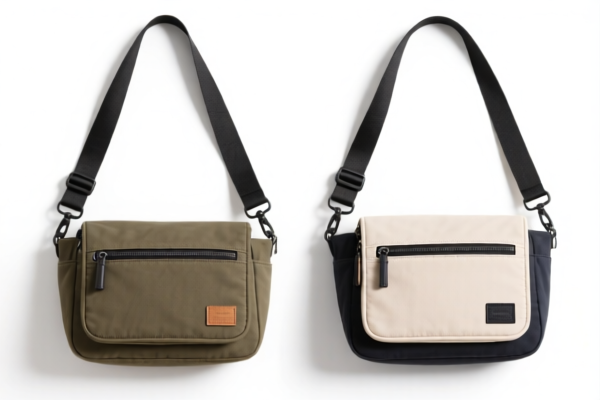
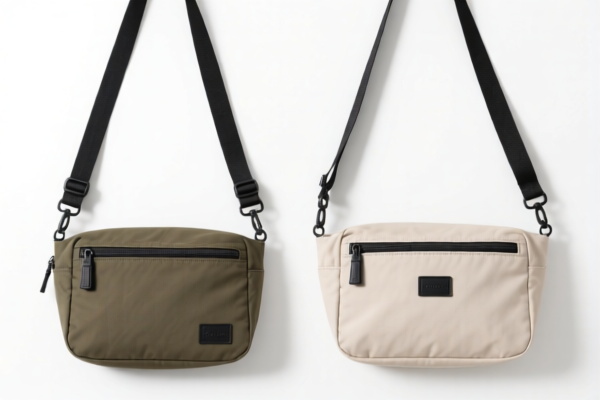
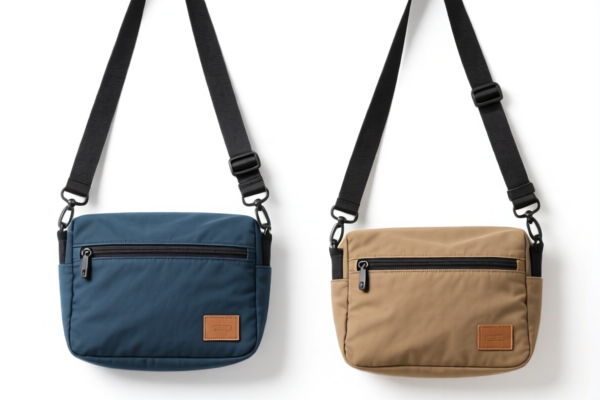
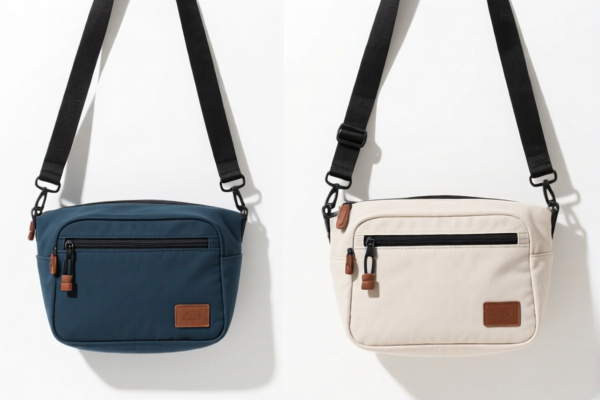
AI Analysis
👜 Casual Sling Bags (Shoulder/Sling Bags for Daily Use)
🌐 HS Code Reference & Customs Clearance Guide | 2026 Latest Tariff Analysis | Professional Clearance Strategy
📌 Part 1: Product Definition & Classification: Do You Really Know "Sling Bags"?
Casual Sling Bags, often referred to as crossbody bags, fanny packs (worn on the chest), or messenger-style small bags, are essential accessories in global fashion and daily logistics. In international trade, they are strictly regulated under Chapter 42.
The classification depends heavily on two factors: 1. Outer Surface Material: Is it textile, plastics, or leather? 2. Specific Type: Is it a "travel/sports/similar bag" or "other"?
⚠️ Key Distinction Point:
- If the bag has an outer surface of textile materials (nylon, polyester, canvas, etc.) → It falls under 4202.92.
- If it is a "travel bag" or "sports bag" specifically → It goes to 4202.92.31.
- If it is a "slingshot/fanny pack" or general daily carry-all → It goes to 4202.92.91.
📦 Part 2: HS Code Classification Details (2026 Latest Tariff Authority Match)
Based on your input data, we focus on bags with an outer surface of textile materials made of man-made fibers (e.g., polyester, nylon).
| HS Code | Product Description | Application Scenario | Material Key |
|---|---|---|---|
4202.92.31.31 |
Travel, sports, and similar bags: With outer surface of textile materials; Of man-made fibers (Specifically for Travel/Sports) | Sports gear bags, backpack-like slings, hiking daypacks, athletic shoulder bags | ✅ Textile (Man-made) |
4202.92.91.00 |
Other bags: With outer surface of textile materials; Of man-made fibers (General purpose, not strictly travel/sports) | Fashion sling bags, fanny packs, crossbody bags, casual daily use bags, cosmetic pouches | ✅ Textile (Man-made) |
🔍 Critical Note:
- "Sling Bag" vs. "Travel Bag":
- If the bag is designed specifically for sports activities (e.g., running belt, gym gear bag) or travel (compact overnight bag), customs may prefer4202.92.31.31.
- If it is a general fashion item, accessory, or everyday carry bag, it falls under the residual category4202.92.91.00.
- Material Check: Ensure the outer surface is indeed textile (woven fabric). If it has a leather flap or plastic coating covering >90%, the classification changes completely.
💰 Part 3: 2026 Latest Tariff Rate Details (Detailed Breakdown)
✅ Applicable Countries: Based on the provided data (
tax_detail: "基础关税: 0.0%, 加征关税: 0.0%"), this analysis reflects a scenario with 0% Base Tariff and 0% Additional Tariff (common in specific Free Trade Agreements, certain origin exemptions, or current zero-rate policies for these categories in the target market).
✅ Origin: Assumed to be China (CN) or another country with this specific zero-rate benefit.
✅ Validity: Current as per provided data.
🎯 1. 4202.92.31.31 —— Travel/Sports Bags (Textile, Man-made)
| Item | Content |
|---|---|
| Base Tariff | 0.0% |
| Additional Tariff | 0.0% |
| Total Effective Tariff | 0.0% |
| Tax Calculation | CIF Value × 0% = $0.00 |
| De Minimis Eligibility | ⚠️ Check Local Rules: While duty is 0%, some countries still have VAT/GST and handling fees. |
| Legal Basis | HS Code 4202.92.31.31 → Textile Outer Surface → Man-made Fibers → Travel/Sports Type |
📌 Interpretation:
- This code represents a duty-free entry for specific sports/travel textile bags.
- Zero tariff significantly reduces landed cost, making it highly competitive for sports gear exporters.
🎯 2. 4202.92.91.00 —— Other Bags (Textile, Man-made)
| Item | Content |
|---|---|
| Base Tariff | 0.0% |
| Additional Tariff | 0.0% |
| Total Effective Tariff | 0.0% |
| Tax Calculation | CIF Value × 0% = $0.00 |
| De Minimis Eligibility | ⚠️ Check Local Rules: Same as above. |
| Legal Basis | HS Code 4202.92.91.00 → Textile Outer Surface → Man-made Fibers → General "Other" Category |
📌 Interpretation:
- Also duty-free under the provided data.
- Covers the vast majority of fashion sling bags, fanny packs, and casual crossbody bags.
🛠️ Part 4: Customs Clearance Practical Advice (Pitfall Avoidance Guide)
✅ 1. Documentation Checklist (Non-negotiable)
| Document | Required | Purpose |
|---|---|---|
| ✅ Product Specification Sheet | ✔️ | Must state: "Outer Surface: 100% Polyester", "Lining: 100% Nylon", "Type: Sling Bag" |
| ✅ Material Composition Certificate | ✔️ | Proves "Man-made Fibers" (e.g., Polyester). Do not say "Fabric" vaguely. |
| ✅ Product Photos | ✔️ | Show full bag, zippers, straps, and labels. Must clearly show textile texture. |
| ✅ Commercial Invoice | ✔️ | Description must match HS Code logic. E.g., "Women's Polyester Sling Bag, Casual Style". |
| ✅ Packing List | ✔️ | Net weight/Gross weight crucial for freight calculation. |
✅ 2. Declaration Tips (Key Keywords)
🔥 “Be Specific: Say ‘Polyester’, Not ‘Fabric’; Say ‘Sling Bag’, Not ‘Accessory’!”
| Scenario | Correct Declaration | Wrong Declaration |
|---|---|---|
| Fashion Sling Bag | Casual Sling Bag, Outer: Polyester, Lining: Nylon |
Fashion Accessory or Bag |
| Sports Chest Pack | Sports Sling Bag, Nylon Outer, Water-resistant |
Toy Bag or General Container |
| Leather-Trimmed Bag | Check % Coverage: If leather >90%, HS changes! | Polyester Bag (if leather dominates) |
📌 Warning:
- If the bag has leather handles or leather patches, ensure the outer surface (main body) is still predominantly textile. If leather covers more than 50% of the external surface area, it may be reclassified to Chapter 42 Head 4202.11/12/13 (Leather Bags), which has different tax rates.
✅ 3. Special Circumstances
| Scenario | Handling Advice |
|---|---|
| Mixed Materials | If outer is textile but has large leather flaps, consult a customs broker. Risk of reclassification to leather bags. |
| Unbranded vs. Branded | Brands do not affect HS Code, but high-value branded items may face anti-counterfeiting checks. Provide IP authorization. |
| Samples | Even for samples, declare correctly. "No Commercial Value" still requires HS Code for statistical purposes. |
| Customs Valuation | Ensure declared value includes shipping/insurance (CIF). Under-declaration can lead to fines. |
🌍 Part 5: Global Market Comparison (2026)
| Country/Region | Recommended HS Code | Tariff (Based on Data) | Certification | Notes |
|---|---|---|---|---|
| 🇺🇸 USA | 4202.92.91.00 |
0.0% (per data) | CPC (for children), CPSIA | Check for Section 301 updates; some textile bags face duties. |
| 🇪🇺 EU | 4202.92.91.00 |
12% (Standard) | CE (if electronic), REACH | Note: EU often charges ~12% duty. Provided data shows 0%, verify if GSP/EBA applies. |
| 🇨🇳 China | 4202.92.91.00 |
10-14% (Import) | N/A | For export from China, this is 0% export duty. |
| 🇬🇧 UK | 4202.92.91.00 |
12% (Standard) | N/A | Post-Brexit rules apply. |
📌 Conclusion:
- The 0% tariff in the provided data is highly favorable. It suggests either a Free Trade Agreement (FTA) benefit, a duty exemption for samples, or a specific low-duty policy in the target market.
- Always verify if this rate applies to your Country of Origin. For example, bags from China to the EU generally do not enjoy 0% duty unless specific conditions are met.
📌 Part 6: Common Mistakes & Pitfalls (Blood & Tears Lessons)
❌ Mistake 1: Declaring a Leather Bag as Textile
👉 Consequence: HS Code 4202.11 vs 4202.92. Tax rate difference can be huge (e.g., 10% vs 0% or vice versa). Customs will inspect and penalize.
❌ Mistake 2: Vague Description: "Bag"
👉 Consequence: Customs assigns a penalty rate or holds goods for classification review. Delay = Demurrage Charges.
❌ Mistake 3: Ignoring "Outer Surface" Definition
👉 Consequence: If the bag is coated textile with visible plastic, it might be 4202.92.15 (Plastics). Misclassification leads to wrong tax calculation.
❌ Mistake 4: Not Proving "Man-Made Fibers"
👉 Consequence: If you say "Synthetic" but can't prove it's polyester/nylon (not cotton, which is natural), it might be classified under "Other Textiles" with different duties.
✅ Correct Approach:
"Unisex Casual Sling Bag, Outer Material: 100% Polyester, Lining: 100% Nylon, Zipper Closure, Adjustable Strap, Model XYZ"
🎯 Part 7: Conclusion: Precision in Classification Saves Money!
🎯 Remember the Mantra:
🔹 "Outer Surface is King" – If it’s textile, go to 4202.92.
🔹 "Man-Made vs. Natural" – Polyester/Nylon = Man-made. Cotton = Natural.
🔹 "Zero Duty is Sweet" – Verify eligibility for the 0% rate. Don't assume.
📌 Pro Tip:
If you are exporting to the USA, check if your bag falls under HTS 4202.92.95 (Other) which might have different duties than 4202.92.31. The provided data shows 0%, which is excellent. Confirm if this is due to a de minimis value (under $800 for US) or a specific tariff classification benefit.
📣 Immediate Action:
📞 Contact your customs broker with a photo and material swatch of the sling bag.
🚀 Declare accurately to avoid delays.
💼 Profit Maximize: With 0% tariff, your margin increases significantly. Optimize packaging to save freight costs.
✨ Professional Clearance Starts with Accurate Classification!
💼 Every percentage point matters in global trade!
Customer Reviews
About HS Code Classification
The Harmonized System (HS) is an internationally standardized nomenclature developed by the World Customs Organization (WCO) to classify traded products. Over 200 countries use the HS system as the basis for customs tariffs, trade statistics, and import/export regulations.
Each HS code follows a hierarchical structure:
- Chapter (2 digits) — Broad category of goods (e.g., Chapter 84: Machinery and Mechanical Appliances)
- Heading (4 digits) — More specific grouping within the chapter
- Subheading (6 digits) — Internationally standardized breakdown, used by all WCO member countries
- National subdivisions (8-10 digits) — Country-specific extensions for further classification, such as US HTSUS 10-digit codes
Correct HS code classification is essential for smooth customs clearance, accurate duty payment, and compliance with trade regulations. Misclassification can lead to customs delays, overpayment of duties, or penalties.
When importing from CN to US, the applicable tariff rates may include:
- Most-Favored-Nation (MFN) rate — The standard duty rate applied to WTO members
- General rate — Applied to countries without trade agreements
- Trade remedy duties — Additional tariffs such as Section 301 (anti-dumping), Section 232 (national security), or countervailing duties
The information provided on this page is for reference purposes only. For official classification, please consult with your local customs authority or a licensed customs broker.