Cat Ball Set
CN → US| HS Code | Tariff Rate | Origin | Destination | Doc |
|---|---|---|---|---|
| 3926400090 | 15.3% | CN | US | Official Doc |
| 3926903500 | 24.0% | CN | US | Official Doc |
| 4202999000 | 55.0% | CN | US | Official Doc |
| 3926909989 | 22.8% | CN | US | Official Doc |
| 9503000073 | 10.0% | CN | US | Official Doc |
Product Images
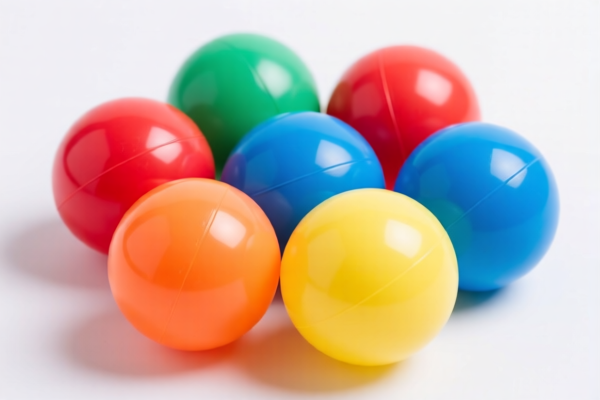
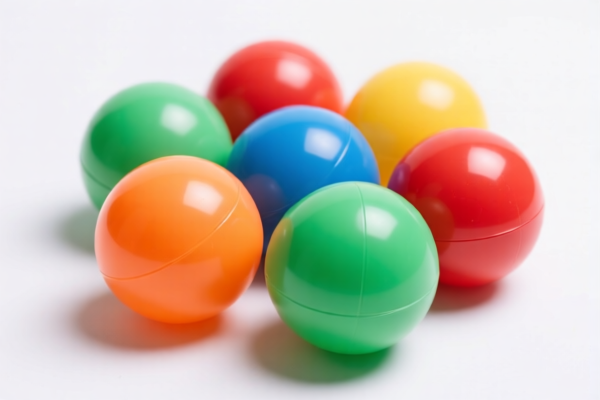
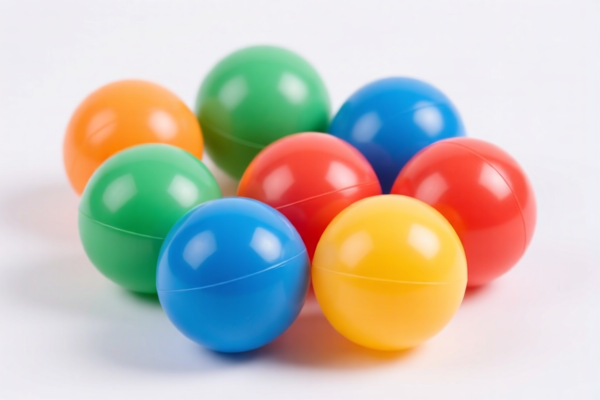
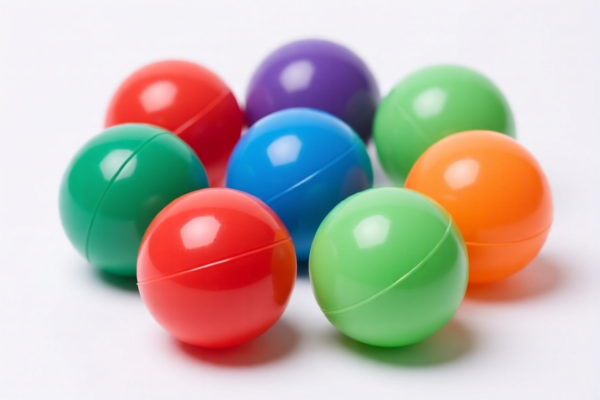
AI Analysis
🐾 Cat Ball Set (Plastic & Plush Toys)
🌐 HS Code Reference & Customs Clearance Guide | 2026 Latest Tariff Analysis | Professional Entry Strategy
📌 I. Product Definition & Classification: What Exactly Is a "Cat Ball Set"?
A Cat Ball Set typically refers to a collection of small, spherical or toy-like items designed for feline entertainment. In international trade, these are not classified as a single monolithic item but depend heavily on their material composition and manufacturing structure. The primary materials identified in this dataset are Plastic, Textile/Fabric, Plush, and Rubber.
⚠️ Key Distinction Point:
- If the balls are made of rigid plastic with no moving parts → They are often seen as Plastic Articles.
- If the balls are plush/rubber or contain fibers → They are classified as Toys.
- If the balls are part of a container or bag (e.g., a toy bag holding balls) → They may fall under Bag/Container categories.
- Crucial Note: The presence of "beads" or specific weaving techniques can change the classification from general plastic to specific textile/plastic hybrid articles.
📦 II. HS Code Classification Details (2026 Latest Tariff Authority Comparison)
| HS Code | Product Description | Material Basis | Applicable Scenario | Total Tax Rate |
|---|---|---|---|---|
3926.40.00.90 |
Plastic Cat Toy Balls | Plastic | Rigid plastic balls, simple shape, no complex assembly. | 15.3% |
3926.90.35.00 |
Other Plastic Articles (Non-Beaded) | Plastic | Complex plastic parts, not classified elsewhere (e.g., plastic rings, complex shapes). | 24.0% |
4202.99.90.00 |
Containers/Bags & Similar Articles | Textile/Plastic | If sold as a "set" in a carry bag, net, or container (e.g., "Cat Toy Bag with Balls"). | 55.0% |
3926.90.99.89 |
Other Plastic Toys/Articles | Plastic/Composite | Plastic toys not specifically listed elsewhere (e.g., plastic mice, feathers attached to plastic). | 22.8% |
9503.00.00.73 |
Plush or Rubber Toys | Plush/Rubber | Soft, squeezable balls made of fabric, plush, or rubber. | 10.0% |
🔍 Key Reminder:
- Soft vs. Hard: If the product is soft (plush/rubber), it MUST go to 9503.00.00.73 for the lowest tax (10%).
- Rigid Plastic: If hard, it goes to 3926 series. Avoid4202unless it is primarily a bag.
- Set Composition: If the "set" includes a plastic bag and plastic balls, customs may view the bag as the essential character if it’s durable, or the toys if they are the main value. However,4202is a high-risk, high-tax trap for simple toys in bags.
💰 III. 2026 Latest Tariff Rate Breakdown (Detailed Tax Clauses)
✅ Applicable Country: USA (US)
✅ Origin: China (CN)
✅ Effective Date: Post-November 2025 (Including subsequent imports)
🎯 1. 3926.40.00.90 —— Plastic Cat Toy Balls (Lowest Plastic Risk)
| Item | Detail |
|---|---|
| Base Tariff | 5.3% (ad valorem) |
| Section 301 Tariff | 0.0% |
| Section 122 Tariff | +10.0% |
| Total Rate | 15.3% |
| Calculation | CIF Value × 15.3% |
| De Minimis Eligibility | ❌ No (Deny de_minimis) |
| Legal Basis | Section 122: 10% + Base: 5.3% |
📌 Explanation:
- This is the most favorable classification for rigid plastic cat balls.
- It avoids the higher "Section 301" (7.5%) applied to other plastic goods.
- Total 15.3% is moderate compared to other plastic categories.
🎯 2. 9503.00.00.73 —— Plush/Rubber Cat Toys (Lowest Overall Tax)
| Item | Detail |
|---|---|
| Base Tariff | 0.0% |
| Section 301 Tariff | 0.0% |
| Section 122 Tariff | +10.0% |
| Total Rate | 10.0% |
| Calculation | CIF Value × 10.0% |
| De Minimis Eligibility | ❌ No (Deny de_minimis) |
| Legal Basis | Section 122: 10% + Base: 0.0% |
📌 Explanation:
- Best Case Scenario: If your cat balls are plush, fabric, or rubber (soft toys), this is the cheapest option.
- 0% Base + 10% Section 122 = 10% Total.
- Warning: Do NOT classify hard plastic balls here. Customs will reclassify and penalize for misdeclaration.
🎯 3. 3926.90.99.89 —— Other Plastic Toys/Articles (Moderate Risk)
| Item | Detail |
|---|---|
| Base Tariff | 5.3% |
| Section 301 Tariff | +7.5% |
| Section 122 Tariff | +10.0% |
| Total Rate | 22.8% |
| Calculation | CIF Value × 22.8% |
| De Minimis Eligibility | ❌ No |
| Legal Basis | Section 301: 7.5% + Section 122: 10% + Base: 5.3% |
📌 Explanation:
- Applies to plastic toys not specifically listed (e.g., plastic mice, complex shapes).
- Higher than3926.40due to the 7.5% Section 301 surcharge.
🎯 4. 3926.90.35.00 —— Other Plastic Articles (Non-Beaded)
| Item | Detail |
|---|---|
| Base Tariff | 6.5% |
| Section 301 Tariff | +7.5% |
| Section 122 Tariff | +10.0% |
| Total Rate | 24.0% |
| Calculation | CIF Value × 24.0% |
| De Minimis Eligibility | ❌ No |
| Legal Basis | Section 301: 7.5% + Section 122: 10% + Base: 6.5% |
📌 Explanation:
- For plastic items that are not toys but also not simple beads (e.g., plastic rings, clips, or non-toy plastic parts).
- Higher base rate (6.5%) than toy-specific codes.
🎯 5. 4202.99.90.00 —— Containers/Bags & Similar Articles (HIGHEST RISK)
| Item | Detail |
|---|---|
| Base Tariff | 20.0% |
| Section 301 Tariff | +25.0% |
| Section 122 Tariff | +10.0% |
| Total Rate | 55.0% |
| Calculation | CIF Value × 55.0% |
| De Minimis Eligibility | ❌ No |
| Legal Basis | Section 301: 25% + Section 122: 10% + Base: 20.0% |
📌 Explanation:
- Extreme Caution: Only use this if the product is primarily a bag (e.g., a durable tote bag) that happens to contain toys.
- If you sell "Cat Toys in a Mesh Bag," customs may still classify it as Toys (9503) if the toys are the primary value.
- 55% Total Rate is extremely high. Avoid unless legally justified as a bag.
🛠️ IV. Customs Clearance Practical Advice (Avoid Pitfalls)
✅ 1. Preparation Checklist (Required Documents)
| Document | Must Provide | Note |
|---|---|---|
| ✅ Product Specifications | ✔️ | Material breakdown (e.g., "100% Polyester Plush", "TPE Plastic"). |
| ✅ Product Photos | ✔️ | Show texture (soft/hard), any bells, feathers, or interactive parts. |
| ✅ Bill of Materials (BOM) | ✔️ | Detail all components if it’s a "set." |
| ✅ Commercial Invoice | ✔️ | Clearly state "Cat Toy Set" or "Cat Ball Toys." Avoid vague terms like "Pet Accessories." |
| ✅ Packaging List | ✔️ | If multiple items, list each separately with HS codes if different. |
✅ 2. Declaration Strategy (Key Tips)
🔥 "Soft Toys Go to 9503, Hard Plastic to 3926, Bags Avoid 4202!"
| Scenario | Correct HS Code | Incorrect HS Code | Consequence |
|---|---|---|---|
| Plush/Rubber Balls | 9503.00.00.73 (10%) |
3926.40.00.90 (15.3%) |
Overpayment of tax |
| Hard Plastic Balls | 3926.40.00.90 (15.3%) |
9503.00.00.73 (10%) |
Underpayment → Penalty & Seizure |
| Plastic Balls in Mesh Bag | 3926.40.00.90 (15.3%) |
4202.99.90.00 (55%) |
Overpayment of tax |
| Complex Plastic Toys | 3926.90.99.89 (22.8%) |
3926.40.00.90 (15.3%) |
Underpayment → Penalty |
📌 Critical Advice:
- Do Not Mix Materials in One Line Item unless they form a single functional unit (e.g., a ball with a built-in plastic feeder).
- Describe Accurately:
- ❌ Bad: "Pet Toy"
- ✅ Good: "Cat Toy Ball, 100% Plush Fabric, Stuffed with Catnip"
- ✅ Good: "Cat Toy Ball, Rigid TPE Plastic, Hollow Interior"
🌍 V. Global Market Comparison (2026)
| Country/Region | Recommended HS Code | Tax Rate (China Origin) | Certification |
|---|---|---|---|
| 🇺🇸 USA | 9503.00.00.73 (Plush) |
10% | CPSIA, ASTM F963 |
| 🇺🇸 USA | 3926.40.00.90 (Plastic) |
15.3% | CPSIA, ASTM F963 |
| 🇨🇳 China | 9503.00.00.73 |
0% | CCC (if applicable) |
| 🇪🇺 EU | 9503.00.00.00 |
0% | CE, EN71 |
| 🇬🇧 UK | 9503.00.00.00 |
0% | UKCA, EN71 |
📌 Conclusion:
- USA has high tariffs due to Section 122 and Section 301.
- Plush toys (9503) are the most cost-effective for the US market.
- Plastic toys (3926) are moderately taxed.
- Avoid Classifying Toys as Bags (4202) unless legally required, as it invites audits.
📌 VI. Common Mistakes & Pitfalls (Lessons Learned)
❌ Mistake 1: Classifying plush balls as "Plastic Articles" (3926)
👉 Consequence: Overpaying tax (15.3% vs 10%).
❌ Mistake 2: Classifying hard plastic balls as "Toys" (9503)
👉 Consequence: Underpayment → Fine, Seizure, or Forced Recall. Customs checks density and texture.
❌ Mistake 3: Declaring "Cat Toy Set" without specifying material
👉 Consequence: Customs Detention. They will ask for clarification, delaying shipment by 1-2 weeks.
❌ Mistake 4: Using 4202 for toys in a bag
👉 Consequence: 55% Tax. Only use if the bag is the primary item (e.g., a reusable shopping bag for pet supplies).
✅ Correct Declaration Example:
"Cat Entertainment Toy Set: Contains 3x Plush Mouse Balls and 2x Rigid Plastic Balls. Material: 100% Polyester Plush, TPE Plastic. For Pet Use."
🎯 VII. Conclusion: Precise Classification Saves Money!
🎯 Remember the Golden Rules:
🔹 "Soft = 9503 (10%) | Hard Plastic = 3926.40 (15.3%) | Avoid 4202 (55%)"
🔹 "Material Determines Code, Not Just Function!"
🔹 "Always Declare Material Composition Clearly!"
📌 Pro Tip:
If your cat balls are made of TPE (Thermoplastic Elastomer), they may still qualify as Plastic (3926) unless they are explicitly marketed as "rubber-like toys" and meet toy standards. When in doubt, choose the lower-risk, verified code and consult a customs broker for a Pre-Ruling.
📣 Immediate Action:
📞 Contact a licensed customs broker
📤 Submit product photos and material specs
🚀 Ensure smooth clearance and maximize profit margins!
✨ Professional Clearance Starts with Accurate HS Codes!
💼 Every Percent Saved is Profit Gained!
Customer Reviews
About HS Code Classification
The Harmonized System (HS) is an internationally standardized nomenclature developed by the World Customs Organization (WCO) to classify traded products. Over 200 countries use the HS system as the basis for customs tariffs, trade statistics, and import/export regulations.
Each HS code follows a hierarchical structure:
- Chapter (2 digits) — Broad category of goods (e.g., Chapter 84: Machinery and Mechanical Appliances)
- Heading (4 digits) — More specific grouping within the chapter
- Subheading (6 digits) — Internationally standardized breakdown, used by all WCO member countries
- National subdivisions (8-10 digits) — Country-specific extensions for further classification, such as US HTSUS 10-digit codes
Correct HS code classification is essential for smooth customs clearance, accurate duty payment, and compliance with trade regulations. Misclassification can lead to customs delays, overpayment of duties, or penalties.
When importing from CN to US, the applicable tariff rates may include:
- Most-Favored-Nation (MFN) rate — The standard duty rate applied to WTO members
- General rate — Applied to countries without trade agreements
- Trade remedy duties — Additional tariffs such as Section 301 (anti-dumping), Section 232 (national security), or countervailing duties
The information provided on this page is for reference purposes only. For official classification, please consult with your local customs authority or a licensed customs broker.