Cat Tunnel Toy
CN → US| HS Code | Tariff Rate | Origin | Destination | Doc |
|---|---|---|---|---|
| 6307909891 | 24.5% | CN | US | Official Doc |
| 3926907500 | 14.2% | CN | US | Official Doc |
| 6307907500 | 14.3% | CN | US | Official Doc |
| 3926909989 | 22.8% | CN | US | Official Doc |
Product Images
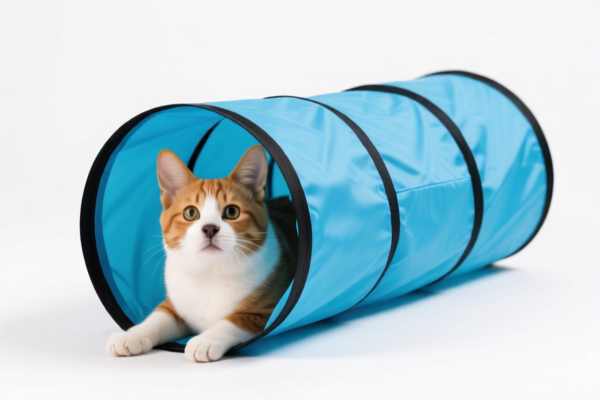
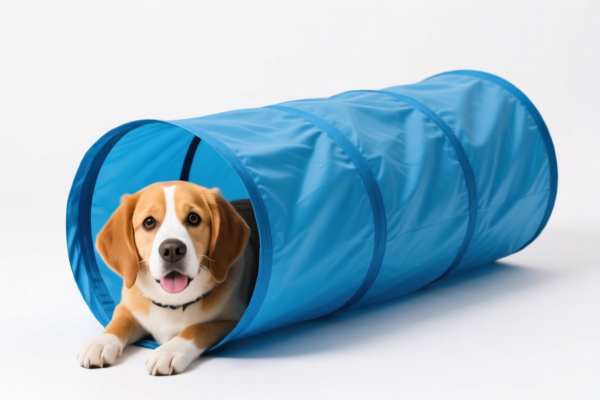
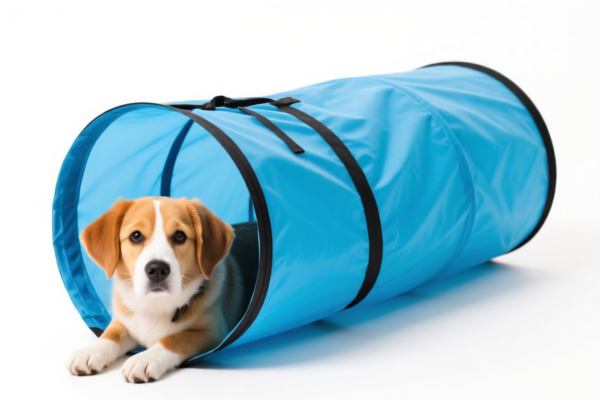
AI Analysis
🐱 Cat Tunnel Toy: Global Classification & Tariff Breakdown (2026 Edition)
🌐 HS Code Classification & Duty Strategy | Complete Tax Analysis | Smart Clearance Guide
📌 一、What is a "Cat Tunnel Toy"? (Product Definition)
A Cat Tunnel Toy is a collapsible, portable play structure for felines, designed for exploration, hiding, and chasing. Structurally, it usually consists of a flexible ring frame (plastic or metal) covered by a fabric or plastic shell, often featuring openings and dangling toys.
In international trade, the classification strictly depends on the primary material of the tunnel's body: * Fabric-Based: Made primarily of non-woven fabric, fleece, or knitted textiles (often with a plastic ring frame). * Plastic-Based: Made primarily of molded or inflatable PVC/plastic sheets without significant textile components.
⚠️ Critical Classification Logic:
- Textile Dominance: If the outer covering is the main functional component → Chapter 63 (Textiles).
- Plastic Dominance: If the material is entirely or primarily plastic → Chapter 39 (Plastics).
- General "Other": If the material is ambiguous or mixed without a clear leading component → Chapter 63 (Other textile products) or Chapter 39 (Other plastic articles).
📦 II. HS Code Classification Breakdown (2026 Tariff Data)
Based on the provided data, here are the 4 specific classification scenarios for Cat Tunnels, along with their tax implications.
| HS Code | Material Logic | Product Description | Total Tax Rate | Key Components |
|---|---|---|---|---|
| 6307.90.98.91 | General Textile | "Other made up articles" (Fabric/Plastic mix, non-specific). | 24.5% | Textile/Plastic composite |
| 3926.90.75.00 | Plastic (Specific) | "Inflated or filled plastic articles" (Non-specific shapes). | 14.2% | Primarily Plastic |
| 6307.90.75.00 | Textile (Specific) | "Textile pet toys" (Confirmed textile material). | 14.3% | Primarily Fabric |
| 3926.90.99.89 | Plastic (General) | "Other plastic articles" (Not listed elsewhere). | 22.8% | Primarily Plastic |
💰 III. Detailed Taxation Analysis (US Import from China)
✅ Origin: China (CN)
✅ Target Market: United States (US)
✅ Effective Period: Current 2026 Tariff Schedule
🎯 Scenario 1: Textile-Made Pet Toys
HS Code: 6307.90.75.00
Classification: Textile material pet toys.
Total Tax: 14.3%
| Tax Component | Rate | Explanation |
|---|---|---|
| Base Duty | 4.3% | Standard Most-Favored-Nation (MFN) rate for textile articles. |
| Section 301 (Section 122) | 10.0% | "122 Clause" tariff (Section 301 actions) applied to Chinese textile imports. |
| Other Add-ons | 0.0% | No additional Section 301 or specific "added" tariffs in this scenario. |
| Calculation | CIF × 14.3% |
Total duty on the Cost, Insurance, and Freight value. |
📌 Note: This is the most cost-effective classification for fabric tunnels, avoiding the highest Section 301 surcharges.
🎯 Scenario 2: Specific Plastic Articles (Inflated/Filled)
HS Code: 3926.90.75.00
Classification: Plastic articles, non-specific shapes (inflated/filled).
Total Tax: 14.2%
| Tax Component | Rate | Explanation |
|---|---|---|
| Base Duty | 4.2% | Standard MFN rate for plastic articles. |
| Section 301 (Section 122) | 10.0% | "122 Clause" tariff applied to specific plastic items. |
| Other Add-ons | 0.0% | No additional Section 301 tariffs (0.0% in this slot). |
| Calculation | CIF × 14.2% |
Lowest possible rate for plastic tunnels. |
📌 Note: If your tunnel is clearly plastic (e.g., PVC with no fabric lining), this is the ideal classification (14.2%).
🎯 Scenario 3: General Plastic Articles (Unspecified)
HS Code: 3926.90.99.89
Classification: Other plastic articles not specifically listed.
Total Tax: 22.8%
| Tax Component | Rate | Explanation |
|---|---|---|
| Base Duty | 5.3% | Standard MFN rate for "other" plastic items. |
| Section 301 (Added) | 7.5% | Additional Section 301 "Added" tariff applied to this sub-category. |
| Section 122 Clause | 10.0% | The standard 10% "122 Clause" tariff. |
| Calculation | CIF × 22.8% |
High tax rate due to double taxation (Base + Added + 122). |
📌 Risk: Avoid this code unless the product is truly ambiguous. The 7.5% "Added" tariff makes this option significantly more expensive.
🎯 Scenario 4: General Textile Articles (Unspecified)
HS Code: 6307.90.98.91
Classification: Other made-up textile articles (General "Other").
Total Tax: 24.5%
| Tax Component | Rate | Explanation |
|---|---|---|
| Base Duty | 7.0% | Standard MFN rate for general textile articles. |
| Section 301 (Added) | 7.5% | Additional Section 301 "Added" tariff applied to this sub-category. |
| Section 122 Clause | 10.0% | The standard 10% "122 Clause" tariff. |
| Calculation | CIF × 24.5% |
Highest tax rate in this dataset. |
📌 Risk: This is the "catch-all" for textiles. If your tunnel isn't clearly a "pet toy" under 6307.90.75, it falls here with a heavy penalty.
🛠️ IV. Clearance & Operational Strategy (Professional Guide)
✅ 1. Documentation Preparation (Must-Have)
To secure the lower tax rates (14.2% or 14.3%), you must prove the primary material composition.
| Document | Requirement | Why it matters |
|---|---|---|
| Product Composition Sheet | Must state % of Fabric vs. Plastic. | Determines if 6307 (Textile) or 3926 (Plastic) is correct. |
| Product Photos (Open & Closed) | Show the inner frame and outer covering. | Proves if it's "Inflated/Filled" (Plastic) or "Made-up" (Textile). |
| Bill of Materials (BOM) | List ring material (plastic/metal) + covering material. | Customs officers check if the "primary character" is textile or plastic. |
| Commercial Invoice | Must describe "Cat Tunnel Toy" + Material (e.g., "Polyester Tunnel"). | Vague descriptions lead to "Other" codes with 22%+ taxes. |
✅ 2. Declaration Strategy (The "Golden Rule")
🔥 Rule: "Define the Primary Character Clearly!"
| If the product is... | Declare as... | Result | Warning |
|---|---|---|---|
| Fabric cover with plastic rings | 6307.90.75.00 (Textile Pet Toy) |
14.3% ✅ | Ensure "Pet Toy" is mentioned. |
| Solid PVC/Plastic tube | 3926.90.75.00 (Plastic Inflated) |
14.2% ✅ | Best option if applicable. |
| Mixed material, unclear | 3926.90.99.89 or 6307.90.98.91 |
22.8% ~ 24.5% ❌ | High Risk: Avoid this! |
| Unspecified "Other" | Do Not Declare | 24.5% ❌ | Leads to audits and delays. |
✅ 3. Special Advice for "122 Clause" (Section 301)
The 10% "122 Clause" tariff is applied to almost all categories in the provided data.
* The Key Difference: The Base Duty and Additional Tariffs vary.
* Strategy: To save money, you must avoid the "Other" categories (...99.89 and ...98.91) which carry the 7.5% Additional Tariff.
* Action: Push for classification under 6307.90.75.00 (Pet Toy) or 3926.90.75.00 (Specific Plastic) to avoid the extra 7.5%.
🚨 V. Common Pitfalls & Risk Warnings
❌ Mistake 1: Calling it "Pet Toy" but declaring as "Other Plastic" (3926.90.99.89)
* Consequence: You pay 22.8% (Base 5.3% + Added 7.5% + 122 10%).
* Correction: Use 3926.90.75.00 for 14.2% if it fits the "inflated/filled" description.
❌ Mistake 2: Calling it "Other Textile" (6307.90.98.91)
* Consequence: You pay 24.5% (Base 7.0% + Added 7.5% + 122 10%).
* Correction: Use 6307.90.75.00 for 14.3% if it is clearly a "Pet Toy".
❌ Mistake 3: Missing the "Pet" Context * Consequence: Customs may not recognize it as a "Pet Toy" and default to a higher "Other" code. * Correction: Explicitly state "For Cats / Pet Toy" on the invoice and packing list.
🎯 VI. Conclusion & Final Recommendation
🎯 The Bottom Line:
* Optimal Strategy: Aim for 3926.90.75.00 (14.2%) or 6307.90.75.00 (14.3%).
* Avoid: The "Other" categories (...99.89, ...98.91) which add an extra 7.5% in duty.
* Key Action: Ensure your product description and BOM clearly highlight "Pet Toy" (for textile) or "Inflated/Filled Plastic" (for plastic).
📢 Immediate Action Plan: 1. Audit your product: Is it primarily fabric or plastic? 2. Update your Invoice: Use precise terms ("Cat Tunnel Toy - Polyester", "Cat Tunnel - PVC"). 3. Pre-Consult: If unsure, request a Binding Ruling from CBP to lock in the 14.2% rate before shipping.
✨ Smart Customs, Lower Cost!
Your Cat Tunnel Toy doesn't have to cost 24.5% in tax. With the right HS Code, you save nearly 10% on every shipment.
📌 Need help? Contact your customs broker with the HS Code 6307.90.75.00 or 3926.90.75.00 and watch your margins grow!
Customer Reviews
About HS Code Classification
The Harmonized System (HS) is an internationally standardized nomenclature developed by the World Customs Organization (WCO) to classify traded products. Over 200 countries use the HS system as the basis for customs tariffs, trade statistics, and import/export regulations.
Each HS code follows a hierarchical structure:
- Chapter (2 digits) — Broad category of goods (e.g., Chapter 84: Machinery and Mechanical Appliances)
- Heading (4 digits) — More specific grouping within the chapter
- Subheading (6 digits) — Internationally standardized breakdown, used by all WCO member countries
- National subdivisions (8-10 digits) — Country-specific extensions for further classification, such as US HTSUS 10-digit codes
Correct HS code classification is essential for smooth customs clearance, accurate duty payment, and compliance with trade regulations. Misclassification can lead to customs delays, overpayment of duties, or penalties.
When importing from CN to US, the applicable tariff rates may include:
- Most-Favored-Nation (MFN) rate — The standard duty rate applied to WTO members
- General rate — Applied to countries without trade agreements
- Trade remedy duties — Additional tariffs such as Section 301 (anti-dumping), Section 232 (national security), or countervailing duties
The information provided on this page is for reference purposes only. For official classification, please consult with your local customs authority or a licensed customs broker.