Cat Vest
CN → US| HS Code | Tariff Rate | Origin | Destination | Doc |
|---|---|---|---|---|
| 4201003000 | 37.4% | CN | US | Official Doc |
| 4201006000 | 37.8% | CN | US | Official Doc |
| 6117809570 | 32.1% | CN | US | Official Doc |
| 6217109550 | 32.1% | CN | US | Official Doc |
| 6117809510 | 32.1% | CN | US | Official Doc |
Product Images
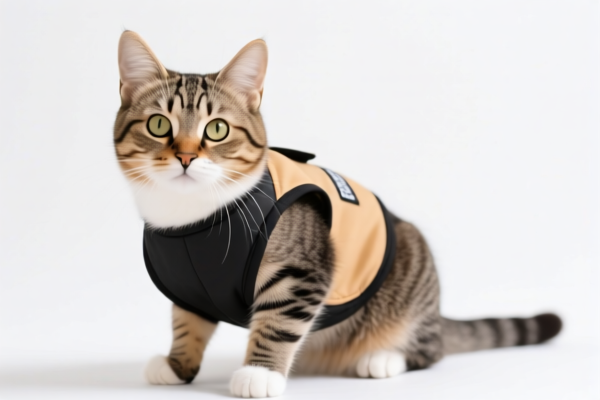
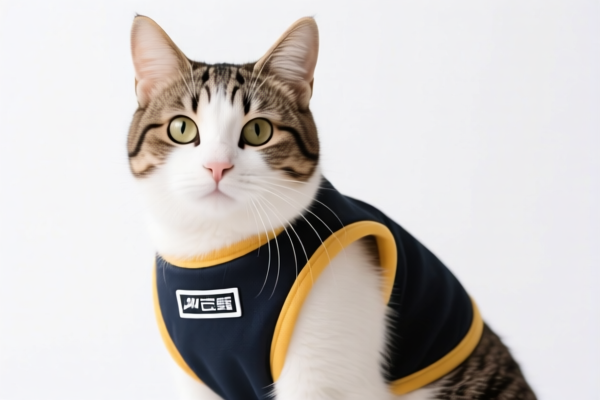
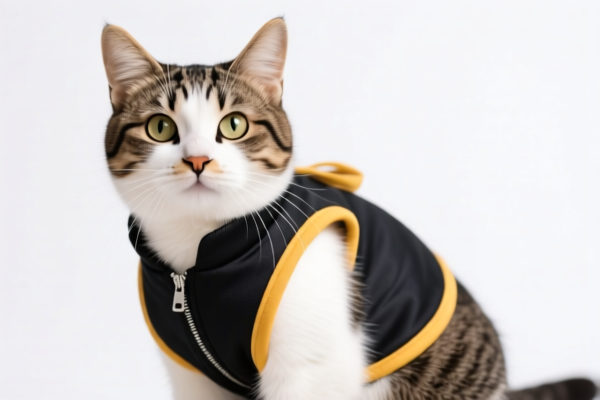
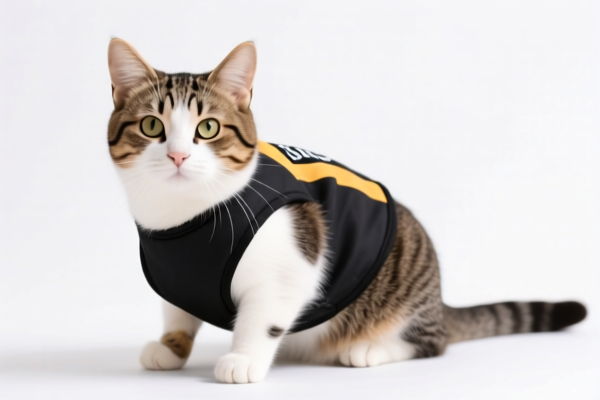
AI Analysis
🐱 Cat Vest (Pet Apparel for Felines)
🌐 HS Code Reference & Customs Clearance Guide | 2026 Latest Tariff Analysis | Professional Clearance Strategy
📌 1. Product Definition & Classification: Do You Really Understand "Cat Vest"?
A Cat Vest is a specialized garment designed for felines, serving purposes such as warmth, protection, or identification. In international trade, its classification hinges on two critical factors: 1. Form & Function: Is it a specific "article of saddle or harness" (4201), or is it considered "made-up clothing accessories" (6117/6217)? 2. Material Composition: Is it knitted/crocheted (Chapter 61) or made of other textiles (Chapter 62)?
⚠️ Key Classification Logic:
- If the vest is classified under Chapter 42, it is treated as an article of "saddle or harness," regardless of whether it is for humans or animals.
- If classified under Chapter 61/62, it is treated as "made-up clothing accessories" or "other made-up clothing articles."
- Material Assumption: Since material is not specified, we infer common pet industry materials (polyester, nylon, cotton blends). The analysis covers both "Other Materials" (4201) and "Textile" (6117/6217) scenarios.
📦 2. HS Code Classification Details (2026 Latest Tariff Authority Comparison)
| HS Code | Product Description | Applicable Scenario | Tax Rate (Total) | Key Logic |
|---|---|---|---|---|
4201.00.30.00 |
Articles of saddle or harness, of any material (Cat Equipment/Vest) | Specific pet gear classified as "saddle/harness" | 37.4% | Matches "Cat Equipment"; Material inferred as any textile/plastic. |
4201.00.60.00 |
Articles of saddle or harness, of any material (Cat Clothing Category) | Cat vests classified under "clothing items" within harness category | 37.8% | Matches "Cat Use"; Fits broad "harness" scope including clothing-like items. |
6117.80.95.70 |
Other made-up clothing accessories, knitted/crocheted, Other (Polyester/Nylon etc.) | Knitted vest inferred as non-cotton/wool textile | 32.1% | Matches "Accessories"; Material assumed non-natural fiber (e.g., polyester). |
6217.10.95.50 |
Other made-up clothing accessories, not knitted/crocheted | Woven vest inferred as textile material | 32.1% | Matches "Accessories"; Textile material, no conflict with "Other" category. |
6117.80.95.10 |
Other made-up clothing accessories, knitted/crocheted, Cotton/Other Fibers | Knitted vest inferred as Cotton or other fiber | 32.1% | Matches "Form & Use"; Vests fit "accessories" logic; Material assumed generic fiber. |
🔍 Critical Note:
- Chapter 42 (4201) treats animal wear as "Saddles/Harnesses" – a functional classification that often triggers higher tariffs due to broader scope.
- Chapter 61/62 (6117/6217) treats animal wear as "Clothing Accessories" – often lower base duty but subject to specific accessory rates.
- Tariff Disparity: The difference between Chapter 42 (37.4-37.8%) and Chapter 61/62 (32.1%) is significant. Proper classification can save ~5% on duty.
💰 3. 2026 Latest Tariff Rate Detailed Explanation (Including Surtax & Policy Add-ons)
✅ Applicable Country: United States (US)
✅ Origin: China (CN)
✅ Effective Date: Post-November 10, 2025 (Including subsequent imports)
🎯 1. 4201.00.30.00 & 4201.00.60.00 —— Articles of Saddle or Harness (Pet Gear)
| Item | Content |
|---|---|
| Base Duty Rate | 2.4% - 2.8% (ad valorem) |
| Section 301 Surtax | +25.0% (USITC Footnote 9903.88.01) |
| IEEPA Surtax | +10.0% (Targeting China/HK products, effective Nov 10, 2025) |
| Total Effective Rate | 37.4% - 37.8% |
| Calculation Basis | CIF Value × Total Rate |
| De Minimis Exemption? | ❌ No (Deny De Minimis) |
| Legal Basis Path | IEEPA:9903.01.25 → USITC:4201.00.30.00 → FOOTNOTE:9903.88.01 |
📌 Explanation:
- "Section 301 (25%)": A retaliatory tariff on Chinese goods, specifically targeting machinery, electrical equipment, and articles of leather/plastics/textiles used as harnesses/saddles.
- "IEEPA (10%)": An additional emergency economic power act tariff imposed on Chinese imports, effective from late 2025.
- Total Impact: Even though the base duty is low (2.4-2.8%), the 35-37.8% total cost makes these codes expensive.
- Risk: High scrutiny on "pet accessories" being misclassified as "clothing" to avoid Section 301.
🎯 2. 6117.80.95.70 & 6117.80.95.10 —— Knitted/Crocheted Clothing Accessories
| Item | Content |
|---|---|
| Base Duty Rate | 14.6% (ad valorem) |
| Section 301 Surtax | +7.5% (Reduced rate for certain accessories/textiles) |
| IEEPA Surtax | +10.0% |
| Total Effective Rate | 32.1% |
| Calculation Basis | CIF Value × 32.1% |
| De Minimis Exemption? | ❌ No (Deny De Minimis) |
| Legal Basis Path | IEEPA:9903.01.24 → USITC:6117.80.95.x0 → FOOTNOTE:9903.75.01 |
📌 Explanation:
- "Base Duty (14.6%)": Higher base duty for knitted accessories compared to harnesses, but...
- "Section 301 (7.5%)": Significantly lower than the 25% for Chapter 42. This is the key savings point!
- "IEEPA (10%)": Same as above.
- Net Result: 32.1% is 5.3-5.7% lower than the Chapter 42 classification.
- Assumption: Requires the vest to be clearly identified as a "made-up accessory" (e.g., a sleeveless garment without harness hardware).
🎯 3. 6217.10.95.50 —— Woven/Other Textile Clothing Accessories
| Item | Content |
|---|---|
| Base Duty Rate | 14.6% (ad valorem) |
| Section 301 Surtax | +7.5% |
| IEEPA Surtax | +10.0% |
| Total Effective Rate | 32.1% |
| Calculation Basis | CIF Value × 32.1% |
| De Minimis Exemption? | ❌ No |
| Legal Basis Path | IEEPA:9903.01.24 → USITC:6217.10.95.50 → FOOTNOTE:9903.75.01 |
📌 Explanation:
- Identical tax structure to the knitted version (6117).
- Applies if the vest is woven (e.g., non-knitted polyester or cotton fabric).
- Key Differentiator: Must ensure the item is not "knitted/crocheted" (which would push it to 6117). Misclassifying knitted as woven is a common audit risk.
🛠️ 4. Customs Clearance Practical Advice (Battle-Tested Pitfall Avoidance)
✅ 1. Required Documentation Checklist (None of the following can be omitted)
| Document | Must Provide | Description |
|---|---|---|
| ✅ Product Spec Sheet | ✔️ | Dimensions, material composition (e.g., 95% Polyester, 5% Spandex), closure type (Velcro/Zipper). |
| ✅ Photos (Labeled) | ✔️ | Clear images of front, back, inside lining, and tags. Must show no metal harness rings/hooks if claiming 6117/6217. |
| ✅ Commercial Invoice | ✔️ | Description must be precise: "Cat Vest, Knitted, Polyester, Size M". Avoid vague terms like "Pet Toy". |
| ✅ Material Test Report | ✔️ | Proof of fabric type (Knitted vs. Woven) to support 6117 vs. 6217. |
| ✅ Packing List | ✔️ | Quantity, weight, and packaging details. |
| ✅ OEM/Design Drawing | ✔️ | If applicable, to prove it is a "vest" (garment) and not a "harness" (saddle/harness category). |
✅ 2. Declaration Tactics (Key Mnemonics)
🔥 "Garment No Hardware, Accessory Code Low; Harness with Metal, 4201 Code High!"
| Scenario | Correct Declaration | Wrong Practice |
|---|---|---|
| Soft Vest (No D-rings, no heavy buckles) | 6117.80.95.70 or 6217.10.95.50 |
Misreporting as 4201 → Pay 37.8% unnecessarily |
| Vest with Heavy D-rings, Buckles, Leash Attachment | 4201.00.30.00 or 4201.00.60.00 |
Misreporting as "Accessory" → Risk of audit & penalty |
| Cotton Vest | 6117.80.95.10 |
Misreporting as "Synthetic" → Potential misclassification |
| Knitted vs. Woven | Critical: Must specify "Knitted" or "Woven" | Vague description "Textile Vest" → Delayed clearance |
✅ 3. Special Case Handling
| Situation | Handling Advice |
|---|---|
| OEM Custom Vests | Provide customer design specs. If the design includes "harness functionality" (e.g., leash loop), declare under 4201. |
| "No-Pull" Harness-Vests | If it functions primarily as a harness (controls movement via leash), it MUST be 4201. Do not attempt to classify as clothing. |
| Pure Fashion Vest | If it is purely aesthetic (no leash attachment, no control function), try to classify under 6117/6217 to save 5.7%. |
| Mixed Shipments | Separate "Harnesses" and "Clothing" on the invoice. Mixing them may lead to the entire shipment being audited under the higher tariff code. |
🌍 5. Global Market Clearance Comparison (2026 Latest)
| Country/Region | Recommended HS Code | Total Tariff (China Origin) | Certification Requirements | Notes |
|---|---|---|---|---|
| 🇺🇸 USA | 6117.80.95.70 / 4201.00.30.00 |
32.1% / 37.4% | None specific, but label compliance required | High scrutiny on Section 301. |
| 🇨🇳 China | 6117.80.95.70 |
~14-15% (Import Duty) | None | Lower domestic tariff. |
| 🇪🇺 EU | 6117.80.95 / 4201.00 |
0% - 4% (Standard MFN) | CE (if electronic), REACH (chemicals) | No Section 301/IEEPA equivalent. Much cheaper. |
| 🇬🇧 UK | 6117.80.95 |
0% - 4% | UKCA | Post-Brexit rules apply. |
| 🇯🇵 Japan | 6117.80.95 |
0% - 7% | PSE (if electrical components) | Low tariffs, high quality standards. |
📌 Conclusion:
- USA is the most expensive market due to the combination of Base Duty + Section 301 + IEEPA.
- EU/UK/Japan offer significantly lower duty rates (0-7%) for the same product.
- Strategy: If targeting the US, ensure accurate classification to avoid the 5.7% penalty of misclassifying a vest as a harness (or vice versa). Consider supply chain diversification (e.g., Vietnam/Mexico) if volume is high, as some of these surtaxes may not apply to non-China origins.
📌 6. Common Errors & Pitfall Guide (Blood-Teaching Lessons)
❌ Error 1: Classifying a Leash-Attach Vest as "Clothing Accessory" (6117)
👉 Consequence: Customs audits find D-rings/hardware. Reclassified to 4201. Pay back-duties + penalties.
✅ Fix: If it has hardware for leash attachment, declare as 4201.
❌ Error 2: Classifying a Plain Knitted Vest as "Saddle/Harness" (4201)
👉 Consequence: You pay 37.4% instead of 32.1%. Lost profit margin.
✅ Fix: If no harness hardware, declare as 6117.80.95.70.
❌ Error 3: Vague Description "Pet Vest"
👉 Consequence: Customs officers have discretion. They may choose the highest applicable code.
✅ Fix: Use precise language: "Cat Vest, Knitted Polyester, No Harness Hardware".
❌ Error 4: Ignoring IEEPA 10% Surtax
👉 Consequence: Underquoting duty, leading to seizure or refund demands.
✅ Fix: Always include the 10% IEEPA in cost calculations for China-origin goods post-2025.
✅ Correct Declaration Example:
"CAT VEST, KNITTED, 95% POLYESTER 5% SPANDEX, SLEEVELESS, NO HARNESS HARDWARE, SIZE M, MODEL CV-2026"
🎯 7. Conclusion: Professional Declaration, Cost Efficiency!
🎯 Remember the Mnemonic:
🔹 "Hardware = 4201 (37.8%); No Hardware = 6117 (32.1%)."
🔹 "IEEPA 10% is mandatory for China; Section 301 varies by Chapter."
🔹 "One D-ring can cost you 5.7% more in duties!"
📌 Pro Tip:
If your Cat Vest is knitted (most common for comfort), ensure your supplier provides a knitting method statement. If it is woven, specify "Woven". This distinction between 6117 and 6217 is minor for tax but critical for audit compliance.
For high-volume exporters, consider applying for a Binding Ruling with US Customs to confirm whether your specific design (e.g., vest with small loops) qualifies as a "harness" or "accessory."
📣 Immediate Action:
📞 Consult a Customs Broker + Provide Product Photos + Apply for HS Code Pre-Ruling
🚀 Ensure your Cat Vests pass US Customs smoothly, avoid 5.7% leaks, and maximize profit!
✨ Professional Customs Clearance Starts with Accurate Classification!
💼 Every cent in duty is precisely calculated!
Customer Reviews
About HS Code Classification
The Harmonized System (HS) is an internationally standardized nomenclature developed by the World Customs Organization (WCO) to classify traded products. Over 200 countries use the HS system as the basis for customs tariffs, trade statistics, and import/export regulations.
Each HS code follows a hierarchical structure:
- Chapter (2 digits) — Broad category of goods (e.g., Chapter 84: Machinery and Mechanical Appliances)
- Heading (4 digits) — More specific grouping within the chapter
- Subheading (6 digits) — Internationally standardized breakdown, used by all WCO member countries
- National subdivisions (8-10 digits) — Country-specific extensions for further classification, such as US HTSUS 10-digit codes
Correct HS code classification is essential for smooth customs clearance, accurate duty payment, and compliance with trade regulations. Misclassification can lead to customs delays, overpayment of duties, or penalties.
When importing from CN to US, the applicable tariff rates may include:
- Most-Favored-Nation (MFN) rate — The standard duty rate applied to WTO members
- General rate — Applied to countries without trade agreements
- Trade remedy duties — Additional tariffs such as Section 301 (anti-dumping), Section 232 (national security), or countervailing duties
The information provided on this page is for reference purposes only. For official classification, please consult with your local customs authority or a licensed customs broker.