Catalog and Index
CN → US| HS Code | Tariff Rate | Origin | Destination | Doc |
|---|---|---|---|---|
| 4911100020 | 17.5% | CN | US | Official Doc |
| 4911100040 | 10.0% | CN | US | Official Doc |
| 4820102010 | 35.0% | CN | US | Official Doc |
| 4820102060 | 35.0% | CN | US | Official Doc |
Product Images

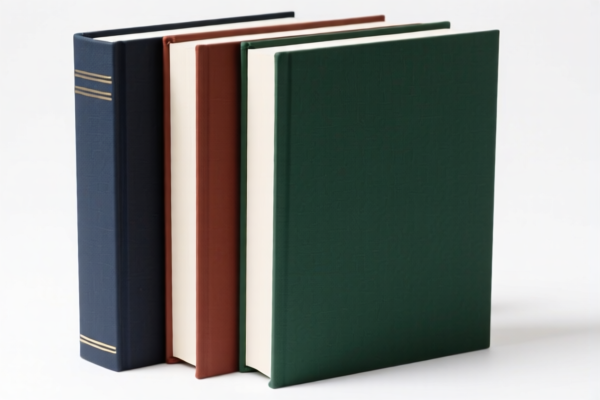


AI Analysis
📚 Catalogs & Indexes (Printed Matter)
🌐 HS Code Reference & Customs Clearance Guide | 2026 Latest Tariff Analysis | Professional Clearance Strategy
📌 I. Product Definition & Classification: What Exactly Are "Catalogs and Indexes"?
In international trade, "Catalogs and Indexes" generally fall under Chapter 49 (Printed Books, Newspapers, Photographs, etc.). They are primarily advertising materials, commercial catalogs, or trade notices. The key distinction lies in the origin of the seller and the nature of the goods being offered.
⚠️ Key Distinction Point:
- If the catalog promotes US-origin products sold by a US entity → HS 4911.10.00.20
- If the catalog promotes Foreign products sold by a foreign entity → HS 4911.10.00.40
- Note: Stationery items like diaries or notebooks are classified separately under HS 4820, as shown in the provided data.
📦 II. HS Code Classification Details (Based on Provided Data)
| HS Code | Product Description | Applicable Scenario | Origin of Seller | Total Tax Rate |
|---|---|---|---|---|
4820.10.20.10 |
Diaries, notebooks and address books, bound; memorandum pads, letter pads... | Diaries, notebooks, address books (Bound) | N/A | 25.0% |
4820.10.20.60 |
Registers, account books, notebooks... Diaries, notebooks and address books, bound; memorandum pads... Other | Other stationery items not specified above | N/A | 25.0% |
4911.10.00.20 |
Trade advertising material, commercial catalogs: Printed catalogs relating principally to current offers for the sale of United States products | Promoting US goods | US Entity | 7.5% |
4911.10.00.40 |
Trade advertising material: Printed catalogs, price lists... relating to offers by a person whose principal place of business is in a foreign country to sell products of a foreign country | Promoting Foreign goods | Foreign Entity | 7.5% |
🔍 Critical Reminder:
- Stationery vs. Advertising: Items like "Diaries," "Notebooks," and "Letter Pads" are paper stationery (HS 4820) and are subject to the 25.0% tax rate.
- Commercial Catalogs: Items that are purely advertising material (e.g., brochures, catalogs offering goods for sale) are printed matter (HS 4911) and are subject to the 7.5% tax rate.
- Do Not Confuse: A "diary" (used for writing) is HS 4820. A "catalog of products" (used for advertising) is HS 4911.
💰 III. 2026 Latest Tariff Rate Breakdown (Including Additional Taxes)
✅ Applicable Country: United States (US)
✅ Origin: China (CN) (Note: The data shows a 25% additional tax, typical for US-China trade tensions)
✅ Effective Time: Current USITC and IEEPA provisions apply.
🎯 1. 4820.10.20.10 & 4820.10.20.60 —— Stationery (Diaries, Notebooks, etc.)
| Item | Content |
|---|---|
| Basic Tariff | 0% (ad valorem) |
| Additional Tax (Section 301 / IEEPA) | +25.0% |
| Total Tax Rate | 25.0% |
| Tax Calculation | CIF Value × 25.0% |
| De Minimis Exemption | ❌ Not Applicable (Assuming standard commercial shipment; small parcels may vary, but commercial catalogs/stationery usually taxed) |
| Legal Basis | Based on provided data: 基础关税: 0.0%, 加征关税: 25.0% |
📌 Explanation:
- These items are classified as paper stationery.
- Despite having a 0% basic tariff, the 25% additional tax significantly increases the landed cost.
- This applies to bound diaries, notebooks, address books, and letter pads.
🎯 2. 4911.10.00.20 —— US Product Catalogs
| Item | Content |
|---|---|
| Basic Tariff | 0% (ad valorem) |
| Additional Tax | +7.5% |
| Total Tax Rate | 7.5% |
| Tax Calculation | CIF Value × 7.5% |
| Legal Basis | Based on provided data: 基础关税: 0.0%, 加征关税: 7.5% |
📌 Explanation:
- This code is for print catalogs primarily advertising US products.
- The tax rate is significantly lower (7.5%) than stationery (25%).
- Caution: If a foreign company sends a catalog promoting its own foreign products, this code does not apply.
🎯 3. 4911.10.00.40 —— Foreign Product Catalogs (by Foreign Sellers)
| Item | Content |
|---|---|
| Basic Tariff | 0% (ad valorem) |
| Additional Tax | +7.5% |
| Total Tax Rate | 7.5% |
| Tax Calculation | CIF Value × 7.5% |
| Legal Basis | Based on provided data: 基础关税: 0.0%, 加征关税: 7.5% |
📌 Explanation:
- This code is for print catalogs, price lists, or trade notices where the seller’s principal place of business is outside the US, and the products offered are foreign.
- Tax rate is 7.5%, same as US product catalogs.
- Key: The seller must be a foreign entity.
🛠️ IV. Customs Clearance Practical Advice (Battle-Tested Pitfall Guide)
✅ 1. Preparation Checklist (Essential Documents)
| Document | Required | Notes |
|---|---|---|
| ✅ Product Specification Sheet | ✔️ | Clearly distinguish: Is it a diary/notebook (HS 4820) or a commercial catalog (HS 4911)? |
| ✅ Commercial Invoice | ✔️ | Must specify: "Printed Catalogs" or "Bound Diaries". Do not just say "Paper Goods". |
| ✅ Sample/Photo | ✔️ | Provide images showing if the item is blank (stationery) or printed with product offers (catalog). |
| ✅ Declaration Statement | ✔️ | For HS 4911.10.00.40, declare: "Catalogs for products of foreign country, sold by foreign entity." |
✅ 2. Declaration Tips (Key Mantra)
🔥 "Stationery is 25%, Catalog is 7.5%! Classify by Content, Not Just Material!"
| Scenario | Correct HS Code | Incorrect HS Code | Consequence |
|---|---|---|---|
| Blank Diaries / Notebooks | 4820.10.20.10 / .60 |
4911.10.00.20 |
Overpay Tax: 7.5% vs 25% → Refund hassle |
| Catalog advertising US goods | 4911.10.00.20 |
4820.10.20.60 |
Underpay Tax: 7.5% vs 25% → Penalties + Back Tax |
| Catalog advertising Foreign goods (by Foreign seller) | 4911.10.00.40 |
4820.10.20.60 |
Underpay Tax: 7.5% vs 25% → Penalties + Back Tax |
| Mixed Shipment (Diaries + Catalogs) | Split Declaration | Single HS Code | Audit Risk: Misclassification leads to delays |
✅ 3. Special Cases
| Scenario | Handling Advice |
|---|---|
| Digital Catalogs (USB/CD) | Not covered in this data. May fall under HS 8523 (Storage Media). Check separately. |
| Branded Notebooks (e.g., "Apple Diary") | Still HS 4820. Branding does not make it a "catalog". Tax: 25%. |
| Catalogs with Samples | If the item is a display sample (e.g., fabric swatch book), it may be classified differently (e.g., HS 50 or 60). Ensure it's purely "printed matter". |
| Dropshipping Catalogs | If sent directly from China to US consumer, consider de minimis thresholds, but commercial bulk shipments are taxed. |
🌍 V. Global Market Comparison (2026)
| Country/Region | Recommended HS Code | Tariff Rate | Notes |
|---|---|---|---|
| 🇺🇸 United States | 4911.10.00.20/40 or 4820.10.20.x0 |
7.5% (Catalog) / 25% (Stationery) | High tax on stationery. Low tax on advertising catalogs. |
| 🇨🇳 China | 4911.10.00.00 |
Varies (often 0-10%) | Import tariffs may differ. Export from US to China? Check Chinese HS. |
| 🇪🇺 European Union | 4911.10.00.00 |
0% (Most cases) | EU is generally friendly to printed advertising materials. |
| 🇬🇧 United Kingdom | 4911.10.00.00 |
0% | Post-Brexit, UK tariff for catalogs is low. |
| 🇯🇵 Japan | 4911.10.00.00 |
0% - 3% | Low tariffs for printed matter. |
📌 Conclusion:
- USA is the most expensive market for imported stationery (Diaries/Notebooks) due to the 25% additional tax.
- Catalogs (Advertising) enjoy a low 7.5% rate in the US, making them a cost-effective marketing tool.
- Strategy: If you are exporting blank stationery to the US, expect high costs. If you are exporting marketing catalogs, the cost is manageable.
📌 VI. Common Mistakes & Pitfalls (Lessons Learned)
❌ Mistake 1: Declaring a Printed Product Catalog as "Notebook" to avoid 7.5% tax?
👉 Result: No, the opposite is worse. Declaring a Notebook as a Catalog to get 7.5% instead of 25% is Tax Evasion.
👉 Consequence: Seizure, Fines, and Legal Action. Customs will inspect the contents.
❌ Mistake 2: Assuming all "Paper Items" are HS 4820.
👉 Result: Catalogs are HS 4911. Confusion leads to misclassification.
👉 Consequence: Delayed clearance, additional duties.
❌ Mistake 3: Ignoring the "Seller's Origin" for HS 4911.10.00.40.
👉 Result: If a US company sends a catalog promoting its own US goods, it is HS 4911.10.00.20. If a Chinese company sends a catalog promoting Chinese goods, it is HS 4911.10.00.40. Both are 7.5%, but the description must match.
👉 Consequence: Misdescription can lead to audits.
✅ Correct Approach:
"Blank Diaries → HS 4820 (25%)"
"Advertising Catalogs → HS 4911 (7.5%)"
🎯 VII. Conclusion: Precision Classification, Cost Optimization!
🎯 Remember the Mantra:
🔹 "Diaries are Stationery (25%), Catalogs are Ads (7.5%)!"
🔹 "Classify by Function, Not Just Material!"
📌 Pro Tip:
If you are sending marketing materials (catalogs) to US clients, ensure the declaration clearly states:
"Printed Commercial Catalogs, for promotional purposes, no samples included, Foreign Entity Seller."
If you are shipping gift items (diaries/notebooks), declare:
"Bound Diaries, Paper Stationery, for personal use/gift."
📣 Immediate Action:
📞 Consult a licensed customs broker to classify mixed shipments.
🚀 Accurate HS Codes = Lower Taxes + Faster Clearance!
✨ Professional Clearance Starts with Correct Classification!
💼 Save Money, Avoid Penalties, Stay Compliant!
Customer Reviews
About HS Code Classification
The Harmonized System (HS) is an internationally standardized nomenclature developed by the World Customs Organization (WCO) to classify traded products. Over 200 countries use the HS system as the basis for customs tariffs, trade statistics, and import/export regulations.
Each HS code follows a hierarchical structure:
- Chapter (2 digits) — Broad category of goods (e.g., Chapter 84: Machinery and Mechanical Appliances)
- Heading (4 digits) — More specific grouping within the chapter
- Subheading (6 digits) — Internationally standardized breakdown, used by all WCO member countries
- National subdivisions (8-10 digits) — Country-specific extensions for further classification, such as US HTSUS 10-digit codes
Correct HS code classification is essential for smooth customs clearance, accurate duty payment, and compliance with trade regulations. Misclassification can lead to customs delays, overpayment of duties, or penalties.
When importing from CN to US, the applicable tariff rates may include:
- Most-Favored-Nation (MFN) rate — The standard duty rate applied to WTO members
- General rate — Applied to countries without trade agreements
- Trade remedy duties — Additional tariffs such as Section 301 (anti-dumping), Section 232 (national security), or countervailing duties
The information provided on this page is for reference purposes only. For official classification, please consult with your local customs authority or a licensed customs broker.