Catalyst Adsorbent
CN → US| HS Code | Tariff Rate | Origin | Destination | Doc |
|---|---|---|---|---|
| 8421320000 | 35.0% | CN | US | Official Doc |
| 6909195095 | 39.0% | CN | US | Official Doc |
| 6909195010 | 39.0% | CN | US | Official Doc |
Product Images
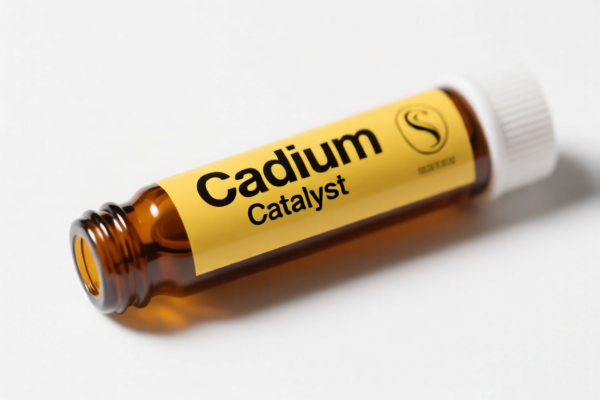
AI Analysis
🧪 Catalyst Adsorbent (催化剂用吸附剂)
🌐 HS Code Reference & Customs Clearance Guide | 2026 Latest Tariff Analysis | Professional Clearance Strategy
📌 I. Product Definition & Classification: What is a "Catalyst Adsorbent"?
"Catalyst Adsorbent" is a specialized material used in industrial chemical processes, particularly in the purification and filtration sectors. In international trade, its classification depends heavily on its primary function and material composition. It generally falls into two distinct categories:
1. Exhaust Gas Catalytic Converters (Automotive/Industrial): If the "adsorbent" is a functional core component specifically designed for purifying or filtering exhaust gases from internal combustion engines, it is classified as part of the catalytic converter system.
2. Ceramic Laboratory/Technical Articles (Chemical/Industrial Use): If the "adsorbent" is a ceramic-based material used for general chemical, technical, or laboratory purposes (e.g., chemical filtration media, technical ceramic adsorbents), it is classified as a ceramic article.
⚠️ Key Distinction Point:
- If it is a functional assembly for engine exhaust purification →归入 8421.32.00.00
- If it is a ceramic material/component for general chemical/technical use →归入 6909.19.50.10 / 6909.19.50.95
📦 II. HS Code Classification Details (2026 Latest Tariff Authority Comparison)
| HS Code | Product Description | Application Scenario | Material/Function |
|---|---|---|---|
8421.32.00.00 |
Centrifuges; Filtering or Purifying Machinery and Apparatus for Liquids or Gases; Part: Catalytic Converters for Internal Combustion Engines | Automotive exhaust systems, industrial gas purification units | Functional Core: Specifically for engine exhaust purification |
6909.19.50.10 |
Ceramic Articles for Laboratory, Chemical, or Other Technical Uses; Part: Other | Chemical plants, laboratory filtration, technical ceramic adsorbents | Material-Based: Ceramic material for chemical/technical use |
6909.19.50.95 |
Ceramic Articles for Laboratory, Chemical, or Other Technical Uses; Part: Other (Miscellaneous) | General ceramic adsorbents not fitting specific technical sub-categories | Material-Based: Ceramic/mineral primary form adsorbents |
🔍 Important Reminder:
- If the product is explicitly sold as a "Catalytic Converter" or a core component for engine exhaust purification, it must be classified under 8421.32.00.00.
- If the product is described as a "Ceramic Adsorbent" or "Technical Ceramic Material" without specific exhaust purification integration, it falls under 6909.19.50.10 or 6909.19.50.95.
💰 III. 2026 Latest Tariff Rate Details (Including Surtaxes & Policy Surcharges)
✅ Applicable Country: United States (US)
✅ Country of Origin: China (CN)
✅ Effective Date: From November 10, 2025 (for subsequent imports)
🎯 1. 8421.32.00.00 —— Catalytic Converters / Filtering Apparatus for Exhaust Gases
| Item | Content |
|---|---|
| Basic Tariff Rate | 0.0% (ad valorem) |
| Section 301 Surcharge (USITC) | +25.0% |
| Section 122 Surcharge (IEEPA) | +10.0% |
| Total Tariff Rate | 35.0% |
| Tax Calculation | CIF Value × 35% |
| De Minimis Exemption Applicable? | ❌ No (deny_de_minimis) |
| Legal Basis Path | Section 301: 8421.32.00.00 → Section 122: 8421.32.00.00 |
📌 Explanation:
- The 25% Section 301 tariff is applied to specific automotive and industrial filtering equipment listed in the USITC Footnotes.
- The 10% Section 122 tariff is a broad surcharge on imports from China under the International Emergency Economic Powers Act.
- Total 35% is a high tariff rate. Precise classification is critical to avoid misdeclaration penalties.
🎯 2. 6909.19.50.10 —— Ceramic Articles for Technical/Chemical Use
| Item | Content |
|---|---|
| Basic Tariff Rate | 4.0% (ad valorem) |
| Section 301 Surcharge (USITC) | +25.0% |
| Section 122 Surcharge (IEEPA) | +10.0% |
| Total Tariff Rate | 39.0% |
| Tax Calculation | CIF Value × 39% |
| De Minimis Exemption Applicable? | ❌ No (deny_de_minimis) |
| Legal Basis Path | Section 301: 6909.19.50.10 → Section 122: 6909.19.50.10 |
📌 Note:
- Although the basic rate (4%) is higher than the 0% for catalytic converters, the surtaxes (35%) remain the same.
- This classification applies to ceramic adsorbents that are not specifically designed as integrated catalytic converters for engines.
🎯 3. 6909.19.50.95 —— Ceramic Articles for Technical/Chemical Use (Other)
| Item | Content |
|---|---|
| Basic Tariff Rate | 4.0% (ad valorem) |
| Section 301 Surcharge (USITC) | +25.0% |
| Section 122 Surcharge (IEEPA) | +10.0% |
| Total Tariff Rate | 39.0% |
| Tax Calculation | CIF Value × 39% |
| De Minimis Exemption Applicable? | ❌ No (deny_de_minimis) |
| Legal Basis Path | Section 301: 6909.19.50.95 → Section 122: 6909.19.50.95 |
📌 Note:
- Same tariff structure as6909.19.50.10.
- Use this code for ceramic adsorbents that do not fit the specific "laboratory/technical" sub-description of.10but are still ceramic-based.
🛠️ IV. Customs Clearance Practical Advice (Actionable Guide)
✅ 1. Required Documentation Checklist (Must Provide)
| Document | Required | Description |
|---|---|---|
| ✅ Product Specification Sheet | ✔️ | Details material composition, chemical properties, intended use (exhaust vs. general chemical). |
| ✅ Technical Data Sheet (TDS) | ✔️ | Must clearly state if it is a "Catalytic Converter Core" or "Ceramic Adsorbent Material." |
| ✅ Product Photos (with Labels) | ✔️ | Show physical structure, markings, and any integration points. |
| ✅ Commercial Invoice | ✔️ | Must accurately describe the product: e.g., "Ceramic Adsorbent for Chemical Filtration" vs. "Catalytic Converter for Engine Exhaust." |
| ✅ Certificate of Origin (CO) | ✔️ | Required to confirm Chinese origin and apply surcharges correctly. |
| ✅ Packing List | ✔️ | Details quantity and weight; must match invoice. |
✅ 2. Declaration Tips (Key Mantras)
🔥 “Function Dictates Code, Material Supports Claim!”
| Scenario | Correct Declaration | Wrong Practice |
|---|---|---|
| Product is a core part of an exhaust system | HS 8421.32.00.00Desc: "Catalytic Converter Core for Exhaust Purification" |
Declare as "Ceramic Adsorbent" → Risk of penalty for misclassification |
| Product is a ceramic material for chemical use | HS 6909.19.50.10Desc: "Ceramic Technical Adsorbent for Chemical Filtration" |
Declare as "Catalytic Converter" → Incorrect function attribution |
| Product is generic ceramic adsorbent | HS 6909.19.50.95 |
Ambiguous description → Customs detention for review |
✅ 3. Special Circumstances Handling
| Situation | Handling Advice |
|---|---|
| OEM Custom Adsorbents | Provide client order + design specs to prove specific intended use. |
| Mixed Shipments | If both catalytic converters and ceramic adsorbents are in one shipment, separate declarations are required. Do not combine. |
| Unclear Function | If unsure, provide Test Reports or Manufacturer Certification confirming whether the product is for engine exhaust or general chemical use. |
| Material Composition | If the product contains both ceramic and non-ceramic elements, ensure the principal material determines the HS Code. |
🌍 V. Global Market Comparison (2026 Latest)
| Country/Region | Recommended HS Code | Tariff Rate (China Origin) | Certification Requirements | Notes |
|---|---|---|---|---|
| 🇺🇸 USA | 8421.32.00.00 |
35% (25% Sec 301 + 10% Sec 122) | None specific | High tariff; precise function description critical |
| 🇺🇸 USA | 6909.19.50.10/.95 |
39% (4% Base + 25% Sec 301 + 10% Sec 122) | None specific | Higher total tariff due to 4% base |
| 🇨🇳 China | 8421.32.00.00 |
~0-10% (Varies) | CCC (if applicable) | Lower import duty for domestic processing |
| 🇪🇺 EU | 8421.32.00.00 |
~2.5% | REACH Compliance | No US-style surcharges |
| 🇯🇵 Japan | 8421.32.00.00 |
~0-5% | JIS Standards | Competitive tariff structure |
📌 Conclusion:
- US Market: High tariffs apply regardless of classification due to Section 301 and Section 122.
- Classification Impact: While both paths incur surcharges, 8421.32.00.00 has a 0% base rate, resulting in a 35% total, whereas 6909.19 paths have a 4% base rate, resulting in 39% total.
- Strategy: If the product can be legitimately classified as a ceramic technical article rather than an engine component, the tariff difference is 4%. However, function must match description to avoid legal risks.
📌 VI. Common Errors & Pitfalls (Lessons Learned)
❌ Error 1: Declaring an engine exhaust catalytic converter as "Ceramic Adsorbent" to avoid higher scrutiny.
👉 Consequence: Customs may reject the declaration, demand reclassification, and impose fines for misdeclaration.
❌ Error 2: Using vague terms like "Industrial Filter Material" without specifying application.
👉 Consequence: Customs will detain the goods for further investigation, causing delays.
❌ Error 3: Ignoring Section 122 (10%) surcharges.
👉 Consequence: Underpayment of duties, leading to retrospective tax collection and penalties.
❌ Error 4: Confusing catalytic converters with general ceramic filters.
👉 Consequence: Wrong HS Code selection → Incorrect tax calculation.
✅ Correct Practice:
"Catalytic Converter Core, Ceramic Substrate, for Internal Combustion Engine Exhaust Purification, Model XYZ"
OR
"Ceramic Technical Adsorbent, Porous Material, for Chemical Filtration Applications, Model ABC"
🎯 VII. Conclusion: Precise Classification, Cost Control, Compliance!
🎯 Remember the Mantras:
🔹 "Function First: Engine Exhaust = 8421, Ceramic Tech = 6909"
🔹 "Surtaxes Are Inevitable for CN Origin: 25% Sec 301 + 10% Sec 122"
🔹 "Base Rate Difference: 0% vs 4% → 35% vs 39% Total"
📌 Pro Tip:
If your product is sourced from Vietnam, Mexico, or Malaysia, you may be eligible to avoid US surcharges.
Consider Advance Ruling applications to confirm HS Code before shipment.
📣 Immediate Action:
📞 Consult a Professional Customs Broker
📄 Provide Product Technical Sheets & Intended Use Documentation
🚀 Ensure Accurate Declaration to Avoid Delays and Penalties!
✨ Professional Customs Clearance Starts with Precise Classification!
💼 Every Dollar Saved is a Dollar Earned!
Customer Reviews
About HS Code Classification
The Harmonized System (HS) is an internationally standardized nomenclature developed by the World Customs Organization (WCO) to classify traded products. Over 200 countries use the HS system as the basis for customs tariffs, trade statistics, and import/export regulations.
Each HS code follows a hierarchical structure:
- Chapter (2 digits) — Broad category of goods (e.g., Chapter 84: Machinery and Mechanical Appliances)
- Heading (4 digits) — More specific grouping within the chapter
- Subheading (6 digits) — Internationally standardized breakdown, used by all WCO member countries
- National subdivisions (8-10 digits) — Country-specific extensions for further classification, such as US HTSUS 10-digit codes
Correct HS code classification is essential for smooth customs clearance, accurate duty payment, and compliance with trade regulations. Misclassification can lead to customs delays, overpayment of duties, or penalties.
When importing from CN to US, the applicable tariff rates may include:
- Most-Favored-Nation (MFN) rate — The standard duty rate applied to WTO members
- General rate — Applied to countries without trade agreements
- Trade remedy duties — Additional tariffs such as Section 301 (anti-dumping), Section 232 (national security), or countervailing duties
The information provided on this page is for reference purposes only. For official classification, please consult with your local customs authority or a licensed customs broker.