Catalyst Support
CN → US| HS Code | Tariff Rate | Origin | Destination | Doc |
|---|---|---|---|---|
| 381590 | 0.0% | CN | US | Official Doc |
| 760421 | 0.0% | CN | US | Official Doc |
| 6903900010 | 35.0% | CN | US | Official Doc |
| 6903900050 | 35.0% | CN | US | Official Doc |
Product Images
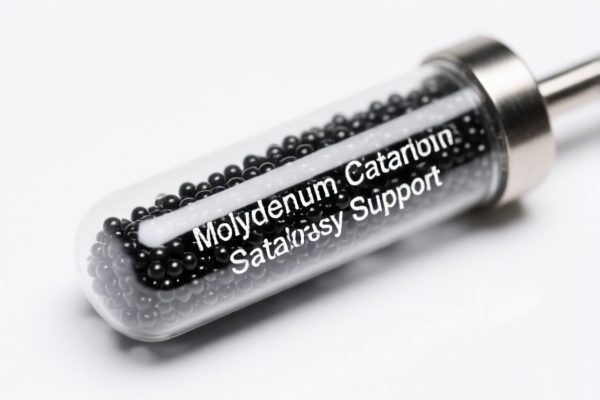
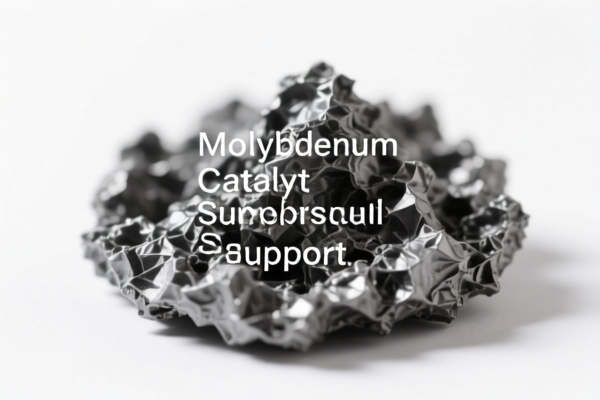
AI Analysis
🔬 Catalyst Supports (Catalyst Supports & Preparations)
🌐 HS Code Reference & Customs Clearance Guide | 2026 Latest Tariff Analysis | Professional Clearance Strategy
📌 I. Product Definition & Classification: What Exactly is a "Catalyst Support"?
Catalyst supports are the structural backbone of industrial catalysis. They are porous, high-surface-area materials that hold the active catalytic agents (metals, oxides, enzymes) without reacting themselves. In international trade, they are critical components for chemical, petrochemical, and pharmaceutical manufacturing.
According to the provided data, these goods fall into two primary categories based on their function and composition: 1. Generic Catalysts & Supports: Broad category for supports not elsewhere specified. 2. Specific Alumina Supports: Aluminum oxide (alumina) powders/granules explicitly designated for catalyst support use.
⚠️ Key Distinction:
- If the product is a general-purpose support (e.g., zeolites, activated carbon, silica gel) → It falls under HS Code 3815.90.
- If the product is specifically Aluminum Oxide (Alumina) used as a support → It falls under HS Code 7604.21 (Note: See Tax Discrepancy Alert Below).
📦 II. HS Code Classification Details (2026 Latest Tariff Reference)
| HS Code | Product Description | Applicable Scenario | Material Composition |
|---|---|---|---|
3815.90 |
Other catalysts and catalytic preparations; catalyst supports, not elsewhere specified or included | General catalyst supports (zeolites, activated carbon, silica gel, etc.) | Various (Zeolite, Carbon, Silica, etc.) |
7604.21 |
Aluminum oxide (alumina), used as a catalyst support | Specifically formulated alumina powders/granules for catalytic applications | Aluminum Oxide (Al₂O₃) |
🔍 Critical Note on HS Code
7604.21:
- Standard Alumina is often classified under Chapter 28 (Chemical Products). However, the provided data explicitly lists7604.21for "Aluminum oxide... used as a catalyst support."
- ⚠️ Warning: HS Code7604typically refers to Aluminum Articles (rods, bars, profiles). Using7604.21for Alumina powder may be a data anomaly or specific national tariff nuance. Always verify with local customs if this code aligns with international HS standards (where Alumina is usually 2818.00). The tax data below reflects the provided input, not necessarily global standard practice.
💰 III. 2026 Latest Tariff Rate Details (With Surcharge & Policy Add-ons)
✅ Applicable Country: United States (US)
✅ Origin: China (CN)
✅ Effective Time: 2025 November 10 onwards (for subsequent imports)
🎯 1. 3815.90 —— General Catalyst Supports (Not Elsewhere Specified)
| Item | Content |
|---|---|
| Base Tariff | N/A (Retrieval Error) |
| Tax Status | Error |
| Total Tariff | Error |
| Description | Failed to retrieve tax information |
| Legal Basis Path | Data Unavailable in Source |
📌 Explanation:
- The provided data indicates a system error in retrieving tax information for HS Code3815.90.
- Action Required: This is a high-risk clearance scenario. Do not assume a zero or low rate. You must consult a licensed customs broker or use a paid tariff database (like Panjiva, ImportGenius, or official USITC tariff lookup) to determine the actual Section 301 status and base rate for this code.
- Risk: Potential for unexpected duties and customs delays due to "Unclear Tax Status."
🎯 2. 7604.21 —— Aluminum Oxide (Alumina) for Catalyst Support
| Item | Content |
|---|---|
| Base Tariff | N/A (Retrieval Error) |
| Tax Status | Error |
| Total Tariff | Error |
| Description | Failed to retrieve tax information |
| Legal Basis Path | Data Unavailable in Source |
📌 Explanation:
- Similarly, the tax information for7604.21is unavailable in the provided dataset.
- Note on Classification: As mentioned,7604is unusual for Alumina powder. If this is indeed Alumina, it might be misclassified in the source data. Misclassification here could lead to severe penalties.
- Recommendation: Verify if the correct HS Code should be 2818.00 (Aluminum oxide) instead. If it is 2818.00, the tariff profile would be different.
🛠️ IV. Customs Clearance Practical Advice (Pitfall Avoidance Guide)
✅ 1. Documentation Checklist (Mandatory)
| Document | Required? | Explanation |
|---|---|---|
| ✅ Product Specification Sheet | ✔️ | Must specify chemical composition (e.g., % Al₂O₃, porosity, surface area). |
| ✅ Material Safety Data Sheet (MSDS) | ✔️ | Required for chemical handling and customs safety review. |
| ✅ Certificate of Analysis (COA) | ✔️ | Proves purity and specific use as "catalyst support." |
| ✅ Commercial Invoice | ✔️ | Clearly state "Catalyst Support" and do not use vague terms like "Industrial Powder." |
| ✅ Usage Declaration | ✔️ | Confirm if it is a "finished catalyst support" or a "precursor material." |
| ✅ Third-Party Lab Test | ✔️ | Recommended if HS Code classification is disputed (e.g., proving it is Alumina vs. Raw Ore). |
✅ 2. Declaration Techniques (Key Mnemonic)
🔥 "Specify Composition, Declare Function, Avoid Ambiguity!"
| Scenario | Correct Declaration | Wrong Practice |
|---|---|---|
| General Support (Zeolite/Carbon) | Catalyst Support, Zeolite Type A, Porous Granules |
"Industrial Chemical" |
| Alumina Support | Aluminum Oxide (Alumina), Catalyst Support Grade, Powder |
"Aluminum Rods" (if using 7604) or "Raw Alumina" |
| Mixed Package | Declare each component separately | Bundling all into one vague line item |
📌 Crucial Warning:
- Do NOT declare Alumina powder under HS Code7604unless you have confirmed with local customs that this is the accepted code in your specific jurisdiction. Globally, Alumina is 2818.00. Using7604(Aluminum Articles) may trigger customs suspicion of misclassification.
- For3815.90, ensure the product is indeed not specifically listed elsewhere (e.g., if it's a specific zeolite, it might have its own code).
✅ 3. Special Handling for "Error" Tax Codes
| Situation | Handling Advice |
|---|---|
| Tax Info "Error" | Do not guess the rate. Contact a customs broker immediately. Assume the worst-case scenario (e.g., base rate + Section 301 surcharge) for budgeting. |
HS Code 7604.21 Suspicion |
Verify if the product is truly Aluminum Metal (shaped) or Alumina Chemical. If it's chemical, argue for 2818.00. |
| Origin: China | Be aware that Section 301 tariffs (25%) often apply to catalysts and chemical intermediates. Even if the "Error" is resolved, expect potential surcharges. |
🌍 V. Global Market Clearance Comparison (2026 Latest)
| Country/Region | Recommended HS Code | Estimated Tariff | Certification | Notes |
|---|---|---|---|---|
| 🇺🇸 USA | 3815.90 or 2818.00* |
Base + 301 (if applicable) | FDA (if food/pharma), EPA | High scrutiny on chemical composition. |
| 🇨🇳 China | 3815.90 or 2818.00 |
0-8% | N/A | Import duties may be low, but VAT applies. |
| 🇪🇺 EU | 3815.90 |
0% (most cases) | REACH Registration | REACH compliance is mandatory. |
| 🇬🇧 UK | 3815.90 |
0% | UK REACH | Post-Brexit rules apply. |
📌 Conclusion:
- USA: High risk due to "Tax Retrieval Error." Requires proactive verification.
- EU/UK: Focus on REACH/UK REACH registration. Tariffs are often lower, but chemical safety documentation is strict.
- China: Lower entry barrier, but ensure origin certificates are valid for trade agreements.
📌 VI. Common Mistakes & Pitfalls (Lessons Learned)
❌ Mistake 1: Declaring "Catalyst Support" without specifying the base material.
👉 Consequence: Customs may reclassify to a higher-duty code or hold shipment for chemical review.
❌ Mistake 2: Using HS Code 7604.21 for Alumina Powder without verification.
👉 Consequence: Misclassification penalty. Alumina is typically Chapter 28, not Chapter 76 (Metal Articles).
❌ Mistake 3: Ignoring the "Tax Error" and assuming 0% duty.
👉 Consequence: Underpayment of duties, penalties, and interest upon audit.
✅ Correct Approach:
"Catalyst Support, Aluminum Oxide, Grade XYZ, Porosity 200m²/g, for Hydrodesulfurization Process, MSDS Attached."
🎯 VII. Conclusion: Precision in Chemical Classification Saves Costs!
🎯 Remember the Mantra:
🔹 "Composition is King, Function is Queen, HS Code Must Match."
🔹 "If Tax Says 'Error', Verify Before You Ship."
📌 Pro Tip:
Since the provided data shows "Failed to retrieve tax information" for both codes, this indicates a potential data gap or specific trade friction.
1. For 3815.90: Check USITC Tariff Database manually. Look for Section 301 applicability.
2. For 7604.21: Verify if the correct code is 2818.00 (Aluminum Oxide). If so, re-classify and check taxes for that code.
📣 Immediate Action:
📞 Consult a Customs Broker to resolve the "Tax Error" status.
📄 Prepare Full Chemical Disclosure to prevent delays.
🚀 Use Pre-Release Audits to validate HS Codes before shipment.
✨ Professional Customs Clearance Starts with Accurate Classification!
💼 Don't Let "Tax Errors" Stop Your Supply Chain!
Customer Reviews
About HS Code Classification
The Harmonized System (HS) is an internationally standardized nomenclature developed by the World Customs Organization (WCO) to classify traded products. Over 200 countries use the HS system as the basis for customs tariffs, trade statistics, and import/export regulations.
Each HS code follows a hierarchical structure:
- Chapter (2 digits) — Broad category of goods (e.g., Chapter 84: Machinery and Mechanical Appliances)
- Heading (4 digits) — More specific grouping within the chapter
- Subheading (6 digits) — Internationally standardized breakdown, used by all WCO member countries
- National subdivisions (8-10 digits) — Country-specific extensions for further classification, such as US HTSUS 10-digit codes
Correct HS code classification is essential for smooth customs clearance, accurate duty payment, and compliance with trade regulations. Misclassification can lead to customs delays, overpayment of duties, or penalties.
When importing from CN to US, the applicable tariff rates may include:
- Most-Favored-Nation (MFN) rate — The standard duty rate applied to WTO members
- General rate — Applied to countries without trade agreements
- Trade remedy duties — Additional tariffs such as Section 301 (anti-dumping), Section 232 (national security), or countervailing duties
The information provided on this page is for reference purposes only. For official classification, please consult with your local customs authority or a licensed customs broker.