Cattle nose ring
CN → US| HS Code | Tariff Rate | Origin | Destination | Doc |
|---|---|---|---|---|
| 7113195091 | 23.0% | CN | US | Official Doc |
| 7113195095 | 23.0% | CN | US | Official Doc |
| 7117909000 | 28.5% | CN | US | Official Doc |
Product Images
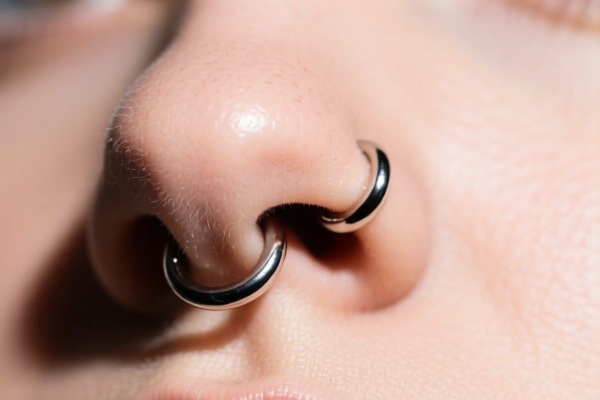
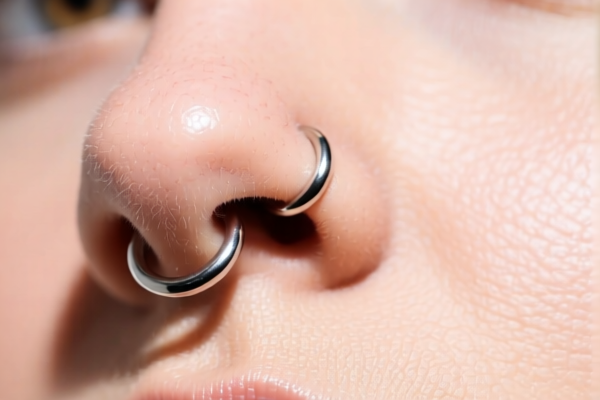


AI Analysis
👃 Cattle Nose Ring (Livestock Agricultural Equipment)
🌐 HS Code Reference & Clearance Guide | 2026 Latest Tariff Analysis | Professional Compliance Strategy
📌 I. Product Definition & Classification: What Exactly Is a "Cattle Nose Ring"?
A cattle nose ring is a device inserted into the septum of a bovine’s nose, primarily used for livestock management, handling, and restraint. Unlike human fashion jewelry, its function is strictly agricultural and mechanical.
In international trade, it is classified based on material composition and intent: 1. Precious Metal Nose Rings: Made of gold, silver, or other precious metals, treated as jewelry. 2. Plated Metal Nose Rings: Base metal plated with precious metal, also treated as jewelry. 3. Imitation/Fashion Nose Rings: Made of non-precious metals (e.g., stainless steel, brass) without precious metal plating, treated as imitation jewelry.
⚠️ Critical Distinction:
- If the product is made of precious metals or plated with precious metals → Classified under Chapter 71 (Jewelry).
- If the product is made of plain base metals (stainless steel, iron) → Often considered imitation jewelry or general hardware depending on specific national interpretations, but in the provided data, it is explicitly mapped to Imitation Jewelry (7117.90.90.00).
- Do NOT classify as general hardware (Chapter 83) if it fits the jewelry description in the provided dataset.
📦 II. HS Code Classification Details (Based on Provided Data)
| HS Code | Product Description | Applicable Scenario | Material/Feature |
|---|---|---|---|
7113.19.50.91 |
Precious metal jewelry (other than necklaces/ropes) | Nose rings made of gold, silver, platinum, etc. | ✅ Precious Metal |
7113.19.50.95 |
Precious metal jewelry (other) | Nose rings made of base metal plated with precious metal | ✅ Plated Precious Metal |
7117.90.90.00 |
Imitation jewelry (other) | Nose rings made of stainless steel, brass, iron (non-precious) | ❌ Non-precious / Imitation |
🔍 Key Insight:
- The classification hinges on material value. Even if used for cattle, if it’s made of precious metal, it falls under 7113.
- If it’s a standard stainless steel agricultural ring, it is classified under 7117.90.90.00 as imitation jewelry.
💰 III. 2026 Latest Tariff Rate Breakdown (US Import from China)
✅ Applicable Country: United States (US)
✅ Origin: China (CN)
✅ Effective Date: 2025/2026 (Includes subsequent imports)
🎯 1. HS Code 7113.19.50.91 – Precious Metal Jewelry
| Item | Detail |
|---|---|
| Base Tariff | 5.5% |
| Section 301 Tariff | 7.5% |
| Section 122 Tariff | 10% |
| Total Tariff Rate | 23.0% |
| Calculation | CIF Value × 23% |
| De Minimis Exemption | ❌ Not Eligible (Section 321 de minimis does not apply to high-tariff agricultural/luxury goods) |
| Legal Path | Base: 5.5% + Section 301: 7.5% + Section 122: 10% |
📌 Explanation:
- Base Tariff (5.5%): Standard ad valorem rate for precious metal jewelry.
- Section 301 Tariff (7.5%): Additional tariff on Chinese imports under Trade Act of 1974.
- Section 122 Tariff (10%): Additional tariff under Section 122 of the Trade Act of 1962 (national security/emergency).
- Total: 23.0% – High cost, requires precise documentation.
🎯 2. HS Code 7113.19.50.95 – Plated Precious Metal Jewelry
| Item | Detail |
|---|---|
| Base Tariff | 5.5% |
| Section 301 Tariff | 7.5% |
| Section 122 Tariff | 10% |
| Total Tariff Rate | 23.0% |
| Calculation | CIF Value × 23% |
| De Minimis Exemption | ❌ Not Eligible |
| Legal Path | Base: 5.5% + Section 301: 7.5% + Section 122: 10% |
📌 Note:
- Same tariff structure as pure precious metal.
- Even if the core is base metal, if it is plated with precious metal, it is classified under 7113 and taxed at 23%.
🎯 3. HS Code 7117.90.90.00 – Imitation Jewelry
| Item | Detail |
|---|---|
| Base Tariff | 11.0% |
| Section 301 Tariff | 7.5% |
| Section 122 Tariff | 10% |
| Total Tariff Rate | 28.5% |
| Calculation | CIF Value × 28.5% |
| De Minimis Exemption | ❌ Not Eligible |
| Legal Path | Base: 11.0% + Section 301: 7.5% + Section 122: 10% |
📌 Note:
- Highest Tariff Rate (28.5%) among the three options.
- Applies to stainless steel, brass, or other non-precious metal nose rings.
- Despite being "imitation," the base rate is higher (11% vs 5.5%) due to classification differences.
🛠️ IV. Clearance Practical Advice (Real-World Pitfalls)
✅ 1. Documentation Checklist (Must-Haves)
| Document | Required | Purpose |
|---|---|---|
| ✅ Product Specification Sheet | ✔️ | Details material (e.g., "304 Stainless Steel" vs "925 Silver") |
| ✅ Material Composition Proof | ✔️ | Certificate of Analysis or Mill Test Report |
| ✅ Product Photos | ✔️ | Clear shots of the ring, showing any plating or markings |
| ✅ Commercial Invoice | ✔️ | Must state "Cattle Nose Ring" and material clearly |
| ✅ Packing List | ✔️ | Weight, dimensions, quantity |
| ✅ Original/Origin Certificate | ✔️ | If claiming any preferential treatment (rare for US) |
📌 Critical:
- Do NOT use vague terms like "Metal Ring." Specify "Cattle Nose Ring, Stainless Steel" or "Silver Nose Ring for Livestock."
- Mislabeling can lead to misclassification penalties.
✅ 2. Declaration Tips (Key Phrases)
🔥 "Material Matters, Not Just Use!"
| Scenario | Correct Declaration | Wrong Declaration |
|---|---|---|
| Stainless Steel Ring | 7117.90.90.00 – Cattle Nose Ring, Stainless Steel |
7113.19.50.91 – Precious Metal Jewelry |
| Gold-Plated Ring | 7113.19.50.95 – Plated Nose Ring |
7117.90.90.00 – Imitation Jewelry |
| Pure Silver Ring | 7113.19.50.91 – Precious Metal Nose Ring |
7117.90.90.00 – Imitation Jewelry |
📌 Why it matters:
- Declaring a stainless steel ring as "precious metal" to avoid higher base rates is fraud.
- Declaring a gold-plated ring as "imitation" to avoid Section 122 tariffs is risky and may be challenged.
✅ 3. Special Cases
| Case | Handling Advice |
|---|---|
| Mixed Shipments | Declare separately by material. Do not combine stainless and silver. |
| OEM Custom Rings | Provide design specs to prove material intent. |
| Small Quantities | No de minimis exemption for these HS codes under current US rules. |
| Recalled/Defective Rings | Must declare as "Defective" and may face additional scrutiny. |
🌍 V. Global Market Comparison (2026)
| Country/Region | Recommended HS Code | Tariff Rate | Notes |
|---|---|---|---|
| 🇺🇸 USA | 7117.90.90.00 |
28.5% | Highest due to Section 301 + 122 |
| 🇺🇸 USA | 7113.19.50.91 |
23.0% | Lower base rate for precious metals |
| 🇪🇺 EU | 7113/7117 | 0-4.5% | No Section 301/122; standard EU duties apply |
| 🇨🇳 China | 7113/7117 | 5-11% | Lower base rates; no Section 122 |
📌 Conclusion:
- USA is the most challenging market due to layered tariffs (Base + 301 + 122).
- EU and China offer significantly lower costs, but if exporting from China to USA, plan for 23-28.5% total duty.
📌 VI. Common Mistakes & Pitfalls (Lessons Learned)
❌ Mistake 1: Classifying stainless steel nose rings as "precious metal"
👉 Result: Customs audit, fines, or retroactive tariff application.
❌ Mistake 2: Ignoring Section 122 Tariff
👉 Result: Underpayment by 10%, leading to penalties + interest.
❌ Mistake 3: Using "Jewelry" as a generic term
👉 Result: Ambiguity leads to manual classification, delays, and storage fees.
❌ Mistake 4: Assuming de minimis applies
👉 Result: Small shipments still subject to full tariff; no exemption.
✅ Correct Approach:
"Cattle Nose Ring, 304 Stainless Steel, Agricultural Use, HS 7117.90.90.00, Total Duty 28.5%"
🎯 VII. Conclusion: Professional Classification Saves Money
🎯 Remember:
🔹 "Material Dictates Code, Code Dictates Cost."
🔹 "Section 122 is the Silent Killer – 10% Extra!"
🔹 "Imitation Jewelry Costs 28.5%, Precious Metal 23% – Choose Wisely!"
📌 Pro Tip:
If you are importing large quantities, consider:
1. Pre-classification Ruling from US CBP.
2. Supplier Audits to verify material composition.
3. Alternative Routing if possible (though unlikely for US direct imports).
📣 Immediate Action:
📞 Contact a Licensed Customs Broker
📄 Provide Material Certificates
🚀 Ensure Accurate HS Code Selection to Avoid 28.5% Surprises!
✨ Professional Clearance, Start with Precise Classification!
💼 Your Profit Margin Depends on Accurate Tariff Calculation!
Customer Reviews
About HS Code Classification
The Harmonized System (HS) is an internationally standardized nomenclature developed by the World Customs Organization (WCO) to classify traded products. Over 200 countries use the HS system as the basis for customs tariffs, trade statistics, and import/export regulations.
Each HS code follows a hierarchical structure:
- Chapter (2 digits) — Broad category of goods (e.g., Chapter 84: Machinery and Mechanical Appliances)
- Heading (4 digits) — More specific grouping within the chapter
- Subheading (6 digits) — Internationally standardized breakdown, used by all WCO member countries
- National subdivisions (8-10 digits) — Country-specific extensions for further classification, such as US HTSUS 10-digit codes
Correct HS code classification is essential for smooth customs clearance, accurate duty payment, and compliance with trade regulations. Misclassification can lead to customs delays, overpayment of duties, or penalties.
When importing from CN to US, the applicable tariff rates may include:
- Most-Favored-Nation (MFN) rate — The standard duty rate applied to WTO members
- General rate — Applied to countries without trade agreements
- Trade remedy duties — Additional tariffs such as Section 301 (anti-dumping), Section 232 (national security), or countervailing duties
The information provided on this page is for reference purposes only. For official classification, please consult with your local customs authority or a licensed customs broker.