Caulk Tape Sealant Strip
CN → US| HS Code | Tariff Rate | Origin | Destination | Doc |
|---|---|---|---|---|
| 4016931010 | 37.5% | CN | US | Official Doc |
| 4016935010 | 37.5% | CN | US | Official Doc |
| 3926904590 | 38.5% | CN | US | Official Doc |
| 3926904510 | 38.5% | CN | US | Official Doc |
| 4811411000 | 35.0% | CN | US | Official Doc |
Product Images
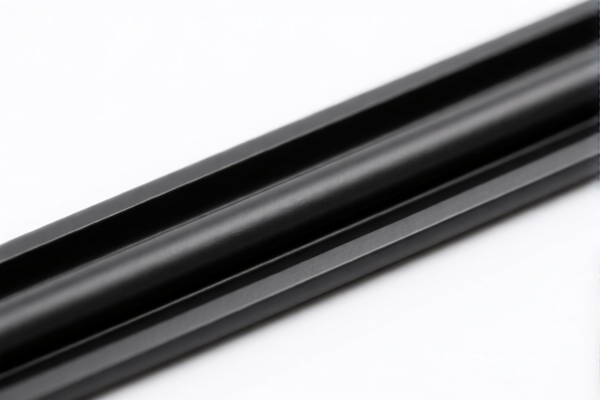
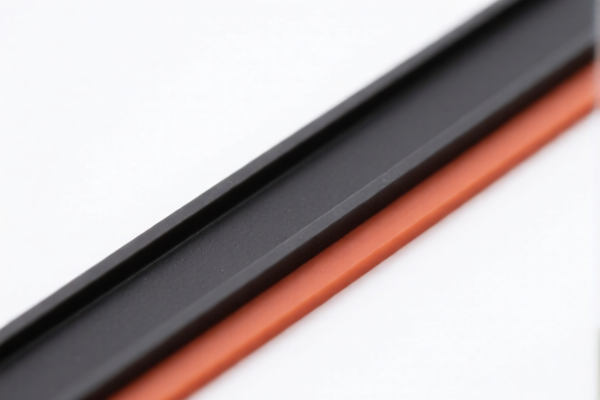
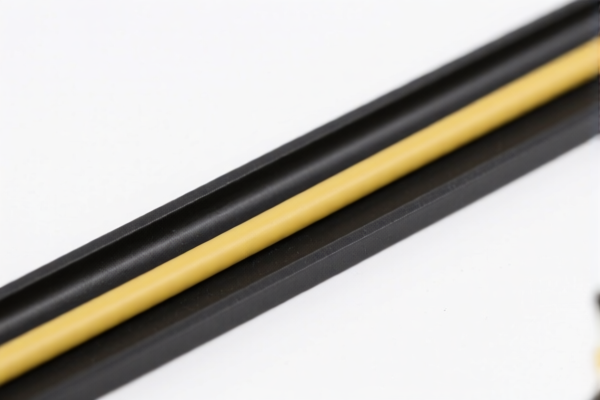
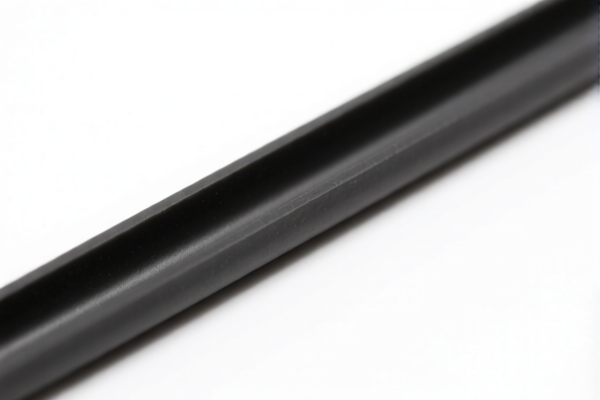
AI Analysis
🛡️ Caulk Tape Sealant Strip
🌐 HS Code Reference & Customs Clearance Guide | 2026 Latest Tariff Analysis | Professional Clearance Strategy
📌 I. Product Definition & Classification: Do You Really Know "Sealant Strips"?
Caulk Tape Sealant Strips (often referred to as foam-backed tape seals or adhesive gaskets) are critical components used in construction, automotive, and industrial applications to prevent air, water, and dust infiltration. In international trade, they are broadly categorized based on their material composition and specific form.
Since the input does not specify the exact material (Rubber vs. Plastic/Non-Rubber) or precise dimensions, customs classification typically branches into two main paths:
- Rubber-Based Seals: If the strip is made of natural or synthetic rubber (often foam-backed), it falls under Chapter 40.
- Plastic/Non-Rubber Seals: If the strip is made of PVC, Polyethylene, or other plastics, it falls under Chapter 39 (specifically articles of plastics) or Chapter 48 if it has a significant adhesive paper backing (like self-adhesive paper tape).
⚠️ Key Distinction Point:
- If the material is Rubber → Look at 4016 (Articles of rubber).
- If the material is Plastic (and not O-rings) → Look at 3926 (Articles of plastics).
- If it is primarily a Self-Adhesive Paper/Foil Tape with sealing properties → Look at 4811 or 3926 depending on the base material.
📦 II. HS Code Classification Details (2026 Latest Tariff Authority Comparison)
Based on the provided data, here are the applicable HS Codes and their specific rationales:
| HS Code | Product Description | Rationale & Material Inference | Total Tax Rate |
|---|---|---|---|
4016.93.10.10 |
Seal Strips (Rubber) | Categorized as "Seals" (gaskets, packing, etc.). When material is unspecified but implied to be rubber-based sealing strips, this code applies. | 37.5% |
4016.93.50.10 |
Seal Strips (Rubber, Other) | Specifically inferred as Rubber due to the "seal strip" usage. No conflicting material indicators. | 37.5% |
3926.90.45.90 |
Plastic Seals/Gaskets | Categorized as "Gaskets, washers, and other seals" made of Plastic. Does not conflict with non-O-ring categories in Chapter 39. | 38.5% |
3926.90.45.10 |
Plastic Seals (Other) | Form is identified as sealing components. Material inferred as Plastic or Rubber, but Chapter 39 (Plastics) is selected for non-rubber variants. | 38.5% |
4811.41.10.00 |
Self-Adhesive Sealing Tape | Matches the morphology of self-adhesive paper/plastic tape. "Transparent" and "Sealing" are common usage attributes. No material/size conflict for this specific tape type. | 35.0% |
🔍 Critical Reminder:
- Rubber vs. Plastic: If the strip is flexible foam-backed rubber (like weather stripping for doors/windows), use 4016. If it is PVC or PE foam tape (common in HVAC), use 3926.
- Tape vs. Solid Strip: If it is a thin, rollable tape primarily used for sealing gaps (like acrylic foam tape), 4811.41.10.00 may apply, offering the lowest tax rate (35.0%).
- Misclassification Risk: Declaring a rubber seal as plastic (or vice versa) can lead to customs audits and back-taxes.
💰 III. 2026 Latest Tariff Rate Breakdown (Including Surtaxes & Policy Add-ons)
✅ Applicable Country: United States (US)
✅ Country of Origin: China (CN)
✅ Effective Date: From November 10, 2025 onwards (for all subsequent imports)
🎯 1. Rubber-Based Seal Strips (4016.93.10.10 & 4016.93.50.10)
| Item | Content |
|---|---|
| Basic Duty Rate | 2.5% (ad valorem) |
| USITC Surtax (Section 301) | +25.0% |
| IEEPA Surtax (Section 122/Other China Measures) | +10.0% |
| Total Effective Tax Rate | 37.5% |
| Tax Calculation | CIF Value × 37.5% |
| De Minimis Exemption Eligibility | ❌ No (denied for these HS codes under current trade policies) |
| Legal Basis Path | USITC:4016.93.10.10 → FOOTNOTE:301.9901 → IEEPA:9903.01.24 |
📌 Explanation:
- The 25% is the standard Section 301 tariff on Chinese rubber articles.
- The 10% is an additional levy (often referred to as "122 Clause" or similar IEEPA provisions) specifically targeting Chinese imports.
- Total 37.5% is a high barrier for low-value rubber seals.
🎯 2. Plastic-Based Seal Strips (3926.90.45.90 & 3926.90.45.10)
| Item | Content |
|---|---|
| Basic Duty Rate | 3.5% (ad valorem) |
| USITC Surtax (Section 301) | +25.0% |
| IEEPA Surtax (Section 122/Other China Measures) | +10.0% |
| Total Effective Tax Rate | 38.5% |
| Tax Calculation | CIF Value × 38.5% |
| De Minimis Exemption Eligibility | ❌ No |
| Legal Basis Path | USITC:3926.90.45.90 → FOOTNOTE:301.9901 → IEEPA:9903.01.24 |
📌 Note:
- Plastic seals are slightly more expensive in basic duty (3.5% vs 2.5%) but suffer from the same surcharges.
- Even small PVC foam tapes used for sealing are subject to these rates if classified under Chapter 39.
🎯 3. Self-Adhesive Sealing Tape (4811.41.10.00)
| Item | Content |
|---|---|
| Basic Duty Rate | 0.0% (ad valorem) |
| USITC Surtax (Section 301) | +25.0% |
| IEEPA Surtax (Section 122/Other China Measures) | +10.0% |
| Total Effective Tax Rate | 35.0% |
| Tax Calculation | CIF Value × 35.0% |
| De Minimis Exemption Eligibility | ❌ No |
| Legal Basis Path | USITC:4811.41.10.00 → FOOTNOTE:301.9901 → IEEPA:9903.01.24 |
📌 Strategic Advantage:
- This is the lowest tax bracket among the options (35.0%).
- If the product is a thin, self-adhesive tape (e.g., acrylic foam tape, duct tape for sealing), classify here to save 1.5% - 2.5% compared to rubber/plastic strip classifications.
- Caution: Must prove it is "Tape" (rolled, adhesive backing) and not a "Molded Rubber Seal."
🛠️ IV. Customs Clearance Practical Advice (Real-World Pitfall Guide)
✅ 1. Document Checklist (Essential)
| Document | Required | Explanation |
|---|---|---|
| ✅ Product Specifications | ✔️ | Must detail: Material (Rubber/Plastic/PVC), Thickness, Adhesive Type, Dimensions. |
| ✅ Material Declaration | ✔️ | Explicitly state "100% Synthetic Rubber" or "PVC Foam." Ambiguity leads to forced classification. |
| ✅ Product Photos | ✔️ | Clear images showing cross-section (to prove foam/rubber vs. solid plastic) and adhesive backing. |
| ✅ Commercial Invoice | ✔️ | Must accurately describe the item. Avoid vague terms like "Gadget." Use "Self-Adhesive Foamed Rubber Seal Strip." |
| ✅ Packing List | ✔️ | Show unit packaging to support "Tape" classification if applicable (rolls vs. cut lengths). |
✅ 2. Classification Strategy (Key Mantra)
🔥 "Material First, Form Second, Tape Saves Money!"
| Scenario | Correct HS Code | Incorrect Approach | Consequence |
|---|---|---|---|
| Rubber Door Seal | 4016.93.10.10 |
Classify as Plastic (3926) |
Audit, Back-taxes + Penalties |
| PVC Window Seal | 3926.90.45.90 |
Classify as Rubber (4016) |
Minor discrepancy, but requires explanation |
| Acrylic Foam Tape | 4811.41.10.00 |
Classify as Plastic (3926) |
Overpayment of 1.5% - 3.5% taxes |
| Solid O-Ring | 4016.93.90.00 (Not in data) |
Use 4016.93.10.10 (Seal Strip) |
Incorrect! O-rings have different subheadings. |
✅ 3. Special Handling Tips
| Situation | Recommendation |
|---|---|
| OEM Custom Seals | Provide design drawings to prove the product is a "Seal Strip" and not a generic "Plastic Article." |
| Mixed Shipments | If shipping both Rubber Strips and Plastic Tapes, split the invoice. Do not lump them under one HS Code. |
| "Transparent" Seals | Transparency does not determine material. Clear rubber exists. Verify with lab test if needed. |
| Adhesive Type | If it uses a pressure-sensitive adhesive on a paper or foil backing, 4811 is stronger. If adhesive is on rubber/plastic foam, 4016 or 3926 is correct. |
🌍 V. Global Market Clearance Comparison (2026 Latest)
| Country/Region | Recommended HS Code | Tariff (China Origin) | Certification Requirements | Notes |
|---|---|---|---|---|
| 🇺🇸 USA | 4811.41.10.00 (Best Rate) |
35.0% (Lowest) | No specific certs for basic seals | Avoid 4016/3926 if tape classification is valid to save ~3.5% |
| 🇨🇳 China | 4016.93.10.10 |
2.5% | CCC (if for construction safety) | No Section 301 surtaxes domestically |
| 🇪🇺 EU | 4016.93.00 |
0% - 6% | REACH (Chemicals) | No major surtaxes if proper origin proof |
| 🇦🇺 Australia | 4016.93.00 |
5% | SAA Standards | Lower base duty, but check local standards |
📌 Conclusion:
- The US market is the most challenging due to the 25% + 10% surtaxes.
- Tax Optimization Strategy: If your "Caulk Tape" is technically a self-adhesive tape (even if rubber/plastic foam), prioritize classifying it under4811.41.10.00(35.0%) rather than4016(37.5%) or3926(38.5%). This requires robust product descriptions emphasizing "Tape," "Roll," and "Adhesive Backing."
📌 VI. Common Errors & Pitfall Guide (Lessons Learned)
❌ Error 1: Calling a rubber seal "Plastic Gasket" to avoid rubber tariffs
👉 Result: Customs lab test reveals rubber → 100% penalty + Back-taxes.
❌ Error 2: Using "Seal" for everything, ignoring "Tape" classification
👉 Result: Paying 38.5% instead of 35.0%. Save 3.5% by correctly declaring "Self-Adhesive Tape."
❌ Error 3: Missing the "122 Clause/IEEPA 10%" in cost calculation
👉 Result: Profit margins evaporate. Always add 35% - 38.5% to landed cost, not just the base duty.
❌ Error 4: Confusing "O-Rings" with "Seal Strips"
👉 Result: O-rings may have different subheadings. Ensure the product is a strip/profile, not a circular ring.
✅ Correct Declaration Example:
"Self-Adhesive Foamed Rubber Seal Tape, 10mm x 5mm, Black, for Window Sealing, Roll 50m, Model XT-100"
🎯 VII. Conclusion: Professional Classification Saves Money!
🎯 Remember the Mantra:
🔹 "Tape is King: 35% Rate!"
🔹 "Rubber is 37.5%, Plastic is 38.5%."
🔹 "Always check if 'Tape' classification applies!"
📌 Pro Tip:
If your seal is made from materials originating from Vietnam, Mexico, or Malaysia, you may qualify for IEEPA Exemptions, reducing the effective tax rate to 0% - 5%.
For US imports, consider applying for a Binding Ruling (Advance Ruling) to lock in the 4811.41.10.00 classification if your product qualifies as tape.
📣 Immediate Action:
📞 Consult a licensed customs broker
📸 Provide high-res photos and material specs
🚀 Optimize your HS Code to save up to 3.5% in taxes!
✨ Precision in Classification, Profit in Clearance!
💼 Every cent counts in the trade war era.
Customer Reviews
About HS Code Classification
The Harmonized System (HS) is an internationally standardized nomenclature developed by the World Customs Organization (WCO) to classify traded products. Over 200 countries use the HS system as the basis for customs tariffs, trade statistics, and import/export regulations.
Each HS code follows a hierarchical structure:
- Chapter (2 digits) — Broad category of goods (e.g., Chapter 84: Machinery and Mechanical Appliances)
- Heading (4 digits) — More specific grouping within the chapter
- Subheading (6 digits) — Internationally standardized breakdown, used by all WCO member countries
- National subdivisions (8-10 digits) — Country-specific extensions for further classification, such as US HTSUS 10-digit codes
Correct HS code classification is essential for smooth customs clearance, accurate duty payment, and compliance with trade regulations. Misclassification can lead to customs delays, overpayment of duties, or penalties.
When importing from CN to US, the applicable tariff rates may include:
- Most-Favored-Nation (MFN) rate — The standard duty rate applied to WTO members
- General rate — Applied to countries without trade agreements
- Trade remedy duties — Additional tariffs such as Section 301 (anti-dumping), Section 232 (national security), or countervailing duties
The information provided on this page is for reference purposes only. For official classification, please consult with your local customs authority or a licensed customs broker.