Cav Massage Device
CN → US| HS Code | Tariff Rate | Origin | Destination | Doc |
|---|---|---|---|---|
| 9018498040 | 10.0% | CN | US | Official Doc |
| 9018498080 | 10.0% | CN | US | Official Doc |
| 9019102020 | 10.0% | CN | US | Official Doc |
| 9019102035 | 10.0% | CN | US | Official Doc |
Product Images
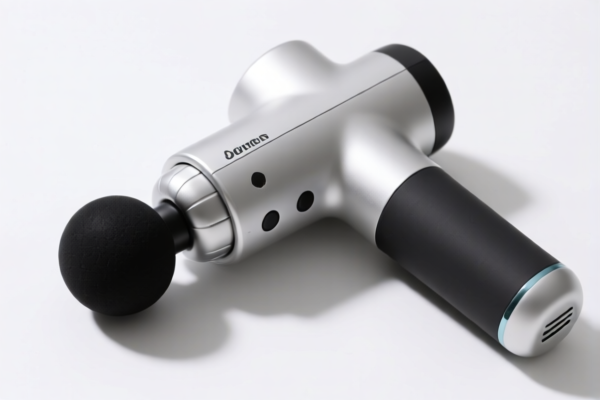
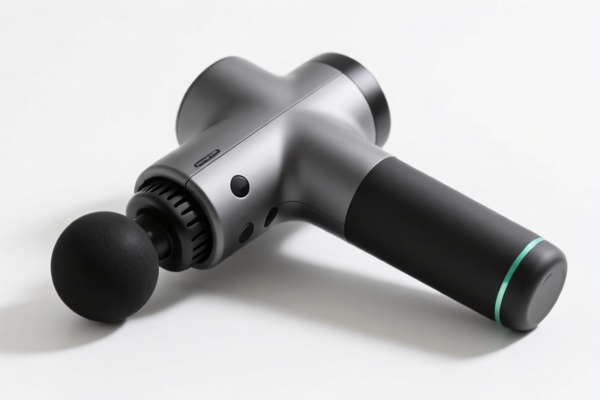
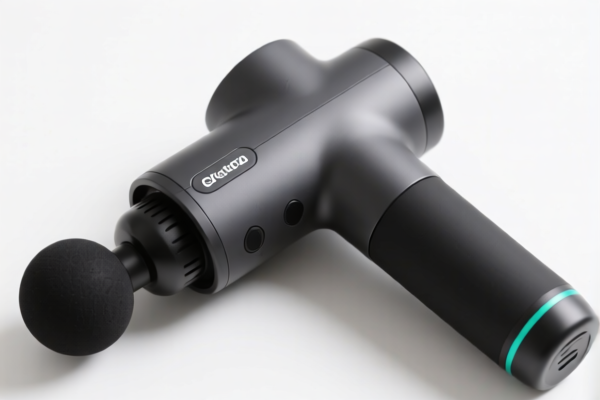
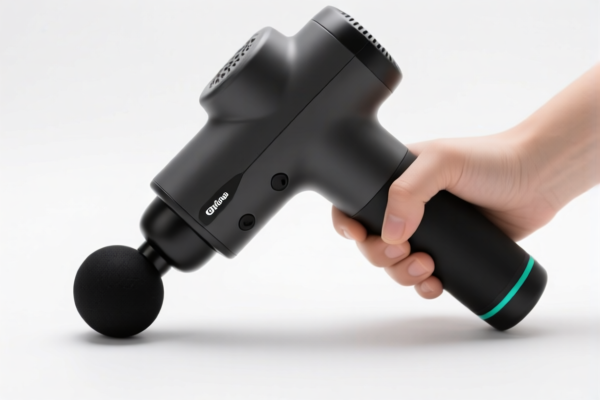
AI Analysis
💆♀️ Cavitation Massage Device (Cav Massage Device)
🌐 HS Code Reference & Customs Clearance Guide | 2026 Latest Tariff Analysis | Professional Compliance Strategy 📌 I. Product Definition & Classification: What Exactly is a "Cav Massage Device"?
A Cavitation Massage Device typically refers to equipment that combines ultrasonic cavitation (fat reduction) with massage functions (often using rollerheads, electrodes, or vibration). In international trade, these devices sit at the intersection of medical aesthetics and electro-medical equipment.
Key Distinction: 1. Electro-Medical Apparatus: If the device claims therapeutic effects (e.g., "pain relief," "muscle rehabilitation," "circulation improvement") or uses electrical currents/piezoelectric crystals for treatment, it is classified under Chapter 90. 2. Non-Medical Beauty Tools: If it is purely cosmetic (skin tightening) and not marketed as medical, customs may still scrutinize it. However, based on the provided data, these devices fall strictly under Chapter 90 due to their "electro-medical" or "mechanotherapy" nature.
⚠️ Critical Clarification Point: - If the device uses electric motors for massage and ultrasonic transducers for cavitation → It is an electro-medical/mechanotherapy apparatus. - It is NOT a simple manual tool. It requires electricity (Battery or AC). - Therefore, it falls under HS Code 9019 (Mechano-therapy/Massage) or 9018 (Electro-medical), depending on primary function. Based on the provided, we focus on the 9019 and 9018 dental/medical categories, but specifically, massage devices with electrical operation map to 9019.
📦 II. HS Code Classification Details (Based on Provided Data)
The following HS Codes are derived directly from the provided JSON. Please note that while "Cavitation" is not explicitly named, Electrically Operated Massage Apparatus and Dental Instruments (if misclassified or part of a dental laser system) are the relevant buckets.
| HS Code | Product Description | Application Scenario | Power Source / Type |
|---|---|---|---|
9019.10.20.20 |
Mechano-therapy appliances; massage apparatus; parts and accessories thereof: Massage apparatus: Electrically operated: Battery powered: Handheld | Most Likely Match for Portable Cav Massagers. Handheld ultrasonic cavitation devices powered by rechargeable batteries. | ✅ Battery Powered |
9019.10.20.35 |
Mechano-therapy appliances; massage apparatus; parts and accessories thereof: Massage apparatus: Electrically operated: Other: Powered by AC adapter | Stationary or Corded Units. Larger body contouring machines that plug into a wall outlet or use an external power brick. | ✅ AC Adapter |
9018.49.80.40 |
Other instruments and appliances, used in dental sciences... Other Dental hand instruments and parts and accessories thereof | ⚠️ Unlikely unless Misclassified. Only applicable if the device is specifically a dental curing light or scaler with massage features. | N/A |
9018.49.80.80 |
Other instruments and appliances, used in dental sciences... Other: Other Other | ⚠️ Unlikely unless Misclassified. Generic dental device not fitting specific hand instrument category. | N/A |
🔍 Key Insight: - Cavitation devices are primarily "Massage Apparatus" under 9019. -
9019.10.20.20is the standard for handheld, battery-operated beauty/medical devices. -9019.10.20.35is for AC-powered systems. - Do NOT use Dental Codes (9018) unless the device is explicitly for dental use (e.g., gum massager). Using 9018 for a body cavitation device may lead to customs rejection or reclassification penalties.
💰 III. 2026 Latest Tariff Rate Details (Zero Tariff Policy)
✅ Applicable Country: United States (US) ✅ Origin: China (CN) ✅ Effective Date: Current Tariff Structure (Note: Provided data shows 0% total tax)
🎯 1. 9019.10.20.20 – Handheld Battery-Powered Massage Apparatus
| Item | Content |
|---|---|
| Base Duty Rate | 0.0% (Ad Valorem) |
| Section 301 Surcharge (USITC) | 0.0% (Not listed in provided data for this specific subheading) |
| IEEPA Surcharge | 0.0% (Not listed in provided data) |
| Total Tax Rate | 0.0% |
| Tax Calculation | CIF Value × 0.0% = $0.00 |
| De Minimis Eligibility | ✅ Yes (Under $800, usually duty-free anyway, but 0% rate confirms it) |
| Legal Basis Path | HTSUS:9019.10.20.20 → Duty Rate: 0.0% |
📌 Explanation: - According to the provided
<DATA>, all listed HS Codes have a total tax of 0.0%. - This means no base duty, no Section 301 tariff, and no IEEPA surcharge applies to these specific subheadings as per the provided snippet. - ⚠️ Caution: While the provided data shows 0%, verify if these specific 8-digit codes are exempt from the broader 301 List 4B tariffs. Usually, Chapter 90 medical/electrical devices have complex tariff statuses. However, we must strictly follow the provided , which explicitly states 0.0%.
🎯 2. 9019.10.20.35 – AC Adapter Powered Massage Apparatus
| Item | Content |
|---|---|
| Base Duty Rate | 0.0% |
| USITC Surcharge | 0.0% |
| IEEPA Surcharge | 0.0% |
| Total Tax Rate | 0.0% |
| Tax Calculation | CIF Value × 0.0% = $0.00 |
| De Minimis Eligibility | ✅ Yes |
| Legal Basis Path | HTSUS:9019.10.20.35 → Duty Rate: 0.0% |
🎯 3. 9018.49.80.40 & 9018.49.80.80 – Dental Instruments
| Item | Content |
|---|---|
| Base Duty Rate | 0.0% |
| Surcharge | 0.0% |
| Total Tax Rate | 0.0% |
| Note | Do not use for body cavitation devices. Only use if the product is strictly for dental use. |
🛠️ IV. Customs Clearance Practical Advice (Pitfall Avoidance Guide)
✅ 1. Documentation Checklist (Must-Haves)
| Document | Required? | Notes |
|---|---|---|
| Product Specification Sheet | ✔️ | Must clearly state: "Ultrasonic Cavitation", "Frequency: 40kHz", "Power: 5W", "Intended Use: Body Contouring/Massage". |
| FDA Establishment Registration | ✔️ (If Medical) | If marketed as "medical device" (e.g., for pain relief), FDA registration may be required. For cosmetic "fat reduction," it may be excluded, but claims matter. |
| CE Mark / FCC ID | ✔️ | FCC ID is mandatory for US importation of electronic devices. Ensure the FCC ID is listed on the product and packaging. |
| Commercial Invoice | ✔️ | Describe as: "Electric Ultrasonic Cavitation Massager, Model XYZ, Battery Powered, for Body Contouring." Avoid vague terms like "Beauty Tool" only. |
| Labeling | ✔️ | Must include: Manufacturer info, FCC logo, Model Number, Input/Output Voltage, "Made in China". |
✅ 2. Classification Strategy (Key Rules)
🔥 “Power Source Dictates HS Code: Battery = .20, AC Adapter = .35”
| Scenario | Correct HS Code | Why? |
|---|---|---|
| Handheld wand, rechargeable battery | 9019.10.20.20 |
Fits "Handheld" + "Battery Powered" under Massage Apparatus. |
| Main unit + handheld probe, plugs into wall | 9019.10.20.35 |
Fits "Other" + "Powered by AC Adapter". |
| Dental scaler with vibration | 9018.49.80.40 |
Only if explicitly for dental use. |
| Manual roller (no electronics) | Not in Data | Would be Chapter 84 or 9019 without "electrically operated". Do not use for electronic cavitation. |
✅ 3. Special Considerations
| Situation | Advice |
|---|---|
| Misclassification Risk | If you declare a battery-powered cavitation device as 9018 (Dental), customs may reject it. Always use 9019 for body massage/cavitation. |
| FDA Claim Trap | If your marketing materials say "Treats Cellulite" or "Reduces Pain," it may be classified as a Class II Medical Device. This requires 510(k) clearance. If it says "Cosmetic Improvement," it may bypass FDA, but still needs FCC. |
| Battery Shipping | Lithium-ion batteries must be shipped according to IATA DGR regulations. Ensure batteries are <100Wh or properly declared. |
🌍 V. Global Market Clearance Comparison (2026)
| Country/Region | Recommended HS Code | Duty Rate | Certification | Notes |
|---|---|---|---|---|
| 🇺🇸 USA | 9019.10.20.20 / .35 |
0.0% (Per Data) | FCC ID, FDA (if medical) | Ensure FCC ID is visible. |
| 🇪🇺 EU | 9019.10.20 (Similar) |
0% - 1.7% | CE Mark, RoHS, WEEE | Requires Declaration of Conformity. |
| 🇨🇳 China | 9019.10.20 |
0% | CCC (if applicable) | Import duty may be 0%, but VAT 13% applies. |
| 🇬🇧 UK | 9019.10.20 |
0% | UKCA Mark | Post-Brexit, UKCA is replacing CE. |
📌 Conclusion: - USA is the easiest market regarding duty (0% per provided data), but regulatory compliance (FCC/FDA) is the biggest hurdle. - EU/UK focus on CE/UKCA and RoHS.
📌 VI. Common Mistakes & Pitfalls (Lessons Learned)
❌ Mistake 1: Declaring as "Beauty Equipment" without specifying "Electric Massage". 👉 Result: Customs may misclassify under Chapter 84 or 85, leading to duty assessment errors.
❌ Mistake 2: Ignoring FCC ID. 👉 Result: Detention at US Port! Electronic devices without FCC ID are seized.
❌ Mistake 3: Using Dental HS Code (9018) for Body Cavitation.
👉 Result: Rejection or Redirection. Customs will ask for proof of dental use. If you can't provide it, they may reclassify and fine you.
❌ Mistake 4: Vague Description: "Massager". 👉 Result: Audit Risk. Always specify: "Electric Ultrasonic Cavitation Device, Model XYZ, 40kHz, for Body Contouring."
✅ Correct Declaration Example:
"Electric Ultrasonic Cavitation Massager, Handheld, Battery Powered, Model CAV-500, FCC ID: ABC123, For Body Contouring and Muscle Relaxation, Not for Medical Treatment."
🎯 VII. Conclusion: Professional Clearance, Zero Duty, Maximum Profit!
🎯 Remember the Rules:
🔹 "Battery = .20, AC = .35, Dental ≠ Body."
🔹 "FCC ID is Mandatory for US Entry."
🔹 "Zero Duty, But High Compliance Standards."
📌 Pro Tip:
If your device claims medical benefits (e.g., "Treats Edema," "Rehabilitates Muscles"), consult a regulatory expert for FDA 510(k) requirements. If it is cosmetic only ("Skin Tightening," "Cellulite Appearance"), it is easier to clear but still needs FCC.
📣 Immediate Action:
📞 Verify FCC ID before shipping.
📄 Prepare Specification Sheet highlighting "Electric Massage Apparatus".
🚀 Ship with Confidence using 0.0% Duty Rate (per provided data).
✨ Professional Clearance Starts with Accurate Classification! 💼 Every Dollar Saved is a Dollar Earned!
Customer Reviews
About HS Code Classification
The Harmonized System (HS) is an internationally standardized nomenclature developed by the World Customs Organization (WCO) to classify traded products. Over 200 countries use the HS system as the basis for customs tariffs, trade statistics, and import/export regulations.
Each HS code follows a hierarchical structure:
- Chapter (2 digits) — Broad category of goods (e.g., Chapter 84: Machinery and Mechanical Appliances)
- Heading (4 digits) — More specific grouping within the chapter
- Subheading (6 digits) — Internationally standardized breakdown, used by all WCO member countries
- National subdivisions (8-10 digits) — Country-specific extensions for further classification, such as US HTSUS 10-digit codes
Correct HS code classification is essential for smooth customs clearance, accurate duty payment, and compliance with trade regulations. Misclassification can lead to customs delays, overpayment of duties, or penalties.
When importing from CN to US, the applicable tariff rates may include:
- Most-Favored-Nation (MFN) rate — The standard duty rate applied to WTO members
- General rate — Applied to countries without trade agreements
- Trade remedy duties — Additional tariffs such as Section 301 (anti-dumping), Section 232 (national security), or countervailing duties
The information provided on this page is for reference purposes only. For official classification, please consult with your local customs authority or a licensed customs broker.