Cedar Preservative Wood Board
CN → US| HS Code | Tariff Rate | Origin | Destination | Doc |
|---|---|---|---|---|
| 4412312610 | 43.0% | CN | US | Official Doc |
| 4412342600 | 40.1% | CN | US | Official Doc |
| 4407190077 | 35.0% | CN | US | Official Doc |
| 4407190076 | 35.0% | CN | US | Official Doc |
| 9403910080 | 35.0% | CN | US | Official Doc |
Product Images
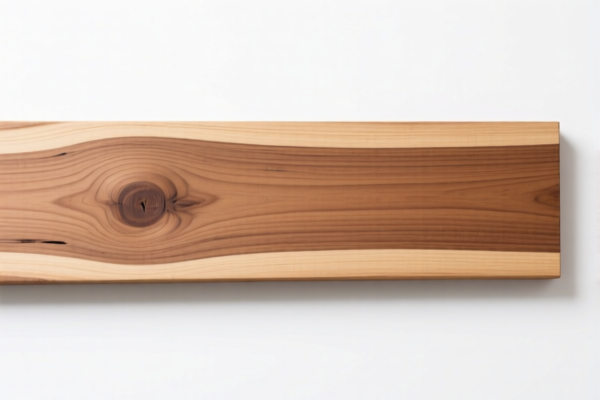
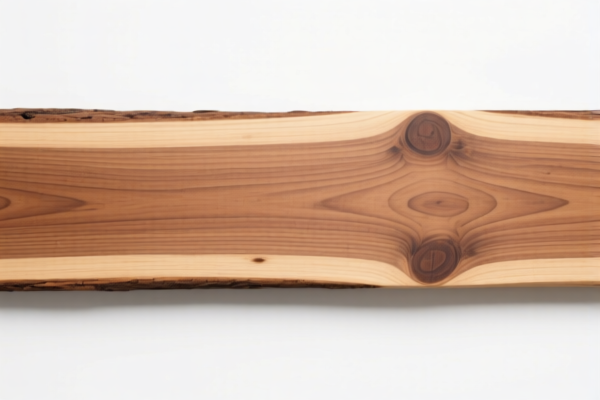
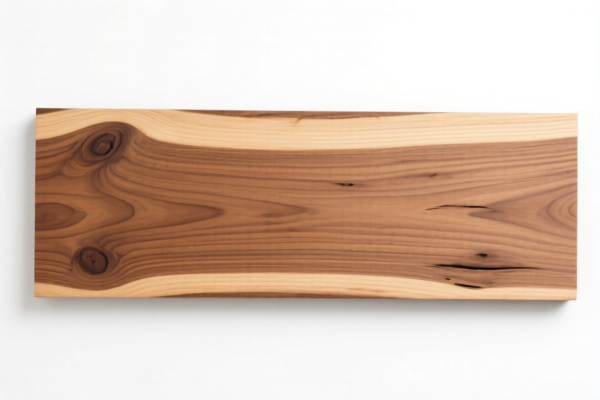
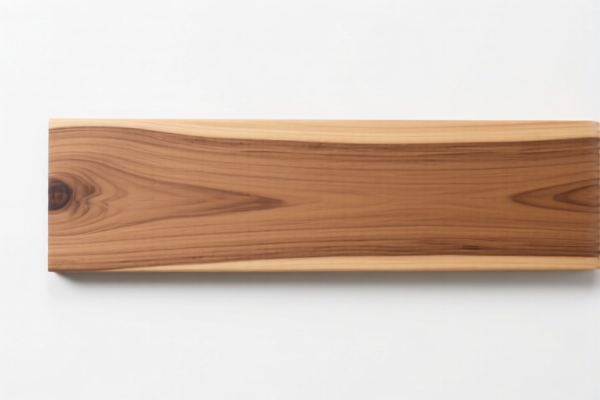
AI Analysis
🌲 Cedar Preservative Wood Board (Cedar Lumber & Plywood)
🌐 HS Code Reference & Customs Clearance Guide | 2026 Latest Tariff Analysis | Professional Transit Strategy
📌 I. Product Definition & Classification: Do You Really Understand "Cedar Wood Board"?
"Cedar Preservative Wood Board" is a broad commercial term that encompasses several distinct categories in international trade. In the context of US Customs and Border Protection (CBP) regulations, the classification depends heavily on the processing level (raw, processed, or assembled into a specific item like plywood) and the specific wood species (Western Red Cedar, Eastern White Cedar, etc.).
Internationally, it is generally divided into three main categories:
- Processed Lumber/Veneer: Sawn, dressed, or planed cedar wood.
- Plywood: Cedar veneer laminated together with adhesive.
- Parts of Furniture/Articles: Cedar wood used as components for furniture or other manufactured goods.
⚠️ Critical Distinction Point: - If it is plywood (veneers glued together) → It falls under Chapter 44 Section III, specifically HS 4412. - If it is sawn timber/lumber (raw or processed boards) → It falls under HS 4407. - If it is a component for furniture (e.g., a drawer side or shelf cut to size but not yet assembled) → It may fall under HS 9403.
📦 II. HS Code Classification Details (2026 Latest Tariff Authoritative Comparison)
Based on the provided data, here are the specific HS Codes applicable to Cedar Wood Products, their descriptions, and tax implications.
| HS Code | Product Description | Applicable Scenario | Processing State |
|---|---|---|---|
4412.31.26.10 |
Cedar Plywood - Face layer is cedar, form is plywood | Standard cedar plywood sheets for construction, cabinetry, or siding. | ✅ Plywood (Laminated Veneers) |
4412.34.26.00 |
Cedar Plywood - Material is cedar, form is plywood | Other cedar plywood varieties (may differ in thickness or specific veneer layering). | ✅ Plywood (Laminated Veneers) |
4407.19.00.77 |
Cedar Wood - Processed form is sliced or laminated | Sliced cedar veneer or basic laminated cedar sheets (not yet formed into final plywood structure per 4412). | ✅ Raw/Processed Timber |
4407.19.00.76 |
Cedar Wood - Rough or other categories, material is cedar wood | Rough-sawn cedar lumber, planks, or unprocessed cedar boards. | ✅ Raw/Processed Timber |
9403.91.00.80 |
Cedar Wood - Raw material or basic form as parts of wooden furniture | Cedar components specifically identified as parts for furniture (e.g., legs, backs, sides). | ✅ Furniture Parts |
🔍 Key Reminder: - All plywood products (even if made entirely of cedar) must be classified under Chapter 44, Heading 4412, NOT under general lumber (4407). - If the product is "preservative-treated," this does not change the HS Code classification but may require additional safety data sheets (SDS) or fumigation certificates for clearance. - "Preservative" is a treatment, not a material definition. The core material (Cedar) drives the HS Code.
💰 III. 2026 Latest Tariff Rate Details (Including Surtaxes, Policy Add-ons)
✅ Applicable Country: United States (US)
✅ Country of Origin: China (CN)
✅ Effective Date: From November 10, 2025 (including subsequent imports)
🎯 1. 4412.31.26.10 —— Cedar Plywood (Face Layer Cedar)
| Item | Content |
|---|---|
| Base Tariff Rate | 8.0% (ad valorem) |
| Section 301 Surcharge | +25% |
| Section 122 Surcharge | +10% |
| Total Tax Rate | 43.0% |
| Tax Calculation | CIF Value × 43.0% |
| De Minimis Eligibility | ❌ Not Eligible (deny_de_minimis) |
| Legal Basis Path | USITC:4412.31.26.10 → Section 301 Footnote → Section 122 |
📌 Explanation:
- "Base Tariff 8%" is the standard Most Favored Nation (MFN) rate for plywood. - "Section 301 Surtax 25%" is the additional tariff imposed on Chinese-origin goods under US Trade Law Section 301. - "Section 122 Surtax 10%" is an additional tariff imposed under Section 232/122 measures (often related to national security or trade deficits, applied to specific wood products). - Total 43% is a very high tariff. Precise classification is critical to avoid misdeclaration penalties.
🎯 2. 4412.34.26.00 —— Other Cedar Plywood
| Item | Content |
|---|---|
| Base Tariff Rate | 5.1% (ad valorem) |
| Section 301 Surcharge | +25% |
| Section 122 Surcharge | +10% |
| Total Tax Rate | 40.1% |
| Tax Calculation | CIF Value × 40.1% |
| De Minimis Eligibility | ❌ Not Eligible |
| Legal Basis Path | USITC:4412.34.26.00 → Section 301 Footnote → Section 122 |
📌 Note:
- This code applies to cedar plywood that does not fit the specific criteria of4412.31.26.10(e.g., different veneer thickness or layering structure). - The base rate is slightly lower (5.1% vs 8.0%), but the surcharges remain the same, resulting in a 40.1% total rate.
🎯 3. 4407.19.00.77 & 4407.19.00.76 —— Cedar Wood (Sliced/Processed or Rough)
| Item | Content |
|---|---|
| Base Tariff Rate | 0.0% (ad valorem) |
| Section 301 Surcharge | +25% |
| Section 122 Surcharge | +10% |
| Total Tax Rate | 35.0% |
| Tax Calculation | CIF Value × 35.0% |
| De Minimis Eligibility | ❌ Not Eligible |
| Legal Basis Path | USITC:4407.19.00.76/77 → Section 301 Footnote → Section 122 |
📌 Explanation:
- For raw or processed cedar lumber/veneer (non-plywood), the base tariff is often 0%. - However, the Section 301 (25%) and Section 122 (10%) surcharges still apply. - Total 35% is lower than the plywood rates (40.1% - 43.0%), making correct classification between "Plywood" and "Lumber/Veneer" financially significant.
🎯 4. 9403.91.00.80 —— Parts of Wooden Furniture
| Item | Content |
|---|---|
| Base Tariff Rate | 0.0% (ad valorem) |
| Section 301 Surcharge | +25% |
| Section 122 Surcharge | +10% |
| Total Tax Rate | 35.0% |
| Tax Calculation | CIF Value × 35.0% |
| De Minimis Eligibility | ❌ Not Eligible |
| Legal Basis Path | USITC:9403.91.00.80 → Section 301 Footnote → Section 122 |
📌 Note:
- If the cedar wood is clearly identified as parts for furniture (e.g., pre-cut drawer fronts, shelf units), it may qualify for this code. - Like the lumber codes, the base rate is 0%, leading to a 35% total rate.
🛠️ IV. Customs Clearance Practical Advice (Pitfall Avoidance Guide)
✅ 1. Document Checklist (None Can Be Missing)
| Document | Must Provide | Description |
|---|---|---|
| ✅ Commercial Invoice | ✔️ | Must clearly state "Cedar Preservative Wood Board" and specify if it is Plywood (4412) or Lumber (4407). |
| ✅ Packing List | ✔️ | Detail dimensions, weight, and number of pieces. |
| ✅ Product Specification Sheet | ✔️ | Include wood species (e.g., Western Red Cedar), treatment type (preservative), and processing method (sawn vs. plywood). |
| ✅ Fumigation Certificate | ✔️ | Required for wood products to prevent pest introduction. |
| ✅ Safety Data Sheet (SDS) | ✔️ | If the "preservative" contains chemicals (e.g., copper azole), SDS may be required by EPA/CBP. |
| ✅ Bill of Lading | ✔️ | Standard shipping document. |
✅ 2. Declaration Tips (Key Mnemonic)
🔥 "Plywood is 4412, Lumber is 4407. Treatments don't change the code!"
| Scenario | Correct Declaration | Incorrect Practice |
|---|---|---|
| Cedar Plywood Sheets | 4412.31.26.10 or 4412.34.26.00 |
Declaring as "Lumber" → 43%+ Tax |
| Cedar Planks/Boards | 4407.19.00.76 or 77 |
Declaring as "Plywood" → Higher Base Rate |
| Furniture Parts | 9403.91.00.80 |
Declaring as raw wood → Complex Inspection |
| Mixed Shipments | Split by HS Code | Bundling different types → Confiscation/Fine |
📌 Critical:
- "Preservative" is a treatment. Do not invent a new HS Code for it. The base material (Cedar) determines the code. - Ensure the description distinguishes between Veneer (thin slices for plywood) and Sawn Timber (thicker boards).
✅ 3. Special Situation Handling
| Situation | Handling Advice |
|---|---|
| Chemical Treatment | Provide SDS to prove compliance with EPA regulations. Some preservatives may trigger additional inspections. |
| Origin Labeling | Clearly mark "Made in China" on all packages. Mislabeling can lead to penalties under Section 301. |
| Partial Assembly | If cedar parts are loosely assembled, they may be considered "furniture parts" (9403) rather than raw materials. Provide assembly instructions. |
| Samples | Even for samples, full HS declaration and tax payment are required if over de minimis thresholds (usually $800, but wood products are often exempt from de minimis). |
🌍 V. Global Major Market Customs Comparison (2026 Latest)
| Country/Region | Recommended HS Code | Tariff (China Origin) | Certification Requirements | Notes |
|---|---|---|---|---|
| 🇺🇸 USA | 4412.31.26.10 / 4407.19.00.76 |
35% - 43% | Fumigation Certificate, SDS | High surcharges due to Section 301 & 122. |
| 🇨🇳 China | 4412 / 4407 |
0% - 5% | No additional surcharges | Standard import duties. |
| 🇪🇺 EU | 4407 / 4412 |
0% - 5% | FSC/PEFC (if claimed), Phytosanitary | No Section 301 equivalents, but strict phytosanitary rules. |
| 🇬🇧 UK | 4407 / 4412 |
0% - 5% | Fumigation, UKCA | Post-Brexit rules apply. |
| 🇨🇦 Canada | 4407 / 4412 |
0% - 5% | Phytosanitary | NAFTA/USMCA may not apply to wood products from China. |
📌 Conclusion:
- The US market imposes the highest additional tariffs on Chinese cedar wood products due to trade wars (Section 301) and national security measures (Section 122). - European markets are more lenient on tariffs but strict on phytosanitary (pest) controls. - Cost Implication: For US imports, the 35-43% total tax significantly impacts profit margins. Supplier pricing must reflect this.
📌 VI. Common Errors & Pitfall Guide (Blood-Lessons)
❌ Error 1: Declaring "Cedar Plywood" as "Cedar Lumber" (4407)
👉 Consequence: Base rate drops from 8% to 0%, BUT customs may reject it for misclassification, leading to seizure or heavy fines. Plywood has specific structural requirements.
❌ Error 2: Ignoring "Preservative" Treatment in Documentation
👉 Consequence: CBP may detain the shipment for lacking SDS or Fumigation Certificates. Delays can cost thousands in demurrage.
❌ Error 3: Assuming "De Minimis" ($800) Applies to Wood
👉 Consequence: Wood products are generally excluded from de minimis. Even small shipments are subject to full tariffs and detailed inspection.
❌ Error 4: Mixing Plywood and Lumber in One Shipment Without Splitting HS Codes
👉 Consequence: Customs will require reclassification, delaying clearance. Always separate by HS Code.
✅ Correct Practice:
"Western Red Cedar Plywood, 1/2 inch thick, 4x8 ft, Preservative Treated, for Outdoor Decking. Origin: China. HS Code: 4412.31.26.10."
🎯 VII. Conclusion: Professional Declaration, Save Time, Reduce Costs!
🎯 Remember the Mnemonic:
🔹 "Plywood is 4412, Lumber is 4407. Base rates vary, but surcharges stick (35-43%). Preservative is just treatment, don't let it confuse your code!"
🔹 "HS Code determines the tax, a difference of 3% can save thousands. Declare accurately, avoid delays!"
📌 Tip:
If your cedar wood products are originally sourced from Vietnam, Malaysia, or Canada, you may qualify for lower or zero tariffs under trade agreements (e.g., USMCA for Canada, or GSP alternatives).
Recommend applying for an Advance Ruling (Pre-Ruling) with CBP before shipment to confirm the correct HS Code and tax rate.
📣 Take Action Now:
📞 Contact a professional customs broker + Provide Product Photos + Apply for HS Code Pre-Ruling
🚀 Let your cedar wood products clear customs smoothly, efficiently, and profitably!
✨ Professional Clearance Starts with Accurate Classification!
💼 Every cent of your cost deserves precise calculation!
Customer Reviews
About HS Code Classification
The Harmonized System (HS) is an internationally standardized nomenclature developed by the World Customs Organization (WCO) to classify traded products. Over 200 countries use the HS system as the basis for customs tariffs, trade statistics, and import/export regulations.
Each HS code follows a hierarchical structure:
- Chapter (2 digits) — Broad category of goods (e.g., Chapter 84: Machinery and Mechanical Appliances)
- Heading (4 digits) — More specific grouping within the chapter
- Subheading (6 digits) — Internationally standardized breakdown, used by all WCO member countries
- National subdivisions (8-10 digits) — Country-specific extensions for further classification, such as US HTSUS 10-digit codes
Correct HS code classification is essential for smooth customs clearance, accurate duty payment, and compliance with trade regulations. Misclassification can lead to customs delays, overpayment of duties, or penalties.
When importing from CN to US, the applicable tariff rates may include:
- Most-Favored-Nation (MFN) rate — The standard duty rate applied to WTO members
- General rate — Applied to countries without trade agreements
- Trade remedy duties — Additional tariffs such as Section 301 (anti-dumping), Section 232 (national security), or countervailing duties
The information provided on this page is for reference purposes only. For official classification, please consult with your local customs authority or a licensed customs broker.