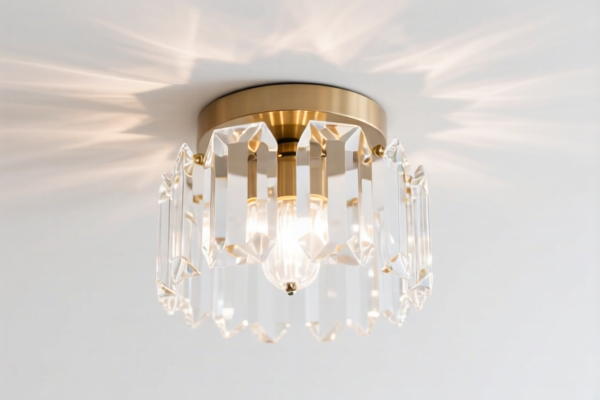
Ceiling Light
CN → US| HS Code | Tariff Rate | Origin | Destination | Doc |
|---|---|---|---|---|
| 8539520091 | 12.0% | CN | US | Official Doc |
| 9405118010 | 38.9% | CN | US | Official Doc |
| 9405116010 | 42.6% | CN | US | Official Doc |
| 8539520020 | 12.0% | CN | US | Official Doc |
| 8541410000 | 35.0% | CN | US | Official Doc |
Product Images



AI Analysis
💡 Ceiling Light (LED) – The Ultimate 2026 Clearance & HS Code Guide
🌐 Professional Customs Classification & Tax Strategy for LED Ceiling Lamps | 2026 Tariff Breakdown | Expert Clearance Tactics
📌 I. Product Definition & Classification: Is Your "Ceiling Light" Really Just a Lamp?
Ceiling lights, especially modern LED models, are ubiquitous in residential, commercial, and industrial lighting. However, in international trade, they are not a single category. Their HS Code and resulting tax liability depend entirely on technical composition and intended use.
Key Distinction:
- Integrated LED Lighting Units (Complete fixture with housing, driver, and LEDs) → Often classified under Chapter 94 (Furniture/Lighting) or Chapter 85 (Electrical Machinery).
- LED Components/Modules (e.g., bare LED arrays, drivers sold separately) → Often classified under Chapter 85 (Diodes/LEDs).
- Domestic vs. General Use → Critical for determining "Home Use" vs. "General" classification.
⚠️ Critical Warning:
- If the light is a complete fixture intended for ceiling/wall mounting with LED technology, it can fall under 8539.52 (Other lamps) OR 9405.11 (Household lighting).
- Misclassification can lead to tax penalties, cargo delays, or rejection at customs.
- The 25% Section 301 Tariff and 10% Section 122 Tariff (China-specific) dramatically alter the final cost for Chinese-origin products.
📦 II. HS Code Classification Matrix (2026 Data from Provided Source)
| HS Code | Product Description (Summary) | Key Feature | Total Tax Rate | Tax Detail Breakdown |
|---|---|---|---|---|
| 8539.52.00.91 | LED Ceiling Light (General/Other LED Lamps) | Matches LED source & ceiling form; Classified as "Other LED Lamps" | 12.0% | Base: 2.0% + Section 301: 0.0% + Sec 122: 10% |
| 9405.11.80.10 | LED Ceiling Light (Household/Residential) | Household LED lighting device; Fits ceiling lighting use | 38.9% | Base: 3.9% + Section 301: 25.0% + Sec 122: 10% |
| 9405.11.60.10 | LED Ceiling Light (Wall/Ceiling Fixture) | Wall/Ceiling form; LED source application | 42.6% | Base: 7.6% + Section 301: 25.0% + Sec 122: 10% |
| 8539.52.00.20 | LED Ceiling Light (LED Component Form) | Matches LED material & diode form characteristics | 12.0% | Base: 2.0% + Section 301: 0.0% + Sec 122: 10% |
| 8541.41.00.00 | LED Ceiling Light (LED Assembly/Device) | Classified as LED Application/Assembly (Diode unit) | 35.0% | Base: 0.0% + Section 301: 25.0% + Sec 122: 10% |
🔍 Insight:
- Lowest Tax (12%):8539.52.00.91&8539.52.00.20. These avoid the 25% Section 301 tariff (often due to "General" classification where Section 301 doesn't apply or specific exclusions).
- Highest Tax (42.6%):9405.11.60.10. This category treats the light as a domestic fixture subject to all three tariffs (Base + 301 + 122).
- The 25% "Section 301" Trap: Codes9405.11.80.10,9405.11.60.10, and8541.41.00.00all carry the 25% punitive tariff.
💰 III. 2026 Tax Rate Deep Dive (China Origin → USA Import)
✅ Origin: China (CN)
✅ Product: LED Ceiling Lights
✅ Active Tariffs: Base Duty + Section 301 (25%) + Section 122 (10%)
🎯 1. The "Sweet Spot" (Low Tax: 12.0%)
Codes: 8539.52.00.91 | 8539.52.00.20
| Item | Details |
|---|---|
| Base Duty | 2.0% |
| Section 301 (Trump Tariff) | 0.0% (Excluded from the 25% list for these subcategories) |
| Section 122 (Biden Tariff) | 10.0% (Specific "Buy American" or strategic addition) |
| Total | 12.0% |
| Strategy | Perfect for general commercial lighting or non-domestic specific fixtures. Avoid labeling as "Household" if possible to skip the 25%. |
🎯 2. The "Household Trap" (High Tax: 38.9% - 42.6%)
Codes: 9405.11.80.10 | 9405.11.60.10
| Item | Details |
|---|---|
| Base Duty | 3.9% - 7.6% |
| Section 301 (Trump Tariff) | +25.0% (Mandatory for these "Household/Residential" categories) |
| Section 122 | +10.0% |
| Total | 38.9% / 42.6% |
| Strategy | DO NOT classify as "Household" unless absolutely certain. If it's for a hotel, office, or warehouse, argue against "Household" status to save ~26% in taxes. |
🎯 3. The "Component/Assembly" Risk (35.0%)
Code: 8541.41.00.00
| Item | Details |
|---|---|
| Base Duty | 0.0% |
| Section 301 | +25.0% |
| Section 122 | +10.0% |
| Total | 35.0% |
| Strategy | Only use if the product is technically an LED assembly (e.g., the light source is the main product, not the fixture). |
🛠️ IV. Clearance Operational Strategy (Avoiding the Pitfalls)
✅ 1. Classification Strategy: "Don't Say 'Home'"
🔥 Golden Rule:
If your ceiling light is for commercial, industrial, or public spaces (Office, Hotel, School, Mall), DO NOT use the9405.11.xxcodes (Household). - Action: Use8539.52.00.91or8539.52.00.20. - Result: You save 25% in Section 301 tariffs. - Risk: If you claim "Household" but the end user is a corporate office, Customs will reclassify and charge the higher rate + penalties.
✅ 2. Documentation Checklist (Critical for Low Tax)
| Document | Requirement | Why It Matters |
|---|---|---|
| Technical Datasheet | Must specify "Commercial/Industrial Use" if applicable. | Proves it's not "Household" (9405.11). |
| Product Photos | Show the fixture clearly. If it looks like a generic "panel light" for offices, use 8539. |
Visual evidence for Customs officers. |
| End-User Statement | If shipping to a corporate buyer, provide a letter stating commercial application. | Supports the lower tax classification. |
| BOM (Bill of Materials) | Breakdown of components (Driver, LED, Housing). | Helps verify if it's a "Light" (8539) or "Assembly" (8541). |
✅ 3. Declaration Wording (Copy-Paste Friendly)
Wrong: "LED Ceiling Light for Home Use" → Result: 42.6% Tax.
Correct: "LED Panel Ceiling Light, Commercial Grade, for Office/Warehouse Use, Model [XYZ], Non-Residential." → Result: 12.0% Tax.
🚨 V. Common Errors & Consequences (Red Flags)
❌ Error 1: Auto-Assigning "Household"
- Mistake: Using 9405.11.80.10 for a hotel bathroom light.
- Consequence: 38.9% tax instead of 12%. Loss of 26.9% profit margin.
❌ Error 2: Misidentifying the "Form"
- Mistake: Calling a "LED Driver + Fixture" an "LED Assembly" (8541).
- Consequence: 35.0% tax + potential audit for "Component vs. Product" misclassification.
❌ Error 3: Ignoring Section 122
- Mistake: Calculating only Base + 301.
- Consequence: Underpaying by 10% (Section 122) → Audit + Interest.
🌍 VI. Global Market Comparison (US Focus)
| Market | Recommended HS Code | Total Tax (China Origin) | Strategy |
|---|---|---|---|
| 🇺🇸 USA | 8539.52.00.91 |
12.0% | Best Option: Avoid 9405 codes. |
| 🇪🇺 EU | Varies | 0% - 6% (No 301/122) | Focus on CE/RoHS, not 301 tariffs. |
| 🇨🇦 Canada | Varies | 0% - 5% | Free Trade Agreement (CUSMA) often applies. |
| 🇯🇵 Japan | Varies | 0% - 8% | Lower base rates, no punitive tariffs. |
💡 Key Takeaway: The USA is the only market in this list that applies the 25% Section 301 and 10% Section 122 tariffs. This makes accurate HS Code selection absolutely critical for US exports.
📌 VII. Final Verdict: Your Action Plan
- Audit Your Product: Is it strictly for residential use?
- YES → Prepare for 38.9% - 42.6% tax. Use
9405.11codes. - NO (Commercial/Industrial) → AVOID
9405.11. Use8539.52.00.91(12.0% Tax).
- YES → Prepare for 38.9% - 42.6% tax. Use
- Re-Label Packaging: Ensure all shipping labels and invoices do not contain the word "Home" or "Residential" if you intend to use the lower tax code.
- Consult a Broker: Before the first shipment, get a Binding Ruling from US Customs (CBP) for your specific product to lock in the 12.0% rate.
🎯 Summary:
"LED Ceiling Light" is a generic term.
- 8539.52.00.91 = 12.0% (Winning Strategy for Commercial)
- 9405.11.80.10 = 38.9% (Painful for Residential)
Don't let a generic name cost you 26% in taxes!
🚀 Optimize Your HS Code Today!
✨ Professional Customs, Smarter Shipping, Higher Margins!
💼 Your Tax Bill is a Design Choice – Make it the Right One.
Customer Reviews
About HS Code Classification
The Harmonized System (HS) is an internationally standardized nomenclature developed by the World Customs Organization (WCO) to classify traded products. Over 200 countries use the HS system as the basis for customs tariffs, trade statistics, and import/export regulations.
Each HS code follows a hierarchical structure:
- Chapter (2 digits) — Broad category of goods (e.g., Chapter 84: Machinery and Mechanical Appliances)
- Heading (4 digits) — More specific grouping within the chapter
- Subheading (6 digits) — Internationally standardized breakdown, used by all WCO member countries
- National subdivisions (8-10 digits) — Country-specific extensions for further classification, such as US HTSUS 10-digit codes
Correct HS code classification is essential for smooth customs clearance, accurate duty payment, and compliance with trade regulations. Misclassification can lead to customs delays, overpayment of duties, or penalties.
When importing from CN to US, the applicable tariff rates may include:
- Most-Favored-Nation (MFN) rate — The standard duty rate applied to WTO members
- General rate — Applied to countries without trade agreements
- Trade remedy duties — Additional tariffs such as Section 301 (anti-dumping), Section 232 (national security), or countervailing duties
The information provided on this page is for reference purposes only. For official classification, please consult with your local customs authority or a licensed customs broker.