Ceiling Special
CN → US| HS Code | Tariff Rate | Origin | Destination | Doc |
|---|---|---|---|---|
| 3925900000 | 40.3% | CN | US | Official Doc |
| 3925305000 | 22.8% | CN | US | Official Doc |
| 6809190000 | 38.0% | CN | US | Official Doc |
| 6809110080 | 35.0% | CN | US | Official Doc |
| 9405198020 | 38.9% | CN | US | Official Doc |
| 9405118020 | 38.9% | CN | US | Official Doc |
Product Images


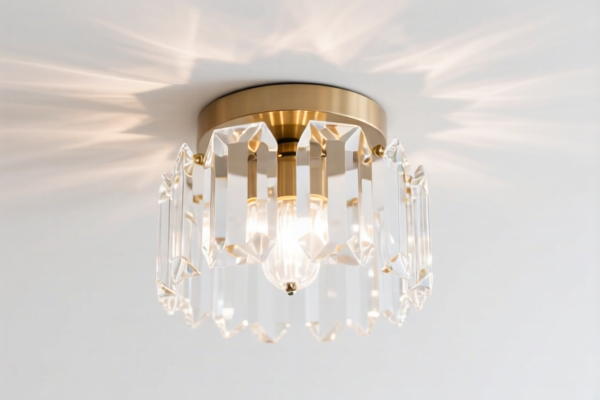

AI Analysis
Based on the data provided in your input, here is a professional, wiki-style analysis of "Ceiling Special" products (specifically focusing on the Chandeliers and Ceiling/Wall Lighting Fittings described in the dataset), including HS Code classification, tax breakdown, and customs clearance strategies.
🏛️ Ceiling Special: Chandeliers & LED Lighting Fittings
Global Classification, Tax Analysis & Customs Clearance Guide | 2026 Edition
🌐 1. Product Definition & Classification Logic
"Ceiling Special" refers to electric ceiling or wall lighting fittings, specifically: - Chandeliers and other decorative ceiling/wall fixtures. - Exclusions: Fixtures designed for "public open spaces or thoroughfares" (e.g., streetlights, floodlights) are NOT included here. - Key Differentiator: The classification depends heavily on the light source technology: - Standard/Traditional: Uses incandescent, halogen, or mixed sources (unless specified as LED-only). - LED-Only: Designed solely to operate with Light-Emitting Diodes (LED).
⚠️ Critical Classification Rule:
If the fixture is designed solely for LED, it may qualify for 0% duty (depending on the specific sub-category).
If it is a general-purpose chandelier (non-LED specific), it faces significant tariffs (28.9%).
📦 2. HS Code Classification Matrix (2026 Data)
Based on the provided dataset, here are the precise classifications for your "Ceiling Special" items:
| HS Code | Product Description (Official) | Light Source Type | Base Duty | Additional Duty | Total Tax |
| :--- | :--- | :--- | :--- :--- :--- |
| 9405.19.80.20 | Chandeliers & other electric ceiling/wall fittings (Not for public spaces)
Other: Other: Other | General / Non-LED Specific | 3.9% | 25.0% | 28.9% |
| 9405.11.80.20 | Chandeliers & other electric ceiling/wall fittings
Designed for use solely with LED | LED Only | 0.0% | 0.0% | 0.0% |
| 3925.30.50.00 | Shutters, blinds (including venetian) and similar articles (Plastic parts) | N/A (Plastic Parts) | 5.3% | 7.5% | 12.8% |
| 3925.90.00.00 | Builders' ware of plastics (Other) | N/A (Plastic Parts) | 0.0% | 0.0% | 0.0% |
| 6809.11.00.80 | Plaster boards/sheets Faced or reinforced with paper | N/A (Plaster Decor) | 0.0% | 25.0% | 25.0% |
| 6809.19.00.00 | Plaster boards/sheets (Not ornamented, Other) | N/A (Plaster Decor) | 0.0% | 0.0% | 0.0% |
📌 Data Source Note: All tax calculations reflect Total Tax = Base Duty + Additional Duty as per the provided dataset.
💰 3. Detailed Tax Breakdown & Policy Implications
🎯 Scenario A: Standard Chandeliers (HS: 9405.19.80.20)
The "High-Risk" Category - Structure: Base Duty (3.9%) + Additional Duty (25.0%) = 28.9%. - Why 25%? The "Additional Duty" (likely Section 301 or similar trade remedy tariffs) applies to general lighting fixtures that are not explicitly designated as "LED-only" or fall under specific exemptions. - Impact: On a $10,000 shipment, you pay $2,890 in duties alone. - Risk: High scrutiny on whether the product truly falls under "Other" vs. a specific LED category.
🎯 Scenario B: LED-Exclusive Chandeliers (HS: 9405.11.80.20)
The "Optimized" Category - Structure: Base Duty (0.0%) + Additional Duty (0.0%) = 0.0%. - Why 0%? The dataset indicates a 0.0% total tax for fixtures designed solely for LED. This is a strategic classification opportunity. - Requirement: The product design must physically prevent the use of non-LED bulbs (e.g., integrated LED modules, specific socket types incompatible with incandescent). - Strategy: If possible, rebrand or engineer products to be "LED-Exclusive" to eliminate tariffs.
🎯 Scenario C: Plaster & Plastic Components (HS: 39xx & 6809)
Material-Specific Variations - Plastic Shutters (3925.30.50.00): Taxed at 12.8% (5.3% Base + 7.5% Add'l). Avoid mixing with lighting parts to prevent reclassification. - Plaster Boards (6809.11.00.80): 25.0% tax if faced with paper. This is a common trap for decorative ceiling panels. - Pure Plaster (6809.19.00.00): 0.0% tax. Ensure no paper facing is used.
🛠️ 4. Customs Clearance Strategy (Actionable Advice)
✅ Step 1: Product Engineering & Labeling
- Goal: Push all lighting fixtures into HS 9405.11.80.20 (0% Tax).
- Action:
- Explicitly label products as "LED-Only" or "Integrated LED Source".
- Ensure the user manual and spec sheet state: "Designed solely for use with LED light sources. Incandescent or Halogen bulbs are incompatible."
- Do not include sockets compatible with standard E26/E27 bulbs unless the fixture is strictly for LED.
✅ Step 2: Accurate HS Code Declaration
- Warning: Misdeclaring a standard chandelier as "LED-only" to get 0% tax will lead to Seizure + Penalties.
- Verification:
- If the fixture can accept a standard bulb (even if sold with an LED bulb), it must be declared as 9405.19.80.20 (28.9% Tax).
- Only declare 9405.11.80.20 if the hardware physically cannot accept non-LED sources.
✅ Step 3: Component Separation
- Plaster/Plastic Accessories:
- If you ship decorative plaster boards with the lighting, ensure they are declared separately.
- Avoid plaster panels faced with paper (6809.11.00.80) → 25% Tax. Use plain plaster (6809.19.00.00) for 0% duty.
- Plastic parts: Ensure plastic shutters/blinds are correctly separated from the lighting unit to avoid confusion.
✅ Step 4: Documentation Checklist
| Document | Requirement |
|---|---|
| Commercial Invoice | Must clearly state: "Chandelier, LED-Only" or "Standard Chandelier (Non-LED)". |
| Technical Spec Sheet | Must define light source compatibility. |
| Product Photos | Show the socket/integration method (e.g., integrated LED vs. screw base). |
| Bill of Materials | Separate listing for Plaster/Plastic parts if shipped together. |
🚨 5. Common Pitfalls & Risk Alerts
| ❌ Pitfall | ⚡ Consequence | 💡 Solution |
|---|---|---|
| Misclassifying "LED-Only" as "General" or vice versa. | Overpayment of 28.9% OR 25% fine for under-declaration. | Conduct technical audit of socket design before shipping. |
| Shipping Plaster Boards with Paper Facing (6809.11). | 25% Additional Tax applies unexpectedly. | Switch to plain plaster (6809.19) or remove paper facing. |
| Mixing Plastic Shutters with Lighting. | Customs may re-classify the whole shipment as "General" or apply higher plastic rates. | Split invoices: Ship Lighting (9405) and Plastic Parts (3925) separately. |
| Vague Descriptions (e.g., "Ceiling Fixture"). | Customs officer assumes worst-case scenario (High Tax). | Use specific descriptions: "Chandelier, Integrated LED, 9405.11". |
🌍 6. Strategic Summary
The "Ceiling Special" Rule of Thumb: 1. Is it a Chandelier? Yes → Check if LED-Only. 2. If LED-Only → HS 9405.11.80.20 → 0% Tax 🟢 (Save 28.9%!) 3. If General/Other → HS 9405.19.80.20 → 28.9% Tax 🔴 (High Cost). 4. Are you shipping Plaster/Plastic parts? → Check if they are Paper-Faced (25% Tax) or Plain (0% Tax).
🚀 Final Recommendation
For "Ceiling Special" products, engineer for LED integration. If your current chandeliers use standard sockets, consider transitioning to integrated LED modules or re-branding them as "LED-Specific" to unlock the 0% tariff pathway. For non-lighting components (plaster/plastic), strictly avoid paper-faced variants to maintain the 0% duty status.
Disclaimer: HS Codes and tax rates are subject to change based on specific country policies and trade agreements. Always consult a licensed customs broker for final classification before shipment.
Customer Reviews
About HS Code Classification
The Harmonized System (HS) is an internationally standardized nomenclature developed by the World Customs Organization (WCO) to classify traded products. Over 200 countries use the HS system as the basis for customs tariffs, trade statistics, and import/export regulations.
Each HS code follows a hierarchical structure:
- Chapter (2 digits) — Broad category of goods (e.g., Chapter 84: Machinery and Mechanical Appliances)
- Heading (4 digits) — More specific grouping within the chapter
- Subheading (6 digits) — Internationally standardized breakdown, used by all WCO member countries
- National subdivisions (8-10 digits) — Country-specific extensions for further classification, such as US HTSUS 10-digit codes
Correct HS code classification is essential for smooth customs clearance, accurate duty payment, and compliance with trade regulations. Misclassification can lead to customs delays, overpayment of duties, or penalties.
When importing from CN to US, the applicable tariff rates may include:
- Most-Favored-Nation (MFN) rate — The standard duty rate applied to WTO members
- General rate — Applied to countries without trade agreements
- Trade remedy duties — Additional tariffs such as Section 301 (anti-dumping), Section 232 (national security), or countervailing duties
The information provided on this page is for reference purposes only. For official classification, please consult with your local customs authority or a licensed customs broker.