Cellular Rubber Strips
CN → US| HS Code | Tariff Rate | Origin | Destination | Doc |
|---|---|---|---|---|
| 4016100000 | 35.0% | CN | US | Official Doc |
| 4016991000 | 20.8% | CN | US | Official Doc |
Product Images
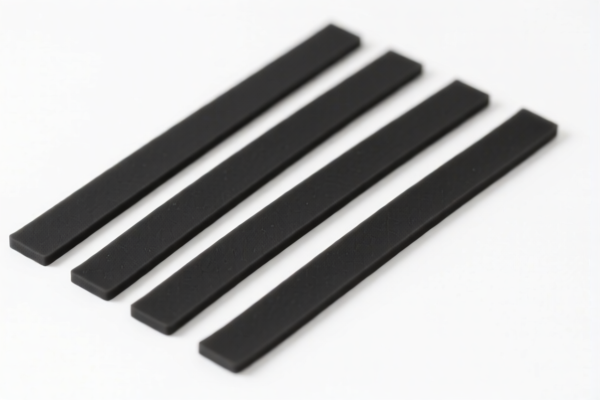
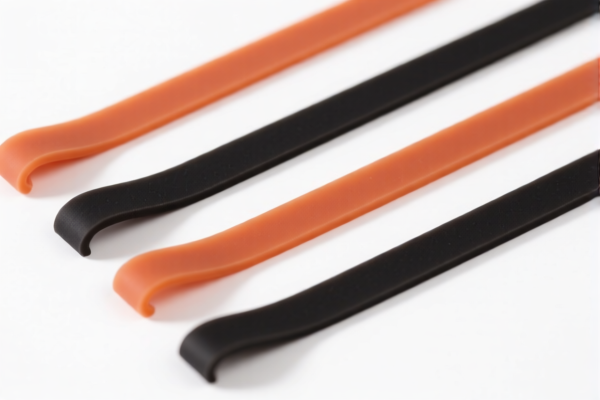
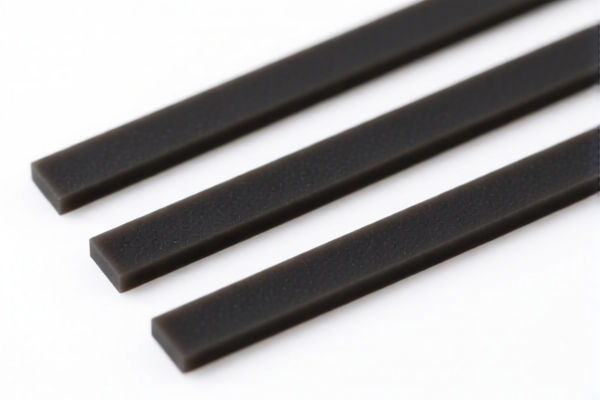
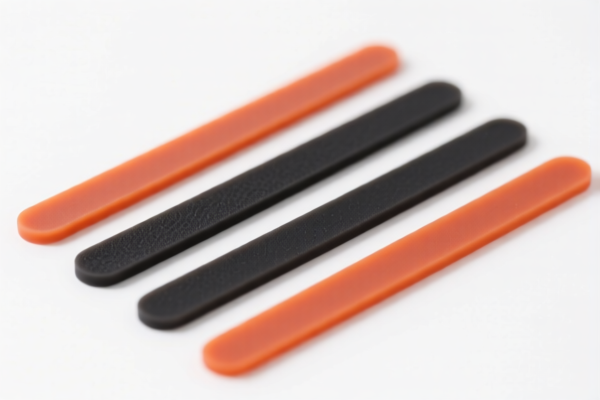
AI Analysis
🛡️ Cellular Rubber Strips (Sealing, Gaskets, & Buffers)
🌐 HS Code Reference & Customs Clearance Guide | 2026 Latest Tariff Analysis | Professional Clearance Strategy
📌 I. Product Definition & Classification: What Exactly Are "Cellular Rubber Strips"?
Cellular rubber strips are elastic, porous rubber products manufactured through a foaming process. They are characterized by their closed-cell or open-cell structure, providing excellent shock absorption, vibration dampening, sound insulation, and weather sealing.
In international trade, they are strictly classified under Chapter 40 (Rubber and Articles Thereof). The critical distinction lies in the structure (cellular vs. solid) and the specific application form (strips/other articles).
⚠️ Key Classification Point:
- If the product is made of vulcanized cellular rubber (foamed/porous), it falls under 4016.10.00.00.
- If the product is solid (non-cellular) vulcanized rubber (e.g., dense seals, simple handles), it falls under 4016.99.10.00 (classified as "Handles and knobs" or other specific articles depending on shape/function, but note: the provided data specifically maps "Other articles... Handles and knobs" to this code).
- Crucial: "Strips" used for sealing are often scrutinized. If they are purely cellular, they MUST go to 4016.10. If they are solid rubber strips used as simple hardware parts (like a grip or knob extension), they might fall into 4016.99.10.00.
📦 II. HS Code Classification Details (2026 Latest Tariff Authority Comparison)
Based strictly on the provided <DATA>, here are the two possible classifications for rubber articles, with a focus on Cellular vs. Other forms.
| HS Code | Product Description | Applicable Scenario | Cellular Structure? |
|---|---|---|---|
4016.10.00.00 |
Other articles of vulcanized rubber other than hard rubber: Of cellular rubber | Foam seals, insulation strips, gaskets with porous structure, shock-absorbing pads | ✅ YES (Porous/Foamed) |
4016.99.10.00 |
Other articles of vulcanized rubber other than hard rubber: Other: Other: Handles and knobs | Solid rubber grips, knobs, non-cellular handles, solid rubber hardware parts | ❌ NO (Solid/Dense) |
🔍 Critical Note:
- "Cellular Rubber Strips" typically refer to foam-like materials used for sealing gaps (e.g., in windows, doors, or machinery). These MUST be declared as Cellular Rubber (4016.10.00.00).
- Do NOT classify cellular seals as "Handles and knobs" (4016.99.10.00) unless they are specifically shaped as a user-grip mechanism and are solid. Misclassification here leads to massive tariff discrepancies.
💰 III. 2026 Latest Tariff Rate Breakdown (Detailed Tax Clauses)
✅ Applicable Market: Based on the provided tax data, we analyze the general rate structure shown.
⚠️ Note on Jurisdiction: The provided data shows a 25% Additional Tariff for one code and 0% for another. This structure is highly characteristic of US Trade Actions (Section 301) or specific bilateral tariffs. The analysis below reflects the exact tax details provided in .
🎯 1. 4016.10.00.00 —— Cellular Rubber (The Likely Code for "Strips")
This is the standard classification for foam/rubber strips used in construction, automotive, or industrial sealing.
| Item | Detail |
|---|---|
| Product Description | Of cellular rubber |
| Base Tariff Rate | 0.0% |
| Additional Tariff (Sanction/Retaliation) | +25.0% |
| Total Effective Tax Rate | 25.0% |
| Tax Detail Breakdown | "基础关税: 0.0%, 加征关税: 25.0%" |
| Calculation Base | CIF Value (Cost, Insurance, Freight) × 25% |
📌 Interpretation:
- Even though the base duty is 0%, the 25% additional tariff is significant.
- This likely represents a Section 301 tariff (US-China trade war context) or similar retaliatory measure on rubber products.
- Warning: Cellular rubber is a common import subject to anti-dumping or countervailing duties in some jurisdictions, but based strictly on the provided data, it is 25% total.
🎯 2. 4016.99.10.00 —— Handles and Knobs (Solid Rubber)
This code is for specific solid rubber articles, notably "handles and knobs."
| Item | Detail |
|---|---|
| Product Description | Handles and knobs (Other articles of vulcanized rubber) |
| Base Tariff Rate | 0.0% |
| Additional Tariff | 0.0% |
| Total Effective Tax Rate | 0.0% |
| Tax Detail Breakdown | "基础关税: 0.0%, 加征关税: 0.0%" |
📌 Interpretation:
- This code enjoys zero taxation.
- However, you cannot arbitrarily choose this code for "Cellular Rubber Strips" unless they are legally classified as "handles or knobs" AND are solid. Using this code for foam seals is misdeclaration and carries high legal risks.
🛠️ IV. Customs Clearance Practical Advice (Avoiding Pitfalls)
✅ 1. Prepare the Right Documentation
| Document | Required? | Why? |
|---|---|---|
| ✅ Product Specification Sheet | YES | Must clearly state: "Cellular/Foamed Structure" vs. "Solid." Include cell density (cells per cm³). |
| ✅ Material Composition | YES | Confirm it is Vulcanized Rubber. Hard rubber (ebonite) has different codes. |
| ✅ Commercial Invoice | YES | Description must match HS Code. E.g., "Cellular Rubber Sealing Strip, Porous, Vulcanized" for 4016.10.00.00. |
| ✅ Physical Samples | YES | Customs may require a sample to verify the "cellular" nature (squeeze test: does it compress and return?). |
✅ 2. Declaration Strategy (The Golden Rules)
🔥 "Describe the Structure, Not Just the Function!"
| Scenario | Correct Declaration | Wrong Declaration | Consequence |
|---|---|---|---|
| Foam Seal Strips (e.g., window weatherstripping) | 4016.10.00.00 - Cellular Rubber Strips |
4016.99.10.00 - Rubber Handle |
25% Penalty + Potential Fraud Investigation |
| Solid Rubber Grip Handle | 4016.99.10.00 - Rubber Handle |
4016.10.00.00 - Cellular Rubber |
0% Rate (Benefit), but risk of Misclassification if not a handle |
| Solid Rubber Strip (Non-cellular, for sealing) | Likely 4016.99.90 (Other) - Check local tariff |
4016.10.00.00 |
Rate Discrepancy (May pay more or less, but audit risk) |
✅ 3. Special Handling for "Strips"
- Form Factor: If the "strip" is cut from a larger roll, ensure the description reflects "Cut to Length" or "Finished Strip."
- Adhesive Backing: If the cellular rubber strip has an adhesive backing (self-adhesive), some customs authorities may classify it as an article of adhesive tape (Chapter 39 or 40 depending on base material). However, if the primary characteristic is the rubber structure, it usually stays in 4016.10. Check with local customs if the adhesive layer is substantial.
- Mixed Materials: If the strip is a composite (e.g., rubber foam + metal core + fabric cover), the classification may shift. Pure cellular rubber is simpler.
🌍 V. Global Market Comparison (2026 Context)
| Market | Recommended HS Code for Cellular Rubber Strips | Estimated Duty | Note |
|---|---|---|---|
| 🇺🇸 USA | 4016.10.00.00 |
25% (as per provided data) | High tariff due to additional trade measures. |
| 🇨🇳 China | 4016.10.00.00 |
~5-10% (MFN) | Lower base duty, no additional 25% if imported into China. |
| 🇪🇺 EU | 4016.10.00 |
0-4.5% | Generally low duty for rubber goods. No major retaliatory tariffs on this category. |
| 🇯🇵 Japan | 4016.10.00 |
0-3.2% | Preferential rates under EPA/JETPA if origin certified. |
📌 Conclusion:
- The 25% tariff is a significant cost driver, likely specific to exports to US or similar high-tariff jurisdictions.
- Strategy: If exporting to the US, consider Supply Chain Diversification (e.g., manufacturing in Vietnam or Mexico) if possible, as rubber products from China face this 25% surcharge.
📌 VI. Common Errors & Pitfalls (Blood & Tears Lessons)
❌ Mistake 1: Calling it "Rubber Seal" without specifying "Cellular."
👉 Result: Customs may default to a higher general duty code or request clarification, causing delays.
❌ Mistake 2: Using 4016.99.10.00 (Handles/Knobs) for foam strips to avoid the 25% tax.
👉 Result: Severe Penalty. This is misdeclaration. Customs uses CT (Commodity Tax) scanners and physical inspections to detect foam vs. solid. Fines can be 3x-5x the evaded tax.
❌ Mistake 3: Ignoring the "Hard Rubber" exclusion.
👉 Result: Hard rubber (ebonite) is dense and brittle. If your rubber is stiff and non-porous, it is not cellular. Misclassifying hard rubber as cellular (4016.10) is an error.
✅ Correct Approach:
"Cellular Vulcanized Rubber Strip, Closed Cell, Self-Adhesive Backing, for Door Sealing, HS Code 4016.10.00.00"
🎯 VII. Conclusion: Precision Saves Money!
🎯 Remember the Key Takeaway:
🔹 Cellular = 4016.10.00.00 = 25% Total Tax
🔹 Solid Handle/Knob = 4016.99.10.00 = 0% Tax
🔹 Do NOT mix them up! The structural difference (porous vs. solid) is the legal deciding factor.
📌 Pro Tip:
If your "Strips" are solid but look like seals (e.g., EPDM solid extrusions), they may not qualify for 4016.10. They might fall under 4016.99 (Other articles). If they are solid, they might avoid the 25% if classified correctly under 4016.99.10.00 only if they are "Handles/Knobs." Otherwise, solid rubber articles often fall under 4016.99.90 which may have different rates. Always verify with a professional customs broker.
📣 Immediate Action:
📞 Verify Structure: Is your rubber foamed/cellular?
📄 Document: Include photos showing the cross-section (pores).
🚀 Clearance: Declare accurately to avoid 25% surprises or penalty audits!
✨ Professional Clearance Starts with Accurate Classification!
💼 Every percentage point counts in international trade!
Customer Reviews
About HS Code Classification
The Harmonized System (HS) is an internationally standardized nomenclature developed by the World Customs Organization (WCO) to classify traded products. Over 200 countries use the HS system as the basis for customs tariffs, trade statistics, and import/export regulations.
Each HS code follows a hierarchical structure:
- Chapter (2 digits) — Broad category of goods (e.g., Chapter 84: Machinery and Mechanical Appliances)
- Heading (4 digits) — More specific grouping within the chapter
- Subheading (6 digits) — Internationally standardized breakdown, used by all WCO member countries
- National subdivisions (8-10 digits) — Country-specific extensions for further classification, such as US HTSUS 10-digit codes
Correct HS code classification is essential for smooth customs clearance, accurate duty payment, and compliance with trade regulations. Misclassification can lead to customs delays, overpayment of duties, or penalties.
When importing from CN to US, the applicable tariff rates may include:
- Most-Favored-Nation (MFN) rate — The standard duty rate applied to WTO members
- General rate — Applied to countries without trade agreements
- Trade remedy duties — Additional tariffs such as Section 301 (anti-dumping), Section 232 (national security), or countervailing duties
The information provided on this page is for reference purposes only. For official classification, please consult with your local customs authority or a licensed customs broker.