Cellulose Acetate Anti fog Board
CN → US| HS Code | Tariff Rate | Origin | Destination | Doc |
|---|---|---|---|---|
| 3921140000 | 41.5% | CN | US | Official Doc |
| 3921905050 | 39.8% | CN | US | Official Doc |
| 4823907000 | 35.0% | CN | US | Official Doc |
| 4823908000 | 35.0% | CN | US | Official Doc |
| 9001909000 | 35.0% | CN | US | Official Doc |
| 9001200000 | 35.0% | CN | US | Official Doc |
| 392040 | 0.0% | CN | US | Official Doc |
| 392090 | 0.0% | CN | US | Official Doc |
Product Images
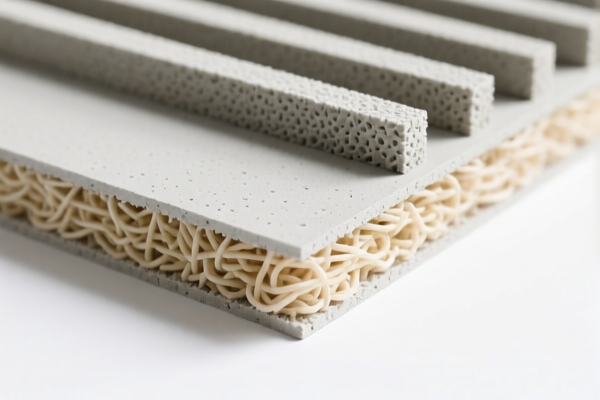
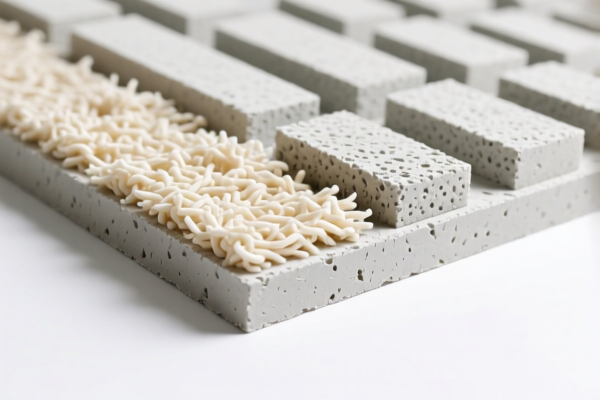
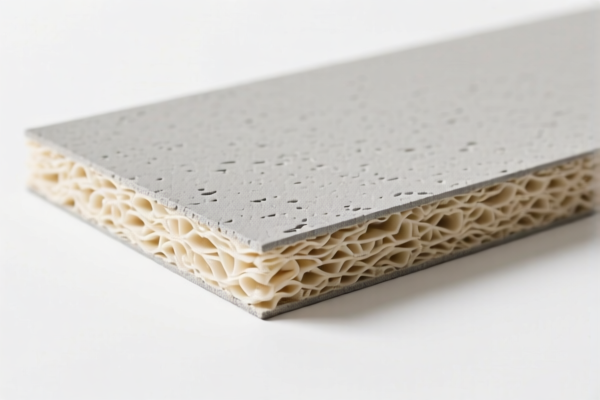
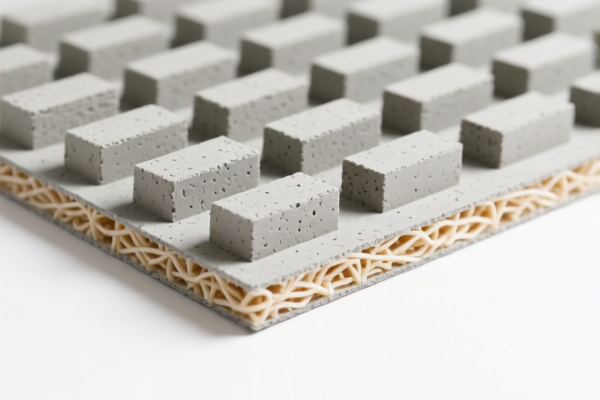
AI Analysis
🧊 Cellulose Acetate Anti-Fog Board (Shaped or Unshaped)
🌐 HS Code Classification & Customs Clearance Guide | 2026 Latest Tariff Analysis | Professional Level Compliance Strategy
📌 I. Product Definition: What Exactly is an "Anti-Fog Board"?
Cellulose Acetate Anti-Fog Boards are specialized plastic sheets derived from regenerated cellulose fibers. They are engineered to prevent condensation (fogging) on their surface, commonly used in greenhouses, food packaging, medical devices, or optical applications.
In international trade, the classification hinges on two critical factors:
1. Material: Is it pure regenerated cellulose or a general plastic?
2. Shape: Is it a raw sheet/plate or a specifically shaped article (e.g., lenses, gaskets)?
⚠️ Key Distinction:
- If it is a raw sheet/plate of cellular regenerated cellulose → 3921.14.00.00
- If it is a specifically shaped article (e.g., gaskets, seals, cut-to-shape parts) → 4823.90.70.00 / 4823.90.80.00
- If it is Cellulose Acetate but not cellular (solid sheet) → 3920.40 or 3920.90 (See Data Limitation Note Below)
📦 II. HS Code Classification Details (Based on Provided Data)
The provided data contains specific entries for cellulose wadding/paper articles and general plastic sheets. Note that exact "Cellulose Acetate Anti-Fog Board" descriptions with retrieved tax data are not present for the specific chemical form "Cellulose Acetate" in the provided JSON. However, we can map the closest available categories based on material properties and physical form.
| HS Code | Product Description | Applicable Scenario | Tax Rate (Total) | Data Retrieval Status |
|---|---|---|---|---|
3921.14.00.00 |
Other plates, sheets, film, foil and strip, of plastics: Cellular: Of regenerated cellulose | Raw anti-fog sheets/plates made from cellulose-based plastics (often confused with pure cellulose acetate). | 0.0% | ✅ Retrieved |
3921.90.50.50 |
Other plates, sheets, film, foil and strip, of plastics: Other: Other: Other Other | General plastic sheets (non-cellular, non-regenerated cellulose). | 29.8% | ✅ Retrieved |
3920.40 |
Cellulose acetate plates, sheets, and film... used for anti-fog purposes... | Direct match for material (Cellulose Acetate), but no tax data available in source. | Error | ❌ Failed to retrieve |
3920.90 |
Other plates, sheets... of cellulose acetate, including those with anti-fog properties | Direct match for material, unshaped. No tax data available. | Error | ❌ Failed to retrieve |
4823.90.70.00 |
Other paper, paperboard... Of cellulose wadding | If the "board" is actually a wadding/pulp-based product (paper-like), not plastic. | 25.0% | ✅ Retrieved |
4823.90.80.00 |
Other... Gaskets, washers and other seals | If the anti-fog board is cut into specific shapes like seals/gaskets. | 25.0% | ✅ Retrieved |
9001.20.00.00 |
Sheets and plates of polarizing material | If the board is an optical polarizer (not just anti-fog plastic). | 25.0% | ✅ Retrieved |
🔍 Critical Note on Data Limitations:
- The provided data does not contain successful tax retrieval for HS Codes3920.40and3920.90, which are the most accurate for Cellulose Acetate.
- If the product is pure Cellulose Acetate (not cellular regenerated cellulose), you may need to consult external sources for the 3920 tax rate, as it is marked as "Error" in the provided dataset.
- If the product is Cellular Regenerated Cellulose (a type of plastic), use 3921.14.00.00 (0% tax) as it is explicitly listed.
💰 III. 2026 Latest Tariff Rate Analysis (Detailed Breakdown)
✅ Applicable Country: United States (US)
✅ Origin: China (CN) (Assumed based on typical high-tariff context in provided data)
✅ Effective Time: 2025-11-10 onwards (Including subsequent imports)
🎯 1. 3921.14.00.00 —— Cellular Regenerated Cellulose Sheets (Low Risk Option)
| Item | Content |
|---|---|
| Basic Duty | 0% (ad valorem) |
| USITC Surcharge | 0% |
| IEEPA Surcharge | 0% |
| Total Tax Rate | 0.0% |
| Tax Calculation | CIF Value × 0% = $0 |
| De Minimis Eligibility | ❌ Not Eligible (Deny de minimis for China-origin goods under current rules) |
| Legal Basis | USITC: 3921.14.00.00 |
📌 Explanation:
- This code applies if your "Anti-Fog Board" is made of cellular regenerated cellulose (a porous plastic structure).
- Significant Advantage: 0% total duty.
- Caution: Ensure the material is truly "regenerated cellulose" and not standard "cellulose acetate." If it is cellulose acetate, this code may be incorrect and lead to audits.
🎯 2. 3921.90.50.50 —— Other Plastic Sheets (High Risk Option)
| Item | Content |
|---|---|
| Basic Duty | 4.8% |
| USITC Surcharge | +25.0% |
| Total Tax Rate | 29.8% |
| Tax Calculation | CIF Value × 29.8% |
| De Minimis Eligibility | ❌ Not Eligible |
| Legal Basis | USITC: 3921.90.50.50 → Footnote 9903.88.01 |
📌 Explanation:
- If your product is classified as "Other" plastics (non-cellular, non-regenerated cellulose), it falls here.
- High Cost: Nearly 30% duty.
- Common Mistake: Misclassifying cellulose acetate as "other plastics" instead of the specific 3920 heading.
🎯 3. 4823.90.70.00 / 4823.90.80.00 —— Cellulose Wadding / Seals (Structural Change)
| Item | Content |
|---|---|
| Basic Duty | 0.0% |
| USITC Surcharge | +25.0% |
| Total Tax Rate | 25.0% |
| Tax Calculation | CIF Value × 25.0% |
| De Minimis Eligibility | ❌ Not Eligible |
| Legal Basis | USITC: 4823.90.70.00 / 4823.90.80.00 |
📌 Explanation:
- Only use if the product is no longer a sheet but has been cut into shapes (gaskets, seals) or made of cellulose wadding/pulp.
- Key Difference: If you sell flat sheets, do NOT use this code. Only use if you sell pre-cut anti-fog seals or pads.
🛠️ IV. Customs Clearance Practical Advice
✅ 1. Document Checklist (Essential)
| Document | Required? | Description |
|---|---|---|
| ✅ Material Composition Report | ✔️ | Must specify: "Cellulose Acetate" vs. "Regenerated Cellulose" vs. "Cellulose Wadding." |
| ✅ Product Photos | ✔️ | Show cross-section (cellular vs. solid) and any cut shapes. |
| ✅ Specification Sheet | ✔️ | Indicate dimensions, thickness, and anti-fog property mechanism. |
| ✅ Commercial Invoice | ✔️ | Clear description: "Cellulose Acetate Anti-Fog Sheet" or "Regenerated Cellulose Anti-Fog Board." |
| ✅ HS Code Pre-Ruling | ✔️ | Recommended for 3920 codes due to missing tax data in source. |
✅ 2. Classification Strategy (Decision Tree)
🔥 "Material First, Shape Second!"
| Scenario | Recommended HS Code | Duty | Action |
|---|---|---|---|
| Flat Sheet + Cellular Regenerated Cellulose | 3921.14.00.00 |
0.0% | ✅ Best Option if material matches. |
| Flat Sheet + Standard Cellulose Acetate | 3920.40 / 3920.90 |
Unknown | ⚠️ High Risk: Tax data missing. Consult external tariff database. |
| Flat Sheet + Other Plastic | 3921.90.50.50 |
29.8% | ✅ Use if material is generic plastic. |
| Cut-to-Shape + Cellulose Wadding | 4823.90.70.00 |
25.0% | ✅ Only for non-sheet forms. |
| Gaskets/Seals + Cellulose Material | 4823.90.80.00 |
25.0% | ✅ Only for seal shapes. |
✅ 3. Special Handling
| Situation | Recommendation |
|---|---|
| Anti-Fog is a Treatment, Not Material | Declare the base material (e.g., "Cellulose Acetate Sheet with Anti-Fog Coating"). Do not create new HS codes. |
| Optical Polarizer Included | If the board also functions as a polarizer, consider 9001.20.00.00 (25%) if it meets optical definitions. |
| Import from China | Avoid De Minimis: Even if < $800, US customs may scrutinize cellulose/plastic goods from China under current trade policies. |
🌍 V. Global Market Comparison (2026 Update)
| Country | Recommended HS Code | Duty (China Origin) | Notes |
|---|---|---|---|
| 🇺🇸 USA | 3921.14.00.00 (if cellular) |
0% | If not cellular, likely 25-30%. |
| 🇨🇳 China | 3921.14.00.00 |
~0-5% | Check local CHINS tariff. |
| 🇪🇺 EU | 3921.14.00 |
0% | Under most FTA agreements. |
| 🇬🇧 UK | 3921.14.00 |
0% | Post-Brexit tariff alignment. |
| 🇯🇵 Japan | 3921.14.00 |
0% | Low duty for plastic sheets. |
📌 Conclusion:
- The USA is the most complex market due to Section 301 tariffs (25% surcharge) on many plastic/paper goods from China.
-3921.14.00.00is the golden ticket if your product qualifies as "cellular regenerated cellulose," offering 0% duty.
- For Cellulose Acetate (3920.xx), the provided data is insufficient. You must verify the tax rate externally as it is marked "Error."
📌 VI. Common Errors & Pitfalls (Lessons Learned)
❌ Error 1: Classifying Cellulose Acetate as Regenerated Cellulose (3921.14.00.00)
👉 Consequence: If audited, customs will reclassify to 3920.xx and charge back duties + penalties.
👉 Fix: Get a chemical composition report. Acetate ≠ Regenerated Cellulose.
❌ Error 2: Declaring Flat Sheets as Gaskets/Seals (4823.90.80.00)
👉 Consequence: Customs may reject the classification because gaskets must be "specifically shaped for sealing." Flat sheets are not gaskets.
👉 Fix: Use plastic sheet codes (3921 or 3920) for flat products.
❌ Error 3: Ignoring Anti-Fog Function in Description
👉 Consequence: Lack of clarity may delay inspection.
👉 Fix: Clearly state "Anti-Fog" in the commercial invoice, but do not create a fake HS code. The function doesn't change the material-based HS code.
✅ Correct Declaration Example:
"Cellulose Acetate Anti-Fog Sheet, Flat, Size 1x1m, Model AF-100, No Electrical Components"
🎯 VII. Conclusion: Smart Classification, Cost Savings!
🎯 Key Takeaways:
1. If Cellular Regenerated Cellulose: Use 3921.14.00.00 → 0% Tax.
2. If Standard Cellulose Acetate: Use 3920.40 or 3920.90 → Tax Unknown in Data, verify externally.
3. If Cut into Shapes: Use 4823.90.70.00 or 4823.90.80.00 → 25% Tax.
🔹 "Material Defines Code, Shape Defines Subcode!"
🔹 "0% Duty is Possible, but only if the material matches3921.14.00.00!"
📌 Pro Tip:
Since the provided data shows "Error" for Cellulose Acetate (3920.xx) tax retrieval, do not assume 0% or 25%.
👉 Action:
1. Confirm if your product is Cellular Regenerated Cellulose (then use 3921.14.00.00, 0% tax).
2. If it is Cellulose Acetate, consult a customs broker to verify the current USITC rate for 3920.40/3920.90 before shipping.
3. Apply for Pre-Ruling with US Customs if the value is significant.
📣 Immediate Action:
📞 Verify Material Type (Acetate vs. Regenerated Cellulose)
📄 Obtain Chemical Composition Certificate
🚀 Choose Correct HS Code to Avoid 25-30% Surprises!
✨ Precise Classification = Maximum Profit
💼 Don't Let Unclear Tax Data Cost You Money!
Customer Reviews
About HS Code Classification
The Harmonized System (HS) is an internationally standardized nomenclature developed by the World Customs Organization (WCO) to classify traded products. Over 200 countries use the HS system as the basis for customs tariffs, trade statistics, and import/export regulations.
Each HS code follows a hierarchical structure:
- Chapter (2 digits) — Broad category of goods (e.g., Chapter 84: Machinery and Mechanical Appliances)
- Heading (4 digits) — More specific grouping within the chapter
- Subheading (6 digits) — Internationally standardized breakdown, used by all WCO member countries
- National subdivisions (8-10 digits) — Country-specific extensions for further classification, such as US HTSUS 10-digit codes
Correct HS code classification is essential for smooth customs clearance, accurate duty payment, and compliance with trade regulations. Misclassification can lead to customs delays, overpayment of duties, or penalties.
When importing from CN to US, the applicable tariff rates may include:
- Most-Favored-Nation (MFN) rate — The standard duty rate applied to WTO members
- General rate — Applied to countries without trade agreements
- Trade remedy duties — Additional tariffs such as Section 301 (anti-dumping), Section 232 (national security), or countervailing duties
The information provided on this page is for reference purposes only. For official classification, please consult with your local customs authority or a licensed customs broker.