Cellulose Acetate Biodegradable Board
CN → US| HS Code | Tariff Rate | Origin | Destination | Doc |
|---|---|---|---|---|
| 3912120000 | 40.6% | CN | US | Official Doc |
| 3920730000 | 37.9% | CN | US | Official Doc |
| 3920795000 | 38.7% | CN | US | Official Doc |
| 3921190090 | 41.5% | CN | US | Official Doc |
| 3921905050 | 39.8% | CN | US | Official Doc |
Product Images
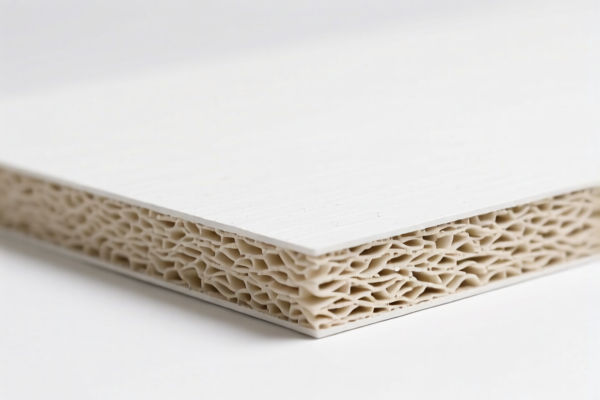
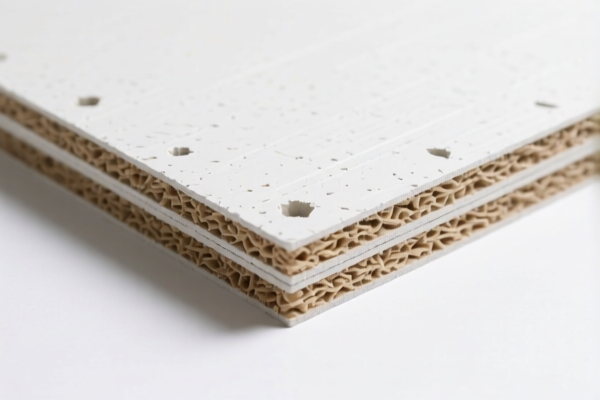
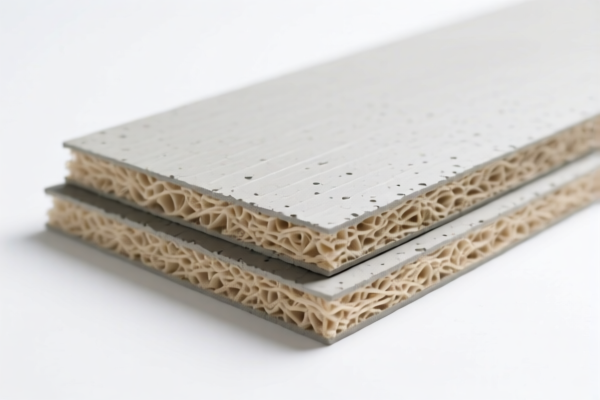
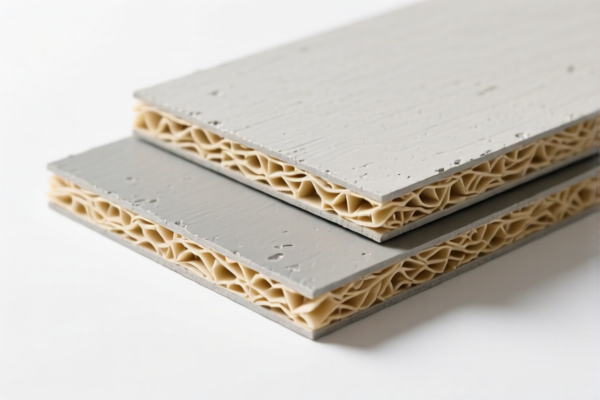
AI Analysis
🌿 Cellulose Acetate Biodegradable Board
🌐 HS Code Reference & Customs Clearance Guide | 2026 Tariff Analysis for Bio-Plastics | Professional Entry Strategy
📌 Part I: Product Definition & Classification – Is It a Chemical Derivative or a Finished Plastic Plate?
Cellulose Acetate Biodegradable Board is a versatile material derived from natural cellulose (typically wood pulp or cotton linter). In international trade, it straddles the line between chemical derivatives and finished plastic articles. The core challenge lies in distinguishing whether the board is classified as a primary chemical form (Chapter 39, Part 1) or a manufactured plastic plate/leaf (Chapter 39, Part 2).
Key Distinction Points: - Chemical Derivative Focus: If the classification emphasizes the material composition as "Cellulose Acetate" or "Modified Cellulose" in a semi-finished state → 3912 or 3920. - Plastic Article Focus: If the classification emphasizes the form as a "Plate/Sheet" made of "Other Plastics/Synthetic Polymers" → 3921.
⚠️ Critical Classification Logic:
- If the board is considered a direct derivative of cellulose in its primary modified form → 3912.12.00.00
- If it is molded/extruded into a plate using cellulose acetate as the base plastic → 3920.73.00.00 or 3920.79.50.00
- If it is treated as a general synthetic polymer plate without specific cellulose derivation focus → 3921.19.00.90 or 3921.90.50.50
📦 Part II: HS Code Classification Details (2026 Latest Tariff Authority Comparison)
| HS Code | Product Description | Applicable Scenario | Tax Category Basis |
|---|---|---|---|
3912.12.00.00 |
Modified Cellulose: Cellulose Acetates, in primary forms | Raw/semi-finished cellulose acetate boards in basic chemical form | Chemical Derivative |
3920.73.00.00 |
Cellulose Acetate Plates, Sheets, Film, Foil & Strip | Specific "Cellulose Acetate" plastic plates | Cellulose Acetate Plastic |
3920.79.50.00 |
Other Plates, Sheets, Film, Foil & Strip, of Cellulose Derivatives | Non-cellulose acetate cellulose derivative plates | Other Cellulose Derivatives |
3921.19.00.90 |
Other Plates, Sheets, Film, Foil & Strip, of Polymers of Ethylene | General synthetic polymer/plate logic (Broadest Category) | Other Plastics |
3921.90.50.50 |
Other Plates, Sheets, Film, Foil & Strip, of Plastics | Synthetic Resin/Plastic plates, generic | Other Plastics |
🔍 Key Reminder:
- 3912 items are often viewed as chemical products rather than manufactured articles, potentially affecting duty-free status in certain FTAs, though standard MFN rates apply here.
- 3920/3921 items are manufactured plastic articles.
- For US imports from China, all these codes attract significant Section 301 and IEEPA tariffs due to their classification under plastic/chemical products.
💰 Part III: 2026 Latest Tariff Rate Breakdown (Including Surtaxes & Policy Add-ons)
✅ Applicable Country: United States (US)
✅ Country of Origin: China (CN)
✅ Effective Date: November 10, 2025 (and subsequent imports)
🎯 1. 3912.12.00.00 – Modified Cellulose (Primary Form)
| Item | Detail |
|---|---|
| Base MFN Rate | 5.6% (ad valorem) |
| Section 301 Surcharge | +25.0% |
| IEEPA Surcharge (Section 122) | +10.0% |
| Total Tax Rate | 40.6% |
| Tax Calculation | CIF Value × 40.6% |
| De Minimis Exemption | ❌ Not Eligible (Deny De Minimis) |
| Legal Authority Path | USITC:3912.12.00.00 → Section 301: Footnote 9903.88.01 → IEEPA: 122 Clause |
📌 Explanation:
- Although classified as a chemical derivative, it is still subject to the 25% Section 301 tariff and the 10% IEEPA surcharge applicable to Chinese-origin plastic/chemical goods.
- The base rate is slightly higher than some other 3920 codes, resulting in the highest total rate (40.6%) among the options.
🎯 2. 3920.73.00.00 – Cellulose Acetate Plates
| Item | Detail |
|---|---|
| Base MFN Rate | 2.9% (ad valorem) |
| Section 301 Surcharge | +25.0% |
| IEEPA Surcharge (Section 122) | +10.0% |
| Total Tax Rate | 37.9% |
| Tax Calculation | CIF Value × 37.9% |
| De Minimis Exemption | ❌ Not Eligible |
| Legal Authority Path | USITC:3920.73.00.00 → Section 301: Footnote 9903.88.01 → IEEPA: 122 Clause |
📌 Note:
- This is often the most accurate classification for "Cellulose Acetate" specific boards.
- It offers a lower base rate (2.9%) compared to 3912, resulting in the lowest total rate (37.9%) among the provided HS codes.
🎯 3. 3920.79.50.00 – Other Cellulose Derivative Plates
| Item | Detail |
|---|---|
| Base MFN Rate | 3.7% (ad valorem) |
| Section 301 Surcharge | +25.0% |
| IEEPA Surcharge (Section 122) | +10.0% |
| Total Tax Rate | 38.7% |
| Tax Calculation | CIF Value × 38.7% |
| De Minimis Exemption | ❌ Not Eligible |
| Legal Authority Path | USITC:3920.79.50.00 → Section 301: Footnote 9903.88.01 → IEEPA: 122 Clause |
📌 Note:
- Use this if the board is a cellulose derivative but not specifically pure cellulose acetate (e.g., mixed derivatives).
- Rate is slightly higher than 3920.73 due to the higher base tariff.
🎯 4. 3921.19.00.90 – Other Polymer Plates (Ethylene Polymers Logic)
| Item | Detail |
|---|---|
| Base MFN Rate | 6.5% (ad valorem) |
| Section 301 Surcharge | +25.0% |
| IEEPA Surcharge (Section 122) | +10.0% |
| Total Tax Rate | 41.5% |
| Tax Calculation | CIF Value × 41.5% |
| De Minimis Exemption | ❌ Not Eligible |
| Legal Authority Path | USITC:3921.19.00.90 → Section 301: Footnote 9903.88.01 → IEEPA: 122 Clause |
📌 Warning:
- This is a broad category ("Other Plastics"). Using this code when the product is specifically cellulose acetate may be challenged by customs for misclassification.
- It carries the highest total rate (41.5%) due to the high base rate (6.5%).
🎯 5. 3921.90.50.50 – Other Plastic Plates (Synthetic Resin Logic)
| Item | Detail |
|---|---|
| Base MFN Rate | 4.8% (ad valorem) |
| Section 301 Surcharge | +25.0% |
| IEEPA Surcharge (Section 122) | +10.0% |
| Total Tax Rate | 39.8% |
| Tax Calculation | CIF Value × 39.8% |
| De Minimis Exemption | ❌ Not Eligible |
| Legal Authority Path | USITC:3921.90.50.50 → Section 301: Footnote 9903.88.01 → IEEPA: 122 Clause |
📌 Note:
- A generic fallback for plastic plates.
- Rate is higher than 3920.73 but lower than 3921.19.
🛠️ Part IV: Customs Clearance Practical Advice (Pitfall Avoidance Guide)
✅ 1. Required Documentation Checklist
| Document | Mandatory? | Notes |
|---|---|---|
| ✅ Product Specification Sheet | ✔️ | Must specify: Material (Cellulose Acetate), Form (Board/Plate), Dimensions, Thickness |
| ✅ Composition Analysis Report | ✔️ | Critical to prove it is "Cellulose Acetate" and not a generic plastic |
| ✅ Biodegradability Certificate | ✔️ | If claiming "Biodegradable," provide ISO 17088 or similar certification |
| ✅ Commercial Invoice | ✔️ | Clearly state "Cellulose Acetate Board" and HS Code |
| ✅ Packing List | ✔️ | Detail net/gross weight, dimensions, and package count |
| ✅ Certificate of Origin (CO) | ✔️ | Essential for proving CN origin (triggers tariffs) |
✅ 2. Declaration Strategy (Key Mantra)
🔥 "Material First, Form Second, Specificity Saves Money!"
| Scenario | Recommended HS Code | Risk of Wrong Code |
|---|---|---|
| Pure Cellulose Acetate Plate | 3920.73.00.00 |
Best Option: Lowest Total Tax (37.9%) |
| Cellulose Acetate in Primary Form | 3912.12.00.00 |
High Base Tax (40.6%) |
| Mixed Cellulose Derivative | 3920.79.50.00 |
Moderate Tax (38.7%) |
| Generic Plastic Board (Not CA) | 3921.19.00.90 or 3921.90.50.50 |
Avoid: Higher Tax (39.8%-41.5%) & Misclassification Risk |
✅ 3. Special Handling Tips
| Situation | Handling Advice |
|---|---|
| "Biodegradable" Claim | Ensure you have third-party certification. If claimed falsely, customs may penalize for misdeclaration. |
| Sample Shipments | Even samples are subject to the 40.6%–41.5% tariff. Do not use "Gift" or "Sample" to evade. |
| Pre-Ruling | Strongly recommend applying for a US CBP Pre-Ruling to lock in the 3920.73.00.00 classification if possible. |
| Supply Chain | Since tariffs are high, consider if substantial transformation in a third country (e.g., Vietnam) can change origin. |
🌍 Part V: Global Market Comparison (2026 Update)
| Country/Region | Recommended HS Code | Tariff Rate (China Origin) | Notes |
|---|---|---|---|
| 🇺🇸 USA | 3920.73.00.00 |
37.9% | High tariffs apply to all plastic/chemical boards |
| 🇨🇳 China | 3920.73.00.00 |
5.6% | Standard Import Duty (No surcharges) |
| 🇪🇺 EU | 3920.73.00.00 |
6.5% | Standard MFN Rate |
| 🇯🇵 Japan | 3920.73.00.00 |
5.0% | Standard Rate |
📌 Conclusion:
- The US market is the most expensive due to Section 301 and IEEPA surcharges.
- EU and Japan offer more favorable rates, but ensure your "Biodegradable" claim meets their strict environmental standards (e.g., EU EN 13432).
📌 Part VI: Common Errors & Pitfall Guide (Lessons Learned)
❌ Error 1: Classifying as "Biodegradable Plastic" under a generic code without material specificity
👉 Consequence: Customs may reclassify to 3921, increasing tax to 41.5%.
❌ Error 2: Using 3912 for a finished board
👉 Consequence: While possible, it attracts a higher base rate (5.6% vs 2.9%), leading to 3.1% higher total tax.
❌ Error 3: Ignoring the "122 Clause" IEEPA Surcharge
👉 Consequence: Under-declaring tax by 10%. Penalties + Interest will follow.
❌ Error 4: Claiming De Minimis (Under $800) for small samples
👉 Consequence: Strictly Denied. All Section 301/IEEPA goods are excluded from de minimis.
✅ Correct Practice:
"Cellulose Acetate Board, Biodegradable, 2mm Thick, 3920.73.00.00, Origin: China"
🎯 Part VII: Conclusion – Precision Saves Cost!
🎯 Remember the Mantra:
🔹 "Cellulose Acetate, Code 3920.73, Lowest Rate 37.9%!"
🔹 "Don't Guess, Prove Composition. Don't Hide, Pay the Surcharge."
📌 Pro Tip:
If your product is 100% biodegradable, highlight this in marketing, but do not expect tariff relief in the US. Focus on accurate classification to avoid audits.
📣 Immediate Action:
📞 Contact your customs broker with a Material Safety Data Sheet (MSDS) and Composition Report.
🚀 Apply for a Pre-Ruling to secure the 3920.73.00.00 classification and save up to 3.6% in taxes compared to generic plastic codes.
✨ Professional Clearance Starts with Accurate Classification!
💼 Every Percent of Tariff Matters in Bio-Plastic Trade!
Customer Reviews
About HS Code Classification
The Harmonized System (HS) is an internationally standardized nomenclature developed by the World Customs Organization (WCO) to classify traded products. Over 200 countries use the HS system as the basis for customs tariffs, trade statistics, and import/export regulations.
Each HS code follows a hierarchical structure:
- Chapter (2 digits) — Broad category of goods (e.g., Chapter 84: Machinery and Mechanical Appliances)
- Heading (4 digits) — More specific grouping within the chapter
- Subheading (6 digits) — Internationally standardized breakdown, used by all WCO member countries
- National subdivisions (8-10 digits) — Country-specific extensions for further classification, such as US HTSUS 10-digit codes
Correct HS code classification is essential for smooth customs clearance, accurate duty payment, and compliance with trade regulations. Misclassification can lead to customs delays, overpayment of duties, or penalties.
When importing from CN to US, the applicable tariff rates may include:
- Most-Favored-Nation (MFN) rate — The standard duty rate applied to WTO members
- General rate — Applied to countries without trade agreements
- Trade remedy duties — Additional tariffs such as Section 301 (anti-dumping), Section 232 (national security), or countervailing duties
The information provided on this page is for reference purposes only. For official classification, please consult with your local customs authority or a licensed customs broker.