Cellulose Acetate Butyrate Label Film
CN → US| HS Code | Tariff Rate | Origin | Destination | Doc |
|---|---|---|---|---|
| 3912110000 | 40.6% | CN | US | Official Doc |
| 3912120000 | 40.6% | CN | US | Official Doc |
| 3920730000 | 37.9% | CN | US | Official Doc |
| 3920791000 | 41.2% | CN | US | Official Doc |
| 3921140000 | 41.5% | CN | US | Official Doc |
Product Images
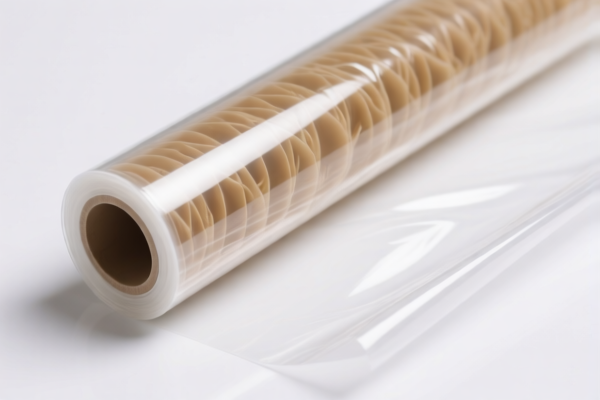


AI Analysis
🏷️ Cellulose Acetate Butyrate (CAB) Label Film
🌐 HS Code Reference & Customs Clearance Guide | 2026 Latest Tariff Analysis | Professional Clearance Strategy
📌 Part I: Product Definition and Classification: What exactly is "Cellulose Acetate Butyrate Label Film"?
Cellulose Acetate Butyrate (CAB) is a thermoplastic ester resin derived from cellulose. It is widely used in the manufacturing of labels, adhesive tapes, and packaging films due to its excellent chemical resistance, optical clarity, and flexibility. In international trade, when this material is processed into thin sheets or films for labeling purposes, it falls under Chapter 39 (Plastics and Articles Thereof).
Key Distinction:
- Primary Chemical Derivatives (Chapter 39.12): If the film is in its most basic, unworked form primarily defined by its chemical composition (cellulose acetate/butyrate derivatives) without further processing into specific plastic articles like rigid plates or specialized laminates, it may be classified here.
- Plastic Films/Sheets (Chapter 39.20/39.21): If the material is processed into specific forms such as thin films, sheets, or plates for general plastic applications, it often falls under Chapter 39.20 or 39.21. The specific sub-heading depends on the thickness, exact chemical composition details (e.g., whether it is strictly "acetate" vs. "other derivatives"), and intended use.
⚠️ Critical Classification Point:
- If the product is explicitly defined as a cellulosic derivative film in its primary form → HS 3912
- If it is classified as a generic plastic film/sheet (acetate or other) → HS 3920 or HS 3921
📦 Part II: HS Code Classification Details (2026 Latest Tariff Authoritative Comparison)
Based on the provided data, here are the applicable HS Codes for Cellulose Acetate Butyrate Label Film. Note that while the chemical material is CAB, customs may classify it under different headings based on specific form descriptions.
| HS Code | Product Description | Applicable Scenario | Tax Rate (Total) |
|---|---|---|---|
3912.11.00.00 |
Cellulose Acetate Films, in primary forms | Basic acetate cellulose film, unworked | 40.6% |
3912.12.00.00 |
Cellulose Acetate Films, in other forms | Cellulose derivatives in common film forms | 40.6% |
3920.73.00.00 |
Cellulose Acetate Films, Plates, Sheets, Strip | Thin films for general plastic applications | 37.9% |
3920.79.10.00 |
Films/Sheets < 0.076mm, Other Cellulose Derivatives | Ultra-thin films (≤0.76mm), generic derivatives | 41.2% |
3921.14.00.00 |
Films of Regenerated Cellulose | If classified as "Regenerated Cellulose" | 41.5% |
🔍 Key Reminder:
- 3912.11/12: Focuses on Cellulose Acetate specifically in primary/standard forms.
- 3920.73/79: Focuses on Plastic Films/Sheets made of acetate or other derivatives. The tax rate varies significantly based on thickness and specific derivative type.
- 3921.14: Specifically for Regenerated Cellulose. If your CAB film is processed to meet the definition of "regenerated cellulose" (less common for CAB but possible depending on processing), this code applies.
💰 Part III: 2026 Latest Tariff Rate Breakdown (Including Surtaxes and Policy Add-ons)
✅ Applicable Country: United States (US)
✅ Origin: China (CN)
✅ Effective Date: From November 10, 2025 onwards (including subsequent imports)
🎯 1. HS Codes 3912.11.00.00 & 3912.12.00.00 —— Cellulose Acetate Films (Primary/Other Forms)
| Item | Details |
|---|---|
| Base Tariff Rate | 5.6% (ad valorem) |
| Section 301 Surtax | +25.0% (USITC Footnote related to Chinese origin) |
| Section 122 Tariff | +10.0% (Specific surcharge for Chinese products) |
| Total Tariff Rate | 40.6% |
| Tax Calculation | CIF Value × 40.6% |
| De Minimis Exemption | ❌ Not Available |
| Legal Basis Path | Base Tariff → Section 301 (25%) → Section 122 (10%) |
📌 Explanation:
- Base 5.6%: Standard MFN tariff for cellulose acetate films.
- Section 301 (25%): Additional tariff imposed on goods originating from China.
- Section 122 (10%): Additional surcharge applicable to certain Chinese goods.
- Total 40.6%: This is a high tariff burden. Proper classification is crucial to avoid overpayment or misclassification penalties.
🎯 2. HS Code 3920.73.00.00 —— Cellulose Acetate Films (Plates, Sheets, Strip)
| Item | Details |
|---|---|
| Base Tariff Rate | 2.9% (ad valorem) |
| Section 301 Surtax | +25.0% |
| Section 122 Tariff | +10.0% |
| Total Tariff Rate | 37.9% |
| Tax Calculation | CIF Value × 37.9% |
| De Minimis Exemption | ❌ Not Available |
| Legal Basis Path | Base Tariff → Section 301 (25%) → Section 122 (10%) |
📌 Note:
- This code offers a lower total tax (37.9%) compared to the 3912 codes (40.6%).
- It applies if the film is considered a "plastic film/sheet" rather than a "cellulose derivative in primary form."
- Ensure your product description matches "Plates, Sheets, Strip" to justify this classification.
🎯 3. HS Code 3920.79.10.00 —— Films/Sheets < 0.076mm, Other Cellulose Derivatives
| Item | Details |
|---|---|
| Base Tariff Rate | 6.2% (ad valorem) |
| Section 301 Surtax | +25.0% |
| Section 122 Tariff | +10.0% |
| Total Tariff Rate | 41.2% |
| Tax Calculation | CIF Value × 41.2% |
| De Minimis Exemption | ❌ Not Available |
| Legal Basis Path | Base Tariff → Section 301 (25%) → Section 122 (10%) |
📌 Note:
- Applies specifically to films/thin sheets ≤ 0.076mm.
- Total tax is 41.2%, the highest among the 3920 codes listed.
- Must strictly meet the thickness requirement to use this code.
🎯 4. HS Code 3921.14.00.00 —— Films of Regenerated Cellulose
| Item | Details |
|---|---|
| Base Tariff Rate | 6.5% (ad valorem) |
| Section 301 Surtax | +25.0% |
| Section 122 Tariff | +10.0% |
| Total Tariff Rate | 41.5% |
| Tax Calculation | CIF Value × 41.5% |
| De Minimis Exemption | ❌ Not Available |
| Legal Basis Path | Base Tariff → Section 301 (25%) → Section 122 (10%) |
📌 Note:
- Applies if the CAB film is legally classified as "Regenerated Cellulose."
- Total tax is 41.5%, the highest overall.
- Use only if your product documentation explicitly supports "Regenerated Cellulose" classification.
🛠️ Part IV: Customs Clearance Practical Advice (Battle-Tested Pitfall Avoidance Guide)
✅ 1. Required Documentation Checklist (Non-Negotiable)
| Document | Required? | Explanation |
|---|---|---|
| ✅ Product Specification Sheet | ✔️ | Must detail chemical composition (CAB vs. CA), thickness, and form (film). |
| ✅ Material Safety Data Sheet (MSDS) | ✔️ | Proves chemical composition and handling properties. |
| ✅ Product Photos (Clear Label/Film) | ✔️ | Show dimensions, thickness, and any markings. |
| ✅ Third-Party Test Report | ✔️ | Confirm thickness (if claiming <0.076mm) and material type. |
| ✅ Commercial Invoice | ✔️ | Clearly state "Cellulose Acetate Butyrate Label Film" and HS Code. |
| ✅ Certificate of Origin (CO) | ✔️ | Essential for applying surtaxes. |
| ✅ Packing List | ✔️ | Detail quantities and net/gross weights. |
✅ 2. Declaration Tips (Key Mnemonics)
🔥 “Thickness Matters, Composition is Key, Name Must Be Precise, Tax Varies Widely!”
| Scenario | Correct Declaration | Wrong Practice |
|---|---|---|
| Standard Label Film (Any Thickness) | 3920.73.00.00 (Lower Tax 37.9%) |
Misclassifying as 3912 (40.6%) → Overpay Tax |
| Ultra-Thin Film (≤0.076mm) | 3920.79.10.00 |
Using 3920.73 → Misclassification Risk |
| Regenerated Cellulose Film | 3921.14.00.00 |
Using 3920 codes → Legal Discrepancy |
| Vague "Plastic Film" Description | ❌ Dangerous | Use specific chemical name (CAB/CA) |
✅ 3. Special Cases Handling
| Scenario | Handling Advice |
|---|---|
| OEM Custom Label Films | Provide client order + design specs. Clarify if it’s “Regenerated” or “Derived.” |
| Adhesive-Coated Films | If coated with adhesive, ensure it doesn’t cross into Chapter 35 (Glues) or 48 (Paper). Usually, plastic film with adhesive stays in Chapter 39. |
| Mixed Shipment (CAB + Other Plastics) | Separate declarations. Do not bundle different materials. |
| Samples for Testing | Declare as “Samples, No Commercial Value” if applicable, but still subject to duties if value is declared. |
🌍 Part V: Global Main Market Clearance Comparison (2026 Latest)
| Country/Region | Recommended HS Code | Tariff (China Origin) | Certification | Notes |
|---|---|---|---|---|
| 🇺🇸 USA | 3920.73.00.00 |
37.9% (Best Case) | None Specific | Highest tax burden globally due to Surtaxes. |
| 🇨🇳 China | 3920.73.00.00 |
2.9% | None | Base tariff only. |
| 🇪🇺 EU | 3920.73.00.00 |
0-6.5% | REACH + RoHS | Lower tariffs, stricter chemical compliance. |
| 🇦🇺 Australia | 3920.73.00.00 |
5% | APEC CE Mark | Moderate tariffs. |
| 🇯🇵 Japan | 3920.73.00.00 |
0-5% | JIS | Low tariffs, high quality standards. |
📌 Conclusion:
- USA has the highest effective tariff due to Section 301 and Section 122.
- Choosing the correct HS Code (3920.73 vs. 3912) can save 2.7% of the CIF value.
- China-origin goods face significant surcharges; supply chain optimization is key.
📌 Part VI: Common Mistakes & Pitfall Avoidance Guide (Blood-and-Tears Lessons)
❌ Mistake 1: Using vague terms like “Plastic Film” without specifying “Cellulose Acetate Butyrate”
👉 Consequence: Customs may assign a higher default duty or demand additional classification review → Delays & Extra Costs.
❌ Mistake 2: Misclassifying 3920.73 (37.9%) as 3912.11 (40.6%) due to lack of knowledge
👉 Consequence: Overpaying 2.7% tax on every shipment → Significant cumulative loss.
❌ Mistake 3: Ignoring the thickness requirement for 3920.79.10.00
👉 Consequence: If film is >0.076mm but declared under this code, it’s misclassification → Penalties + Back Taxes.
❌ Mistake 4: Assuming “Label Film” automatically means 3921.14 (Regenerated Cellulose)
👉 Consequence: CAB is a derivative, not necessarily regenerated → Legal Risk.
✅ Correct Practice:
“Cellulose Acetate Butyrate (CAB) Label Film, Thickness: [X]mm, Width: [Y]mm, for Packaging/Labeling Use, HS Code: 3920.73.00.00”
🎯 Part VII: Conclusion: Professional Declaration, Time-Saving, Cost-Efficient!
🎯 Remember the Mnemonic:
🔹 “3920.73 is King (37.9%), 3912 is High (40.6%), Thickness Matters (3920.79).”
🔹 “HS Code Determines Tax, 2.7% Difference is Huge, Declaration Error Costs Thousands!”
📌 Pro Tip:
If your film is thin (≤0.076mm), check if 3920.79.10.00 is justified. If not, stick with 3920.73.00.00 for the lowest tax.
Recommend applying for an Advance Ruling from US Customs if the classification is ambiguous.
📣 Take Action Now:
📞 Contact Professional Customs Broker + Provide Product Specs + Apply for HS Code Advance Ruling
🚀 Ensure your CAB Label Films clear customs smoothly, minimize tax burden, and maximize profit!
✨ Professional Clearance Starts with Accurate Classification!
💼 Every Cent Saved is Profit Gained!
Customer Reviews
About HS Code Classification
The Harmonized System (HS) is an internationally standardized nomenclature developed by the World Customs Organization (WCO) to classify traded products. Over 200 countries use the HS system as the basis for customs tariffs, trade statistics, and import/export regulations.
Each HS code follows a hierarchical structure:
- Chapter (2 digits) — Broad category of goods (e.g., Chapter 84: Machinery and Mechanical Appliances)
- Heading (4 digits) — More specific grouping within the chapter
- Subheading (6 digits) — Internationally standardized breakdown, used by all WCO member countries
- National subdivisions (8-10 digits) — Country-specific extensions for further classification, such as US HTSUS 10-digit codes
Correct HS code classification is essential for smooth customs clearance, accurate duty payment, and compliance with trade regulations. Misclassification can lead to customs delays, overpayment of duties, or penalties.
When importing from CN to US, the applicable tariff rates may include:
- Most-Favored-Nation (MFN) rate — The standard duty rate applied to WTO members
- General rate — Applied to countries without trade agreements
- Trade remedy duties — Additional tariffs such as Section 301 (anti-dumping), Section 232 (national security), or countervailing duties
The information provided on this page is for reference purposes only. For official classification, please consult with your local customs authority or a licensed customs broker.