Cellulose Acetate Coated Board
CN → US| HS Code | Tariff Rate | Origin | Destination | Doc |
|---|---|---|---|---|
| 3921190090 | 41.5% | CN | US | Official Doc |
| 3912110000 | 40.6% | CN | US | Official Doc |
| 3921905050 | 39.8% | CN | US | Official Doc |
| 3912120000 | 40.6% | CN | US | Official Doc |
| 3920730000 | 37.9% | CN | US | Official Doc |
| 3920795000 | 38.7% | CN | US | Official Doc |
Product Images
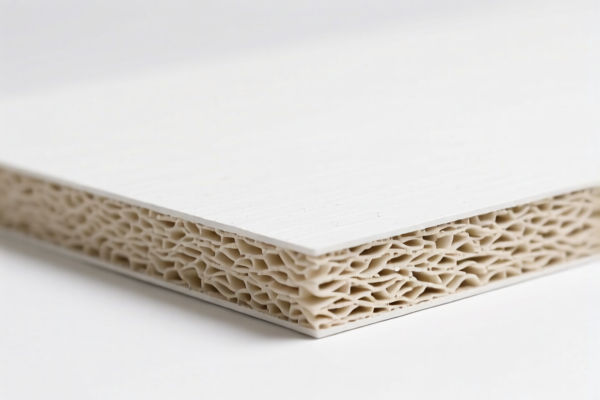
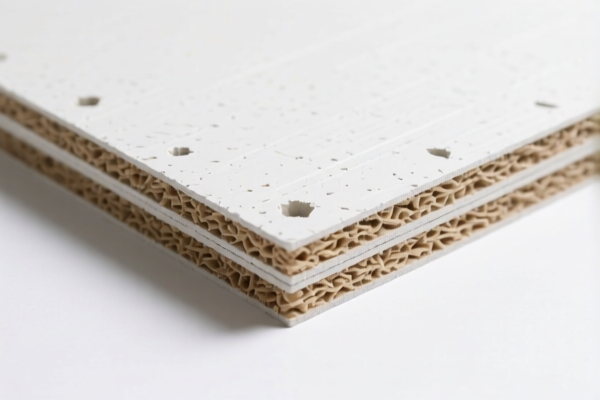
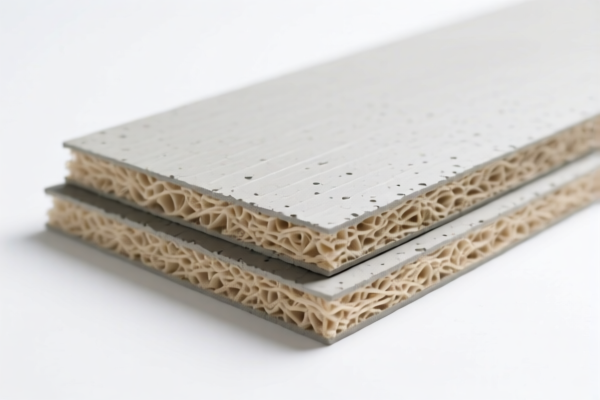
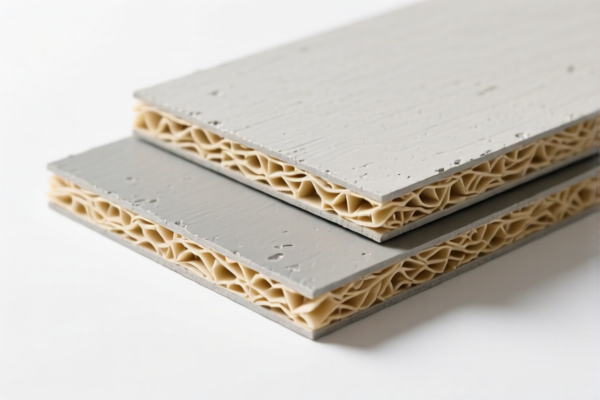
AI Analysis
📜 Cellulose Acetate Coated Board (Acetate Precision Plates)
🌐 HS Code Reference & Customs Clearance Guide | 2026 Latest Tariff Analysis | Strategic Compliance Strategy
📌 I. Product Definition & Classification: What is "Cellulose Acetate Coated Board"?
Cellulose Acetate Coated Board, often referred to in trade as "Acetate Precision Plates" or "Semi-finished Acetate Products," is a material derived from cellulose (usually wood pulp or cotton linter) that has been chemically modified into cellulose acetate. It is processed into flat sheet, plate, or film forms.
In international trade, its classification depends heavily on whether it is considered a primary plastic material (raw/semi-finished) or a fabricated plastic product (finished plate/panel). This distinction drastically affects the HS Code and resulting tariff liability.
⚠️ Key Distinction Point:
- If the product is viewed as primary cellulose acetate in sheet/film form (intermediate material for further processing) → It falls under Chapter 3912 (Cellulose and its chemical derivatives).
- If the product is viewed as a specific fabricated plastic plate/panel (finished semi-finished good) → It falls under Chapter 3920 or 3921 (Plastics in primary forms, plates/sheets/films).
📦 II. HS Code Classification Matrix (Based on Provided Data)
According to the provided <DATA>, there are five potential classifications for "Cellulose Acetate Coated Board." Below is the detailed breakdown of why each code applies and the associated tax implications.
| HS Code | Product Description & Logic | Total Tax Rate | Tax Composition Details |
|---|---|---|---|
3921.19.00.90 |
Acetate Precision Plate: Material is Cellulose Acetate, Form is Plate. Classified under Chapter 3921 (Plastic plates, sheets, film, etc.). | 41.5% | Base: 6.5% Additional: 25.0% (Section 301) 122 Clause: 10% |
3912.11.00.00 |
Cellulose Acetate (Primary Form): Material matches Cellulose Acetate, Form is Plate. Considered an extension of primary form application. | 40.6% | Base: 5.6% Additional: 25.0% (Section 301) 122 Clause: 10% |
3921.90.50.50 |
Synthetic Fiber/Plastic Plate: Material is Synthetic Fiber/Plastic type, Form is Plate. Fits "Plates/Sheets" classification in Ch. 3921. | 39.8% | Base: 4.8% Additional: 25.0% (Section 301) 122 Clause: 10% |
3912.12.00.00 |
Acetate Derivative (Semi-finished): Material and classification consistent, Form is Primary/Semi-finished. Fits Cellulose Acetate and its derivatives. | 40.6% | Base: 5.6% Additional: 25.0% (Section 301) 122 Clause: 10% |
3920.73.00.00 |
Cellulose Acetate Plate/Film: Material is Cellulose Acetate, Form is Plate/Sheet/Film. Classification match successful. | 37.9% | Base: 2.9% Additional: 25.0% (Section 301) 122 Clause: 10% |
🔍 Critical Observation:
- All five codes attract the 25.0% Additional Tariff (likely Section 301) and 10% 122 Clause Tariff.
- The total tax burden ranges from 37.9% to 41.5%.
- The lowest tax rate (37.9%) applies to3920.73.00.00, which treats the item as a specific plastic plate/sheet of cellulose acetate.
💰 III. Tariff Structure Explained (Detailed Breakdown)
✅ Context: Based on the provided data structure, these tariffs appear to reflect a high-tariff environment (likely US imports from China, given the "122 Clause" and "25% Additional" references).
🎯 1. The Common Components (Present in ALL Codes)
| Component | Rate | Source/Reason |
|---|---|---|
| Additional Tariff | 25.0% | Typically associated with US Section 301 tariffs on Chinese goods. |
| 122 Clause Tariff | 10.0% | Specific regulatory clause (likely referring to US customs enforcement measures or specific trade remedy provisions). |
| Base Tariff | Varies (2.9% - 6.5%) | Determined by the specific HS Code subheading (Chapter 3912 vs. 3920/3921). |
📊 2. Total Tax Calculation Example
For 3921.19.00.90:
* Base: 6.5%
* Additional: 25.0%
* 122 Clause: 10.0%
* Total: 41.5%
📌 Why the Difference?
The variation in total tax (37.9% vs 41.5%) is driven solely by the Base Tariff.
-3920.73.00.00has the lowest base (2.9%) → Lowest Total Tax (37.9%).
-3921.19.00.90has the highest base (6.5%) → Highest Total Tax (41.5%).
🛠️ IV. Customs Clearance Practical Advice
✅ 1. Documentation Requirements (Must-Haves)
| Document | Purpose | Notes |
|---|---|---|
| Product Specification Sheet | Proves material composition | Must explicitly state "Cellulose Acetate" and % content. |
| Technical Data Sheet (TDS) | Confirms form and use | Shows dimensions, thickness, and whether it is "primary form" or "fabricated plate." |
| Commercial Invoice | Valuation & Description | Use precise terminology: "Cellulose Acetate Sheet/Plate." Avoid vague terms like "Plastic Board." |
| Packing List | Physical verification | Ensure weight and dimensions match invoice. |
| Certificate of Origin | Tariff eligibility | If applicable for any potential exemptions (though unlikely given the 37%+ rates). |
✅ 2. Classification Strategy (How to Choose)
🔥 "Form Defines Fate: Primary vs. Fabricated"
| Scenario | Recommended HS Code | Reason |
|---|---|---|
| Raw/Intermediate Sheets | 3920.73.00.00 or 3912.11.00.00 |
If the product is essentially a sheet of acetate ready for further lamination or cutting, 3920 (Plastics in primary forms) may offer the lowest base tariff (2.9%). |
| Finished Precision Plates | 3921.19.00.90 |
If the plate has specific treatments, coatings, or is finished for direct use as a precision component, 3921 (Plastic plates/sheets) is more appropriate. |
| Chemical Derivative Focus | 3912.11.00.00 |
If the focus is on the chemical nature (Cellulose Acetate) rather than the physical shape, 3912 is the correct chapter. |
⚠️ Risk Warning:
- Misclassifying a "fabricated plate" (3921) as a "primary form" (3912/3920) to save 2.5% in base tariff can lead to customs audits, penalties, and back-taxes.
- Ensure your product truly meets the definition of "primary form" (e.g., unprocessed sheets) if choosing3920or3912.
✅ 3. Declaration Tips
- Be Precise: Declare as "Cellulose Acetate Plates/Sheets, Unfinished/Finished" rather than just "Plastic Board."
- Highlight Material: Emphasize "Cellulose Acetate" to justify Chapter 3912 or 3920 if eligible.
- Include All Layers: If the board is "coated," disclose the coating material. If it's a laminate, the entire composition may need to be declared.
🌍 V. Global Market Comparison (General Context)
| Region | Typical HS Code for Acetate Sheets | Est. Duty (Pre-Trade War) | Notes |
|---|---|---|---|
| 🇺🇸 USA | 3920.73.00.00 / 3921.19.00.90 |
37.9% - 41.5% (as per data) | High additional tariffs apply. |
| 🇨🇳 China | 3920.73.00.00 |
~5-6% | Lower base rates, no Section 301. |
| 🇪🇺 EU | 3920.73.00 |
~4-6.5% | Generally lower tariffs, no 25% addition. |
| 🇬🇧 UK | 3920.73.00 |
~4-6.5% | Post-Brexit standards apply. |
📌 Conclusion:
- The US market presents the highest barrier due to the 35%+ effective tariff rate (Base + 25% + 10%).
- Other markets typically apply only the Base Tariff (2.9% - 6.5%), making them significantly more cost-effective for this product.
📌 VI. Common Errors & Pitfalls (Blood & Tears Lessons)
❌ Error 1: Classifying "Cellulose Acetate Coated Board" as "Wood Board" or "Paper"
👉 Consequence: Rejection by customs, misclassification penalties, and delays.
👉 Fix: Always emphasize the polymer/plastic nature of the material.
❌ Error 2: Ignoring the "Coating"
👉 Consequence: If the board is laminated with other materials (e.g., PVC, PET), the classification may shift to a different subheading.
👉 Fix: Provide a detailed layer-by-layer breakdown in the spec sheet.
❌ Error 3: Assuming all "Plastic Plates" are the same
👉 Consequence: Using a generic 3921.90 code when a specific 3921.19 or 3920.73 applies.
👉 Fix: Match the chemical composition (Cellulose Acetate) to the most specific code (3912 or 3920.73).
🎯 VII. Final Recommendations: Cost Optimization & Compliance
🎯 Key Takeaway:
🔹 Lowest Risk & Cost: Aim for
3920.73.00.00(Total 37.9%) if the product qualifies as "Plastics in primary forms, cellulose acetate, plates/sheets/film."
🔹 Highest Risk: Avoid vague descriptions like "Acetate Board." Use "Cellulose Acetate Sheet/Plate."
📞 Immediate Action Plan:
- Verify Material: Confirm the exact % of cellulose acetate vs. other additives.
- Check Form: Is it a raw sheet (
3920) or a fabricated plate (3921)? - Calculate Landed Cost: Include the 37.9% - 41.5% tariff in your pricing model.
- Consult Broker: For the first shipment, request a Binding Tariff Information (BTI) or advance ruling if possible.
📣 Pro Tip:
If you are exporting to the US, consider supply chain diversification (e.g., production in Vietnam or Mexico) to potentially avoid the 25% Additional Tariff and 10% 122 Clause Tariff, reducing your total tax burden significantly.
✨ Accurate Classification Saves Money!
💼 Every 0.1% of base tariff counts when the total hits 40%+!
Customer Reviews
About HS Code Classification
The Harmonized System (HS) is an internationally standardized nomenclature developed by the World Customs Organization (WCO) to classify traded products. Over 200 countries use the HS system as the basis for customs tariffs, trade statistics, and import/export regulations.
Each HS code follows a hierarchical structure:
- Chapter (2 digits) — Broad category of goods (e.g., Chapter 84: Machinery and Mechanical Appliances)
- Heading (4 digits) — More specific grouping within the chapter
- Subheading (6 digits) — Internationally standardized breakdown, used by all WCO member countries
- National subdivisions (8-10 digits) — Country-specific extensions for further classification, such as US HTSUS 10-digit codes
Correct HS code classification is essential for smooth customs clearance, accurate duty payment, and compliance with trade regulations. Misclassification can lead to customs delays, overpayment of duties, or penalties.
When importing from CN to US, the applicable tariff rates may include:
- Most-Favored-Nation (MFN) rate — The standard duty rate applied to WTO members
- General rate — Applied to countries without trade agreements
- Trade remedy duties — Additional tariffs such as Section 301 (anti-dumping), Section 232 (national security), or countervailing duties
The information provided on this page is for reference purposes only. For official classification, please consult with your local customs authority or a licensed customs broker.