Cellulose Acetate Film
CN → US| HS Code | Tariff Rate | Origin | Destination | Doc |
|---|---|---|---|---|
| 3912110000 | 40.6% | CN | US | Official Doc |
| 3912120000 | 40.6% | CN | US | Official Doc |
| 3920730000 | 37.9% | CN | US | Official Doc |
| 3920791000 | 41.2% | CN | US | Official Doc |
| 3921140000 | 41.5% | CN | US | Official Doc |
Product Images

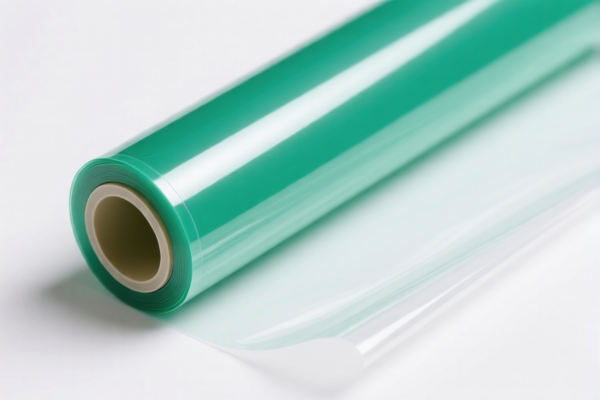

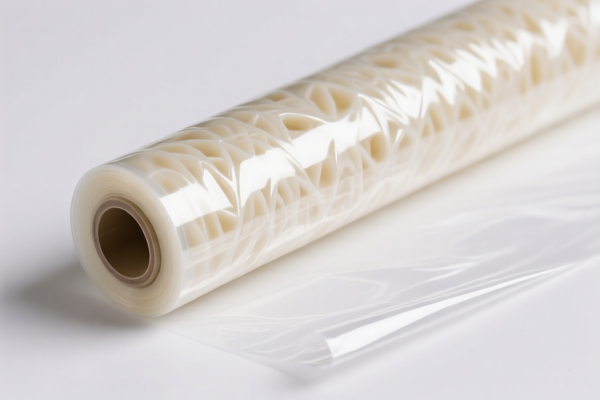
AI Analysis
🎬 Cellulose Acetate Film: The Transparent Giant
🌐 HS Code Reference & Customs Clearance Guide | 2026 Latest Tariff Analysis | Professional Strategy for High-Tax Imports
📌 I. Product Definition: What Exactly is "Cellulose Acetate Film"?
Cellulose Acetate (CA) Film is a synthetic polymer derived from cellulose (usually wood pulp or cotton linters). It is known for its high transparency, excellent printability, and chemical resistance. In international trade, it is primarily used for: - Photography & Cinematography: Traditional film stock, protective overlays. - Packaging: Food wrappers, cigarette cellophane. - Electronics: Insulation layers, protective coatings. - Optics: Glare reduction, filters.
⚠️ Key Classification Nuance:
The classification depends heavily on processing level and physical form. - Primary Form: Simple unprocessed film → Often falls under Chapter 39.12 (Cellulose Esters). - Processed/Specific Use: Laminated, coated, or specific thickness ranges → May fall under Chapter 39.20 (Plates, Sheets, Film, Foil, Strip) or 39.21 (Other Plates/Sheets). - Regenerated Cellulose: If processed into "Cellophane" type structures, it might shift to 39.21.14.
📦 II. HS Code Classification Details (2026 Latest Tariff Reference)
Based on the provided data, here are the precise HS Codes for Cellulose Acetate Film, categorized by their physical and chemical characteristics.
| HS Code | Product Description & Summary | Key Attributes | Applicable Scenario |
|---|---|---|---|
| 3912.11.00.00 | Cellulose Acetate Film, Primary Form | Material: Cellulose Acetate; Form: Film. Meets primary form definition. | Basic, unprocessed CA film; raw materials for further manufacturing. |
| 3912.12.00.00 | Cellulose Acetate Film, No Plasticizer Conflict | Material: Cellulose Acetate; Form: Film. No plasticization attribute conflict. | CA film without conflicting plasticizer additives; standard industrial CA film. |
| 3920.73.00.00 | Cellulose Acetate Film, Sheet/Film Class | Material: Cellulose Acetate; Form: Film. Classified under plates/sheets/film. | General-purpose CA film, often used in packaging or display applications. |
| 3920.79.10.00 | Cellulose Acetate Film, Thin Film | Material: Cellulose Derivative; Form: Film ≤ 0.076 mm. | Ultra-thin CA films (e.g., for packaging, optical layers). |
| 3921.14.00.00 | Cellulose Acetate Film, Regenerated | Material: Regenerated Cellulose; Form: Film. Meets classification requirements. | CA film treated or classified as "regenerated cellulose" (often overlaps with cellophane standards). |
🔍 Critical Distinction:
- 3912 Series: Focuses on the chemical substance (Cellulose Esters) in primary or simple forms.
- 3920/3921 Series: Focuses on the physical product form (Sheets/Films) and specific uses/thicknesses.
- Thickness Matters: Film ≤ 0.076 mm is explicitly singled out in 3920.79.10.00.
💰 III. 2026 Latest Tariff Rate Breakdown (Including Surtaxes & Policy Add-ons)
✅ Applicable Country: United States (US)
✅ Origin: China (CN)
✅ Effective Date: 2025–2026 (Current Trade Policy)
🎯 1. 3912.11.00.00 & 3912.12.00.00 —— Primary Cellulose Acetate Film
| Item | Content |
|---|---|
| Base Duty Rate | 5.6% |
| Section 301 Surtax | +25.0% (Trade War Tariff) |
| Section 122 Tariff | +10.0% (Specific trade clause) |
| Total Tax Rate | 40.6% |
| Tax Calculation | CIF Value × 40.6% |
| De Minimis Eligibility | ❌ Not Eligible (High-value industrial chemical/plastic) |
📌 Explanation:
- 5.6% Base: Standard Most Favored Nation (MFN) rate for cellulose esters.
- 25% Section 301: Part of the ongoing US-China tariff list for chemical plastics.
- 10% Section 122: Likely refers to specific national security or trade balance measures.
- Total: 40.6% is a high barrier. Cost calculation must include this.
🎯 2. 3920.73.00.00 —— CA Film (Sheet/Film Category)
| Item | Content |
|---|---|
| Base Duty Rate | 2.9% |
| Section 301 Surtax | +25.0% |
| Section 122 Tariff | +10.0% |
| Total Tax Rate | 37.9% |
| Tax Calculation | CIF Value × 37.9% |
| De Minimis Eligibility | ❌ Not Eligible |
📌 Advantage:
- Slightly lower base rate (2.9%) compared to 3912 (5.6%).
- Total: 37.9% is the lowest among the options, making this the most cost-effective classification if the film fits the "plate/sheet/film" description without being a "regenerated" type.
🎯 3. 3920.79.10.00 —— Thin CA Film (≤ 0.076 mm)
| Item | Content |
|---|---|
| Base Duty Rate | 6.2% |
| Section 301 Surtax | +25.0% |
| Section 122 Tariff | +10.0% |
| Total Tax Rate | 41.2% |
| Tax Calculation | CIF Value × 41.2% |
| De Minimis Eligibility | ❌ Not Eligible |
📌 Note:
- This code is for thin films. If your product is thinner than 0.076 mm, you must use this code or risk misclassification.
- Total: 41.2% is the highest due to higher base rate.
🎯 4. 3921.14.00.00 —— Regenerated Cellulose Film
| Item | Content |
|---|---|
| Base Duty Rate | 6.5% |
| Section 301 Surtax | +25.0% |
| Section 122 Tariff | +10.0% |
| Total Tax Rate | 41.5% |
| Tax Calculation | CIF Value × 41.5% |
| De Minimis Eligibility | ❌ Not Eligible |
📌 Caution:
- Only use if the film is chemically classified as "Regenerated Cellulose" (e.g., cellophane-like structures).
- Total: 41.5% is the most expensive. Do not use unless technically accurate.
🛠️ IV. Customs Clearance Practical Advice (Real-World Pitfall Guide)
✅ 1. Preparation Checklist (Non-negotiable)
| Document | Required | Notes |
|---|---|---|
| ✅ Product Specification Sheet | ✔️ | Must include: Chemical composition (% Cellulose Acetate), thickness (mm), width, roll length. |
| ✅ Material Safety Data Sheet (MSDS) | ✔️ | Essential for chemical classification verification. |
| ✅ Product Photos | ✔️ | Clear images showing the film, roll, and any labeling. |
| ✅ Commercial Invoice | ✔️ | Must state: "Cellulose Acetate Film," not just "Plastic Film." |
| ✅ Packing List | ✔️ | Detail net/gross weight. Ensure no mixed HS Codes in one shipment. |
| ✅ Certificate of Origin | ✔️ | To verify Chinese origin for 301/122 tariffs. |
✅ 2. Classification Strategy (Key Rules)
🔥 "Thickness Dictates Code, Chemistry Dictates Chapter!"
| Scenario | Recommended HS Code | Reason |
|---|---|---|
| Standard CA Film, > 0.076 mm | 3920.73.00.00 |
Lowest total tax (37.9%). Fits "Plates/Sheets/Film" broadly. |
| Thin CA Film, ≤ 0.076 mm | 3920.79.10.00 |
Mandatory due to thickness spec. Tax is higher (41.2%). |
| Raw/Unprocessed CA Polymer Film | 3912.11.00.00 / 3912.12.00.00 |
If it’s a base material for further processing. Tax: 40.6%. |
| "Cellophane" Style Regenerated Film | 3921.14.00.00 |
Only if chemically regenerated. Highest tax (41.5%). |
⚠️ Warning:
- Do NOT use3920.73.00.00for thin films (≤ 0.076 mm). Customs may reclassify and apply3920.79.10.00(41.2%) + penalties.
- Do NOT mislabel "Regenerated Cellulose" as "Cellulose Acetate" to avoid higher taxes. If it’s regenerated, it is regenerated.
✅ 3. Special Handling Tips
| Situation | Advice |
|---|---|
| Mixed Thickness Rolls | Split shipments if possible. Separate ≤ 0.076 mm from > 0.076 mm to optimize tax. |
| Coated/Laminated CA Film | May shift to 3921 or 3920.79. Consult a customs broker. Lamination can change the "essential character." |
| Small Samples (< $800) | Still subject to duties if declared as commercial samples. De Minimis does not apply to China-origin plastic films under current rules. |
| Anti-Dumping/Countervailing Duties | Check if CA film is subject to additional duties. None currently listed in data, but verify with CBP. |
🌍 V. Global Market Comparison (2026)
| Region | Recommended HS Code | Base Duty | US Surtax | Total Approx. | Notes |
|---|---|---|---|---|---|
| 🇺🇸 USA | 3920.73.00.00 |
2.9% | +35% (301+122) | 37.9% | Best for standard film. |
| 🇨🇳 China | 3920.73.00.00 |
5.5% | 0% | 5.5% | Low import tax for domestic use. |
| 🇪🇺 EU | 3920.73.00.00 |
5.7% | 0% | 5.7% | No 301/122 surtaxes. |
| 🇬🇧 UK | 3920.73.00.00 |
5.7% | 0% | 5.7% | Post-Brexit, aligned with EU. |
📌 Conclusion:
- USA is the most expensive market due to 301/122 tariffs.
- EU/UK offer significant cost advantages (~32% lower total duty).
- Consider supply chain diversification if shipping large volumes to the US.
📌 VI. Common Mistakes & Pitfalls (Learn from Others)
❌ Mistake 1: Using 3920.73.00.00 for thin films (≤ 0.076 mm).
👉 Consequence: Customs reclassifies to 3920.79.10.00 (41.2%) + back taxes + fines.
❌ Mistake 2: Calling it "Plastic Film" generically.
👉 Consequence: Customs requests additional info, delays clearance, and may assign a higher default rate.
❌ Mistake 3: Ignoring thickness.
👉 Consequence: Misclassification. Thickness is a legal definition in HS 3920.79.10.00.
✅ Correct Declaration Example:
"Cellulose Acetate Film, Uncoated, Width 100cm, Thickness 0.1mm, Roll Length 500m, For Packaging Use, HS: 3920.73.00.00"
🎯 VII. Conclusion: Smart Classification Saves Money!
🎯 Key Takeaways:
🔹 Lowest Tax:
3920.73.00.00(37.9%) → Use for standard thickness (>0.076mm).
🔹 Thin Films:3920.79.10.00(41.2%) → Mandatory for ≤0.076mm.
🔹 Raw Materials:3912.11.00.00(40.6%) → For unprocessed base films.
🔹 Regenerated:3921.14.00.00(41.5%) → Only if chemically regenerated.
📌 Pro Tip:
If your film is exactly 0.076 mm, verify with a lab test. Being even 0.001 mm over allows you to use 3920.73.00.00 (37.9%), saving 3.3% per unit value!
📣 Immediate Action:
📞 Contact a Customs Broker to confirm thickness and chemical composition.
📄 Get a Pre-Ruling from CBP if your product is on the borderline (e.g., 0.076 mm).
💰 Factor 37.9–41.5% into your landed cost to avoid margin erosion.
✨ Precise Classification = Maximum Profit!
💼 Don’t let tariff complexity cost you your competitive edge!
Customer Reviews
About HS Code Classification
The Harmonized System (HS) is an internationally standardized nomenclature developed by the World Customs Organization (WCO) to classify traded products. Over 200 countries use the HS system as the basis for customs tariffs, trade statistics, and import/export regulations.
Each HS code follows a hierarchical structure:
- Chapter (2 digits) — Broad category of goods (e.g., Chapter 84: Machinery and Mechanical Appliances)
- Heading (4 digits) — More specific grouping within the chapter
- Subheading (6 digits) — Internationally standardized breakdown, used by all WCO member countries
- National subdivisions (8-10 digits) — Country-specific extensions for further classification, such as US HTSUS 10-digit codes
Correct HS code classification is essential for smooth customs clearance, accurate duty payment, and compliance with trade regulations. Misclassification can lead to customs delays, overpayment of duties, or penalties.
When importing from CN to US, the applicable tariff rates may include:
- Most-Favored-Nation (MFN) rate — The standard duty rate applied to WTO members
- General rate — Applied to countries without trade agreements
- Trade remedy duties — Additional tariffs such as Section 301 (anti-dumping), Section 232 (national security), or countervailing duties
The information provided on this page is for reference purposes only. For official classification, please consult with your local customs authority or a licensed customs broker.