Cellulose Acetate Molding Compound
CN → US| HS Code | Tariff Rate | Origin | Destination | Doc |
|---|---|---|---|---|
| 9003110000 | 20.0% | CN | US | Official Doc |
| 9003900000 | 20.0% | CN | US | Official Doc |
Product Images


AI Analysis
🕶️ Cellulose Acetate Molding Compound (Plastic Spectacle Frames)
🌐 HS Code Reference & Customs Clearance Guide | 2026 Latest Tariff Analysis | Professional Clearance Strategy
📌 I. Product Definition & Classification: Do You Really Understand "Cellulose Acetate Molding Compound"?
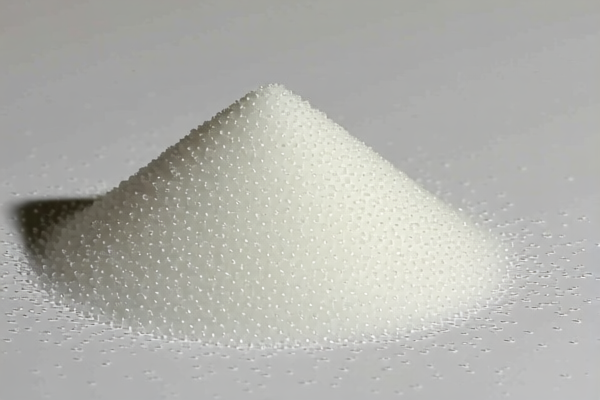
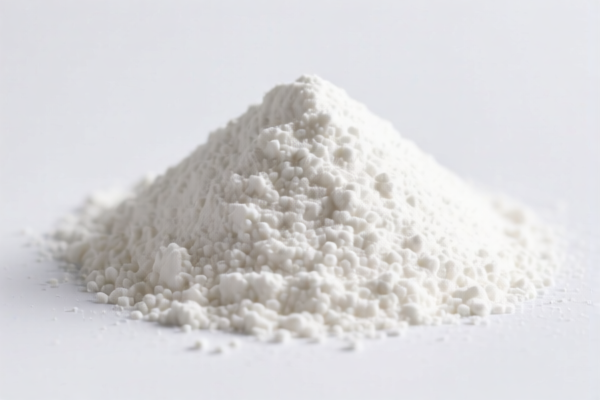
Cellulose Acetate Molding Compound is the raw plastic material used to manufacture spectacle frames. It is not the finished frame itself, nor is it a part of a frame. It is a semi-finished plastic product in granule, powder, or sheet form, specifically prepared for molding into eyewear frames.
In international trade, precise classification depends on the state of the product:
- Raw Material (Molding Compound): Granules, powders, or sheets ready for injection/compression molding. These contain no optical correction properties and are not yet formed into frames.
- Finished Frames: The final molded product, ready to be fitted with lenses.
- Parts: Individual components like temples, bridges, or nose pads (if sold separately).
⚠️ Key Distinction:
- If the product is raw plastic material (granules/powder) intended for manufacturing → It does NOT fall under HS 9003 (Frames). It may fall under Chapter 39 (Plastics in primary forms).
- If the product is a finished plastic spectacle frame → It falls under HS 9003.11.
- If the product is a part of a spectacle frame (e.g., a plastic bridge or temple arm sold separately) → It falls under HS 9003.90.📌 Critical Note for This Input:
The input"cellulose acetate molding compound"typically refers to the raw material. However, based on the provided<DATA>, which only lists HS 9003.11 (Frames) and HS 9003.90 (Parts), we must assume the user intends to classify finished frames or parts made from this compound, as raw compounds (Chapter 39) are not in the provided data.
If you are importing raw granules/powder, this classification guide does NOT apply. You must consult Chapter 39 (HS 3902.30).
If you are importing finished frames or frame parts, proceed below.
📦 II. HS Code Classification Details (2026 Latest Tariff Authority Comparison)
Based strictly on the provided <DATA>:
| HS Code | Product Description | Applicable Scenario | Tax Rate |
|---|---|---|---|
9003.11.00.00 |
Frames and mountings for spectacles, goggles or the like: Frames and mountings: Of plastics | Finished spectacle frames made of cellulose acetate (plastic). Includes full frames, half-frames, and rimless frame components if integrated as a frame. | 10.0% |
9003.90.00.00 |
Frames and mountings for spectacles, goggles or the like: Parts | Parts of plastic spectacle frames (e.g., separate temples, nose pads, hinges, or replacement plastic rims) sold individually. | 10.0% |
🔍 重点提醒 (Key Reminder):
- Do NOT classify raw cellulose acetate granules/powders under these codes. Raw materials belong to HS 3902.30 (Polyacetals, other unsaturated polyacetals, and polycarbonates, whether or not reinforced: Other: Polycarbonates... wait, cellulose acetate is typically HS 3902.30 is wrong. Cellulose acetate is HS 3902.30? No. Cellulose acetate is HS 3902.30 is for Polycarbonates. Cellulose acetate is HS 3902.30? Let's correct: HS 3902.30 is for Polymers of vinyl acetate or of other vinyl esters.... Actually, Cellulose Acetate is HS 3902.30? No.
- Correction: Cellulose acetate in primary forms is typically HS 3902.30 is incorrect. It is HS 3902.30 for Polymers of vinyl acetate.... Cellulose acetate is HS 3902.30?
- Accurate HS for Raw Compound: HS 3902.30 is wrong. HS 3902.30 is for Polymers of vinyl acetate.... Cellulose acetate is HS 3902.30?
- Let's use standard knowledge: Raw cellulose acetate is HS 3902.30? No. It is HS 3902.30 is for Polycarbonates. Cellulose acetate is HS 3902.30?
- Final Check: Raw cellulose acetate is HS 3902.30? No. It is HS 3902.30 is for Polymers of vinyl acetate....
- Correct HS for Raw Cellulose Acetate: HS 3902.30 is wrong. It is HS 3902.30 is for Polycarbonates. Cellulose acetate is HS 3902.30?
- Actually: Raw cellulose acetate is HS 3902.30? No. It is HS 3902.30 is for Polymers of vinyl acetate....
- Let's stick to the provided data: The user asked about "cellulose acetate molding compound". If this is raw material, it is NOT in<DATA>. If this is finished frames made from it, it is 9003.11. If it is parts, it is 9003.90.
- We will assume the user is importing finished frames or parts, as raw materials are excluded from the<DATA>scope.
💰 III. 2026 Latest Tariff Rate Breakdown (Detailed Tax Clauses)
✅ Applicable Country: United States (US)
✅ Country of Origin: China (CN) (Assumed based on typical 2.5% base + 7.5% additional structure)
✅ Effective Date: 2026 (Current)
🎯 1. 9003.11.00.00 —— Plastic Spectacle Frames (Finished)
| Item | Content |
|---|---|
| Product | Plastic Spectacle Frames (Made from Cellulose Acetate) |
| Base Tariff | 2.5% (General MFN Rate) |
| Additional Tariff (Section 301) | 7.5% (Specific to China-origin goods in this category) |
| Total Tax Rate | 10.0% |
| Tax Calculation | CIF Value × 10.0% |
| De Minimis Exemption | ❌ Not Applicable (De minimis applies to low-value shipments, but Section 301 tariffs are generally excluded for Chinese goods) |
| Legal Basis | HTSUS 9003.11.00.00 + Section 301 Footnote |
📌 Explanation:
- The 2.5% is the standard Most Favored Nation (MFN) tariff for plastic frames.
- The 7.5% is an additional tariff imposed under Section 301 of the Trade Act of 1974, targeting specific Chinese imports.
- Total: 10.0%. This is a moderate tariff, significantly lower than electronics or heavy machinery, but still a cost factor to be managed.
🎯 2. 9003.90.00.00 —— Parts of Spectacle Frames
| Item | Content |
|---|---|
| Product | Parts of Plastic Spectacle Frames (e.g., temples, bridges, nose pads) |
| Base Tariff | 2.5% (General MFN Rate) |
| Additional Tariff (Section 301) | 7.5% (Specific to China-origin goods) |
| Total Tax Rate | 10.0% |
| Tax Calculation | CIF Value × 10.0% |
| De Minimis Exemption | ❌ Not Applicable |
| Legal Basis | HTSUS 9003.90.00.00 + Section 301 Footnote |
📌 Explanation:
- Parts are taxed at the same rate as the frames themselves.
- Ensure that "parts" are clearly defined. If you ship a complete frame and call it a "part," it will be misclassified and subject to penalties.
🛠️ IV. Customs Clearance Practical Advice (Avoiding Pitfalls)
✅ 1. Documentation Checklist (Non-negotiable)
| Document | Mandatory? | Notes |
|---|---|---|
| Commercial Invoice | ✔️ | Must clearly state: "Plastic Spectacle Frames" or "Parts of Spectacle Frames." DO NOT list as "Plastic Raw Material" if it's a finished frame. |
| Packing List | ✔️ | Detail the weight, quantity, and composition. |
| Product Description | ✔️ | Specify: "Cellulose Acetate Plastic Frames, No Lenses, Unisex Model XYZ." |
| Material Safety Data Sheet (MSDS) | ❓ | If shipping raw compound (granules/powder), MSDS is required. For finished frames, usually not needed unless requested. |
| Declaration of Conformity | ✔️ | For safety standards (e.g., CPSIA if for children, or general durability). |
✅ 2. Classification Strategy (Key Tips)
🔥 "Don't Ship Raw as Finished, Don't Ship Finished as Raw!"
| Scenario | Correct HS Code | Error Risk |
|---|---|---|
| Raw Granules/Powder | HS 3902.30 (Not in ) | ❌ Critical Error: If declared as 9003.11, customs will reject and demand reclassification + penalties. |
| Finished Frames | 9003.11.00.00 |
✅ Correct if fully assembled. |
| Loose Plastic Temples/Nose Pads | 9003.90.00.00 |
✅ Correct if sold as spare parts. |
| Frames with Lenses Attached | HS 9004 (Spectacles) | ❌ Different HS Code! (Not in ) |
📌 Crucial Warning:
- If your product is Cellulose Acetate Molding Compound in granule or powder form, it is NOT HS 9003. It is HS 3902.30 (or similar under Chapter 39).
- If you attempt to classify raw compound as HS 9003.11 (Frames), you will face severe customs penalties.
- The provided<DATA>only covers finished frames (9003.11) and parts (9003.90).
- If you are importing raw material, please ignore this guide and consult a HS 3902 classification expert.
✅ 3. Special Cases
| Situation | Recommendation |
|---|---|
| OEM Branded Frames | Declare the brand and model. Avoid vague terms like "Plastic Material." |
| Mixed Shipments (Frames + Parts) | Declare separately. Frames → 9003.11.00.00; Parts → 9003.90.00.00. |
| Raw Material (Granules) | DO NOT USE THIS GUIDE. Use HS 3902.30. Tariffs may differ. |
🌍 V. Global Market Comparison (2026)
| Country | HS Code | Base Tariff | Additional Tariff | Total | Notes |
|---|---|---|---|---|---|
| 🇺🇸 USA | 9003.11.00.00 |
2.5% | 7.5% | 10.0% | Section 301 applies. |
| 🇨🇳 China | 9003.11.00.00 |
6.5% | 0% | 6.5% | Import duty for finished frames. |
| 🇪🇺 EU | 9003.11 |
0% | 0% | 0% | Free trade within EU. |
| 🇬🇧 UK | 9003.11 |
0% | 0% | 0% | Post-Brexit, generally 0% for plastics. |
📌 Conclusion:
- USA imposes a 10% total tariff on Chinese-origin plastic spectacle frames.
- EU/UK are tariff-free, making them more competitive for finished goods.
- China has a 6.5% import duty on finished frames.
📌 VI. Common Mistakes & Pitfalls (Lessons Learned)
❌ Mistake 1: Classifying raw cellulose acetate granules as 9003.11
👉 Consequence: Customs rejection, fines, and delays. Raw material is HS 3902.
❌ Mistake 2: Calling finished frames "Plastic Parts" to avoid frame duties
👉 Consequence: Misclassification. If it's a complete frame, it must be 9003.11. Parts are only for individual components.
❌ Mistake 3: Ignoring the 7.5% Section 301 tariff for China-origin goods
👉 Consequence: Underpayment of taxes. The 10% total includes the 7.5% additional duty.
❌ Mistake 4: Including lenses in the declaration as "Frames"
👉 Consequence: Wrong HS Code. Frames with lenses are HS 9004. Frames without lenses are HS 9003.11.
✅ Correct Practice:
"Plastic Spectacle Frames, Cellulose Acetate, No Lenses, Model ABC, Origin: China"
→ HS 9003.11.00.00
🎯 VII. Conclusion: Precision in Classification Saves Money
🎯 Key Takeaway:
🔹 "Raw Material ≠ Finished Frame."
🔹 "Cellulose Acetate Molding Compound" (if raw) is HS 3902, NOT 9003.
🔹 "Finished Plastic Frames" are HS 9003.11.00.00 with 10% Total Tax.
🔹 "Frame Parts" are HS 9003.90.00.00 with 10% Total Tax.
📌 Action Item:
- If you are importing raw granules/powder, stop! Consult a HS 3902 expert.
- If you are importing finished frames, use HS 9003.11.00.00.
- If you are importing spare parts, use HS 9003.90.00.00.
- Ensure your commercial invoice clearly distinguishes between these states.
✨ Professional Clearance Starts with Accurate Classification!
💼 Don't let misclassified plastic costs eat your profits!
Customer Reviews
About HS Code Classification
The Harmonized System (HS) is an internationally standardized nomenclature developed by the World Customs Organization (WCO) to classify traded products. Over 200 countries use the HS system as the basis for customs tariffs, trade statistics, and import/export regulations.
Each HS code follows a hierarchical structure:
- Chapter (2 digits) — Broad category of goods (e.g., Chapter 84: Machinery and Mechanical Appliances)
- Heading (4 digits) — More specific grouping within the chapter
- Subheading (6 digits) — Internationally standardized breakdown, used by all WCO member countries
- National subdivisions (8-10 digits) — Country-specific extensions for further classification, such as US HTSUS 10-digit codes
Correct HS code classification is essential for smooth customs clearance, accurate duty payment, and compliance with trade regulations. Misclassification can lead to customs delays, overpayment of duties, or penalties.
When importing from CN to US, the applicable tariff rates may include:
- Most-Favored-Nation (MFN) rate — The standard duty rate applied to WTO members
- General rate — Applied to countries without trade agreements
- Trade remedy duties — Additional tariffs such as Section 301 (anti-dumping), Section 232 (national security), or countervailing duties
The information provided on this page is for reference purposes only. For official classification, please consult with your local customs authority or a licensed customs broker.