Cellulose Acetate Packaging Film
CN → US| HS Code | Tariff Rate | Origin | Destination | Doc |
|---|---|---|---|---|
| 3921904010 | 39.2% | CN | US | Official Doc |
| 3921140000 | 41.5% | CN | US | Official Doc |
| 3912110000 | 40.6% | CN | US | Official Doc |
| 3912120000 | 40.6% | CN | US | Official Doc |
| 3920730000 | 37.9% | CN | US | Official Doc |
Product Images

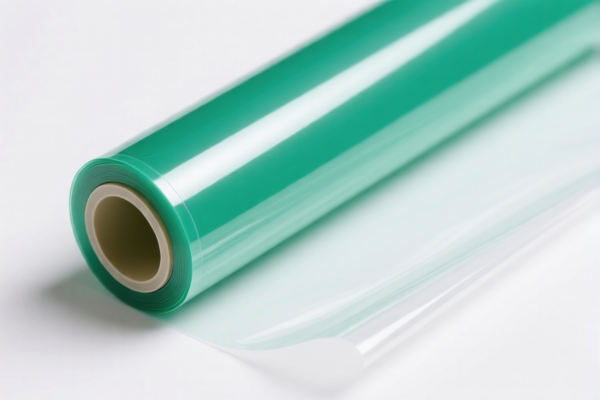

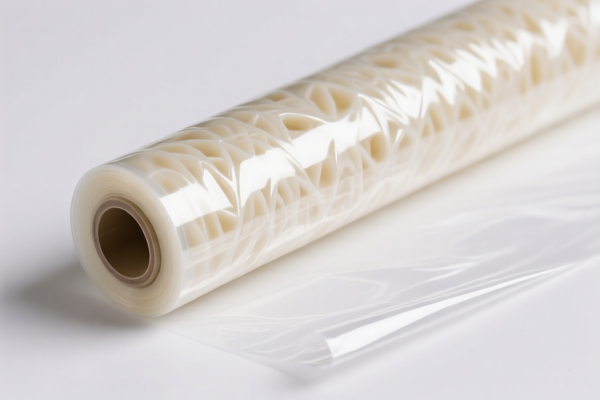
AI Analysis
📦 Cellulose Acetate Packaging Film (醋酸纤维包装膜)
🌐 HS Code Reference & Customs Clearance Guide | 2026 Latest Tariff Analysis | Professional Entry Strategy
📌 I. Product Definition & Classification: What Exactly Is "Cellulose Acetate Film"?
Cellulose Acetate Packaging Film is a versatile plastic film derived from cellulose (usually wood pulp) via acetylation. In international trade, it is categorized based on its chemical composition, end-use (labeling vs. general film), and physical state.
Key Distinction: * Labeling Film (3921 Series): Specifically designed for labeling purposes, often involving adhesives or specific surface treatments for printing. * General Film/Sheet (3912/3920 Series): Used for general packaging, wrapping, or as a substrate, not primarily defined as a "label."
⚠️ Critical Classification Points:
- If the product is explicitly defined as a "Label Film" with specific properties for labeling → Look at Chapter 3921 (Plastics sheets, film, foil...).
- If it is a "Film/Sheets" used for general packaging or as a raw material → Look at Chapter 3912 (Cellulose ethers and esters) or 3920 (Other plastics).
- Material Matters: "Cellulose Acetate" (3912) vs. "Regenerated Cellulose" (3921.14) have different tax rates!
📊 II. HS Code Classification Details (Based on Provided Data)
According to the provided dataset, here are the specific HS Codes and their corresponding tax implications for Cellulose Acetate Packaging Films.
| HS Code | Product Description | Summary in Data | Total Tax Rate | Tax Breakdown |
|---|---|---|---|---|
| 3921.90.40.10 | Cellulose Acetate Label Film | Material: Cellulose Acetate; Form: Film | 39.2% | Base: 4.2% + 25% (Section 301) + 10% (Section 122) |
| 3921.14.00.00 | Cellulose Acetate Label Film | Material: Regenerated Cellulose; Form: Film | 41.5% | Base: 6.5% + 25% (Section 301) + 10% (Section 122) |
| 3912.11.00.00 | Cellulose Acetate Film | Material: Cellulose Acetate; Form: Thin Film | 40.6% | Base: 5.6% + 25% (Section 301) + 10% (Section 122) |
| 3912.12.00.00 | Cellulose Acetate Film | Material: Cellulose Acetate; Form: Thin Film | 40.6% | Base: 5.6% + 25% (Section 301) + 10% (Section 122) |
| 3920.73.00.00 | Cellulose Acetate Film | Material: Cellulose Acetate; Form: Thin Film | 37.9% | Base: 2.9% + 25% (Section 301) + 10% (Section 122) |
🔍 Important Note:
- 3921.14.00.00 is the most expensive due to a higher base tariff (6.5%) despite being a "Label Film."
- 3920.73.00.00 offers the lowest total tax (37.9%) but requires justification that it is "Other Plastic Films" rather than a specialized "Label" or "Cellulose Ester" film.
- 3912 Series (Cellulose Acetate specific) generally has a higher base tariff than 3920 but lower than 3921.14.
💰 III. Detailed Tariff Rate Analysis (Including Surtaxes & Policy Add-ons)
✅ Applicable Country: United States (US)
✅ Origin: China (CN)
✅ Effective Date: 2025/2026 (Based on Section 122 and Section 301 implementations)
🎯 1. 3921.90.40.10 – Cellulose Acetate Label Film
| Item | Detail |
|---|---|
| Base Tariff | 4.2% (Standard MFN Rate) |
| Section 301 Surcharge | +25% (Trade Remedies) |
| Section 122 Surcharge | +10% (Special Trade Measures) |
| Total Effective Rate | 39.2% |
| Calculation | CIF Value × 39.2% |
| De Minimis Exemption | ❌ Not Eligible (Deny De Minimis applies to Section 301/122 goods) |
| Legal Path | HTSUS:3921.90.40.10 → Section 301 Footnote → Section 122 Order |
📌 Explanation:
- This code falls under "Plastics sheets, film, foil..." specifically for labels.
- The 10% Section 122 tariff is a recent addition targeting specific Chinese imports.
- Total 39.2% is significant; cost-plus pricing is essential.
🎯 2. 3921.14.00.00 – Cellulose Acetate Label Film (Regenerated Cellulose)
| Item | Detail |
|---|---|
| Base Tariff | 6.5% |
| Section 301 Surcharge | +25% |
| Section 122 Surcharge | +10% |
| Total Effective Rate | 41.5% |
| Calculation | CIF Value × 41.5% |
| De Minimis Exemption | ❌ Not Eligible |
📌 Warning:
- Do NOT confuse "Cellulose Acetate" (synthetic ester) with "Regenerated Cellulose" (semi-synthetic).
- If your material is truly Cellulose Acetate, using 3921.14 is incorrect classification and risks penalties.
- This code has the highest total tax (41.5%).
🎯 3. 3912.11.00.00 / 3912.12.00.00 – Cellulose Acetate Film
| Item | Detail |
|---|---|
| Base Tariff | 5.6% |
| Section 301 Surcharge | +25% |
| Section 122 Surcharge | +10% |
| Total Effective Rate | 40.6% |
| Calculation | CIF Value × 40.6% |
| De Minimis Exemption | ❌ Not Eligible |
📌 Explanation:
- Chapter 3912 covers "Cellulose ethers and esters."
- If the film is a pure Cellulose Acetate product used for packaging (not labeling), this is the most accurate classification.
- 40.6% is slightly higher than 3921.90.40.10 due to the higher base rate (5.6% vs 4.2%).
🎯 4. 3920.73.00.00 – Other Plastic Films (Cellulose Acetate)
| Item | Detail |
|---|---|
| Base Tariff | 2.9% |
| Section 301 Surcharge | +25% |
| Section 122 Surcharge | +10% |
| Total Effective Rate | 37.9% |
| Calculation | CIF Value × 37.9% |
| De Minimis Exemption | ❌ Not Eligible |
📌 Strategy:
- This code has the lowest total tax (37.9%).
- Risk: It requires proving the product is "Other Plastic Film" and not specifically a "Label" or "Cellulose Ester."
- Best For: General packaging films where the "label" distinction is not critical or the film is multi-functional.
🛠️ IV. Customs Clearance Practical Advice (Avoid Pitfalls)
✅ 1. Documentation Checklist (Essential)
| Document | Required | Notes |
|---|---|---|
| ✅ Product Specification Sheet | ✔️ | Must specify: Material (Cellulose Acetate vs. Regenerated), Thickness, Width, Application (Label vs. Packaging). |
| ✅ Commercial Invoice | ✔️ | Clearly state: "Cellulose Acetate Film for Packaging" or "Labeling Film." Avoid vague terms like "Plastic Film." |
| ✅ Certificate of Origin | ✔️ | Mandatory for Section 301/122 goods to confirm Chinese origin. |
| ✅ Material Safety Data Sheet (MSDS) | ✔️ | Often requested for chemical-based plastics. |
| ✅ Test Reports | ✔️ | Certify chemical composition if disputed (e.g., proving it's Cellulose Acetate, not Regenerated Cellulose). |
✅ 2. Classification Strategy & Key Tips
🔥 "Material Matters, Form Dictates, Use Defines!"
| Scenario | Recommended HS Code | Reason |
|---|---|---|
| Explicitly for Labels | 3921.90.40.10 | Most common for labeled packaging films. Base tariff 4.2%. |
| Pure Cellulose Acetate Film (General) | 3912.11.00.00 | Chemically accurate for Cellulose Acetate. Base tariff 5.6%. |
| Lowest Tariff Risk | 3920.73.00.00 | Only if you can justify it as "Other Plastic Film" and not a label. Base tariff 2.9%. |
| Regenerated Cellulose (Wrong Material!) | 3921.14.00.00 | Avoid unless material is truly Regenerated Cellulose. Highest tax! |
⚠️ Common Mistakes: - Mistake 1: Using 3921.14.00.00 for Cellulose Acetate.
👉 Consequence: Overpayment of tax and potential customs audit for misclassification.
- Mistake 2: Declaring as 3920.73.00.00 for Label Film.
👉 Consequence: Customs may reclassify to 3921.90.40.10, leading to back taxes + penalties.
- Mistake 3: Ignoring Section 122.
👉 Consequence: Underpayment. The 10% surcharge is mandatory for these HTSUs from China.
✅ 3. Special Handling
| Situation | Advice |
|---|---|
| Multi-Layer Films | If the film has multiple layers (e.g., PE + Cellulose Acetate), classification may change. Check the "essential character" rule. |
| Adhesive Labels | If the film is already backed with adhesive, ensure the HTSUS matches "Self-Adhesive" vs. "Non-Adhesive." |
| Pre-Clearance | Submit an Advance Ruling (CBP Ruling) if the application is ambiguous. Saves time and money. |
🌍 V. Global Market Comparison (2026 Overview)
| Country/Region | Recommended HS Code | Tariff Rate | Notes |
|---|---|---|---|
| 🇺🇸 USA | 3921.90.40.10 | 39.2% | High due to Section 301 + 122. |
| 🇨🇳 China | 3921.90.40.10 | ~6.5% | No Section 301/122 surcharges. |
| 🇪🇺 EU | 3920.73.00.00 | ~6.5% | No Section 301. Verify CE/RoHS. |
| 🇬🇧 UK | 3920.73.00.00 | ~6.5% | Post-Brexit tariffs apply. |
📌 Conclusion:
- The USA is the most expensive market for Cellulose Acetate films due to cumulative surtaxes (35% total add-ons).
- Strategic Tip: If possible, explore non-Chinese sourcing for the USA market to avoid these surcharges, or adjust pricing accordingly.
📌 VI. Summary & Action Plan
- Confirm Material: Is it Cellulose Acetate or Regenerated Cellulose?
- → Cellulose Acetate: Use 3912 or 3921.90.40.10.
- → Regenerated Cellulose: Use 3921.14.00.00 (but expect higher tax).
- Confirm Use: Is it specifically for Labels?
- → Yes: Prefer 3921.90.40.10 (39.2%).
- → No (General Packaging): Consider 3920.73.00.00 (37.9%) if defensible.
- Calculate Landed Cost: Include 39.2% - 41.5% total tax in your FOB pricing.
- Documentation: Ensure invoices explicitly state "Cellulose Acetate" and "Film for Packaging/Labeling."
🎯 Pro Tip:
"Classify correctly, declare honestly, and prepare for the 35%+ surtax. Don't let a 0.5% base tariff difference cost you 10% in penalties!"
📣 Ready to Ship?
📞 Contact your customs broker BEFORE shipment.
📄 Request a CBP Ruling for complex multi-layer films.
🚀 Safe Shipping, High Compliance, Maximum Profit!
✨ Precise Classification = Predictable Costs
💼 Your Supply Chain Needs Precision, Not Guesswork!
Customer Reviews
About HS Code Classification
The Harmonized System (HS) is an internationally standardized nomenclature developed by the World Customs Organization (WCO) to classify traded products. Over 200 countries use the HS system as the basis for customs tariffs, trade statistics, and import/export regulations.
Each HS code follows a hierarchical structure:
- Chapter (2 digits) — Broad category of goods (e.g., Chapter 84: Machinery and Mechanical Appliances)
- Heading (4 digits) — More specific grouping within the chapter
- Subheading (6 digits) — Internationally standardized breakdown, used by all WCO member countries
- National subdivisions (8-10 digits) — Country-specific extensions for further classification, such as US HTSUS 10-digit codes
Correct HS code classification is essential for smooth customs clearance, accurate duty payment, and compliance with trade regulations. Misclassification can lead to customs delays, overpayment of duties, or penalties.
When importing from CN to US, the applicable tariff rates may include:
- Most-Favored-Nation (MFN) rate — The standard duty rate applied to WTO members
- General rate — Applied to countries without trade agreements
- Trade remedy duties — Additional tariffs such as Section 301 (anti-dumping), Section 232 (national security), or countervailing duties
The information provided on this page is for reference purposes only. For official classification, please consult with your local customs authority or a licensed customs broker.