Cellulose Acetate Powder
CN → US| HS Code | Tariff Rate | Origin | Destination | Doc |
|---|---|---|---|---|
| 3912110000 | 40.6% | CN | US | Official Doc |
| 3912120000 | 40.6% | CN | US | Official Doc |
| 3920730000 | 37.9% | CN | US | Official Doc |
| 3920791000 | 41.2% | CN | US | Official Doc |
| 3921140000 | 41.5% | CN | US | Official Doc |
Product Images

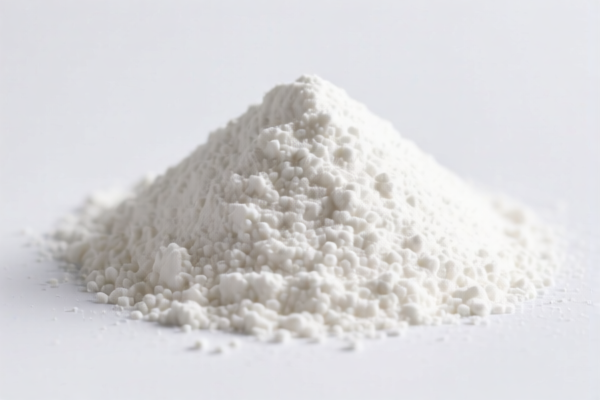
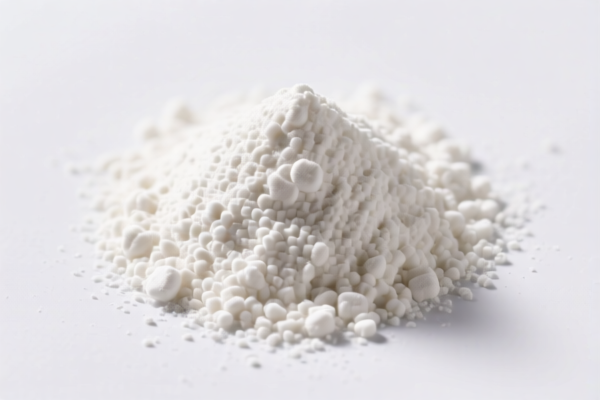
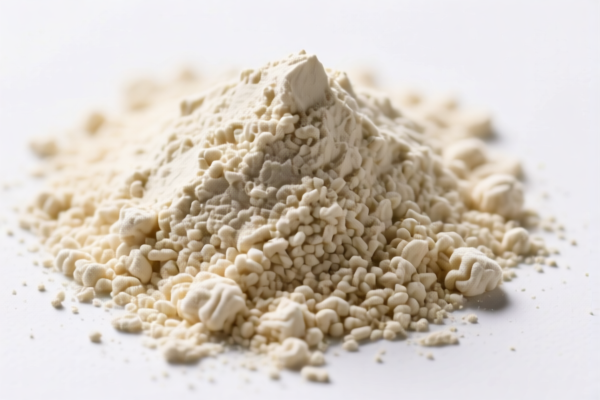
AI Analysis
🧪 Cellulose Acetate Powder (醋酸纤维素粉末)
🌐 HS Code Classification & Customs Clearance Guide | 2026 Latest Tariff Analysis | Professional Level Clearance Strategy
📌 I. Product Definition & Classification: Understanding the Core Material
Cellulose Acetate (CA) is a thermoplastic material widely used in films, fibers, and plastics. In international trade, the HS Code classification depends heavily on the physical state and intended use:
- Powder/Form for Processing: Raw material for extrusion or molding → Generally classified under Chapter 39 (Plastics and Articles Thereof).
- Thin Films/Rolls: Finished semi-finished goods → Classified under Heading 3920 or 3912 depending on chemical structure.
⚠️ Key Distinction for Your Data:
The provided<DATA>contains HS codes primarily for Film/Sheet forms (3912, 3920, 3921) rather than raw powder. However, the classification logic below explains why certain films might be confused with or derived from cellulose acetate materials, and clarifies the tax implications for cellulose acetate derivatives as per the provided dataset.
📦 II. HS Code Classification Details (Based on Provided Data)
Although the input is "Powder," the provided data lists Film/Sheet classifications. This suggests the user might be importing Cellulose Acetate Films (derived from the powder) or the system is mapping "Cellulose Acetate" broadly. Below are the classifications for Cellulose Acetate Films/Sheets as listed in <DATA>, with detailed tax breakdowns.
| HS Code | Product Description | Key Characteristics | Total Tax Rate |
|---|---|---|---|
| 3912.11.00.00 | Cellulose Acetate Films (Primary Form) | Material: Cellulose Acetate; Form: Film; Meets Primary Form Definition | 40.6% |
| 3912.12.00.00 | Cellulose Acetate Films (No Plasticizer Conflict) | Material: Cellulose Acetate; Form: Film; No plasticizer attribute conflict | 40.6% |
| 3920.73.00.00 | Cellulose Acetate Films (Plates/Sheets) | Material: Cellulose Acetate; Form: Film; Classified as Plates/Sheets/Foils | 37.9% |
| 3920.79.10.00 | Cellulose Acetate Films (Thin, ≤0.076mm) | Material: Cellulose Derivative; Form: Film; Thickness ≤ 0.076mm | 41.2% |
| 3921.14.00.00 | Regenerated Cellulose Films | Material: Regenerated Cellulose (Not pure CA); Form: Film | 41.5% |
🔍 Critical Note:
- 3912 covers "Cellulose and its chemical derivatives." Codes 3912.11 and 3912.12 are specific to Cellulose Acetate. - 3920 covers "Other plates, sheets, film, foil, and strip, of plastics." Code 3920.73 is for "Of cellulose acetate." - 3921 covers "Other plates, sheets, film, foam, foil, and strip." Code 3921.14 is for "Of regenerated cellulose" (e.g., Cellophane), which is different from Cellulose Acetate but often grouped in consumer inquiries.
💰 III. 2026 Latest Tariff Rate Breakdown (Including Additional Taxes)
✅ Applicable Country: United States (US)
✅ Origin: China (CN)
✅ Effective Time: Post-2025 adjustments (Section 301 & IEEPA)
🎯 1. 3912.11.00.00 & 3912.12.00.00 —— Cellulose Acetate Films (Primary Derivatives)
| Item | Details |
|---|---|
| Base Tariff Rate | 5.6% |
| Section 301 Additional Tariff | +25.0% |
| IEEPA Section 122 Tariff | +10.0% |
| Total Effective Tax Rate | 40.6% |
| Tax Calculation | CIF Value × 40.6% |
| De Minimis Exemption | ❌ Not Eligible (High-value chemical derivatives typically excluded or subject to strict scrutiny) |
| Legal Basis Path | USITC:3912.11.00.00 → Footnote 301: 25% → IEEPA: Section 122 (10%) |
📌 Explanation:
- 5.6%: Standard Most Favored Nation (MFN) rate for cellulose acetate derivatives. - 25%: Added under US Trade Act Section 301 against Chinese goods. - 10%: Additional levy under IEEPA (International Emergency Economic Powers Act) specific to certain chemical imports. - Total 40.6%: Extremely High. Must be factored into Landed Cost calculations immediately.
🎯 2. 3920.73.00.00 —— Cellulose Acetate Films (Plates/Sheets)
| Item | Details |
|---|---|
| Base Tariff Rate | 2.9% |
| Section 301 Additional Tariff | +25.0% |
| IEEPA Section 122 Tariff | +10.0% |
| Total Effective Tax Rate | 37.9% |
| Tax Calculation | CIF Value × 37.9% |
| De Minimis Exemption | ❌ Not Eligible |
| Legal Basis Path | USITC:3920.73.00.00 → Footnote 301: 25% → IEEPA: Section 122 (10%) |
📌 Why Lower?:
- The base rate for "Plates/Sheets" (3920) is lower (2.9%) than "Primary Derivatives" (3912, 5.6%). - However, the total rate (37.9%) is still very high due to fixed 35% additional tariffs. - Strategic Tip: If your product can be classified as "Plates/Sheets" (3920.73) rather than "Primary Derivatives" (3912), you save 2.7% in total duty.
🎯 3. 3920.79.10.00 —— Cellulose Acetate Films (Thin ≤0.076mm)
| Item | Details |
|---|---|
| Base Tariff Rate | 6.2% |
| Section 301 Additional Tariff | +25.0% |
| IEEPA Section 122 Tariff | +10.0% |
| Total Effective Tax Rate | 41.2% |
| Tax Calculation | CIF Value × 41.2% |
| De Minimis Exemption | ❌ Not Eligible |
| Legal Basis Path | USITC:3920.79.10.00 → Footnote 301: 25% → IEEPA: Section 122 (10%) |
📌 Why Higher?:
- Specific subheading for very thin films (≤0.076mm) has a higher base rate (6.2%). - Total 41.2% is the highest among the provided codes. Avoid this code if the film is slightly thicker or can be classified elsewhere.
🎯 4. 3921.14.00.00 —— Regenerated Cellulose Films (Cellophane)
| Item | Details |
|---|---|
| Base Tariff Rate | 6.5% |
| Section 301 Additional Tariff | +25.0% |
| IEEPA Section 122 Tariff | +10.0% |
| Total Effective Tax Rate | 41.5% |
| Tax Calculation | CIF Value × 41.5% |
| De Minimis Exemption | ❌ Not Eligible |
| Legal Basis Path | USITC:3921.14.00.00 → Footnote 301: 25% → IEEPA: Section 122 (10%) |
📌 Warning:
- This code is for Regenerated Cellulose (e.g., Cellophane), NOT Cellulose Acetate. - If you ship Cellulose Acetate but classify it here, you risk misdeclaration penalties. - Only use if the product is chemically Regenerated Cellulose (e.g., viscose rayon films).
🛠️ IV. Customs Clearance Practical Advice (Avoiding Pitfalls)
✅ 1. Documentation Checklist (Must-Have)
| Document | Required | Purpose |
|---|---|---|
| ✅ Product Specification Sheet | ✔️ | Must specify: Chemical Name (Cellulose Acetate vs. Regenerated Cellulose), Form (Powder/Film/Sheet), Thickness, Plasticizer Content |
| ✅ Chemical Composition Report | ✔️ | Prove it is Cellulose Acetate (not Regenerated Cellulose) to justify 3912/3920.73 over 3921.14 |
| ✅ Certificate of Origin (CO) | ✔️ | Confirm China origin for accurate Section 301/IEEPA application |
| ✅ Commercial Invoice | ✔️ | Clearly state: "Cellulose Acetate Film/Sheet" or "Regenerated Cellulose Film" |
| ✅ Packing List | ✔️ | Specify net/gross weight, volume |
✅ 2. Classification Strategy (Key Tips)
🔥 "Material First, Form Second, Thickness Matters!"
| Scenario | Recommended HS Code | Reason |
|---|---|---|
| Raw Powder | Not in Provided Data | Typically 3912.19 or 3912.39. Note: Your data only lists films. If importing powder, request a separate classification for powder, as it may have different base rates. |
| Standard CA Films | 3912.11.00.00 or 3912.12.00.00 |
Best for primary derivatives. Total tax: 40.6% |
| CA Sheets/Plates | 3920.73.00.00 |
If product can be described as sheet/plate, base rate is lower (2.9%). Total tax: 37.9% (Saves 2.7%) |
| Very Thin Films (<0.076mm) | 3920.79.10.00 |
Avoid if possible. Highest base rate. Total tax: 41.2% |
| Cellophane/Regenerated Cellulose | 3921.14.00.00 |
Only if chemically regenerated cellulose. Total tax: 41.5% |
📌 Strategic Recommendation:
- If your product is Cellulose Acetate Film, try to classify it as 3920.73.00.00 (Sheets/Plates) if it meets the physical definition. This saves 2.7% in total duties compared to 3912. - DO NOT classify Cellulose Acetate as Regenerated Cellulose (3921.14) unless it truly is. Customs tests will reveal the chemical difference, leading to fines.
✅ 3. Special Cases & Risk Management
| Situation | Handling Advice |
|---|---|
| Importing Powder | The provided data does not cover powder. Powder typically falls under 3912.19 or 3912.39. Request a new classification query for powder as rates may differ. |
| Mixed Shipments (Film + Powder) | Declare separately. Do not mix. Film goes to 3912/3920; Powder goes to its own code. Mixing causes confusion and delays. |
| Plasticizer Content | If CA film contains plasticizers, ensure it doesn't violate "No plasticizer conflict" criteria for 3912.12. If it does, use 3920.73. |
| Thickness Declaration | For 3920.79.10.00, thickness must be ≤0.076mm. If it’s 0.08mm, it moves to a different subheading. Declare exact thickness. |
🌍 V. Global Market Comparison (2026)
| Country/Region | Recommended HS Code | Tariff (China Origin) | Notes |
|---|---|---|---|
| 🇺🇸 USA | 3920.73.00.00 |
37.9% | Lowest among provided options. Includes 25% + 10% additional taxes. |
| 🇨🇳 China | 3912.11.00.00 |
5.6% | Base rate only. No Section 301/IEEPA. |
| 🇪🇺 EU | 3912.11.00.00 |
0% - 4.5% | Varies by country. No Section 301. |
| 🇬🇧 UK | 3912.11.00.00 |
5.6% | Post-Brexit tariffs similar to EU base rates. |
📌 Conclusion:
- USA has the highest effective tax rate (37.9% - 41.5%) due to Section 301 and IEEPA. - EU and China have much lower base rates, but ensure you comply with local chemical regulations (REACH in EU, GB in China).
📌 VI. Common Errors & Pitfalls (Blood & Tears Lessons)
❌ Error 1: Classifying Powder as Film (3912/3920)
👉 Consequence: Customs may reject the declaration, request re-classification, and delay shipment. Powder and Film have different HS codes!
❌ Error 2: Classifying Cellulose Acetate as Regenerated Cellulose (3921.14)
👉 Consequence: Penalties for misdeclaration. Chemically different products require different testing.
❌ Error 3: Ignoring Thickness for 3920.79.10.00
👉 Consequence: If thickness > 0.076mm, the code is invalid. Correct the code or pay higher duties.
❌ Error 4: Not declaring Plasticizer Content
👉 Consequence: May affect classification under "No plasticizer conflict" (3912.12). Always declare chemical composition.
✅ Correct Practice:
"Cellulose Acetate Film, 0.1mm thick, for packaging use, China Origin" →
3920.73.00.00(if sheet-like) or3912.11.00.00(if primary derivative).
🎯 VII. Conclusion: Professional Declaration, Cost Optimization!
🎯 Key Takeaways:
🔹 "Powder vs. Film: Know the Form!"
🔹 "Sheets (3920.73) save 2.7% vs. Derivatives (3912)!"
🔹 "US Tariffs: 37.9% - 41.5%. Budget accordingly!"
🔹 "Never mix Powder and Film in one declaration!"
📌 Pro Tip:
If you are importing Powder, the provided data is incomplete. Please consult a customs broker for Powder-specific HS Codes (likely 3912.19 or 3912.39), as rates may differ significantly.
📣 Immediate Action:
📞 Contact a Licensed Customs Broker
📄 Provide Chemical Composition & Physical Form
📉 Optimize HS Code Selection (Choose 3920.73 if applicable)
🚀 Ensure Smooth Clearance & Minimize Duties!
✨ Professional Clearance Starts with Accurate Classification!
💼 Your Cost Efficiency Depends on Precision!
Customer Reviews
About HS Code Classification
The Harmonized System (HS) is an internationally standardized nomenclature developed by the World Customs Organization (WCO) to classify traded products. Over 200 countries use the HS system as the basis for customs tariffs, trade statistics, and import/export regulations.
Each HS code follows a hierarchical structure:
- Chapter (2 digits) — Broad category of goods (e.g., Chapter 84: Machinery and Mechanical Appliances)
- Heading (4 digits) — More specific grouping within the chapter
- Subheading (6 digits) — Internationally standardized breakdown, used by all WCO member countries
- National subdivisions (8-10 digits) — Country-specific extensions for further classification, such as US HTSUS 10-digit codes
Correct HS code classification is essential for smooth customs clearance, accurate duty payment, and compliance with trade regulations. Misclassification can lead to customs delays, overpayment of duties, or penalties.
When importing from CN to US, the applicable tariff rates may include:
- Most-Favored-Nation (MFN) rate — The standard duty rate applied to WTO members
- General rate — Applied to countries without trade agreements
- Trade remedy duties — Additional tariffs such as Section 301 (anti-dumping), Section 232 (national security), or countervailing duties
The information provided on this page is for reference purposes only. For official classification, please consult with your local customs authority or a licensed customs broker.