Cellulose Acetate Protective Film
CN → US| HS Code | Tariff Rate | Origin | Destination | Doc |
|---|---|---|---|---|
| 3912110000 | 40.6% | CN | US | Official Doc |
| 3912120000 | 40.6% | CN | US | Official Doc |
| 3920730000 | 37.9% | CN | US | Official Doc |
| 3920791000 | 41.2% | CN | US | Official Doc |
| 3921140000 | 41.5% | CN | US | Official Doc |
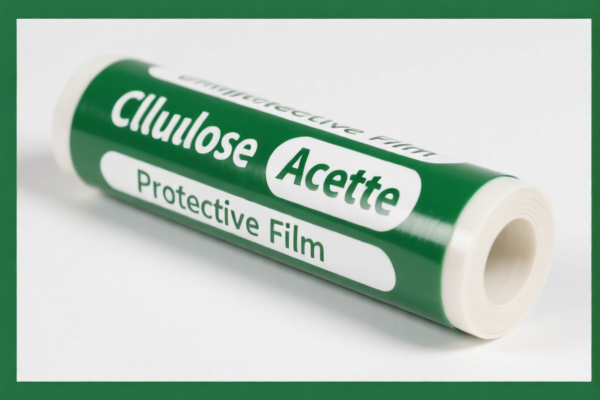
Product Images



AI Analysis
🎬 Cellulose Acetate Protective Film (醋酸纤维素保护膜)
🌐 HS Code Reference & Customs Clearance Guide | 2026 Tariff Breakdown | Strategic Compliance Strategy
📌 I. Product Definition: What is "Cellulose Acetate Protective Film"?
Cellulose Acetate (CA) film is a transparent, biodegradable plastic film derived from natural cellulose (wood pulp or cotton). In international trade, it is primarily used for protective coatings, packaging, optical layers, and industrial shielding.
Unlike standard Polyethylene (PE) or Polypropylene (PP) films, CA film has specific physical properties: * High Clarity & Gloss: Superior optical performance. * Gas Barrier: Better oxygen barrier than PE/PP. * Flammability: More flammable than other thermoplastics. * Sensitivity: Sensitive to humidity and solvents.
⚠️ Critical Classification Distinction:
The HS Code depends heavily on Thickness and Form (Sheet vs. Roll/Film) and whether it is in a Primary/Unprocessed Form or a Finished Product Form.
- If it is a raw/semi-finished film intended for further processing → Often 3912 or 3920.
- If it is a specific thickness (<0.076mm) → Special subheadings apply.
- If it is a reconstituted fiber film → 3921.
📦 II. HS Code Classification Matrix (Based on Provided Data)
| HS Code | Product Summary (English) | Summary (Chinese) | Key Characteristic |
|---|---|---|---|
| 3912.11.00.00 | Cellulose acetate films, in primary forms, in sheets | 初级形式的半成品/片状 | Raw/Semi-finished, Sheet form |
| 3912.12.00.00 | Cellulose acetate films, common form of cellulose derivatives | 纤维素及其化学衍生物的常见表现形式 | General Chemical Derivative Form |
| 3920.73.00.00 | Cellulose acetate films, classified as plates, sheets, web, foil | 板、片、膜、箔类 | Standard Plate/Sheet/Web/Foil classification |
| 3920.79.10.00 | Cellulose acetate films, thickness ≤ 0.076 mm | 厚度不超过0.076毫米的膜、带和片 | Ultra-thin Film (<0.076mm) |
| 3921.14.00.00 | Cellulose acetate films, made of regenerated fiber material | 再生纤维素材质的膜 | Reconstituted/Regenerated Fiber Base |
🔍 Key Classification Logic:
- 3912: Chapter 39, Heading 12 refers to "Cellulose and its chemical derivatives... in primary forms." This is for unworked or simply worked products.
- 3920: Chapter 39, Heading 20 refers to "Other plates, sheets, film, foil and strip..." This is for processed products with specific physical dimensions (like thickness limits).
- 3921: Chapter 39, Heading 21 refers to "Other plates, sheets, film, foil and strip..." specifically for reconstituted materials.
- Why 5 different codes? Because US Customs (CBP) distinguishes based on manufacturing stage and physical dimensions (especially the 0.076mm threshold).
💰 III. 2026 Tariff Rate Analysis (Detailed Breakdown)
✅ Applicable Country: United States (US)
✅ Origin: China (CN)
✅ Effective Date: Post-2025 Import Cycles
✅ Warning: All listed codes attract Significant Additional Tariffs.
🎯 1. 3912.11.00.00 & 3912.12.00.00 — Primary Forms / Sheets
- Summary: Raw or semi-finished cellulose acetate in sheet form.
| Item | Rate/Detail |
|---|---|
| Base Duty (MFN) | 5.6% |
| Section 301 Duty | +25.0% |
| Section 122 Duty | +10.0% |
| Total Landed Cost Duty | 40.6% |
| Calculation | CIF Value × 40.6% |
| De Minimis Exemption | ❌ Not Eligible (High tariff thresholds apply) |
| Legal Path | HTSUS 3912.11/12 → 301 Footnote → 122 Provision |
📌 Explanation:
- The 5.6% is the standard Most Favored Nation (MFN) rate for primary cellulose derivatives.
- The 25% is the standard Section 301 tariff for Chinese origin goods.
- The 10% is a specific "Section 122" tariff (often related to trade remedies or specific administrative provisions).
- Total: 40.6%. This is a high-cost item for US importers.
🎯 2. 3920.73.00.00 — Standard Films/Sheets
- Summary: Classified generally as plates, sheets, or foil.
| Item | Rate/Detail |
|---|---|
| Base Duty (MFN) | 2.9% |
| Section 301 Duty | +25.0% |
| Section 122 Duty | +10.0% |
| Total Landed Cost Duty | 37.9% |
| Calculation | CIF Value × 37.9% |
| De Minimis Exemption | ❌ Not Eligible |
| Legal Path | HTSUS 3920.73 → 301 Footnote → 122 Provision |
📌 Explanation:
- Slightly lower base duty (2.9%) compared to 3912 codes.
- Total: 37.9%. Still very high, but ~2.7% cheaper than the 3912 codes.
🎯 3. 3920.79.10.00 — Ultra-Thin Films (≤ 0.076 mm)
- Summary: Specifically for films/thickness ≤ 0.076 mm.
| Item | Rate/Detail |
|---|---|
| Base Duty (MFN) | 6.2% |
| Section 301 Duty | +25.0% |
| Section 122 Duty | +10.0% |
| Total Landed Cost Duty | 41.2% |
| Calculation | CIF Value × 41.2% |
| De Minimis Exemption | ❌ Not Eligible |
| Legal Path | HTSUS 3920.79.10 → 301 Footnote → 122 Provision |
📌 Explanation:
- The 6.2% base duty reflects the premium or specific classification for thin films.
- Total: 41.2%. This is the highest duty among the provided options.
- Risk: If you declare a 0.08mm film as 0.07mm to try for a different code, it will be rejected.
🎯 4. 3921.14.00.00 — Regenerated Fiber Films
- Summary: Films made from regenerated cellulose fibers.
| Item | Rate/Detail |
|---|---|
| Base Duty (MFN) | 6.5% |
| Section 301 Duty | +25.0% |
| Section 122 Duty | +10.0% |
| Total Landed Cost Duty | 41.5% |
| Calculation | CIF Value × 41.5% |
| De Minimis Exemption | ❌ Not Eligible |
| Legal Path | HTSUS 3921.14 → 301 Footnote → 122 Provision |
📌 Explanation:
- 41.5% is the most expensive option.
- Only use this if the film is explicitly certified as being made from regenerated fibers (e.g., rayon-based). If it’s pure cellulose acetate from wood pulp, this may be misclassified.
🛠️ IV. Customs Clearance Practical Advice
✅ 1. Documentation Checklist (Must-Haves)
| Document | Requirement | Purpose |
|---|---|---|
| Product Specification Sheet | ✔️ Must include Thickness (mm), Width, Length, Composition (% Cellulose Acetate) | To determine correct HS Code (especially 3920.79.10 vs others). |
| Material Safety Data Sheet (MSDS) | ✔️ Essential | CA films are flammable; CBP may ask for safety data. |
| Commercial Invoice | ✔️ Must clearly state "Cellulose Acetate Film" | Avoid generic terms like "Plastic Sheet" which trigger audits. |
| Packing List | ✔️ Detail rolls vs. sheets | To match HS code description (e.g., "in sheets" for 3912). |
| Certificate of Origin | ✔️ If applicable | To verify Chinese origin (triggers 301/122 tariffs). |
| Manufacturing Process Description | ✔️ Optional but recommended | To prove if it’s "Primary Form" (3912) or "Finished Film" (3920/21). |
✅ 2. Classification Strategy (Key Decision Points)
| Scenario | Recommended HS Code | Why? |
|---|---|---|
| Raw rolls, uncut, for further lamination | 3912.11.00.00 or 3912.12.00.00 |
Considered "Primary Form" or "Chemical Derivative." |
| Standard thickness rolls (>0.076mm) | 3920.73.00.00 |
Fits "Other sheets/film" category. Lowest base duty. |
| Very thin films (<0.076mm) | 3920.79.10.00 |
Specific subheading for thin films. Higher base duty. |
| Rayon-based/Regenerated Fiber Film | 3921.14.00.00 |
Only if chemically proven to be regenerated fiber. |
🔥 Golden Rule:
"Thickness Defines Subheading, Composition Defines Heading."
- If thickness ≤ 0.076mm → Look at3920.79.10.
- If thickness > 0.076mm → Look at3920.73or3912.
- If it’s a raw chemical product → Look at3912.
✅ 3. Pitfalls to Avoid
| Mistake | Consequence | Solution |
|---|---|---|
| Misstating Thickness | Audit, Penalties, Back-tariff | Provide certified lab reports for thickness. |
| Using Generic "Plastic Film" | Delays, Request for Info | Use specific chemical name: "Cellulose Acetate." |
| Ignoring Section 122 | Unexpected Bill | Always include 122 tariff in cost calculations. |
| Confusing 3912 & 3920 | Misclassification | 3912 = Primary/Raw; 3920 = Finished/Physical Form. |
🌍 V. Global Market Comparison (2026)
| Region | HS Code | Total Duty Rate | Notes |
|---|---|---|---|
| 🇺🇸 USA | 3920.73.00.00 |
37.9% | High due to 301 + 122. |
| 🇨🇳 China | 3920.73.00.00 |
Varies | Check latest Chinese tariff schedule. |
| 🇪🇺 EU | 3920.73.00 |
~6.5% | No Section 301. Standard EU duty. |
| 🇬🇧 UK | 3920.73.00 |
~6.5% | Post-Brexit independent schedule. |
| 🇯🇵 Japan | 3920.73.00 |
~5.0% | Lower base duty, no US-style add-ons. |
📌 Conclusion:
The US market is exceptionally expensive for Chinese-origin Cellulose Acetate Films due to the cumulative effect of Base + 301 + 122 tariffs.
- Strategy: Consider sourcing from Vietnam, Thailand, or EU if possible to avoid Section 301/122.
- Alternatively: Optimize supply chain to use 3920.73.00.00 (37.9%) instead of 3912/3921 codes if product form allows.
📌 VI. Final Recommendation
- Verify Thickness: If your film is ≤ 0.076mm, you are stuck with 41.2%. If it is > 0.076mm, aim for 3920.73.00.00 (37.9%).
- Confirm Origin: Ensure the Certificate of Origin correctly states "China" if applicable. If not, tariffs drop significantly.
- Pre-Ruling: For large shipments, apply for a CBP Advance Ruling to lock in the HS Code and avoid disputes.
- Cost Calculation: Always budget for ~38-41% duty on CIF value for US imports.
📣 Immediate Action:
📞 Contact your customs broker with:
1. Product Specs (Thickness, Width, Material %).
2. Manufacturing Process Description.
3. Sample Photos.
🚀 Ensure correct classification to avoid 41.5% duties where 37.9% is possible!
✨ Precision in Classification = Precision in Profit!
💼 Don’t let hidden tariffs eat your margins!
Customer Reviews
About HS Code Classification
The Harmonized System (HS) is an internationally standardized nomenclature developed by the World Customs Organization (WCO) to classify traded products. Over 200 countries use the HS system as the basis for customs tariffs, trade statistics, and import/export regulations.
Each HS code follows a hierarchical structure:
- Chapter (2 digits) — Broad category of goods (e.g., Chapter 84: Machinery and Mechanical Appliances)
- Heading (4 digits) — More specific grouping within the chapter
- Subheading (6 digits) — Internationally standardized breakdown, used by all WCO member countries
- National subdivisions (8-10 digits) — Country-specific extensions for further classification, such as US HTSUS 10-digit codes
Correct HS code classification is essential for smooth customs clearance, accurate duty payment, and compliance with trade regulations. Misclassification can lead to customs delays, overpayment of duties, or penalties.
When importing from CN to US, the applicable tariff rates may include:
- Most-Favored-Nation (MFN) rate — The standard duty rate applied to WTO members
- General rate — Applied to countries without trade agreements
- Trade remedy duties — Additional tariffs such as Section 301 (anti-dumping), Section 232 (national security), or countervailing duties
The information provided on this page is for reference purposes only. For official classification, please consult with your local customs authority or a licensed customs broker.