Cellulose Acetate Sheet
CN → US| HS Code | Tariff Rate | Origin | Destination | Doc |
|---|---|---|---|---|
| 3920795000 | 38.7% | CN | US | Official Doc |
| 3920730000 | 37.9% | CN | US | Official Doc |
| 3912120000 | 40.6% | CN | US | Official Doc |
| 3921190090 | 41.5% | CN | US | Official Doc |
| 3926909989 | 22.8% | CN | US | Official Doc |
Product Images
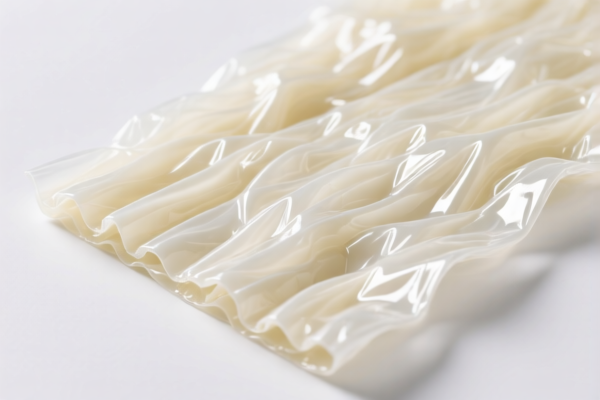
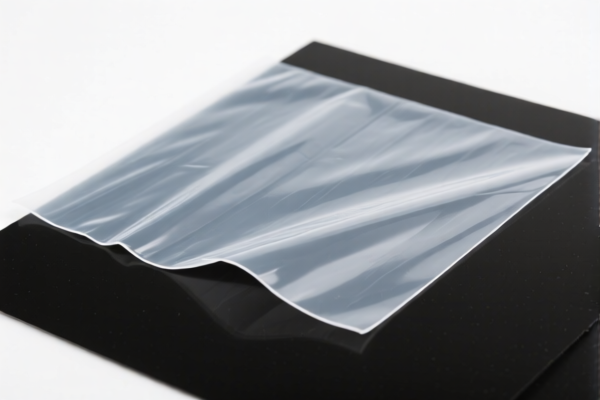
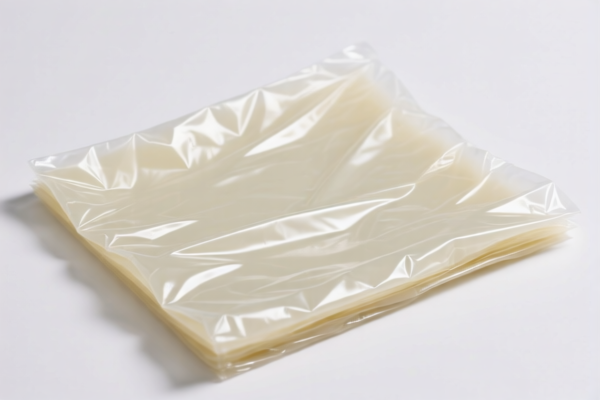
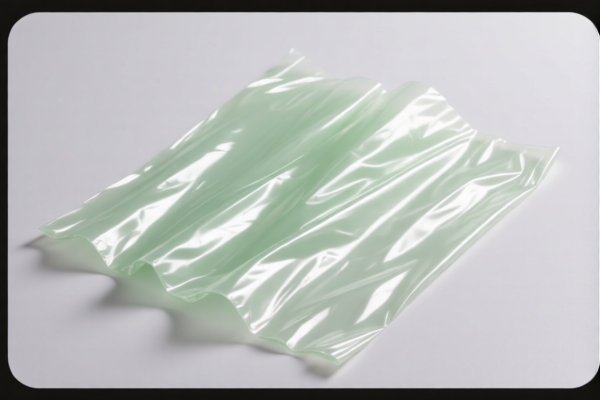
AI Analysis
🧪 Cellulose Acetate Sheet (醋酸纤维改性板/醋酸纤维素板)
🌐 HS Code Reference & Customs Clearance Guide | 2026 Latest Tariff Analysis | Professional Strategy for US Import
📌 I. Product Definition & Classification: What Exactly is "Cellulose Acetate Sheet" in Trade?
Cellulose Acetate Sheet is a semi-synthetic plastic material derived from cellulose (usually wood pulp) and acetic anhydride. In international trade, its classification hinges on its chemical nature and physical form. It is generally categorized under Chapter 39 (Plastics and Articles Thereof).
Key Distinction:
- Derivatives vs. Raw Material: Is it a "cellulose derivative" (modified chemistry, usually hardened sheets) or "primary cellulose acetate" (resin/powder, though the prompt specifies "Sheet/Plate")?
- Form Factor: Since the input is "Sheet," it falls under Plates, Sheets, Film, Foil, and Strip.
- Application: Used for eyewear frames, sunglasses, decorative laminates, technical films, and packaging.
⚠️ Critical Classification Point:
- If the material is strictly Cellulose Acetate (a derivative of cellulose) and formed into a rigid Sheet/Plate, it primarily competes between 3920 (Other plates, sheets, film, foil, and strip) and 3921 (Other plates, sheets, etc.) or even 3912 (Cellulose and its derivatives) if considered a primary derivative form.
- 3920.79.50.00: Specifically for "Other cellulose ethers and esters" plates/sheets.
- 3926.90.99.89: A "catch-all" for other plastic articles, often used if the specific derivative classification is ambiguous, but usually carries lower tariffs for China-origin goods (subject to recent changes).
📦 II. HS Code Classification Details (2026 Authoritative Reference)
| HS Code | Product Description | Applicability | Tax Rate (China Origin) |
|---|---|---|---|
3920.79.50.00 |
Cellulose Acetate Modified Sheet: Plates, sheets, film, foil, and strip, of other cellulose ethers and esters. | Most common for hardened cellulose acetate sheets (e.g., for eyewear, laminates). | 38.7% |
3920.73.00.00 |
Cellulose Acetate Sheet: Plates, sheets, film, foil, and strip, of cellulose acetate. | Specific classification for pure cellulose acetate sheets without other modifications. | 37.9% |
3912.12.00.00 |
Cellulose Acetate & Derivatives: Cellulose acetate, whether or not chemically modified (Primary Form). | Typically for resins/powders, but sometimes applied if the "sheet" is considered a primary derivative form in specific contexts. | 40.6% |
3921.19.00.90 |
Other Plates, Sheets, etc. of Plastics: Other plates, sheets, film, foil, and strip, of polymers of ethylene, of other polymers of vinyl chloride, etc. | If classified as a generic "plastic sheet" due to ambiguity or if it's a composite/modifed plastic not strictly fitting 3920.73. | 41.5% |
3926.90.99.89 |
Other Articles of Plastics: Other articles of plastics and articles of other materials of heading 3901 to 3914. | Catch-all category. Often used for specific shaped items or if the sheet is considered a "part" rather than raw material. Note: Significantly lower base duty but still subject to Section 301/IEEPA. | 22.8% |
🔍 Key Insight:
- 3920.79.50.00 and 3920.73.00.00 are the most accurate for standard Cellulose Acetate Sheets.
- 3926.90.99.89 offers the lowest base duty (5.3%), but still incurs heavy US sanctions tariffs. Use only if the product structure fits "Other Articles" better than "Plates/Sheets" (e.g., pre-cut shapes).
- 3912.12.00.00 is risky; typically reserved for raw derivatives, not finished sheets.
💰 III. 2026 Latest Tariff Rate Breakdown (Including Additional Duties & Policy Surcharges)
✅ Country of Import: United States (US)
✅ Country of Origin: China (CN)
✅ Effective Time: 2025-11-10 onwards (Including subsequent imports)
✅ Sanctions: Section 301 (25%) + IEEPA (10% / 122 Clause)
🎯 1. 3920.79.50.00 —— Cellulose Acetate Sheet (Other Esters)
| Item | Content |
|---|---|
| Base Duty Rate | 3.7% |
| Section 301 Tariff | +25.0% |
| IEEPA / 122 Clause Tariff | +10.0% |
| Total Effective Rate | 38.7% |
| Tax Calculation | CIF Value × 38.7% |
| De Minimis Eligibility | ❌ No (Denied) |
| Legal Basis Path | USITC:3920.79.50.00 → FOOTNOTE:301 → IEEPA:9903.01.24 |
📌 Explanation:
- This is the standard classification for cellulose acetate sheets.
- 38.7% is the total burden. This is high, impacting profit margins significantly.
- No exemptions are available for standard commercial imports from China.
🎯 2. 3920.73.00.00 —— Cellulose Acetate Sheet (Specific)
| Item | Content |
|---|---|
| Base Duty Rate | 2.9% |
| Section 301 Tariff | +25.0% |
| IEEPA / 122 Clause Tariff | +10.0% |
| Total Effective Rate | 37.9% |
| Tax Calculation | CIF Value × 37.9% |
| De Minimis Eligibility | ❌ No (Denied) |
| Legal Basis Path | USITC:3920.73.00.00 → FOOTNOTE:301 → IEEPA:9903.01.24 |
📌 Note:
- Slightly cheaper (37.9% vs 38.7%) than 3920.79.50.00.
- Requires proof that the product is strictly Cellulose Acetate (not mixed with other esters).
- Best if your supplier can provide a pure chemical certificate.
🎯 3. 3926.90.99.89 —— Other Plastic Articles (Lowest Base Duty)
| Item | Content |
|---|---|
| Base Duty Rate | 5.3% |
| Section 301 Tariff | +7.5% (Note: Lower 301 rate for some 3926 items) |
| IEEPA / 122 Clause Tariff | +10.0% |
| Total Effective Rate | 22.8% |
| Tax Calculation | CIF Value × 22.8% |
| De Minimis Eligibility | ❌ No (Denied) |
| Legal Basis Path | USITC:3926.90.99.89 → FOOTNOTE:301 → IEEPA:9903.01.24 |
📌 Warning:
- 22.8% is significantly lower than the 38%+ rates.
- However, this classification is risky. Customs may reclassify it as 3920 if it’s clearly a "sheet/plate."
- Strategy: Use only if the product is not a standard sheet (e.g., pre-cut, shaped, or composite) and you can justify "Other Articles."
- Risk of Audit: High. Misclassification here can lead to back-taxes and penalties.
🎯 4. 3921.19.00.90 —— Other Plastic Sheets
| Item | Content |
|---|---|
| Base Duty Rate | 6.5% |
| Section 301 Tariff | +25.0% |
| IEEPA / 122 Clause Tariff | +10.0% |
| Total Effective Rate | 41.5% |
| Tax Calculation | CIF Value × 41.5% |
| De Minimis Eligibility | ❌ No (Denied) |
📌 Note:
- Highest tariff among the main options.
- Only use if the material is not primarily cellulose acetate (e.g., a composite with other plastics) and cannot be classified under 3920.73/79.
🛠️ IV. Customs Clearance Practical Advice (Pitfall Avoidance Guide)
✅ 1. Required Documentation Checklist
| Document | Mandatory? | Description |
|---|---|---|
| ✅ Product Specification Sheet | ✔️ | Must detail: Chemical composition (e.g., % Cellulose Acetate), physical dimensions, thickness, color, and end-use (e.g., eyewear frames, decorative laminate). |
| ✅ Material Safety Data Sheet (MSDS) | ✔️ | Proves chemical nature and safety. |
| ✅ Commercial Invoice | ✔️ | Must clearly state: "Cellulose Acetate Sheet, Model XYZ, HS Code: 3920.73.00.00." |
| ✅ Certificate of Origin (CO) | ✔️ | For origin proof. |
| ✅ Packing List | ✔️ | Include net/gross weight, dimensions. |
| ✅ Photo of Product & Label | ✔️ | Show any markings, brand, or composition labels. |
| ✅ Declaration of Non-Mixing | ✔️ | If claiming 3920.73.00.00, confirm no other esters are mixed. |
✅ 2. Declaration Tips (Key Mantras)
🔥 "Material Truth, Form Clear, Code Specific, Tariff Clear!"
| Scenario | Correct Declaration | Wrong Practice |
|---|---|---|
| Pure Cellulose Acetate Sheet | 3920.73.00.00 (37.9%) |
Misclassifying as 3921 (41.5%) → Overpaying |
| Modified Cellulose Ester Sheet | 3920.79.50.00 (38.7%) |
Calling it "Plastic Sheet" → Risk of reclassification |
| Pre-cut/Shaped Parts | 3926.90.99.89 (22.8%) with justification |
Calling it "Sheet" → Audit Risk |
| Raw Resin/Powder | 3912.12.00.00 (40.6%) |
Calling it "Sheet" → Clearance Delay |
📌 Important:
- If the product is a standard rectangular sheet (even if tinted or textured), it is likely 3920.73.00.00 or 3920.79.50.00.
- Do not use3926.90.99.89for standard sheets unless you have a strong legal opinion from a customs broker.
- Section 301 Tariff (25%) applies to all 3920 and 3921 codes from China. The 122 Clause (10%) also applies.
✅ 3. Special Case Handling
| Situation | Recommendation |
|---|---|
| Composite Materials | If the sheet has a plastic coating or core, determine the essential character. If cellulose acetate dominates, use 3920.73.00.00. |
| Eyewear Frames (Pre-made) | If sold as frames, not sheets, they may fall under 9003.10 (Eyewear frames). This can have different tariffs (often lower base duty but still subject to 301). Check if the product is finished goods. |
| Laminates | If the sheet is part of a laminate panel, classify as the principal material. |
| Origin Diversification | If sourced from Vietnam, Thailand, or Mexico, apply for preferential duty rates (0-5%). IEEPA exemptions may apply. |
🌍 V. Global Market Comparison (2026 Latest)
| Country/Region | Recommended HS Code | Tariff (China Origin) | Certification | Note |
|---|---|---|---|---|
| 🇺🇸 USA | 3920.73.00.00 |
37.9% | FDA (if food contact), REACH (if EU bound) | High tariff. Consider 3926 if justifiable. |
| 🇨🇳 China | 3920.73.00.00 |
5% (Import) | CCC (if applicable) | No additional sanctions. |
| 🇪🇺 EU | 3920.73.00.00 |
6.5% | REACH, RoHS | No Section 301. |
| 🇯🇵 Japan | 3920.73.00.00 |
5-6% | JIS | No sanctions. |
| 🇬🇧 UK | 3920.73.00.00 |
6.5% | UKCA | Post-Brexit rules apply. |
📌 Conclusion:
- The US market is the most expensive due to Section 301 + IEEPA tariffs.
- Diversify sourcing: If possible, source cellulose acetate sheets from non-China countries to avoid the 35-40% tariff block.
- Value-add: Consider importing resins (if lower tariff) and processing in a third country, or importing finished eyewear frames (9003.10) if applicable.
📌 VI. Common Mistakes & Pitfalls (Lessons Learned)
❌ Mistake 1: Classifying standard sheets as 3926.90.99.89 to save 15% tax.
👉 Consequence: Customs audit, reclassification to 3920.73.00.00, back-taxes of ~15%, and potential fines.
❌ Mistake 2: Ignoring the "122 Clause" (10%).
👉 Consequence: Underpaying duties, leading to penalties and delays. The 10% is mandatory for most plastic imports from China.
❌ Mistake 3: Confusing "Cellulose Acetate Sheet" with "Acetate Rayon Fiber."
👉 Consequence: Wrong HS Code (5501 vs 3920). Fiber is classified under Chapter 55, not 39.
❌ Mistake 4: Not declaring end-use.
👉 Consequence: If the sheet is for eyewear frames, declare as finished frames (9003.10) if possible, which may have a different tariff structure.
✅ Correct Approach:
"Cellulose Acetate Sheet, 0.5mm thick, clear, for eyewear frame manufacturing, Model XYZ, HS Code: 3920.73.00.00."
🎯 VII. Conclusion: Professional Declaration, Cost Optimization!
🎯 Remember the Mantra:
🔹 "Pure Sheet? 3920.73 (37.9%). Mixed? 3920.79 (38.7%). Shape? Maybe 3926 (22.8%) but risk audit. Fin? 9003.10."
🔹 "Tariff is King: 25% + 10% + Base. Don't ignore the 301 Clause!"
📌 Pro Tip:
- If your Cellulose Acetate Sheet is used for eyewear frames, consider if it's more profitable to import finished frames (HS 9003.10) and apply for Section 301 exclusions (if available) or source from Vietnam/Mexico.
- Request a Pre-Ruling from US Customs (CBP) if the classification is complex.
- Consult a licensed customs broker to evaluate the feasibility of using 3926.90.99.89 with strong documentation.
📣 Immediate Action:
📞 Contact Your Broker: Provide spec sheets and photos.
🚀 Evaluate Origin: Can you switch to non-China sourcing?
💡 Optimize Structure: Can you import finished goods instead of raw sheets?
✨ Professional clearance starts with precise classification!
💼 Every percentage point matters in the age of tariffs!
Customer Reviews
About HS Code Classification
The Harmonized System (HS) is an internationally standardized nomenclature developed by the World Customs Organization (WCO) to classify traded products. Over 200 countries use the HS system as the basis for customs tariffs, trade statistics, and import/export regulations.
Each HS code follows a hierarchical structure:
- Chapter (2 digits) — Broad category of goods (e.g., Chapter 84: Machinery and Mechanical Appliances)
- Heading (4 digits) — More specific grouping within the chapter
- Subheading (6 digits) — Internationally standardized breakdown, used by all WCO member countries
- National subdivisions (8-10 digits) — Country-specific extensions for further classification, such as US HTSUS 10-digit codes
Correct HS code classification is essential for smooth customs clearance, accurate duty payment, and compliance with trade regulations. Misclassification can lead to customs delays, overpayment of duties, or penalties.
When importing from CN to US, the applicable tariff rates may include:
- Most-Favored-Nation (MFN) rate — The standard duty rate applied to WTO members
- General rate — Applied to countries without trade agreements
- Trade remedy duties — Additional tariffs such as Section 301 (anti-dumping), Section 232 (national security), or countervailing duties
The information provided on this page is for reference purposes only. For official classification, please consult with your local customs authority or a licensed customs broker.