Cellulose Acetate Sheets
CN → US| HS Code | Tariff Rate | Origin | Destination | Doc |
|---|---|---|---|---|
| 4823906000 | 35.0% | CN | US | Official Doc |
| 4823908000 | 35.0% | CN | US | Official Doc |
| 3920791000 | 41.2% | CN | US | Official Doc |
| 3912110000 | 40.6% | CN | US | Official Doc |
| 4823906000 | 35.0% | CN | US | Official Doc |
Product Images
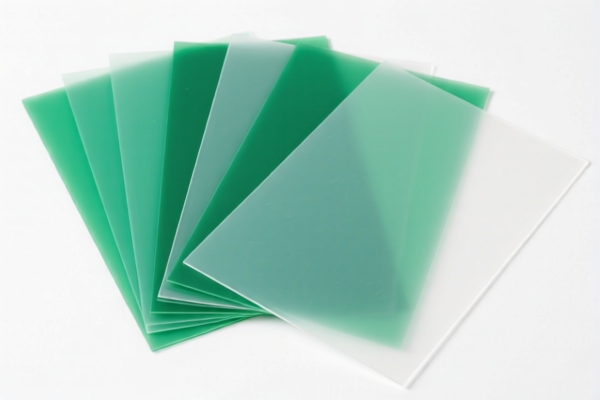
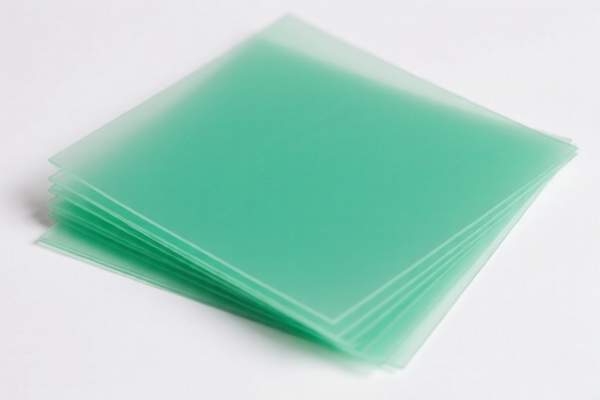
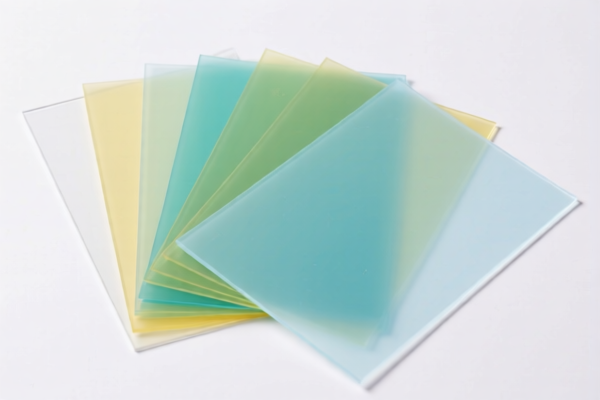
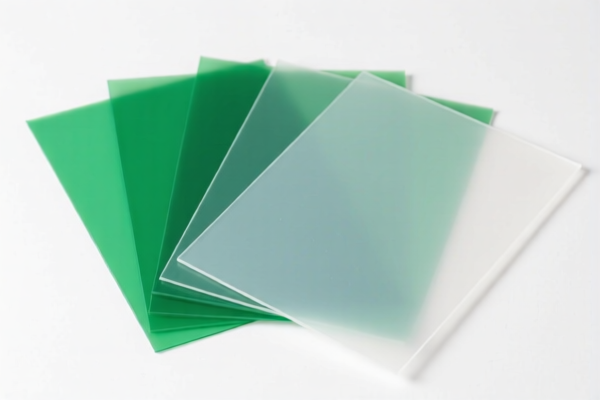
AI Analysis
🧪 Cellulose Acetate Sheets (醋酸纤维素片)
🌐 HS Code Reference & Customs Clearance Guide | 2026 Latest Tariff Analysis | Professional Entry Strategy
📌 I. Product Definition & Classification: Do You Really Know "Cellulose Acetate"?
Cellulose Acetate (CA) is a derivative of natural cellulose, widely used in optics, packaging, and industrial applications due to its clarity and durability. In international trade, it is classified based on its form (sheet vs. film) and purpose (support vs. other).
Key Distinctions: 1. Form: Is it a rigid "Sheet" (plate-like, thicker) or a flexible "Film" (thin, rollable)? * Sheets often fall under Chapter 48 (Paper/Pulp products) if treated as manufactured articles, or Chapter 39 (Plastics) if viewed as primary plastic forms. * Films generally fall under Chapter 39 (Plastics). 2. Material Status: Is it a raw plastic resin (unlikely for sheets) or a finished/semi-finished article? 3. Origin Risk: Crucial for US Imports. Most CA articles from China are subject to significant additional tariffs under Section 301 and IEEPA.
⚠️ Critical Classification Point:
- If the product is a rigid sheet used for support or specific manufactured items → Check HS 4823.90 (Paper-like articles).
- If the product is a thin film or plastic sheet without specific paper-like treatment → Check HS 3920.79 (Plastic sheets/films).
- If it is a primary form film → Check HS 3912.11 (Acetylated cellulose).
📦 II. HS Code Classification Matrix (2026 Latest Data)
| HS Code | Product Description | Key Characteristics | Tax Category |
|---|---|---|---|
4823.90.60.00 |
Supportive Cellulose Acetate Sheet | Material: CA; Form: Sheet; Use: Supportive. Classified under "Cellulose fiber products and pads/seals." | 🟠 High Risk (Section 301) |
4823.90.80.00 |
Other Cellulose Acetate Sheets | Material: CA; Form: Sheet; Other shapes/sizes not specified elsewhere. Classified under "Other manufactured articles." | 🟠 High Risk (Section 301) |
3920.79.10.00 |
Cellulose Acetate Sheet (Plastic) | Material: Cellulose derivative; Form: Sheet. Classified under "Plastic sheets, films, boards." No thickness conflict. | 🔴 Highest Risk (Section 301 + Base) |
3912.11.00.00 |
Cellulose Acetate Film | Material: CA; Form: Film. Classified under "Primary forms/acetylated cellulose." | 🔴 Highest Risk (Section 301 + Base) |
🔍 Analysis of Conflict:
-4823.90vs3920.79: The distinction often lies in whether the product is considered a "paper-like" article (Ch 48) or a "plastic sheet" (Ch 39). Customs officers may argue that CA sheets are essentially plastic. If the sheet is stiff and used structurally,4823is often preferred by importers for lower base rates, but3920is technically accurate for pure plastic derivatives.
-3912.11is specific to films (very thin, rolled). If your product is cut into "sheets,"3920or4823is more appropriate than the "film" code.
💰 III. 2026 Tariff Rate Breakdown (China Origin → USA)
✅ Applicable Country: United States (US)
✅ Country of Origin: China (CN)
✅ Effective Date: Nov 10, 2025 onwards
✅ Note: All listed rates include Base Duty, Section 301 (25%), and IEEPA (10%).
🎯 1. 4823.90.60.00 & 4823.90.80.00 — Cellulose Acetate Sheets (Paper-like)
| Item | Details |
|---|---|
| Base Duty | 0.0% (Ad Valorem) |
| Section 301 Duty | +25.0% (Footnote 9903.88.01 / 301 List 4) |
| IEEPA Duty | +10.0% (25 U.S.C. 1702(b) - China Specific) |
| Total Rate | 35.0% |
| Calculation | CIF Value × 35% |
| De Minimis Exemption | ❌ Not Eligible (Section 321 de minimis does not apply to Section 301/IEEPA goods from China) |
| Legal Path | USITC:4823.90.60.00 → FOOTNOTE:301 → IEEPA:China |
📌 Explanation:
These codes benefit from a 0% base duty, but the 35% combined surcharge makes the landed cost very high. This is the most common classification for CA sheets used in optical filters or structural supports.
🎯 2. 3920.79.10.00 — Cellulose Acetate Sheet (Plastic Classification)
| Item | Details |
|---|---|
| Base Duty | 6.2% (Ad Valorem) |
| Section 301 Duty | +25.0% |
| IEEPA Duty | +10.0% |
| Total Rate | 41.2% |
| Calculation | CIF Value × 41.2% |
| De Minimis Exemption | ❌ Not Eligible |
| Legal Path | USITC:3920.79.10.00 → FOOTNOTE:301 → IEEPA:China |
📌 Explanation:
If Customs classifies the sheet as a "plastic sheet" (Chapter 39), the base duty jumps to 6.2%, leading to a total tax of 41.2%. This is 6.2% higher than the Chapter 48 classification.
Strategy: Provide strong technical data sheets proving the product's "paper-like" structure or specific manufacturing process to argue for4823.
🎯 3. 3912.11.00.00 — Cellulose Acetate Film
| Item | Details |
|---|---|
| Base Duty | 5.6% (Ad Valorem) |
| Section 301 Duty | +25.0% |
| IEEPA Duty | +10.0% |
| Total Rate | 40.6% |
| Calculation | CIF Value × 40.6% |
| De Minimis Exemption | ❌ Not Eligible |
| Legal Path | USITC:3912.11.00.00 → FOOTNOTE:301 → IEEPA:China |
📌 Explanation:
Only applicable if the product is strictly a film (thin, flexible, often rolled). If your product is a rigid sheet, this classification is incorrect and will lead to penalties.
🛠️ IV. Customs Clearance Practical Advice (Pitfall Avoidance)
✅ 1. Documentation Checklist (Mandatory)
| Document | Required? | Notes |
|---|---|---|
| Technical Data Sheet (TDS) | ✅ Yes | Must specify: Thickness, Composition (% CA), Glass Transition Temp, Use Case. |
| Product Photos | ✅ Yes | Show cross-section (to prove "sheet" vs "film" thickness) and surface texture. |
| Commercial Invoice | ✅ Yes | Clearly state: "Cellulose Acetate Sheets, Model XYZ, Made in China." Avoid vague terms like "Plastic Material." |
| Certificate of Origin | ✅ Yes | Required for proving CN origin to apply correct surcharges. |
| Manufacturing Process Description | ✅ Recommended | Explain if calendering, extrusion, or casting was used. Helps argue for 4823 if it mimics paper production. |
✅ 2. Classification Strategy (Key Mantra)
🔥 "Structure Defines Code, Form Defines Duty!"
| Scenario | Recommended HS Code | Why? |
|---|---|---|
| Rigid Sheet, Used as Support/Filter | 4823.90.60.00 |
0% Base Duty. Argue it behaves like a "manufactured paper-like article." |
| Rigid Sheet, Generic Use | 4823.90.80.00 |
0% Base Duty. Catch-all for sheets not in specific plastic subheads. |
| Thin, Flexible, Rolled Material | 3920.79.10.00 |
If it's clearly plastic film/sheet. Higher base duty (6.2%). |
| Ultra-thin, Transparent Film | 3912.11.00.00 |
Only if <0.1mm typically. Classified as "Primary Form." |
⚠️ Warning: Do NOT mix codes in one shipment if items are distinct. If you have both sheets and films, separate them. Misdeclaring a film as a sheet to save duty can result in fraud penalties.
✅ 3. Special Scenarios
| Situation | Advice |
|---|---|
| OEM Custom Sheets | Provide design drawings. If the shape is unique, 4823.90.80.00 is safer than trying to force a specific plastic code. |
| Mixed Materials (CA + Polymer) | If CA is <50%, it may not qualify as CA. If >50%, it is CA. Check the % composition on the invoice. |
| Value < $800 (De Minimis) | DO NOT rely on this. Section 301 and IEEPA tariffs block the de minimis exemption for Chinese goods. You must pay duties regardless of value. |
🌍 V. Global Market Comparison (2026)
| Market | Recommended HS Code | Total Tax (China Origin) | Notes |
|---|---|---|---|
| 🇺🇸 USA | 4823.90.60.00 |
35.0% | Highest barrier. IEEPA + 301 apply. |
| 🇺🇸 USA | 3920.79.10.00 |
41.2% | Avoid if possible; higher base duty. |
| 🇨🇳 China | 3920.79.00.00 |
~10-13% | Import duties vary; check current CN tariff schedule. |
| 🇪🇺 EU | 3920.71.00.00 |
~6.5% | No Section 301. Standard EU duty. |
| 🇬🇧 UK | 3920.71.00.00 |
~6.5% | Post-Brexit tariff aligns with EU. |
📌 Conclusion:
The USA is the most expensive market for Cellulose Acetate Sheets from China due to the 35-41% effective tariff rate.
- Cost Saving Tip: If the CA sheet is part of a larger assembled product, verify if the final product has a different duty rate that might absorb this cost.
- Supply Chain: Consider sourcing from Vietnam or Mexico (if applicable) to bypass IEEPA 10%, though Section 301 may still apply depending on substantial transformation.
📌 VI. Common Mistakes & Pitfalls (Blood Lessons)
❌ Mistake 1: Using "Plastic Sheet" on Invoice for 4823 Code
👉 Consequence: Customs will reclassify to 3920, adding 6.2% to your duty bill + potential penalties for misdeclaration.
✅ Fix: Use terms like "Cellulose Fiber Sheet," "Acetate Paper," or "Non-woven Sheet."
❌ Mistake 2: Assuming De Minimis ($800) Applies
👉 Consequence: Shipments under $800 are still seized or taxed at 35% if from China.
✅ Fix: Plan for full duty payment on all China-origin CA sheets.
❌ Mistake 3: Confusing "Sheet" with "Film"
👉 Consequence: If you declare a thick sheet as "Film" (3912), it may be rejected or fined for incorrect classification.
✅ Fix: Use micrometer measurements in your technical data to define thickness. >0.1mm is usually "Sheet."
🎯 VII. Conclusion: Smart Classification for Cost Efficiency
🎯 Key Takeaway:
🔹 Always aim for
4823.90.60.00if the product is a rigid/supportive sheet. It saves you 6.2% in base duty compared to the plastic classification.
🔹 Total Tax is Non-Negotiable: Expect 35% total for CA sheets from China to the US. No loopholes for Section 301/IEEPA.
🔹 Be Precise: Vague descriptions lead to audits. Use "Cellulose Acetate Sheet, Support Type" in your documentation.
📌 Pro Tip:
For high-volume imports, consider applying for a Binding Ruling (CBP Ruling) before shipment. This provides legal certainty on whether your specific sheet qualifies for 4823 (0% base) vs 3920 (6.2% base), protecting you from retroactive duties.
📣 Immediate Action:
📞 Consult a licensed Customs Broker
📄 Prepare Technical Data Sheets (Thickness, % CA, Use Case)
📦 Pay the 35% Tax and Clear the Goods Smoothly!
✨ Precision in Classification, Profit in Clearance!
💼 Your Supply Chain Efficiency Starts with the Right HS Code!
Customer Reviews
About HS Code Classification
The Harmonized System (HS) is an internationally standardized nomenclature developed by the World Customs Organization (WCO) to classify traded products. Over 200 countries use the HS system as the basis for customs tariffs, trade statistics, and import/export regulations.
Each HS code follows a hierarchical structure:
- Chapter (2 digits) — Broad category of goods (e.g., Chapter 84: Machinery and Mechanical Appliances)
- Heading (4 digits) — More specific grouping within the chapter
- Subheading (6 digits) — Internationally standardized breakdown, used by all WCO member countries
- National subdivisions (8-10 digits) — Country-specific extensions for further classification, such as US HTSUS 10-digit codes
Correct HS code classification is essential for smooth customs clearance, accurate duty payment, and compliance with trade regulations. Misclassification can lead to customs delays, overpayment of duties, or penalties.
When importing from CN to US, the applicable tariff rates may include:
- Most-Favored-Nation (MFN) rate — The standard duty rate applied to WTO members
- General rate — Applied to countries without trade agreements
- Trade remedy duties — Additional tariffs such as Section 301 (anti-dumping), Section 232 (national security), or countervailing duties
The information provided on this page is for reference purposes only. For official classification, please consult with your local customs authority or a licensed customs broker.