Cellulose Acetate Stretch Film
CN → US| HS Code | Tariff Rate | Origin | Destination | Doc |
|---|---|---|---|---|
| 3912110000 | 40.6% | CN | US | Official Doc |
| 3912120000 | 40.6% | CN | US | Official Doc |
| 3920730000 | 37.9% | CN | US | Official Doc |
| 3920791000 | 41.2% | CN | US | Official Doc |
| 3921140000 | 41.5% | CN | US | Official Doc |
Product Images

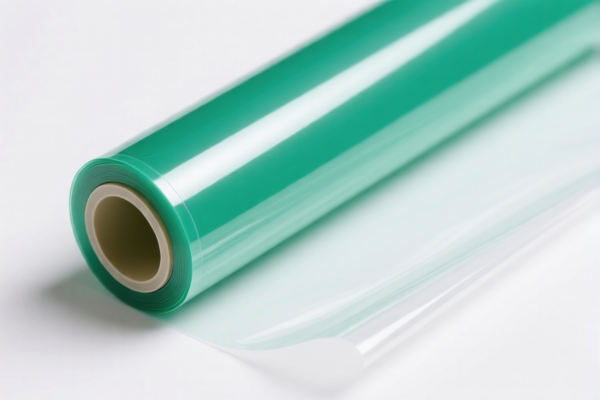
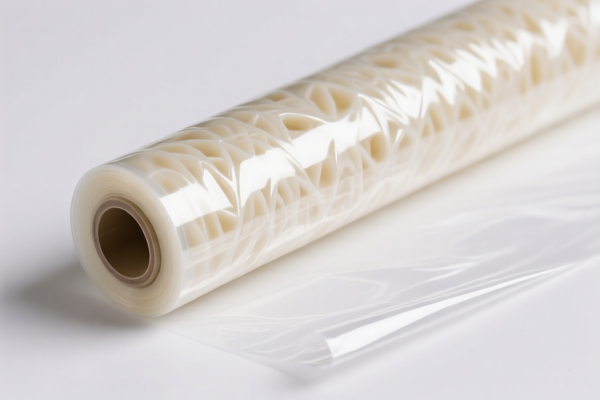
AI Analysis
🧪 Cellulose Acetate Stretch Film (醋酸纤维素薄膜)
🌐 HS Code Reference & Customs Clearance Guide | 2026 Latest Tariff Analysis | Professional Entry Strategy
📌 I. Product Definition & Classification: What is "Cellulose Acetate Stretch Film"?
Cellulose Acetate (CA) is a versatile plastic derived from cellulose (wood pulp or cotton linters). "Stretch Film" in this context typically refers to thin, flexible sheets or rolls of CA used for packaging, protective coatings, or industrial applications. Unlike polyolefin stretch films (like PVC or PE), CA is known for its clarity, oxygen barrier properties, and biodegradability potential.
In international trade, CA film is categorized based on its form (primary shape vs. finished sheet) and thickness. The classification logic follows these key distinctions:
1. Primary Forms / Semi-finished (Raw Material State):
- Includes film in the form of rolls, sheets, or strips intended for further processing.
- Often classified under heading 3912 (Cellulose and its chemical derivatives) if considered a "semi-finished" chemical product.
2. Finished Sheets/Plates/Film (Manufactured Article):
- Includes film that is cut, treated, or finished for specific use.
- Classified under heading 3920 (Other plates, sheets, film, foil, and strip, of plastics) or 3921 (Other plates, sheets, film, foil, and strip, of plastics).
⚠️ Key Classification Point:
- If the product is a raw chemical derivative in semi-finished form → HS 3912.
- If it is a manufactured plastic sheet/film (even if thin) → HS 3920 or 3921.
- Thickness matters: Films ≤ 0.076mm may have specific subheadings.
📦 II. HS Code Classification Matrix (2026 Latest Tariff Reference)
Based on the provided data, here are the precise HS Codes for Cellulose Acetate Stretch Film:
| HS Code | Product Description (Summary) | Key Characteristics | Typical Use Case |
|---|---|---|---|
3912.11.00.00 |
Cellulose Acetate Film (Primary/Semi-finished) | Thin, sheet-like, semi-finished state | Raw material for further lamination or coating |
3912.12.00.00 |
Cellulose Acetate Film (Cellulose Derivative) | Common form of cellulose derivatives | Industrial rolls, bulk packaging material |
3920.73.00.00 |
Cellulose Acetate Film (Plates/Sheets/Film) | Finished plastic film, non-cellulose derivative classification | Standard packaging, protective wraps |
3920.79.10.00 |
Cellulose Acetate Film (≤ 0.076mm thick) | Ultra-thin film, specific thickness cutoff | High-clarity packaging, specialty filters |
3921.14.00.00 |
Regenerated Cellulose Film (Cellophane-type) | Material matches code requirements (regenerated vs. acetate) | Biodegradable packaging, food wraps |
🔍 Critical Note:
- HS 3912 codes are for cellulose acetate (a chemical derivative).
- HS 3921.14.00.00 is for regenerated cellulose (e.g., Cellophane). While similar in appearance, they are chemically distinct. Ensure your material is truly "Acetate" (3912/3920) and not "Regenerated" (3921).
- Thickness: If ≤ 0.076mm,3920.79.10.00applies. Otherwise,3920.73.00.00may be used for general CA films.
💰 III. 2026 Latest Tariff Rate Breakdown (Including Surcharges & Policy Add-ons)
✅ Applicable Country: United States (US)
✅ Origin: China (CN)
✅ Effective Date: Post-2025 (Current trade war tariffs apply)
🎯 1. 3912.11.00.00 & 3912.12.00.00 — Cellulose Acetate (Primary Forms)
| Item | Details |
|---|---|
| Base Tariff | 5.6% (ad valorem) |
| Section 301 Surcharge | +25.0% (USITC Footnote 9903.88.01) |
| Section 122 Tariff | +10.0% (Specific provision for certain chemical derivatives) |
| Total Effective Rate | 40.6% |
| Tax Calculation | CIF Value × 40.6% |
| De Minimis Exemption? | ❌ No (Deny de minimis) |
| Legal Basis | IEEPA:9903.01.25 → USITC:3912.11.00.00 → FOOTNOTE:9903.88.01 |
📌 Explanation:
- These HS codes fall under Section 301 (China-origin goods), incurring a 25% surcharge.
- Additionally, a 10% Section 122 tariff applies, bringing the total to 40.6%.
- High tariff impact: This category is significantly taxed due to trade restrictions.
🎯 2. 3920.73.00.00 — Cellulose Acetate Film (Plates/Sheets/Film)
| Item | Details |
|---|---|
| Base Tariff | 2.9% (ad valorem) |
| Section 301 Surcharge | +25.0% |
| Section 122 Tariff | +10.0% |
| Total Effective Rate | 37.9% |
| Tax Calculation | CIF Value × 37.9% |
| De Minimis Exemption? | ❌ No |
| Legal Basis | IEEPA:9903.01.25 → USITC:3920.73.00.00 → FOOTNOTE:9903.88.01 |
📌 Explanation:
- Base rate is lower (2.9%) than primary forms, but Section 301 and 122 tariffs still apply.
- Total 37.9% is slightly cheaper than 3912 codes but still high.
🎯 3. 3920.79.10.00 — Cellulose Acetate Film (Thickness ≤ 0.076mm)
| Item | Details |
|---|---|
| Base Tariff | 6.2% (ad valorem) |
| Section 301 Surcharge | +25.0% |
| Section 122 Tariff | +10.0% |
| Total Effective Rate | 41.2% |
| Tax Calculation | CIF Value × 41.2% |
| De Minimis Exemption? | ❌ No |
| Legal Basis | IEEPA:9903.01.25 → USITC:3920.79.10.00 → FOOTNOTE:9903.88.01 |
📌 Explanation:
- Ultra-thin films have a higher base rate (6.2%) due to specificity.
- Total 41.2% is the highest tariff among CA films. Precision in thickness declaration is critical.
🎯 4. 3921.14.00.00 — Regenerated Cellulose Film (Cellophane)
| Item | Details |
|---|---|
| Base Tariff | 6.5% (ad valorem) |
| Section 301 Surcharge | +25.0% |
| Section 122 Tariff | +10.0% |
| Total Effective Rate | 41.5% |
| Tax Calculation | CIF Value × 41.5% |
| De Minimis Exemption? | ❌ No |
| Legal Basis | IEEPA:9903.01.25 → USITC:3921.14.00.00 → FOOTNOTE:9903.88.01 |
📌 Explanation:
- Misclassification Risk: If you label "Cellulose Acetate" but it is actually "Regenerated Cellulose," this HS code applies.
- Total 41.5% is the most expensive option. Ensure accurate material identification.
🛠️ IV. Customs Clearance Practical Advice (Real-World Pitfall Guide)
✅ 1. Documentation Checklist (Mandatory)
| Document | Required? | Notes |
|---|---|---|
| ✅ Product Specification Sheet | ✔️ | Must specify: Material (CA vs. Regenerated), Thickness (mm), Width, Roll Length |
| ✅ Material Safety Data Sheet (MSDS) | ✔️ | For chemical handling compliance |
| ✅ Certificate of Origin (CO) | ✔️ | Critical for Section 301/122 applicability |
| ✅ Commercial Invoice | ✔️ | Must clearly state "Cellulose Acetate Film" or "Regenerated Cellulose Film" |
| ✅ Bill of Lading | ✔️ | Weight and volume details |
| ✅ Third-Party Test Report | ✔️ | Proof of material composition (GC/MS analysis recommended) |
✅ 2. Declaration Tips (Key Mnemonics)
🔥 “Material First, Then Form, Thickness Dictates Code!”
| Scenario | Correct HS Code | Wrong Action | Consequence |
|---|---|---|---|
| Raw CA Roll (Semi-finished) | 3912.11.00.00 |
Declare as "Finished Film" → 3920 |
Potential misclassification penalty |
| CA Film ≤ 0.076mm | 3920.79.10.00 |
Declare as >0.076mm → 3920.73.00.00 |
Underpayment of base tariff |
| Cellophane (Regenerated) | 3921.14.00.00 |
Declare as "Cellulose Acetate" → 3912 |
Audit risk, higher penalties |
| Mixed CA & Plastic | Split Declaration | Combine into one line item | Customs seizure |
✅ 3. Special Cases Handling
| Situation | Recommendation |
|---|---|
| OEM Custom CA Film | Provide customer design specs to prove "Semi-finished" status if claiming 3912 |
| Coated CA Film | If coated with resin, may shift to 3921 or 3920 depending on coating type |
| Biodegradable Labeling | Do not use "Biodegradable" as a substitute for material description; clarify CA vs. Regenerated |
| Small Sample Imports | Even small quantities are subject to 40%+ tariffs; no de minimis exemption |
🌍 V. Global Market Comparison (2026 Update)
| Country/Region | Recommended HS Code | Tariff (China Origin) | Certification | Notes |
|---|---|---|---|---|
| 🇺🇸 USA | 3912.11.00.00 |
40.6% | FDA (if food contact) | High tariffs due to Sec 301/122 |
| 🇨🇳 China | 3912.11.00.00 |
5.6% | RoHS | No extra surcharges |
| 🇪🇺 EU | 3920.73.00.00 |
6.5% | REACH | No Section 301 tariffs |
| 🇬🇧 UK | 3920.73.00.00 |
6.5% | UKCA | Post-Brexit rules apply |
| 🇦🇺 Australia | 3920.73.00.00 |
5.0% | AICIS | Lower duties |
📌 Conclusion:
- USA has the highest total tariff (40.6–41.5%) due to Section 301 and 122.
- EU/UK/Australia offer significantly lower rates (5–6.5%).
- Consider supply chain diversification if exporting to the US.
📌 VI. Common Mistakes & Pitfalls (Lessons from the Field)
❌ Mistake 1: Confusing Cellulose Acetate (3912/3920) with Regenerated Cellulose (3921).
👉 Result: 3921.14.00.00 has a 41.5% rate vs. 3912 at 40.6%. Small difference, but audit risk if mislabeled.
❌ Mistake 2: Ignoring Thickness declaration.
👉 Result: Declaring 0.08mm film as ≤0.076mm (3920.79.10.00) to save 0.3% base tariff → Penalty + Back Taxes.
❌ Mistake 3: Assuming "Film" always means 3920.
👉 Result: Semi-finished CA rolls should be 3912. Misclassification leads to overpayment or audit triggers.
❌ Mistake 4: Using "Stretch Film" without specifying material.
👉 Result: Customs may default to PVC/PE codes (0%–5% base), leading to severe penalties for undervaluation.
✅ Correct Approach:
"Cellulose Acetate Film, Roll, 0.05mm, Width 1m, Raw Material for Packaging, HS 3912.11.00.00"
🎯 VII. Conclusion: Precision Pays Off!
🎯 Remember the Mantra:
🔹 "Material Defines Code, Thickness Defines Sub-code, Sec 301 Defines Cost!"
🔹 "CA Film = 40%+ Tax, Don’t Guess, Get Pre-Ruling!"
📌 Pro Tip:
If your cellulose acetate film is sourced from Vietnam, Thailand, or Malaysia, you may avoid Section 301 tariffs. However, Section 122 may still apply. Always verify Country of Origin on the certificate.
📣 Immediate Action:
📞 Contact a Licensed Customs Broker
📄 Request an Advance Ruling (Pre-classification)
📊 Verify Thickness with Lab Test
🚀 Minimize Tariffs, Maximize Profit!
✨ Professional Customs Clearance Starts with Accurate Classification!
💼 Your Bottom Line Depends on the HS Code!
Customer Reviews
About HS Code Classification
The Harmonized System (HS) is an internationally standardized nomenclature developed by the World Customs Organization (WCO) to classify traded products. Over 200 countries use the HS system as the basis for customs tariffs, trade statistics, and import/export regulations.
Each HS code follows a hierarchical structure:
- Chapter (2 digits) — Broad category of goods (e.g., Chapter 84: Machinery and Mechanical Appliances)
- Heading (4 digits) — More specific grouping within the chapter
- Subheading (6 digits) — Internationally standardized breakdown, used by all WCO member countries
- National subdivisions (8-10 digits) — Country-specific extensions for further classification, such as US HTSUS 10-digit codes
Correct HS code classification is essential for smooth customs clearance, accurate duty payment, and compliance with trade regulations. Misclassification can lead to customs delays, overpayment of duties, or penalties.
When importing from CN to US, the applicable tariff rates may include:
- Most-Favored-Nation (MFN) rate — The standard duty rate applied to WTO members
- General rate — Applied to countries without trade agreements
- Trade remedy duties — Additional tariffs such as Section 301 (anti-dumping), Section 232 (national security), or countervailing duties
The information provided on this page is for reference purposes only. For official classification, please consult with your local customs authority or a licensed customs broker.