Cellulose Acetate Tape
CN → US| HS Code | Tariff Rate | Origin | Destination | Doc |
|---|---|---|---|---|
| 3921905050 | 39.8% | CN | US | Official Doc |
| 3921140000 | 41.5% | CN | US | Official Doc |
| 3921904010 | 39.2% | CN | US | Official Doc |
| 3921140000 | 41.5% | CN | US | Official Doc |
| 3921905050 | 39.8% | CN | US | Official Doc |
Product Images
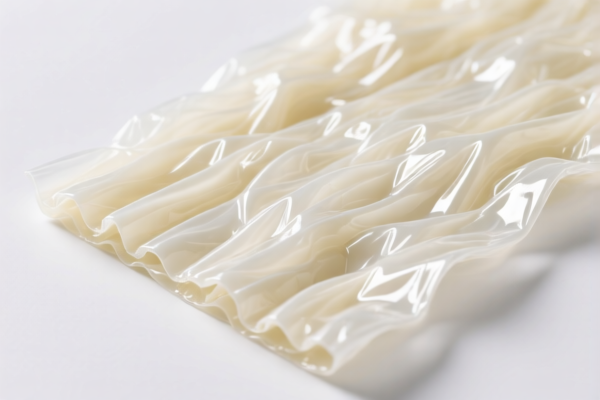
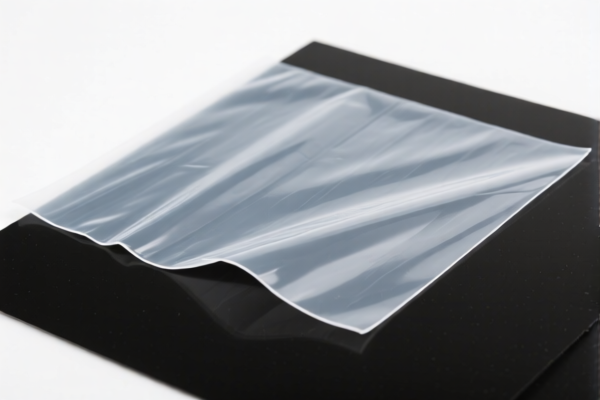
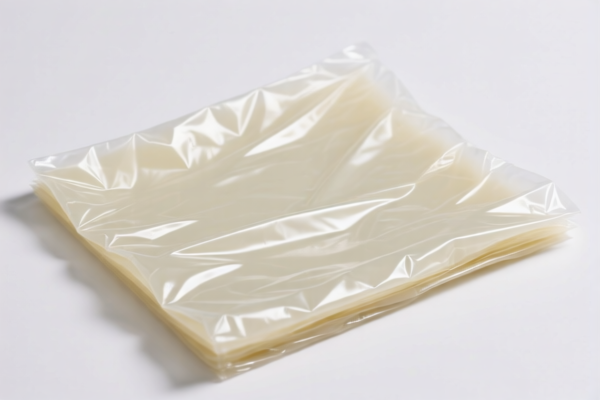

AI Analysis
🧬 Cellulose Acetate Tape (醋酸纤维胶带)
🌐 HS Code Reference & Customs Clearance Guide | 2026 Latest Tariff Analysis | Professional Customs Strategy 📌 I. Product Definition & Classification: What is "Cellulose Acetate Tape"?
Cellulose Acetate Tape is a plastic-based adhesive tape made from regenerated cellulose (acetate). It is widely used in industrial sealing, electrical insulation, and packaging.
In international trade, classification depends on two critical factors: 1. Material: "Cellulose Acetate" falls under Plastics or Regenerated Cellulose. 2. Form: "Tape" is distinct from "Film" (Rolls/Sheets without adhesive/adhesive side not specified) or "Sheet/Plate".
⚠️ Key Distinction Point: - If the product is primarily defined as "Tape" (带状/卷状) → It usually falls under 3921.90 (Other plates, sheets, film, foil and strip). - If the material is strictly classified as "Regenerated Cellulose" (再生纤维素) → It may fall under 3921.14 (Other plates, sheets, film, foil and strip, of cellulose ethers or cellulose esters). - Note: The term "Tape" implies a strip form, but if described loosely as "Film" in some contexts, it might be misclassified under 3921.90.40. We will analyze the specific HS Codes provided in the data.
📦 II. HS Code Classification Details (2026 Latest Tariff Authority Comparison)
| HS Code | Product Description | Basis for Classification | Tax Rate (Total) |
|---|---|---|---|
3921.90.50.50 |
Other plates, sheets, film, foil, and strip of plastics | Material: Acetate fiber belongs to plastics/synthetic fibers. Form: "Tape" matches "Strip". Summary: Matches "Other plastic plates, sheets, film, foil, and strips". |
39.8% |
3921.14.00.00 |
Other plates, sheets, film, foil, and strip of cellulose esters or cellulose ethers | Material: "Cellulose Acetate" is a type of regenerated cellulose (cellulose ester). Form: "Tape" matches "Strip". Summary: Material and form match perfectly with "Regenerated Cellulose". |
41.5% |
3921.90.40.10 |
Other plates, sheets, film, foil, and strip of plastics | Material: Acetate fiber (belongs to plastic/synthetic esters). Form: "Film" (matches under Chapter 39 heading for plates, sheets, films). Summary: No material conflict; classified under general plastic film/strips. |
39.2% |
3921.14.00.00 |
Other plates, sheets, film, foil, and strip of cellulose esters or cellulose ethers | Material: "Cellulose Acetate" matches "Regenerated Cellulose". Form: "Film" matches "Plates, sheets, films". Summary: Matched successfully. |
41.5% |
🔍 Critical Analysis: - 3921.14.00.00 (41.5%): This code is more specific if the importer insists on the chemical nature ("Regenerated Cellulose"). It has a higher base tariff (6.5%) but applies the same additional taxes. - 3921.90.50.50 (39.8%): This code treats it as a generic "Plastic Strip". It has a lower base tariff (4.8%), resulting in a lower total rate. - 3921.90.40.10 (39.2%): This code treats it as a generic "Plastic Film/Strip". It has the lowest base tariff (4.2%), resulting in the lowest total rate among the options.
💰 III. 2026 Latest Tariff Rate Details (Including Surcharges & Policy Add-ons)
✅ Applicable Country: United States (US) ✅ Origin: China (CN) ✅ Effective Date: From Nov 10, 2025 (and subsequent imports)
🎯 1. 3921.90.50.50 —— Plastic Strip (Acetate Fiber)
| Item | Detail |
|---|---|
| Base Tariff | 4.8% (Ad Valorem) |
| Section 301 Surcharge | +25.0% (Additional Tariff) |
| Section 122 Surcharge | +10.0% (Additional Tariff) |
| Total Tariff Rate | 39.8% |
| Tax Calculation | CIF Value × 39.8% |
| De Minimis Exemption | ❌ Not Eligible |
| Legal Basis Path | Section 301: USITC → Section 122: IEEPA → HS: 3921.90.50.50 |
📌 Explanation: - "Base Tariff 4.8%": Standard MFN rate for other plastic strips. - "Section 301 25%": Additional tariff for Chinese goods under US Trade Act Section 301. - "Section 122 10%": Additional tariff under Section 122 of the Trade Act of 1974 (national security/economic emergency). - Total 39.8%: High cost, must be factored into pricing.
🎯 2. 3921.14.00.00 —— Regenerated Cellulose Strip/Film
| Item | Detail |
|---|---|
| Base Tariff | 6.5% (Ad Valorem) |
| Section 301 Surcharge | +25.0% (Additional Tariff) |
| Section 122 Surcharge | +10.0% (Additional Tariff) |
| Total Tariff Rate | 41.5% |
| Tax Calculation | CIF Value × 41.5% |
| De Minimis Exemption | ❌ Not Eligible |
| Legal Basis Path | Section 301: USITC → Section 122: IEEPA → HS: 3921.14.00.00 |
📌 Note: - This code is used if the product is explicitly declared as "Regenerated Cellulose" or "Cellulose Ester". - The base tariff is higher (6.5% vs 4.8%), leading to a higher total duty. - Even if described as "Film", it falls under this specific material category.
🎯 3. 3921.90.40.10 —— Plastic Film/Strip (Generic)
| Item | Detail |
|---|---|
| Base Tariff | 4.2% (Ad Valorem) |
| Section 301 Surcharge | +25.0% (Additional Tariff) |
| Section 122 Surcharge | +10.0% (Additional Tariff) |
| Total Tariff Rate | 39.2% |
| Tax Calculation | CIF Value × 39.2% |
| De Minimis Exemption | ❌ Not Eligible |
| Legal Basis Path | Section 301: USITC → Section 122: IEEPA → HS: 3921.90.40.10 |
📌 Note: - This is the most cost-effective classification among the three, provided the product can be legally described as a generic "Plastic Film/Strip" under 3921.90. - It assumes "Acetate Fiber" is categorized broadly under plastics rather than specific regenerated cellulose.
🛠️ IV. Customs Clearance Practical Advice (Real-World Pitfall Avoidance Guide)
✅ 1. Required Documentation Checklist (Non-Negotiable)
| Document | Must Provide | Description |
|---|---|---|
| ✅ Product Specification Sheet | ✔️ | Must specify: Material (Cellulose Acetate), Form (Tape/Film), Thickness, Width, Adhesive Type. |
| ✅ Material Safety Data Sheet (MSDS) | ✔️ | Proves chemical composition (Cellulose Acetate vs. Pure Plastic). |
| ✅ Product Photos (Clear Labeling) | ✔️ | Show roll, core, and any markings indicating "Acetate" or "Plastic". |
| ✅ Commercial Invoice | ✔️ | Clearly state: "Cellulose Acetate Tape" or "Plastic Strip". Avoid vague terms like "Adhesive Tape" without material spec. |
| ✅ Packing List | ✔️ | Detail net/gross weight, dimensions. |
✅ 2. Declaration Tips (Critical Mantra)
🔥 "Material First, Form Second; Name Specific, Tax Low!"
| Scenario | Correct Declaration | Wrong Practice |
|---|---|---|
| Product is clearly Cellulose Acetate | Declare as 3921.14.00.00 (41.5%) OR 3921.90.50.50 (39.8%) if treated as plastic |
Misdeclaring as "Paper Tape" → High risk of penalty |
| Product is Generic Plastic Tape | Declare as 3921.90.40.10 (39.2%) |
Using "Cellulose" in name if it's pure synthetic plastic → Misclassification |
| Adhesive vs. Non-Adhesive | If non-adhesive strip, use 3921.xx. If adhesive, check Chapter 39 vs 59. |
Mixing up "Tape" (adhesive) with "Strip" (non-adhesive) → Customs confusion |
| Origin Declaration | Must declare China | Falsifying origin → Severe penalties, seizure |
📌 Important: - If the product is non-adhesive (just the acetate strip), it is clearly 3921. - If it is adhesive tape, it might still be 3921 if the backing is cellulose acetate. Confirm with customs broker. - Best Strategy for Cost: Aim for
3921.90.40.10(39.2%) if the material allows broad plastic classification.
✅ 3. Special Circumstances Handling
| Situation | Handling Advice |
|---|---|
| OEM Custom Tape | Provide customer PO + material spec sheet to prove "Cellulose Acetate" content. |
| High-Value Industrial Use | Ensure HS code matches industrial grade, not consumer packaging. |
| Dispute on Material | If customs challenges "Cellulose Acetate" as "Plastic", provide lab test results showing acetate group presence. |
| Section 122 / 301 Impact | These tariffs are non-negotiable for Chinese goods. Factor into FOB/CIF pricing. |
🌍 V. Global Market Clearance Comparison (2026 Latest)
| Country/Region | Recommended HS Code | Tariff (Approx.) | Certification Requirements | Notes |
|---|---|---|---|---|
| 🇺🇸 USA | 3921.90.40.10 / 3921.90.50.50 |
39.2% ~ 39.8% | None specific, but FDA may apply if food contact | Highest tariff due to 301+122 |
| 🇨🇳 China | 3921.90 |
Low (~4-6%) | CCC (if applicable) | No additional surcharges |
| 🇪🇺 EU | 3920.62 / 3921.14 |
6.5% ~ 7.5% | REACH Compliance | No Section 301 equivalent |
| 🇯🇵 Japan | 3921.14 |
7.5% ~ 8.5% | JIS Standards | No additional surcharges |
📌 Conclusion: - USA is the most expensive market due to Section 301 (25%) and Section 122 (10%). - Total Duty in USA: ~39-41%. - Strategy: Consider duty mitigation strategies (e.g., foreign trade zones, if applicable) or verify if Vietnam/Mexico origin is possible for exemption.
📌 VI. Common Errors & Pitfalls Guide (Lessons Learned)
❌ Error 1: Declaring "Cellulose Acetate Tape" as "Adhesive Tape" (Chapter 59) without specifying material. 👉 Consequence: Customs may reclassify to 3921 with penalties, or misclassify to 5906 with different rates → Delays & Fines.
❌ Error 2: Ignoring Section 122 Surcharge. 👉 Consequence: Underpaying 10% → Back-tariff + Interest.
❌ Error 3: Using "Plastic Film" when it is "Tape" (Adhesive). 👉 Consequence: If adhesive, it might be considered a "Composite Good" → Complex classification → Audit Risk.
❌ Error 4: Failing to distinguish between "Regenerated Cellulose" (3921.14) and "Plastic" (3921.90). 👉 Consequence: 3921.14 has higher base tariff (6.5%) vs 3921.90 (4.2-4.8%). Wrong Code = Higher Cost.
✅ Correct Approach:
"Cellulose Acetate Strip, Non-Adhesive, Width 10mm, Thickness 0.1mm, Material: Regenerated Cellulose Ester, HS: 3921.90.50.50"
🎯 VII. Conclusion: Professional Declaration for Cost Savings
🎯 Remember the Mantra:
🔹 "Material Determines Code, Form Determines Sub-Code." 🔹 "USA Tax = Base + 25% + 10% = ~40%." 🔹 "Choose 3921.90.40.10 (39.2%) if possible for lowest duty." 🔹 "Declare Accurately to Avoid 200% Penalties."
📌 Pro Tip: If your Cellulose Acetate Tape is originating from Vietnam, Mexico, Thailand, or Malaysia, you may apply for IEEPA Exemption or Section 301 Exclusion, reducing the tariff to 0%~5%. It is highly recommended to Apply for Advance Ruling or Consult a Customs Broker before shipping to US ports.
📣 Immediate Action:
📞 Contact a Professional Customs Broker + Provide Product Specs + Apply for HS Code Advance Ruling 🚀 Let your Cellulose Acetate Tape clear customs smoothly, efficiently, and cost-effectively!
✨ Professional Customs Clearance Starts with Accurate Classification! 💼 Every Cent of Cost Must Be Precisely Calculated!
Customer Reviews
About HS Code Classification
The Harmonized System (HS) is an internationally standardized nomenclature developed by the World Customs Organization (WCO) to classify traded products. Over 200 countries use the HS system as the basis for customs tariffs, trade statistics, and import/export regulations.
Each HS code follows a hierarchical structure:
- Chapter (2 digits) — Broad category of goods (e.g., Chapter 84: Machinery and Mechanical Appliances)
- Heading (4 digits) — More specific grouping within the chapter
- Subheading (6 digits) — Internationally standardized breakdown, used by all WCO member countries
- National subdivisions (8-10 digits) — Country-specific extensions for further classification, such as US HTSUS 10-digit codes
Correct HS code classification is essential for smooth customs clearance, accurate duty payment, and compliance with trade regulations. Misclassification can lead to customs delays, overpayment of duties, or penalties.
When importing from CN to US, the applicable tariff rates may include:
- Most-Favored-Nation (MFN) rate — The standard duty rate applied to WTO members
- General rate — Applied to countries without trade agreements
- Trade remedy duties — Additional tariffs such as Section 301 (anti-dumping), Section 232 (national security), or countervailing duties
The information provided on this page is for reference purposes only. For official classification, please consult with your local customs authority or a licensed customs broker.