Cellulose Acetate UV Protection Film
CN → US| HS Code | Tariff Rate | Origin | Destination | Doc |
|---|---|---|---|---|
| 3912110000 | 40.6% | CN | US | Official Doc |
| 3912120000 | 40.6% | CN | US | Official Doc |
| 3920730000 | 37.9% | CN | US | Official Doc |
| 3920791000 | 41.2% | CN | US | Official Doc |
| 3921140000 | 41.5% | CN | US | Official Doc |
Product Images

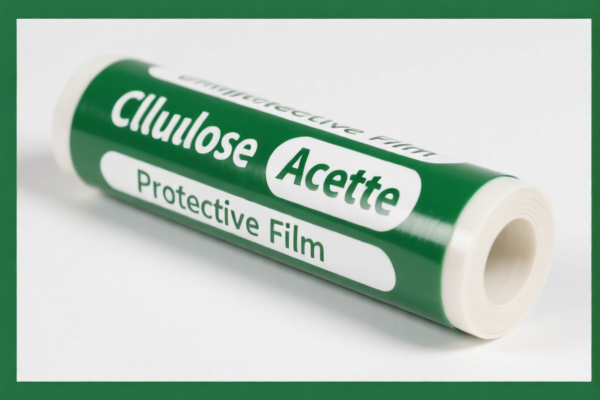
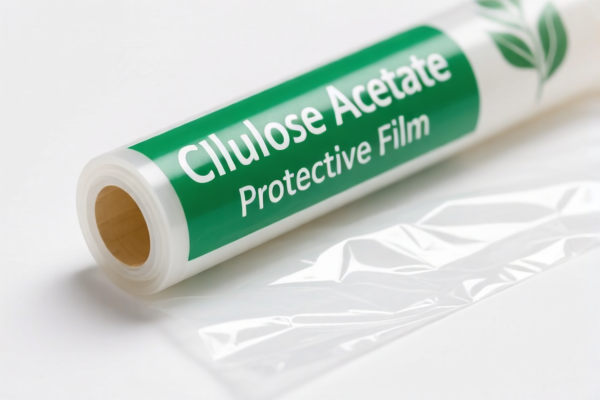

AI Analysis
🌬️ Cellulose Acetate UV Protection Film (醋酸纤维素薄膜)
🌐 HS Code Reference & Customs Clearance Guide | 2026 Latest Tariff Analysis | Professional Clearance Strategy
📌 I. Product Definition & Classification: What Exactly Is "Cellulose Acetate Film"?
Cellulose Acetate (CA) UV Protection Film is a derivative of cellulose, primarily used in packaging, optical media, and protective coatings. In international trade, its classification depends heavily on its physical form (raw material vs. finished sheet/film) and specific characteristics (thickness, chemical structure).
⚠️ Critical Distinction:
- Raw Materials/Semi-finished: Cylinders, bulk films not yet cut into specific sheets or specialized laminates → Often fall under Chapter 39.12.
- Plates, Sheets, Films: Finished or semi-finished flat products → Often fall under Chapter 39.20 or 39.21.
- Key Trap: Misclassifying a "finished film" as a "raw material" can lead to significant tariff discrepancies due to different base rates and additional duties.
📦 II. HS Code Classification Details (2026 Latest Tariff Authority Reference)
Based on the provided data, here are the specific HS Codes and their corresponding descriptions for Cellulose Acetate UV Protection Film:
| HS Code | Product Description | Physical Form/State | Key Characteristics |
|---|---|---|---|
| 3912.11.00.00 | Cellulose Acetates | Primary Forms / Semi-finished (e.g., cylinders, bulk rolls, unprocessed state) |
Described as "Cellulose Acetate Film, primary form, semi-finished/state of plates or sheets" |
| 3912.12.00.00 | Cellulose Acetates | Chemical Derivatives (Common form of cellulose derivatives) |
Described as "Cellulose Acetate Film, common form of cellulose and its chemical derivatives" |
| 3920.73.00.00 | Other Plates, Sheets, Film, Foil and Strip, of Plastics | Plates, Sheets, Films (General purpose CA film) |
Described as "Cellulose Acetate Film, plates, sheets, film, foil types" |
| 3920.79.10.00 | Other Plates, Sheets, Film, Foil and Strip, of Plastics | Thin Films (Specifically for thin UV/protective films) |
Described as "Cellulose Acetate Film, thickness not exceeding 0.076mm" |
| 3921.14.00.00 | Plates, Sheets, Film, Foam, Strip and Block, of Plastics | Regenerated Cellulose Film (Material consistency) |
Described as "Regenerated Cellulose Film, material and form consistent" |
🔍 Important Note:
- If your product is sold as a bulk roll or raw chemical derivative, it may fall under 3912.
- If it is sold as a finished sheet/film ready for use in lamination or packaging, it likely falls under 3920 or 3921.
- Thickness is critical: If the film is ≤ 0.076mm, it is specifically categorized under 3920.79.10.00.
💰 III. 2026 Latest Tariff Rate Breakdown (Including Additional Duties & Policy Surcharges)
✅ Applicable Country: USA (US)
✅ Origin: China (CN)
✅ Effective Time: Current rates apply (including 301 and 122 Section tariffs)
🎯 1. 3912.11.00.00 & 3912.12.00.00 —— Cellulose Acetates (Primary/Derivative Forms)
| Item | Content |
|---|---|
| Base Tariff | 5.6% (ad valorem) |
| Section 301 Additional Tariff | +25.0% |
| Section 122 Tariff | +10.0% |
| Total Tax Rate | 40.6% |
| Tax Calculation | CIF Value × 40.6% |
| De Minimis Exemption | ❌ Not Eligible (deny_de_minimis) |
| Legal Basis Path | HTSUS:3912.11 → Section 301 List 4 → Section 122 |
📌 Explanation:
- Base 5.6%: Standard MFN rate for cellulose acetates in primary forms.
- 301 +25%: Standard US trade remedy tariff on Chinese chemical products.
- 122 +10%: Additional tariff applied to specific chemical imports.
- Total 40.6%: High cost burden. Must be factored into pricing.
🎯 2. 3920.73.00.00 —— Cellulose Acetate Film (Plates, Sheets, Films)
| Item | Content |
|---|---|
| Base Tariff | 2.9% (ad valorem) |
| Section 301 Additional Tariff | +25.0% |
| Section 122 Tariff | +10.0% |
| Total Tax Rate | 37.9% |
| Tax Calculation | CIF Value × 37.9% |
| De Minimis Exemption | ❌ Not Eligible (deny_de_minimis) |
| Legal Basis Path | HTSUS:3920.73 → Section 301 List 4 → Section 122 |
📌 Explanation:
- Base 2.9%: Lower base rate for finished plastic films compared to raw materials.
- Total 37.9%: Still high due to additional duties. Slightly cheaper than primary forms but significantly more than non-China origins.
🎯 3. 3920.79.10.00 —— Cellulose Acetate Film (Thin, ≤ 0.076mm)
| Item | Content |
|---|---|
| Base Tariff | 6.2% (ad valorem) |
| Section 301 Additional Tariff | +25.0% |
| Section 122 Tariff | +10.0% |
| Total Tax Rate | 41.2% |
| Tax Calculation | CIF Value × 41.2% |
| De Minimis Exemption | ❌ Not Eligible (deny_de_minimis) |
| Legal Basis Path | HTSUS:3920.79.10 → Section 301 List 4 → Section 122 |
📌 Explanation:
- Base 6.2%: Higher base rate for very thin films.
- Total 41.2%: Highest total tax rate among the options.
- Critical: If your UV protection film is very thin (< 0.076mm), expect the highest duty burden.
🎯 4. 3921.14.00.00 —— Regenerated Cellulose Film
| Item | Content |
|---|---|
| Base Tariff | 6.5% (ad valorem) |
| Section 301 Additional Tariff | +25.0% |
| Section 122 Tariff | +10.0% |
| Total Tax Rate | 41.5% |
| Tax Calculation | CIF Value × 41.5% |
| De Minimis Exemption | ❌ Not Eligible (deny_de_minimis) |
| Legal Basis Path | HTSUS:3921.14 → Section 301 List 4 → Section 122 |
📌 Explanation:
- Base 6.5%: Highest base rate.
- Total 41.5%: Most expensive classification. Only use if the product is strictly defined as "Regenerated Cellulose" and not "Cellulose Acetate".
🛠️ IV. Customs Clearance Practical Advice (Pitfall Avoidance Guide)
✅ 1. Document Checklist (Essential)
| Document | Required | Description |
|---|---|---|
| ✅ Product Specification Sheet | ✔️ | Must detail: Chemical composition (Cellulose Acetate), thickness, width, UV protection properties. |
| ✅ Technical Data Sheet (TDS) | ✔️ | Prove if it is "Primary Form" (3912) or "Finished Film" (3920/3921). |
| ✅ Certificate of Origin (CO) | ✔️ | Confirm China origin to apply correct tariffs. |
| ✅ Commercial Invoice | ✔️ | Clearly state: "Cellulose Acetate Film, Model XYZ, Thickness: ___ mm". |
| ✅ Packing List | ✔️ | Include roll length, weight, and packaging details. |
| ✅ Test Report | ✔️ | Verify thickness and material composition (especially for 3920.79.10.00). |
✅ 2. Declaration Tips (Key Mantra)
🔥 “Thickness Matters, Form Defines Rate, Name Must Be Precise!”
| Scenario | Correct Declaration | Wrong Practice |
|---|---|---|
| Raw CA Rolls (Unprocessed) | 3912.11.00.00 or 3912.12.00.00 |
Declaring as "Finished Film" → Risk of misclassification penalty |
| Thin UV Film (< 0.076mm) | 3920.79.10.00 |
Declaring as 3920.73.00.00 → Under-declaring value/duty |
| Regular CA Sheet | 3920.73.00.00 |
Declaring as 3912 → Over-declaring base rate (5.6% vs 2.9%) |
| Regenerated Cellulose | 3921.14.00.00 |
Using "Cellulose Acetate" description → Contradiction in documents |
📌 Critical Reminder:
- Do NOT split shipments to avoid the 301/122 tariffs. CBP will consolidate and reclassify.
- Thickness is a key classification factor for3920.79.10.00. Ensure your invoice explicitly states thickness to avoid disputes.
✅ 3. Special Cases
| Situation | Recommendation |
|---|---|
| OEM Custom Film | Provide customer design specs and material composition to prove CA content. |
| Composite Film | If CA is only a layer, check if it meets "essential character" test. May still fall under 3920. |
| Samples for Testing | Even small samples are subject to full duties if declared as imports. Use courier with proper HS code. |
| Non-China Origin | If produced in Vietnam, Thailand, etc., IEEPA Exemption may apply → 0-5% duty. |
🌍 V. Global Market Comparison (2026 Latest)
| Country/Region | Recommended HS Code | Tariff (China Origin) | Certification Requirements | Notes |
|---|---|---|---|---|
| 🇺🇸 USA | 3920.73.00.00 or 3912.11.00.00 |
37.9% - 40.6% | FDA (if food contact), RoHS | High tariff burden due to 301 + 122. |
| 🇨🇳 China | 3920.73.00.00 |
5-10% | CCC (if applicable) | No additional surcharges. |
| 🇪🇺 EU | 3920.73.00.00 |
6.5% (standard) | REACH, RoHS | No Section 301/122 equivalents. |
| 🇦🇺 Australia | 3920.73.00.00 |
5% | APEC | Low duty, stable policy. |
| 🇯🇵 Japan | 3920.73.00.00 |
0-6% | PSE (if electronic) | FTAs may reduce duty. |
📌 Conclusion:
- USA is the most expensive market for Cellulose Acetate Film from China due to combined tariffs.
- EU, Australia, and Japan are more cost-effective alternatives for duty purposes.
- Supply Chain Strategy: Consider sourcing from non-China origins if targeting the US market to leverage IEEPA exemptions.
📌 VI. Common Mistakes & Pitfall Guide (Lessons Learned)
❌ Mistake 1: Declaring "Cellulose Acetate Film" as "Plastic Sheet" without specifying material.
👉 Consequence: Customs may reclassify to a higher duty rate or deny entry.
❌ Mistake 2: Ignoring thickness when declaring 3920.79.10.00.
👉 Consequence: If thickness > 0.076mm, it should be 3920.79.90 or 3920.73, leading to underpayment penalties.
❌ Mistake 3: Using "Regenerated Cellulose" for "Cellulose Acetate".
👉 Consequence: Misclassification → 3921.14.00.00 (41.5%) vs correct 3920.73.00.00 (37.9%) → Extra cost.
❌ Mistake 4: Assuming De Minimis (Section 321) applies.
👉 Consequence: Deny De Minimis for these HS codes. All shipments, regardless of value, are subject to full duties.
✅ Correct Approach:
"Cellulose Acetate UV Protection Film, Thickness: 0.05mm, Roll Width: 1200mm, Material: CA, Model: UV-PRO-05, Origin: China"
🎯 VII. Conclusion: Professional Declaration, Cost Optimization!
🎯 Remember the Mantra:
🔹 "Thickness defines the code, Form determines the chapter."
🔹 "40%+ duty in the US, think twice before you ship."
🔹 "IEEPA Exemption is your best friend if not from China."
📌 Pro Tip:
If your Cellulose Acetate Film is sourced from Vietnam, Mexico, or Thailand, apply for IEEPA Exemption → Tariff drops to 0-5%.
Recommend applying for Advance Ruling from CBP to secure HS Code classification and avoid post-import audits.
📣 Immediate Action:
📞 Contact a licensed customs broker + Provide product specs + Apply for Pre-Ruling
🚀 Ensure your Cellulose Acetate Film clears smoothly, minimizes tax, and maximizes profit!
✨ Professional Clearance Starts with Accurate Classification!
💼 Every cent of duty is worth precise calculation!
Customer Reviews
About HS Code Classification
The Harmonized System (HS) is an internationally standardized nomenclature developed by the World Customs Organization (WCO) to classify traded products. Over 200 countries use the HS system as the basis for customs tariffs, trade statistics, and import/export regulations.
Each HS code follows a hierarchical structure:
- Chapter (2 digits) — Broad category of goods (e.g., Chapter 84: Machinery and Mechanical Appliances)
- Heading (4 digits) — More specific grouping within the chapter
- Subheading (6 digits) — Internationally standardized breakdown, used by all WCO member countries
- National subdivisions (8-10 digits) — Country-specific extensions for further classification, such as US HTSUS 10-digit codes
Correct HS code classification is essential for smooth customs clearance, accurate duty payment, and compliance with trade regulations. Misclassification can lead to customs delays, overpayment of duties, or penalties.
When importing from CN to US, the applicable tariff rates may include:
- Most-Favored-Nation (MFN) rate — The standard duty rate applied to WTO members
- General rate — Applied to countries without trade agreements
- Trade remedy duties — Additional tariffs such as Section 301 (anti-dumping), Section 232 (national security), or countervailing duties
The information provided on this page is for reference purposes only. For official classification, please consult with your local customs authority or a licensed customs broker.