Cellulose Acetate Waterproof Board
CN → US| HS Code | Tariff Rate | Origin | Destination | Doc |
|---|---|---|---|---|
| 3921905010 | 39.8% | CN | US | Official Doc |
| 3921140000 | 41.5% | CN | US | Official Doc |
| 3921190090 | 41.5% | CN | US | Official Doc |
| 3912110000 | 40.6% | CN | US | Official Doc |
| 3921905050 | 39.8% | CN | US | Official Doc |
Product Images
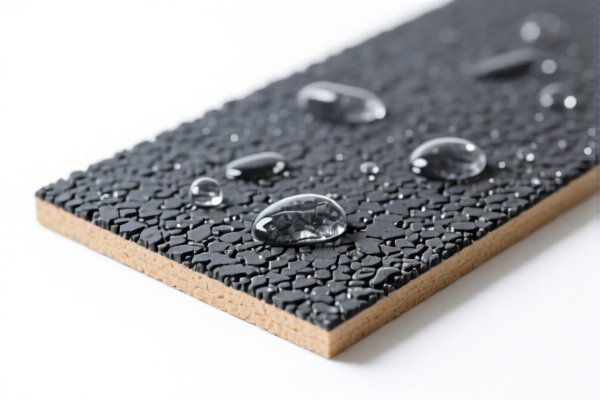
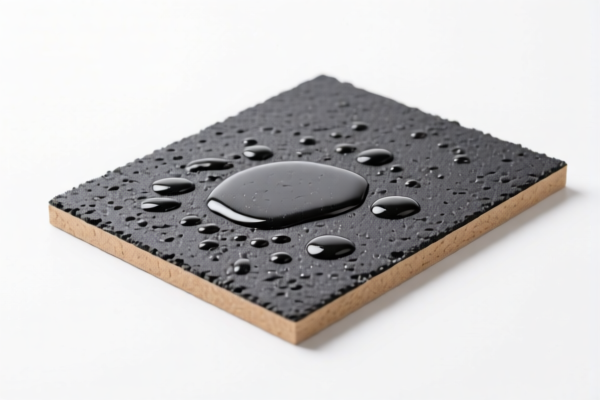
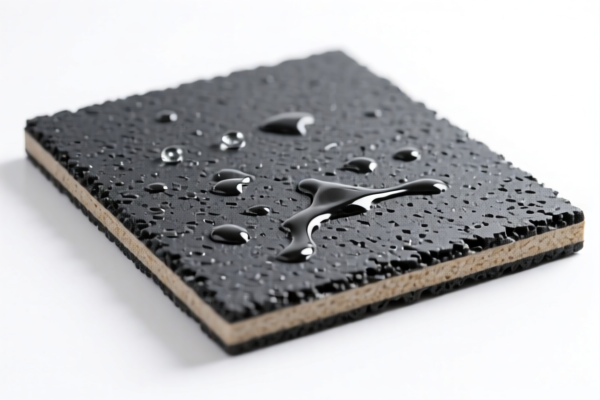
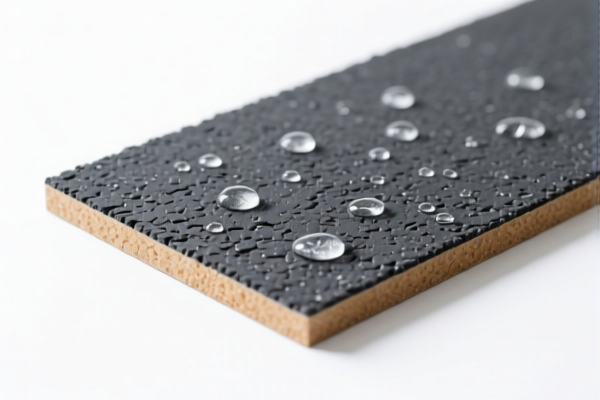
AI Analysis
🧪 Cellulose Acetate Waterproof Board (Anti-Fog & Precision Panels)
🌐 HS Code Classification & Customs Clearance Guide | 2026 Latest Tariff Analysis | Professional Entry Strategy
📌 I. Product Definition & Core Characteristics: What is "Cellulose Acetate Board"?
Cellulose Acetate Board is a high-performance semi-synthetic plastic sheet derived from natural cellulose (usually wood pulp or cotton linter) and acetic acid. It is renowned for its optical clarity, moisture resistance, and chemical stability.
In international trade, this product is primarily categorized based on its physical form (plate/sheet) and chemical composition (Acetate vs. Primary Form). The key applications driving this classification include: * Anti-Fog Panels (防雾板): Used in greenhouses, cold storage, and bathroom mirrors where condensation control is critical. * Precision Plates (精密板): Used in industrial manufacturing, optical instruments, or high-precision packaging due to its dimensional stability.
⚠️ Critical Distinction for Classification:
- If the material is finished into a plate/sheet format for structural or protective use → It falls under Chapter 39 (Plastics).
- If the material is in a raw, unprocessed state (e.g., pellets, films not yet formed into rigid plates) → It falls under 3912 (Cellulose Esters).
- Note: The DATA provided specifically lists "Board/Plate" (形态为板), so we focus primarily on Chapter 39 classifications.
📦 II. HS Code Classification Matrix (2026 Latest Tariff Data)
Based on the provided dataset, there are 5 distinct HS Codes for Cellulose Acetate Boards, split between two main categories: Regenerated Cellulose and Other Plastic Plates.
| HS Code | Product Description (Summary) | Material Category | Physical Form | Key Application/Feature |
|---|---|---|---|---|
3921.90.50.10 |
Cellulose Acetate Anti-Fog Board | Cellulose Acetate | Plate | Anti-fog application |
3921.14.00.00 |
Cellulose Acetate Anti-Fog Board | Regenerated Cellulose | Plate | Anti-fog application (Regenerated) |
3921.19.00.90 |
Cellulose Acetate Precision Plate | Cellulose Acetate | Plate | Precision industrial use |
3912.11.00.00 |
Cellulose Acetate Precision Plate | Cellulose Acetate | Plate | Primary Form (Special Case*) |
3921.90.50.50 |
Cellulose Acetate Precision Plate | Synthetic Fiber/Plastic | Plate | General Plastic category |
🔍 Key Insight:
- Codes starting with 3921 refer to "Plates, Sheets, Film, Foil, and Strip, of Plastics."
- Code 3912.11 refers to "Cellulose Acetate, Primary Forms." Although labeled "Plate" in the summary, this code is strictly for raw materials (pellets, powders, non-formed sheets). If your product is a formed rigid board,3912.11may be rejected by customs unless it is truly unformed.
- Codes 3921.14 and 3921.19 distinguish between specific regenerated cellulose types and other plastics.
💰 III. 2026 Tariff Rate Breakdown (Detailed Tax Analysis)
✅ Applicable Market: United States (US)
✅ Country of Origin: China (CN)
✅ Effective Date: November 10, 2025 (and subsequent imports)
✅ Total Tax Range: 39.8% – 41.5%
All listed HS Codes are subject to the same Tax Structure, but the Base Tariff varies slightly, leading to minor differences in the total rate.
🎯 1. The "Anti-Fog" Boards (3921.90.50.10 & 3921.14.00.00)
| Item | Content | Details |
|---|---|---|
| Base Tariff | 4.8% or 6.5% | Varies by specific sub-category (Regenerated vs. Other Plastic) |
| Section 301 Tariff | +25.0% | Standard "Section 301" surcharge for Chinese goods |
| Section 122 Tariff | +10.0% | Specific surcharge mentioned in the dataset (Likely referencing specific trade acts or recent executive orders) |
| Total Tax Rate | 39.8% (for .10) 41.5% (for .00) |
|
| Tax Calculation | CIF Value × Total Rate |
|
| De Minimis Exemption | ❌ NO | These goods do not qualify for the $800 de minimis exemption (Section 321) due to Section 301 and Section 122 restrictions. |
📌 Why the Difference?
-3921.90.50.10has a lower base (4.8%) → Total 39.8%.
-3921.14.00.00has a higher base (6.5%) → Total 41.5%.
- Recommendation: If the material can be classified as "Other Plastic" rather than "Regenerated Cellulose," you may save 1.7% in tariffs.
🎯 2. The "Precision" Boards (3921.19.00.90 & 3921.90.50.50)
| Item | Content | Details |
|---|---|---|
| Base Tariff | 6.5% or 4.8% | Same base rates as above |
| Section 301 Tariff | +25.0% | Standard surcharge |
| Section 122 Tariff | +10.0% | Specific surcharge |
| Total Tax Rate | 41.5% (for .90) 39.8% (for .50) |
|
| Tax Calculation | CIF Value × Total Rate |
|
| De Minimis Exemption | ❌ NO | No de minimis exemption available. |
🎯 3. The "Primary Form" Case (3912.11.00.00)
⚠️ Warning: This code is for Primary Forms (raw material). If you import a formed board, customs may reclassify it to
3921.19.00.90or3921.90.50.50, resulting in penalties.
- If correctly classified as raw material:
- Base Tariff: 5.6%
- Section 301: +25.0%
- Section 122: +10.0%
- Total Tax: 40.6%
🛠️ IV. Customs Clearance Practical Advice (Actionable Strategy)
✅ 1. Documentation Checklist (Must-Have)
| Document | Required? | Purpose |
|---|---|---|
| Commercial Invoice | ✔️ | Must clearly state "Cellulose Acetate Board" or "Anti-Fog Panel." |
| Product Specification Sheet | ✔️ | Detail material composition (e.g., % cellulose, % acetic acid). |
| Proof of Form (Photos/Cut Sheets) | ✔️ | Crucial! To prove it is a "Plate/Board" and not a raw film or pellet. Distinguish between 3912 (raw) and 3921 (formed). |
| Origin Certificate | ✔️ | To confirm CN origin (triggering 301/122 tariffs). |
| Material Safety Data Sheet (MSDS) | ✔️ | Required for chemical plastic products. |
✅ 2. Classification Strategy: How to Optimize?
| Scenario | Recommended HS Code | Why? |
|---|---|---|
| Standard Anti-Fog Panel | 3921.90.50.10 |
Lower base tariff (4.8%) → 39.8% Total. Avoids higher "Regenerated Cellulose" rate. |
| High-Precision Industrial Plate | 3921.90.50.50 |
Same low base (4.8%) → 39.8% Total. Flexible classification for general plastic plates. |
| Regenerated Cellulose Specific | 3921.14.00.00 |
Only use if the material is explicitly certified as Regenerated Cellulose and you cannot argue for "Other Plastic." Higher tax (41.5%). |
| Raw Material (Pellets/Unformed) | 3912.11.00.00 |
Only if not yet formed into plates. Tax is 40.6%. Do not use for finished boards. |
💡 Pro Tip:
- If the product is a composite (e.g., cellulose acetate coated on another plastic), ensure the invoice describes the essential character material. If cellulose acetate is the primary component,3921is likely correct.
- Avoid3912for finished goods! Customs is strict about Chapter 39.21 vs. 39.12. Using3912for a rigid board is a common misclassification that leads to delays.
✅ 3. Tax Mitigation & Compliance
- No De Minimis: Remember, Section 301 and Section 122 tariffs apply even to small shipments. Do not ship via USPS/UPS small packages expecting $0 tax.
- Section 122 Impact: The 10% surcharge is significant. Ensure your contract prices (Incoterms) account for this. If selling DDP, include this in your cost calculation.
- Audit Trail: Keep records of the chemical composition and manufacturing process. If challenged on "Regenerated Cellulose" vs. "Other Plastic," you need proof of the polymerization process.
🌍 V. Global Market Comparison (Brief)
| Market | HS Code Reference | Est. Duty (China Origin) | Notes |
|---|---|---|---|
| 🇺🇸 USA | 3921.90.50.10 etc. |
39.8% - 41.5% | High due to 301 + 122 tariffs. |
| 🇪🇺 EU | 3921.10 / 3921.90 |
6.5% | No Section 301 equivalent. VAT applies separately. |
| 🇨🇳 China | 3921.90.50 |
6.5% | Lower import duty for domestic consumption. |
📌 Conclusion:
- The US market is the most expensive for Cellulose Acetate Boards due to layered tariffs.
- Optimization Tip: If exporting to the US, consider if the product can be classified under3921.90.50.10or.50(39.8%) rather than.14or.19(41.5%). A 1.7% savings on a $100,000 shipment is $1,700.
📌 VI. Common Errors & Pitfalls (Learn from Mistakes)
❌ Error 1: Classifying a finished board as 3912.11.00.00 (Primary Form).
👉 Consequence: Customs rejects declaration, requires re-classification to 3921, delays shipment, possible penalties.
✅ Fix: Use 3921 series for all formed plates/sheets.
❌ Error 2: Ignoring Section 122 Tariff.
👉 Consequence: Underestimating landed cost by 10%.
✅ Fix: Include 122 tariff in all US financial models.
❌ Error 3: Mislabeling "Cellulose Acetate" as "Cellulose" or "Wood."
👉 Consequence: Wrong HS Code entirely (e.g., Chapter 44), leading to immediate rejection.
✅ Fix: Clearly state "Cellulose Acetate Polymer" in descriptions.
🎯 VII. Final Checklist for Importers
- Confirm Material: Is it Regenerated Cellulose or Synthetic Cellulose Acetate?
- Confirm Form: Is it a Rigid Plate? If yes → Chapter 3921.
- Select Best HS Code:
- Prefer
3921.90.50.10or3921.90.50.50for 39.8% total tax. - Avoid
3921.14.00.00unless necessary, for 41.5% total tax. - Prepare Docs: Invoice, Spec Sheet, Photos, MSDS.
- Budget: Plan for ~40% tariff on CIF value.
📣 Immediate Action:
📞 Contact your customs broker with the product specs.
📄 Request a Pre-Ruling (ACE Ruling) from CBP if the shipment value is high.
🚀 Optimize your classification to the 39.8% bracket to save costs.
✨ Precise Classification Saves Dollars!
💼 Don't let tariff miscalculations eat your margins!
Customer Reviews
About HS Code Classification
The Harmonized System (HS) is an internationally standardized nomenclature developed by the World Customs Organization (WCO) to classify traded products. Over 200 countries use the HS system as the basis for customs tariffs, trade statistics, and import/export regulations.
Each HS code follows a hierarchical structure:
- Chapter (2 digits) — Broad category of goods (e.g., Chapter 84: Machinery and Mechanical Appliances)
- Heading (4 digits) — More specific grouping within the chapter
- Subheading (6 digits) — Internationally standardized breakdown, used by all WCO member countries
- National subdivisions (8-10 digits) — Country-specific extensions for further classification, such as US HTSUS 10-digit codes
Correct HS code classification is essential for smooth customs clearance, accurate duty payment, and compliance with trade regulations. Misclassification can lead to customs delays, overpayment of duties, or penalties.
When importing from CN to US, the applicable tariff rates may include:
- Most-Favored-Nation (MFN) rate — The standard duty rate applied to WTO members
- General rate — Applied to countries without trade agreements
- Trade remedy duties — Additional tariffs such as Section 301 (anti-dumping), Section 232 (national security), or countervailing duties
The information provided on this page is for reference purposes only. For official classification, please consult with your local customs authority or a licensed customs broker.