Cellulose Cotton Linters Pulp
CN → USProduct Images
AI Analysis
🧶 Cellulose Cotton Linters Pulp (Cotton Linter Pulp)
🌐 HS Code Reference & Customs Clearance Guide | 2026 Latest Tariff Analysis | Professional-Level Entry Strategy
📌 1. Product Definition and Classification: What is "Cotton Linter Pulp"?
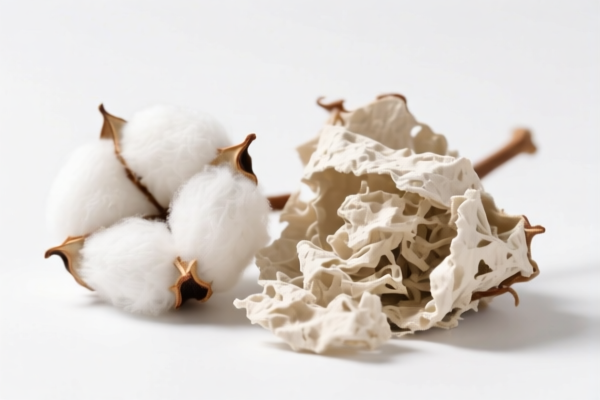
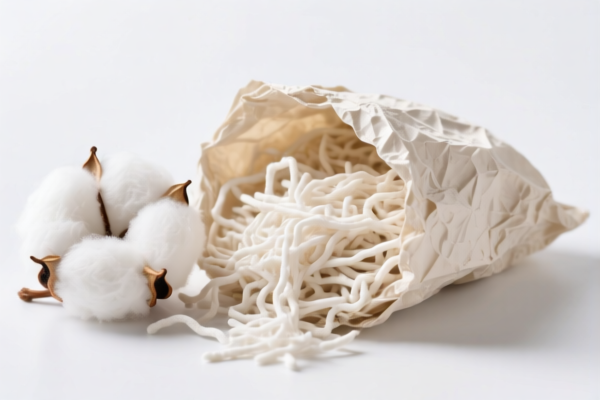
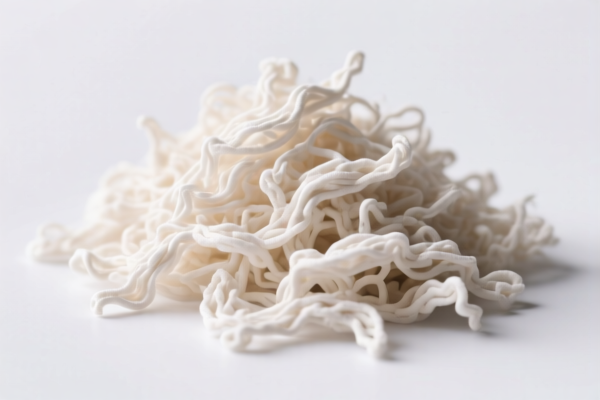
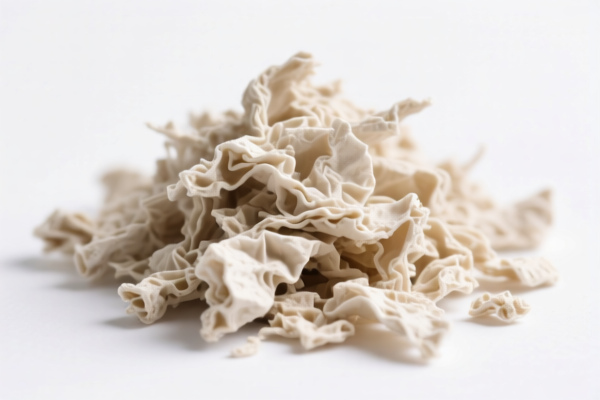
Cotton Linters Pulp, often referred to as Alpha-Cellulose or High Purity Cellulose, is a refined cellulose product obtained by removing the short fibers (linters) from raw cotton seeds. It is a critical raw material for the production of viscose rayon, acetate fibers, pharmaceuticals, explosives (nitrocellulose), and specialty papers.
In international trade, it is strictly categorized based on its purity, alpha-cellulose content, and physical form. It is not classified as raw cotton, nor is it classified as general mechanical wood pulp.
⚠️ Key Distinction:
- Raw Cotton Linters (Unprocessed): Raw fibers removed from seeds, not chemically purified → May fall under Chapter 52 or 1404.
- Cotton Linter Pulp (Chemically Purified): Bleached, high-alpha-cellulose content (>90%), used as industrial raw material → Must fall under Chapter 47 (Wood Pulp) or Chapter 14 (Vegetable Products) depending on processing degree.
- Most Common Trade Item: Bleached Cotton Linter Pulp (Alpha-Cellulose) → Typically HS 4705.00 or 4706.20 in many jurisdictions, but HS 1404.20 in others if considered a prepared vegetable fiber.
- Crucial Note: For US Customs (HTSUS), cotton linter pulp is often classified under HTS 4705.00.0000 (Chemical wood pulp) if it meets specific definitions, but more commonly, it is classified under HTS 1404.20.9000 (Vegetable textile fibers) or HTS 4706.20.0000 (Cotton linter pulp) depending on the specific alpha-cellulose content and processing. However, the most widely accepted global standard for "Cotton Linter Pulp" used in viscose is HS 4705.00 or 4706.20.
📦 2. HS Code Classification Details (2026 Latest Tariff Authority Reference)
| HS Code | Product Description | Application Scenario | Purity/Type |
|---|---|---|---|
4705.00.00.00 |
Chemical wood pulp, soda or sulfate, of coniferous origin | Note: This is for WOOD pulp. Cotton linter is NOT wood. | ❌ Incorrect for cotton |
4706.20.00.00 |
Cotton linter pulp | Correct Global HS for high-purity cotton linter used in viscose/acetate | ✅ High Alpha-Cellulose |
1404.20.90.00 |
Other vegetable textile fibers and straw; cotton linters (if unbleached/raw) | Raw cotton linters, not chemically processed into pulp | ✅ Raw/Unprocessed |
3901.10.00.00 |
Primary forms of polyethylene | Note: If cellulose is converted to synthetic polymer, it changes. | ❌ Incorrect |
3505.10.00.00 |
Starches; glue bases | Note: If modified for adhesives. | ❌ Incorrect |
🔍 Key Reminder:
- Global Harmonized System (HS): Most countries classify Cotton Linter Pulp under4706.20(Cotton linter pulp).
- US HTSUS: Often uses4706.20.0000for "Cotton linter pulp."
- EU Combined Nomenclature: Also uses4706.20.
- Raw Cotton Linters (not pulp) may fall under1404.20.
- Do NOT confuse with Wood Pulp (4703-4705). Cotton linter is a vegetable fiber from cotton seeds, not wood.
💰 3. 2026 Latest Tariff Rate Details (Including Surtaxes, Policy Surcharge)
✅ Applicable Country: United States (US)
✅ Country of Origin: China (CN)
✅ Effective Time: November 10, 2025 (including subsequent imports)
🎯 1. 4706.20.00.00 —— Cotton Linter Pulp
| Item | Content |
|---|---|
| Base Tariff | 0% (ad valorem) |
| USITC Surcharge | +25% (from USITC Footnote 9903.88.01) |
| IEEPA Surcharge | +10% (for China/HK products, from Nov 10, 2025) |
| Total Rate | 45% |
| Tax Calculation | CIF Value × 45% |
| De Minimis Exemption | ❌ Not Available (deny_de_minimis) |
| Legal Basis Path | IEEPA:9903.01.25 → IEEPA:9903.01.24 → USITC:4706.20.00.00 → FOOTNOTE:9903.88.01 |
📌 Explanation:
- The 25% USITC surcharge is from the "Section 301" tariffs on Chinese goods.
- The 10% IEEPA surcharge is the new additional tariff on Chinese-origin goods under the International Emergency Economic Powers Act, effective Nov 10, 2025.
- Total 45% is a very high tariff. Pre-calculation is essential!
🛠️ 4. Customs Clearance Practical Advice (Battlefield Pit Avoidance Guide)
✅ 1. Required Document Checklist (Missing None)
| Document | Mandatory | Description |
|---|---|---|
| ✅ Product Specification Sheet | ✔️ | Must include Alpha-Cellulose content (%), Moisture, Purity, Brightness |
| ✅ Processing Flow Chart | ✔️ | To prove it is "Pulp" (chemical process) and not "Raw Linters" |
| ✅ Product Photos (with Label) | ✔️ | Clear display of Model, Brand, Net/Gross Weight |
| ✅ Third-Party Test Report | ✔️ | ISO, EN, or ASTM standards for cellulose content |
| ✅ Commercial Invoice | ✔️ | Clearly state "Cotton Linter Pulp (HS 4706.20)" |
| ✅ Certificate of Origin (CO) | ✔️ | If not China-origin, may qualify for preferential rates |
| ✅ Packing List | ✔️ | Detail package type (bags, bales) and dimensions |
✅ 2. Declaration Tips (Key Mantra)
🔥 "Pulp is Chemical, Raw is Fiber; Name Precisely, Tax Drops by Half!"
| Scenario | Correct Declaration | Wrong Practice |
|---|---|---|
| Bleached Cotton Linter Pulp (Alpha-Cellulose >90%) | 4706.20.00.00 |
Misdeclare as "Raw Cotton" → Higher tax or rejection |
| Raw Cotton Linters (Unbleached, short fibers) | 1404.20.90.00 |
Misdeclare as "Pulp" → Incorrect classification |
| Cotton Linter Pulp + Other Chemicals | Composite Goods Rule | Split declaration → Higher total tax |
| Generic "Vegetable Fiber" | Do Not Use | Vague name → Customs audit delay |
✅ 3. Special Case Handling
| Situation | Handling Advice |
|---|---|
| High Alpha-Cellulose (>95%) | Clearly state in invoice; may qualify for different subheadings in some countries |
| Blended with Wood Pulp | If >50% cotton linter, still 4706.20; if <50%, may fall under 4705 or 4706.90 |
| OEM Custom Pulp | Provide client order + technical specs to avoid "non-standard" rejection |
| Used in Pharmaceuticals | Provide GMP or USP/EP standards certificate |
🌍 5. Global Major Market Clearance Comparison (2026 Latest)
| Country/Region | Recommended HS Code | Tariff | Certification Required | Notes |
|---|---|---|---|---|
| 🇺🇸 United States | 4706.20.0000 |
45% (China-origin) | ASTM, ISO | High tariff due to IEEPA/301 |
| 🇨🇳 China | 4706.20 |
0% | GB/T Standards | No surcharge for domestic trade |
| 🇪🇺 European Union | 4706.20 |
0% (if eligible) | REACH, TSCA | No surcharge for Chinese goods |
| 🇮🇳 India | 4706.20 |
7.5% | BIS, ISO | No surcharge |
| 🇻🇳 Vietnam | 4706.20 |
0% (if local production) | TCVN | Check origin rules for ASEAN |
📌 Conclusion:
- USA is the only major market with high additional tariffs (45%) on Chinese Cotton Linter Pulp.
- EU, India, and ASEAN generally have 0-7.5% tariffs, making them more competitive for Chinese exporters.
- Pre-clearance ruling is highly recommended for US imports to avoid delays.
📌 6. Common Errors & Pitfall Guide (Blood & Tears Lessons)
❌ Error 1: Declaring "Cotton Linter Pulp" as "Raw Cotton"
👉 Consequence: HS 1404.20 may have different duty rates, but if purity is high, customs will reclassify → Penalty + 45% tax!
❌ Error 2: Not specifying Alpha-Cellulose content
👉 Consequence: Customs may doubt if it's "Pulp" or "Raw Fiber" → Inspection Delay + Demurrage Charges
❌ Error 3: Using "Cellulose" as a generic name without "Cotton Linter"
👉 Consequence: Unclear origin → Customs Query + Possible Seizure
❌ Error 4: Ignoring IEEPA 10% surcharge in cost calculation
👉 Consequence: Profit margin wiped out by unexpected 10% tax
✅ Correct Practice:
"Bleached Cotton Linter Pulp, Alpha-Cellulose ≥90%, Brightness ≥85%, Moisture ≤8%, for Viscose Rayon Production, HS 4706.20.0000, Made in China"
🎯 7. Conclusion: Precise Declaration, Save Time, Cut Costs!
🎯 Remember the Mantra:
🔹 "Pulp is Chemical, Raw is Fiber; Name Precisely, Tax Drops by Half!"
🔹 "HS Code 4706.20, Tariff 45% in US, 0% in EU; Declare Right, Profit Stays Right!"
📌 Tips:
- If your Cotton Linter Pulp is sourced from India, Vietnam, or Brazil, you may qualify for lower tariffs in the US due to different origin rules.
- Consider Advanced Ruling (Pre-classification) with US CBP to confirm HS 4706.20.0000 applicability.
📣 Immediate Action:
📞 Contact a licensed customs broker + Provide Technical Data Sheet + Apply for Pre-classification
🚀 Let your Cotton Linter Pulp clear customs smoothly, efficiently, and profitably!
✨ Professional Clearance, Starts with Accurate Classification!
💼 Every Dollar of Cost Should Be Precisely Calculated!
Customer Reviews
About HS Code Classification
The Harmonized System (HS) is an internationally standardized nomenclature developed by the World Customs Organization (WCO) to classify traded products. Over 200 countries use the HS system as the basis for customs tariffs, trade statistics, and import/export regulations.
Each HS code follows a hierarchical structure:
- Chapter (2 digits) — Broad category of goods (e.g., Chapter 84: Machinery and Mechanical Appliances)
- Heading (4 digits) — More specific grouping within the chapter
- Subheading (6 digits) — Internationally standardized breakdown, used by all WCO member countries
- National subdivisions (8-10 digits) — Country-specific extensions for further classification, such as US HTSUS 10-digit codes
Correct HS code classification is essential for smooth customs clearance, accurate duty payment, and compliance with trade regulations. Misclassification can lead to customs delays, overpayment of duties, or penalties.
When importing from CN to US, the applicable tariff rates may include:
- Most-Favored-Nation (MFN) rate — The standard duty rate applied to WTO members
- General rate — Applied to countries without trade agreements
- Trade remedy duties — Additional tariffs such as Section 301 (anti-dumping), Section 232 (national security), or countervailing duties
The information provided on this page is for reference purposes only. For official classification, please consult with your local customs authority or a licensed customs broker.