Cellulose Culture Medium
CN → US| HS Code | Tariff Rate | Origin | Destination | Doc |
|---|---|---|---|---|
| 3912900090 | 40.2% | CN | US | Official Doc |
| 3821000010 | 15.0% | CN | US | Official Doc |
| 3821000090 | 15.0% | CN | US | Official Doc |
| 3002590000 | 10.0% | CN | US | Official Doc |
| 3002510000 | 10.0% | CN | US | Official Doc |
Product Images
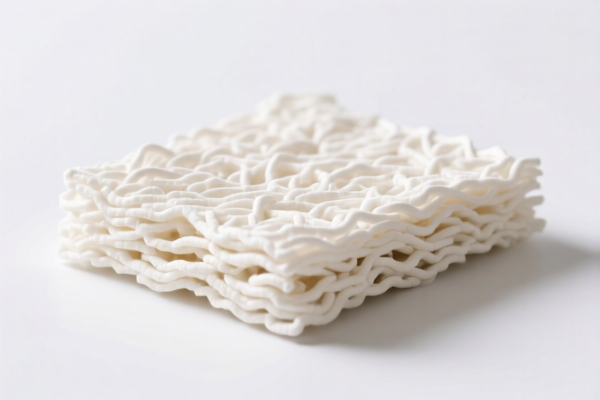
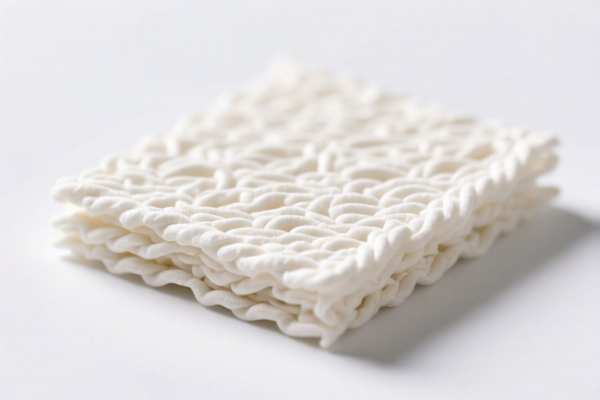
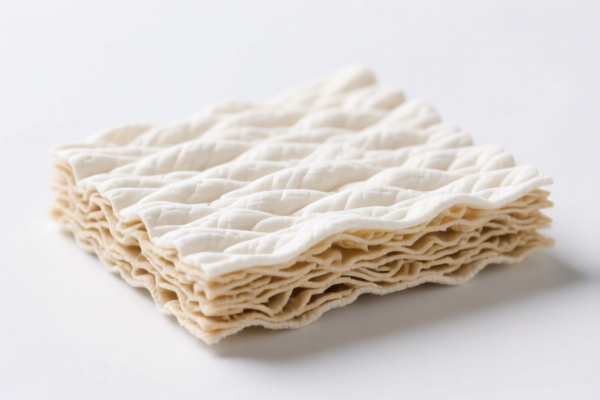
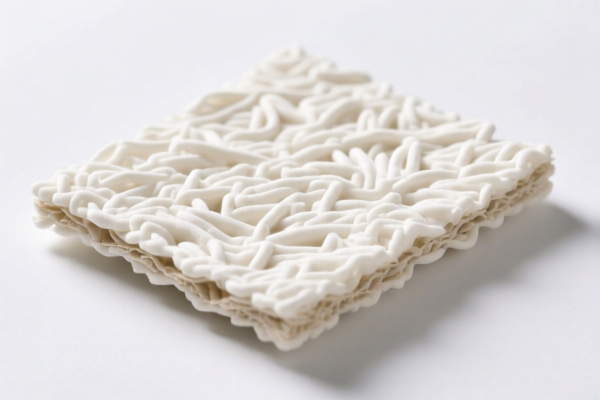
AI Analysis
🧫 Cellulose Culture Medium (基于纤维素材质的培养基)
🌐 HS Code Classification & Customs Clearance Guide | 2026 Tariff Analysis | Strategic Compliance Strategy
📌 I. Product Definition & Classification: What is "Cellulose Culture Medium"?
Cellulose Culture Medium refers to substrates primarily composed of cellulose derivatives (such as carboxymethyl cellulose, microcrystalline cellulose, or regenerated cellulose films) used for the cultivation of microorganisms, cells, or viruses. In international trade, its classification depends heavily on whether it is considered a raw material/nutrient base, a specialized biological reagent, or a mechanical/hydraulic component.
The ambiguity arises because "cellulose" can fall under plastics/polymers (Chapter 39) or specialized chemical preparations (Chapter 38), while "culture medium" can fall under pharmaceuticals/biological products (Chapter 30).
⚠️ Critical Distinction:
- If the medium is primarily a chemical preparation for biological research → Chapter 30 or Chapter 38;
- If it is a primary cellulose material used as a base substrate → Chapter 39;
- Purpose matters: Is it for medical/viral transmission or general industrial/hydraulic use?
📦 II. HS Code Classification Details (Authoritative Reference for 2026)
| HS Code | Product Description | Application Scenario | Key Determining Factor |
|---|---|---|---|
3912.90.00.90 |
Cellulose and its chemical derivatives, n.e.s. (Not Elsewhere Specified) | Raw cellulose mats, non-woven cellulose bases for general cultivation | Material-based: Treated as a raw cellulose material/substrate; no specific biological active ingredient claimed. |
3821.00.00.10 |
Prepared culture media for diagnostic or laboratory use, containing viruses or other microorganisms | Viral transport media, specialized diagnostic cellulose pads | Purpose-based (Viral): Specifically inferred for virus transmission or diagnostic labs; contains cellulose as a component but is a "prepared medium." |
3821.00.00.90 |
Other prepared culture media (n.e.s.) | General industrial microbiology, hydraulic transmission preparation fluids (non-petroleum) | Purpose-based (Other): Non-petroleum-based liquids or semi-solids for mechanical/hydraulic preparation or general lab use; not for medical diagnostics. |
3002.59.00.00 |
Human blood cultures, animal blood cultures, other microbial cultures and related products | Specialized cell cultures, microbial strains grown on cellulose | Usage-based (Biological): Classified under biological products due to cell/microbe culture purpose, regardless of cellulose material. |
3002.51.00.00 |
Cultures of cell lines, and cultures of micro-organisms | Cell line cultivation using cellulose scaffolds/supports | Composition-based: Cell cultures where cellulose is merely a component/support, not the primary value driver. |
🔍 Key Note:
- If the product is sterile and intended for medical/IVD diagnostics, HS 3821.00.00.10 is the most precise fit for "viral/medical culture media."
- If the product is raw cellulose fiber/film sold for downstream lab use without active biological additives, HS 3912.90.00.90 applies.
- If the primary value is the cell/microbe itself, even if grown on cellulose, HS 3002.5x.xx.xxxx may apply.
💰 III. 2026 Tariff Rate Breakdown (Including Surcharges & Policy Add-ons)
✅ Applicable Country: USA (US)
✅ Origin: China (CN)
✅ Effective Date: Nov 10, 2025 (including subsequent imports)
🎯 1. 3912.90.00.90 —— Cellulose Derivatives (Raw Material Classification)
| Item | Detail |
|---|---|
| Base Tariff | 5.2% (ad valorem) |
| Section 301 Surcharge | +25.0% (USITC Footnote, Section 301 Tariffs on China) |
| Section 122 IEEPA Surcharge | +10.0% (IEEPA Proclamation 10923, effective Nov 2025) |
| Total Tariff | 40.2% |
| Tax Calculation | CIF Value × 40.2% |
| De Minimis Eligibility | ❌ Not Eligible (Denied for Section 301 goods) |
| Legal Basis Path | IEEPA:9903.01.24 → USITC:3912.90.00.90 → FOOTNOTE:301 |
📌 Explanation:
- Classified as a polymer/plastic derivative; heavily impacted by trade war tariffs.
- 40.2% is a high duty rate. Importers must budget accordingly.
- No Section 301 exclusion applies to general cellulose derivatives.
🎯 2. 3821.00.00.10 —— Prepared Culture Media for Diagnostic/Viral Use
| Item | Detail |
|---|---|
| Base Tariff | 5.0% (ad valorem) |
| Section 301 Surcharge | +0.0% (Exempt from Section 301 under certain medical/lab exemptions) |
| Section 122 IEEPA Surcharge | +10.0% (IEEPA Proclamation 10923) |
| Total Tariff | 15.0% |
| Tax Calculation | CIF Value × 15.0% |
| De Minimis Eligibility | ❌ Not Eligible (IEEPA surcharge applies) |
| Legal Basis Path | IEEPA:9903.01.24 → USITC:3821.00.00.10 |
📌 Critical Advantage:
- Significant Savings: By correctly classifying as diagnostic/viral culture media, you avoid the 25% Section 301 tariff.
- This classification assumes the product is specifically formulated for biological/viral transport or diagnostic testing.
- Must provide documentation proving it is a prepared medium for lab/diagnostic use, not just raw cellulose.
🎯 3. 3821.00.00.90 —— Other Prepared Culture Media (Non-Petroleum/Hydraulic)
| Item | Detail |
|---|---|
| Base Tariff | 5.0% (ad valorem) |
| Section 301 Surcharge | +0.0% (Exempt from Section 301) |
| Section 122 IEEPA Surcharge | +10.0% (IEEPA Proclamation 10923) |
| Total Tariff | 15.0% |
| Tax Calculation | CIF Value × 15.0% |
| De Minimis Eligibility | ❌ Not Eligible |
| Legal Basis Path | IEEPA:9903.01.24 → USITC:3821.00.00.90 |
📌 Note:
- Applicable if the medium is a liquid/semi-solid used for industrial or hydraulic preparation (non-petroleum based) but not for medical diagnostics.
- Same tax benefit as3821.00.00.10(no Section 301).
- Must ensure it does not contain active medical diagnostic components that would force classification under3821.00.00.10.
🎯 4. 3002.59.00.00 & 3002.51.00.00 —— Microbial/Cell Cultures (Biological Products)
| Item | Detail |
|---|---|
| Base Tariff | 0.0% (ad valorem) |
| Section 301 Surcharge | +0.0% (Exempt from Section 301) |
| Section 122 IEEPA Surcharge | +10.0% (IEEPA Proclamation 10923) |
| Total Tariff | 10.0% |
| Tax Calculation | CIF Value × 10.0% |
| De Minimis Eligibility | ❌ Not Eligible |
| Legal Basis Path | IEEPA:9903.01.24 → USITC:3002.59.00.00 / 3002.51.00.00 |
📌 Maximum Savings:
- Lowest Tax Rate (10%).
- Applicable if the product is sold as a culture of cells/microorganisms (e.g., live cell lines grown on cellulose scaffolds).
- Strict Documentation Required: Must prove the primary value is the biological culture, not the cellulose material.
- If the product is sterile and intended for research/medical use, this is the most favorable classification.
🛠️ IV. Customs Clearance Practical Advice (Avoid Pitfalls)
✅ 1. Documentation Checklist (Essential for Classification)
| Document | Required | Purpose |
|---|---|---|
| ✅ Product Specification Sheet | ✔️ | Must detail composition (cellulose %, additives), sterilization status, intended use (diagnostic vs. industrial). |
| ✅ MSDS (Material Safety Data Sheet) | ✔️ | Proves chemical nature; helps distinguish between raw cellulose (3912) and prepared media (3821). |
| ✅ Certificate of Analysis (CoA) | ✔️ | For 3002 classification: proves presence of live cells/microbes. For 3821: proves it's a "prepared medium." |
| ✅ Product Photos (Label & Packaging) | ✔️ | Label must state "Culture Medium," "Diagnostic Use," or "Raw Cellulose" clearly. |
| ✅ Letter of Intent/Usage Statement | ✔️ | Explain end-use: e.g., "For viral transport in clinical labs" → 3821.00.00.10. |
| ✅ Commercial Invoice | ✔️ | Description must match HS Code logic (e.g., "Prepared Viral Transport Medium with Cellulose Base"). |
✅ 2. Declaration Strategy (Key Mantra)
🔥 “Diagnose = 15%, Biology = 10%, Raw Material = 40%!”
| Scenario | Recommended HS Code | Reason |
|---|---|---|
| Viral Transport Medium (cellulose pad + transport fluid) | 3821.00.00.10 |
Specific for viral/diagnostic use → Avoids 25% Section 301. |
| Live Cell Lines on Cellulose Scaffolds | 3002.51.00.00 or 3002.59.00.00 |
Primary value is the cell culture → Lowest base rate (0%). |
| General Lab Medium (non-diagnostic, liquid) | 3821.00.00.90 |
Non-petroleum, non-diagnostic → Avoids 25% Section 301. |
| Raw Cellulose Film/Mat (no additives, no biology) | 3912.90.00.90 |
Treated as polymer/raw material → High tax (40.2%). |
📌 Warning:
- Do not declare "Cellulose Culture Medium" as "Plastic Film" (3920) or "Raw Cellulose" (3912) if it is a prepared medium. Misclassification leads to back taxes + penalties.
- If you claim3002(Biological), you must prove the presence of live cells/microbes. If it's just nutrient agar/cellulose, it falls under3821.
✅ 3. Special Cases & Exemptions
| Case | Handling Advice |
|---|---|
| Sterile vs. Non-Sterile | Sterile products are more likely to be classified under 3821 or 3002. Non-sterile raw cellulose falls under 3912. |
| OEM/Contract Manufacturing | Provide end-user documentation to justify "Diagnostic Use" for 3821.00.00.10. |
| Hydraulic/Mechanical Culture Media | If used for machinery (e.g., biolubricants), classify under 3821.00.00.90. |
| US-China Trade War Mitigation | Always prefer 3821 or 3002 over 3912 to avoid the 25% Section 301 tariff. |
🌍 V. Global Market Comparison (2026 Update)
| Country/Region | Recommended HS Code | Tariff (China Origin) | Key Certification | Note |
|---|---|---|---|---|
| 🇺🇸 USA | 3821.00.00.10 |
15% (5% base + 10% IEEPA) | FDA (if medical), EPA | Avoid 3912 (40.2%). |
| 🇪🇺 EU | 3821.00.00 |
0-6.5% | CE, REACH | No Section 301/122 equivalents. |
| 🇨🇳 China | 3821.00.00 |
5-10% | N/A | Standard import duties. |
| 🇬🇧 UK | 3821.00.00 |
0-5% | UKCA | Post-Brexit rules apply. |
📌 Conclusion:
- USA is the most complex market due to IEEPA 10% and potential Section 301 25% tariffs.
- Correct classification under3821or3002saves 25-30% in duties compared to3912.
📌 VI. Common Errors & Pitfalls (Lessons Learned)
❌ Error 1: Declaring "Cellulose Culture Medium" as "Plastic Film" (3920) or "Raw Cellulose" (3912).
👉 Consequence: 40.2% tariff instead of 10-15%. Massive cost increase!
❌ Error 2: Using 3821.00.00.10 for non-diagnostic, general lab media.
👉 Consequence: CBP may reclassify to 3821.00.00.90 (still 15%) or 3912 if no diagnostic proof. Penalty risk.
❌ Error 3: Claiming 3002 for sterile nutrient medium without live cells.
👉 Consequence: CBP rejects 3002 (Biological Product). Reclassified to 3821 (15%) or 3912 (40.2%). Audit risk.
✅ Correct Approach:
"Prepared Viral Transport Medium, Cellulose-Based, Sterile, For Laboratory Diagnostic Use" →
3821.00.00.10
"Live Human Cell Lines on Cellulose Scaffold, Sterile, For Research" →3002.59.00.00
🎯 VII. Conclusion: Precision Classification, Maximum Savings!
🎯 Remember the Mantra:
🔹 "Diagnose 15%, Biology 10%, Raw 40%!"
🔹 "Cellulose is not just plastic – it's a medium!"
🔹 "Avoid Section 301 by choosing3821or3002!"
📌 Pro Tip:
- If your product is shipped in small quantities for R&D, consider Section 177 De Minimis exemptions (though IEEPA 10% still applies).
- For large commercial shipments, Apply for Advance Ruling (CBP) to secure 3821 or 3002 classification.
- Document Everything: CoA, MSDS, and Usage Letters are your best defense against CBP audits.
📣 Immediate Action:
📞 Contact your customs broker with Product Specifications + Intended Use Statement.
🚀 Optimize HS Code → Reduce Tariff → Maximize Profit!
✨ Professional Customs Clearance Starts with Precise Classification!
💼 Every dollar saved on duty is pure profit!
Customer Reviews
About HS Code Classification
The Harmonized System (HS) is an internationally standardized nomenclature developed by the World Customs Organization (WCO) to classify traded products. Over 200 countries use the HS system as the basis for customs tariffs, trade statistics, and import/export regulations.
Each HS code follows a hierarchical structure:
- Chapter (2 digits) — Broad category of goods (e.g., Chapter 84: Machinery and Mechanical Appliances)
- Heading (4 digits) — More specific grouping within the chapter
- Subheading (6 digits) — Internationally standardized breakdown, used by all WCO member countries
- National subdivisions (8-10 digits) — Country-specific extensions for further classification, such as US HTSUS 10-digit codes
Correct HS code classification is essential for smooth customs clearance, accurate duty payment, and compliance with trade regulations. Misclassification can lead to customs delays, overpayment of duties, or penalties.
When importing from CN to US, the applicable tariff rates may include:
- Most-Favored-Nation (MFN) rate — The standard duty rate applied to WTO members
- General rate — Applied to countries without trade agreements
- Trade remedy duties — Additional tariffs such as Section 301 (anti-dumping), Section 232 (national security), or countervailing duties
The information provided on this page is for reference purposes only. For official classification, please consult with your local customs authority or a licensed customs broker.