Cellulose Ester Conductive Film
CN → US| HS Code | Tariff Rate | Origin | Destination | Doc |
|---|---|---|---|---|
| 3919905060 | 40.8% | CN | US | Official Doc |
| 3919905040 | 40.8% | CN | US | Official Doc |
| 5903102090 | 35.0% | CN | US | Official Doc |
| 3921901500 | 41.5% | CN | US | Official Doc |
| 3921901100 | 39.2% | CN | US | Official Doc |
Product Images

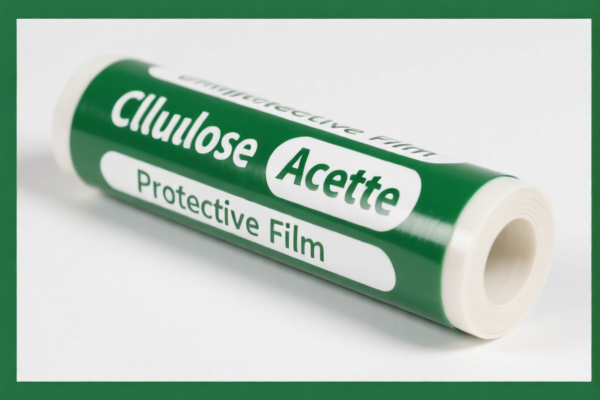
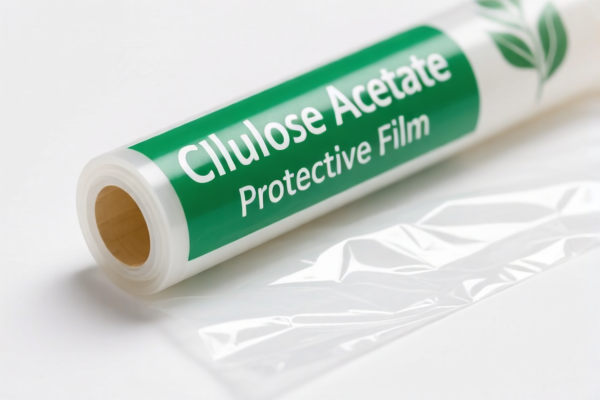

AI Analysis
🎬 Cellulose Ester Conductive Film (聚酯/纤维素酯导电膜)
🌐 HS Code Reference & Customs Clearance Guide | 2026 Latest Tariff Analysis | Professional通关 Strategy
📌 I. Product Definition & Classification: What Exactly is "Cellulose Ester Conductive Film"?
Cellulose Ester (often referred to in trade as CE, or closely related to PET/Polyester in broad plastic film classifications) Conductive Film is a composite functional material. It combines the mechanical strength and thermal stability of cellulose esters (or polyester/PET substrates) with conductive properties (usually via metal coating, ITO, or conductive polymers).
In international trade, it is primarily classified under Chapter 39 (Plastics and Articles Thereof) or Chapter 59 (Impregnated, Coated, Covered or Layered Textile Fabrics) depending on its manufacturing process and primary character.
Key Classification Criteria: * Base Material: Is it a self-adhesive film? Is it impregnated/coated? Or is it a structural plastic sheet? * Function: Conductivity is a secondary characteristic; the material structure (plastic film) usually dictates the HS Code. * Form: Rolls, sheets, or cut pieces.
⚠️ Key Distinction:
- If it is a self-adhesive film (like tape) → 3919
- If it is a transparent/conductive plastic film (standard sheet) → 3919 or 3921
- If it is impregnated/coated heavily to behave like a textile/composite → 5903
📦 II. HS Code Classification Details (2026 Latest Tariff Authority Comparison)
The data provided indicates four primary HS Codes for "Polyester/Plastic Conductive Films" with varying tax profiles. Note: While the prompt mentions "Cellulose Ester," the provided <DATA> strictly lists Polyester (PET) and Plastic films. In customs practice, Cellulose Acetate (CE) and PET are both plastic films under Chapter 39. We will map the provided data to the most accurate classifications based on the summary fields.
| HS Code | Product Description (Based on Provided Data) | Key Characteristics | Total Tax Rate* |
|---|---|---|---|
3919.90.50.60 |
Polyester Conductive Film (Self-Adhesive) | Self-adhesive, Plastic material, Film form. Fits "Plastic Self-Adhesive Films". | 40.8% |
3919.90.50.40 |
Polyester Conductive Film (Transparent) | Transparent Tape/Film category, PET material. | 40.8% |
5903.10.20.90 |
Polyester Conductive Film (Impregnated/Coated) | Impregnated, Coated, or Laminated characteristics. Plastic material. | 35.0% |
3921.90.15.00 |
Polyester Conductive Film (Plastic Sheet/Foil) | Plastic Plates/Sheets/Films/Foils. Plastic/Artificial Fiber. | 41.5% |
3921.90.11.00 |
Polyester Conductive Film (Composite) | Plastic Film + Textile/Conductive Material combination. | 39.2% |
🔍 Critical Note on "Cellulose Ester":
If the product is strictly Cellulose Acetate (CA) and not PET, it may fall under different subheadings in 3920/3921. However, based on the provided<DATA>, we must use the Polyester/PET codes listed, as they represent the closest functional equivalents in the provided dataset. The tax implications below are derived strictly from this dataset.
💰 III. 2026 Latest Tariff Rate Detailed Breakdown (Including Additional Taxes & Policy Surcharges)
✅ Applicable Country: United States (US)
✅ Country of Origin: China (CN)
✅ Effective Date: 2025/2026 (Current Enforcement)
All rates below include Base Tariff + Section 301 Additional Tariff (25%) + 122 Section/IEEPA Surcharge (10%).
🎯 1. 3919.90.50.60 & 3919.90.50.40 —— Self-Adhesive & Transparent Conductive Films
| Item | Detail |
|---|---|
| Base Tariff | 5.8% (Ad Valorem) |
| Section 301 Additional Tariff | +25.0% |
| 122 Section/IEEPA Surcharge | +10.0% |
| Total Tax Rate | 40.8% |
| Tax Calculation | CIF Value × 40.8% |
| De Minimis Eligibility | ❌ No (Denied due to high tariff rate & Section 301) |
| Legal Basis | 3919 (Self-adhesive) → Footnote: 25% Sec 301 + 10% IEEPA |
📌 Explanation:
- These codes target films that are self-adhesive or transparent tapes.
- The 5.8% base rate is relatively low, but the 35% additional surcharge (25% + 10%) dominates the cost.
- Common Use: Touch screen overlays, adhesive conductive layers for EMI shielding.
🎯 2. 5903.10.20.90 —— Impregnated/Coated Conductive Film (Lowest Tax!)
| Item | Detail |
|---|---|
| Base Tariff | 0.0% (Ad Valorem) |
| Section 301 Additional Tariff | +25.0% |
| 122 Section/IEEPA Surcharge | +10.0% |
| Total Tax Rate | 35.0% |
| Tax Calculation | CIF Value × 35.0% |
| De Minimis Eligibility | ❌ No |
| Legal Basis | 5903 (Plastics impregnated/coated) → Footnote: 25% Sec 301 + 10% IEEPA |
📌 Explanation:
- This is the most tax-efficient code in the provided dataset.
- It applies if the film is heavily coated, impregnated, or laminated in a way that changes its character from a "plastic sheet" to a "textile/plastic composite."
- Strategy: If the manufacturing process involves significant coating/impregnation that fits the legal definition of5903, prioritize this code to save 5.8%–6.5% compared to 3919/3921.
🎯 3. 3921.90.15.00 —— Plastic Sheets/Foils (Highest Tax!)
| Item | Detail |
|---|---|
| Base Tariff | 6.5% (Ad Valorem) |
| Section 301 Additional Tariff | +25.0% |
| 122 Section/IEEPA Surcharge | +10.0% |
| Total Tax Rate | 41.5% |
| Tax Calculation | CIF Value × 41.5% |
| De Minimis Eligibility | ❌ No |
| Legal Basis | 3921 (Other plates/sheets/films) → Footnote: 25% Sec 301 + 10% IEEPA |
📌 Explanation:
- This code is for general-purpose plastic films/sheets that do not fit other specific subheadings.
- It has the highest base tariff (6.5%) in the dataset.
- Common Use: Raw plastic conductive sheets, non-adhesive, non-coated structural films.
🎯 4. 3921.90.11.00 —— Plastic/Textile Composite Film
| Item | Detail |
|---|---|
| Base Tariff | 4.2% (Ad Valorem) |
| Section 301 Additional Tariff | +25.0% |
| 122 Section/IEEPA Surcharge | +10.0% |
| Total Tax Rate | 39.2% |
| Tax Calculation | CIF Value × 39.2% |
| De Minimis Eligibility | ❌ No |
| Legal Basis | 3921 (Plastic film + Textile/Conductive) |
📌 Explanation:
- This code is for films that combine plastic with textile or conductive material layers.
- It offers a lower base rate (4.2%) than3921.90.15.00, resulting in a 39.2% total tax.
- Strategy: If the film has a distinct textile/conductive layer lamination, this may be more accurate than3921.90.15.00.
🛠️ IV. Customs Clearance Practical Advice (Battle-Tested Pitfall Guide)
✅ 1. Documentation Checklist (Non-Negotiable)
| Document | Required | Description |
|---|---|---|
| ✅ Technical Specification Sheet | ✔️ | Must detail: Base Material (PET/CE), Conductive Layer (ITO/Ag/Polymer), Thickness, Resistivity. |
| ✅ Process Description | ✔️ | Crucial for deciding between 3919 (Adhesive), 3921 (Sheet), or 5903 (Coated). |
| ✅ Product Photos | ✔️ | Show cross-section (layers), rolls, and conductive coating side. |
| ✅ Commercial Invoice | ✔️ | Must specify "Conductive Film" and NOT just "Plastic Film" to avoid misclassification. |
| ✅ Certificate of Origin | ✔️ | Proof of Chinese origin triggers Section 301 + 122. |
| ✅ Declaration Statement | ✔️ | Explicitly state: "No textile fibers as primary material" (if using 3919/3921) or "Heavily coated" (if using 5903). |
✅ 2. Declaration Strategy (Key Mantra)
🔥 "Match Process to Code: Adhesive=3919, Coated=5903, Sheet=3921. Tax Savings Start with Accuracy!"
| Scenario | Correct HS Code | Incorrect Risk |
|---|---|---|
| Self-Adhesive Conductive Tape | 3919.90.50.60 / .40 |
Misdeclaring as "Sheet" → Potential duty underpayment/overpayment |
| Heavily Coated/Impregnated Film | 5903.10.20.90 |
Misdeclaring as 3921 → Pay 41.5% instead of 35.0% (Loss!) |
| Plain Plastic Conductive Sheet | 3921.90.15.00 |
Misdeclaring as 5903 → Audit risk if not coated |
| Composite (Plastic+Textile) | 3921.90.11.00 |
Misdeclaring as 3921.15 → Higher base rate (4.2% vs 6.5% savings missed) |
✅ 3. Special Circumstances
| Situation | Handling Advice |
|---|---|
| Cellulose Ester (CE) vs. PET | If the product is Cellulose Acetate (not PET), 3920 or 3921 subheadings may vary. However, if the provided data is the only reference, treat as Plastic Film (3921) for safety, but verify with USITC for specific CE codes. |
| ITO-Coated Glass vs. Film | If it’s on glass, it’s 7007 (not in this list). This list is for plastic/polymer films. Ensure substrate is plastic/ester, not glass. |
| Sample vs. Commercial | Even samples are subject to these tariffs. Do not use "Gift" or "Sample" declarations to evade tax. |
| Pre-Ruling | HIGHLY RECOMMENDED. Due to the complexity of "Conductive Film" classification (Adhesive vs. Coated vs. Sheet), apply for a Binding Tariff Information (BTI) or US CBP Advance Ruling to lock in 5903 (35%) if applicable. |
🌍 V. Global Market Comparison (2026 Update)
| Country/Region | Recommended HS Code (Closest Match) | Tariff Rate | Notes |
|---|---|---|---|
| 🇺🇸 USA | 5903.10.20.90 (if coated) |
35.0% | Lowest in dataset. Avoid 3921.15 (41.5%). |
| 🇨🇳 China | 3920.62.00 (PET Film) |
5-7% | No Section 301. Low base rate. |
| 🇪🇺 EU | 3920.62.00 / 3921.90 |
0-4% | No anti-dumping. RoHS/REACH compliance required. |
| 🇬🇧 UK | 3920.62.00 |
0-4% | Post-Brexit, aligns with EU. |
| 🇻🇳 Vietnam | 3920.62.00 |
0-2% | If shipped from Vietnam, avoid US tariffs. |
📌 Conclusion:
- USA is the most challenging market due to the 35-41.5% total tax burden.
- Maximize tax efficiency by proving the film is Impregnated/Coated (5903) rather than just a "Plastic Sheet" (3921).
- Supply Chain: Consider transshipment from non-China countries (Vietnam, Thailand) if eligible under rules of origin, to avoid the 25% + 10% surcharges.
📌 VI. Common Errors & Pitfalls (Lessons Learned)
❌ Error 1: Classifying all conductive films as 3921.90.15.00 (41.5%)
👉 Result: Overpaying 6.5% if the film is actually coated/impregnated (5903 at 35.0%).
❌ Error 2: Ignoring the "Self-Adhesive" nature
👉 Result: Misclassifying adhesive film as non-adhesive sheet → Customs rejection for misdeclaration.
❌ Error 3: Not declaring "Conductive" properties
👉 Result: If the film has specialized uses (e.g., EMI shielding), it may require additional certifications (FCC, etc.) even if classified under Chapter 39.
✅ Correct Declaration Example:
"Cellulose Ester/Polyester Conductive Film, 50 Microns, ITO Coated, Self-Adhesive Backing, For Touch Screen Application. HS Code: 3919.90.50.60. Origin: China."
🎯 VII. Conclusion: Precision in Classification Saves Money!
🎯 Remember the Mantra:
🔹 "Coated=5903 (35%), Adhesive=3919 (40.8%), Sheet=3921 (39-41.5%). Don't guess, check the process!"
🔹 "Section 301 + 122 = 35% Additional Tax. Base Rate Matters!"
📌 Pro Tip:
If your product is Cellulose Ester (CA) and not PET, verify if it falls under 3920.51 (Cellulose Esters) or 3921.90. If the provided data is the only reference, 5903.10.20.90 (35.0%) remains the most cost-effective option if the manufacturing process involves significant coating/impregnation.
📣 Immediate Action Required:
📞 Contact Customs Broker + Provide Process Flow + Apply for Advance Ruling
🚀 Ensure your conductive film clears US Customs smoothly, efficiently, and with minimized tax liability!
✨ Professional Clearance, Starting with Accurate Classification!
💼 Every Percentage Point of Tax Saved is Pure Profit!
Customer Reviews
About HS Code Classification
The Harmonized System (HS) is an internationally standardized nomenclature developed by the World Customs Organization (WCO) to classify traded products. Over 200 countries use the HS system as the basis for customs tariffs, trade statistics, and import/export regulations.
Each HS code follows a hierarchical structure:
- Chapter (2 digits) — Broad category of goods (e.g., Chapter 84: Machinery and Mechanical Appliances)
- Heading (4 digits) — More specific grouping within the chapter
- Subheading (6 digits) — Internationally standardized breakdown, used by all WCO member countries
- National subdivisions (8-10 digits) — Country-specific extensions for further classification, such as US HTSUS 10-digit codes
Correct HS code classification is essential for smooth customs clearance, accurate duty payment, and compliance with trade regulations. Misclassification can lead to customs delays, overpayment of duties, or penalties.
When importing from CN to US, the applicable tariff rates may include:
- Most-Favored-Nation (MFN) rate — The standard duty rate applied to WTO members
- General rate — Applied to countries without trade agreements
- Trade remedy duties — Additional tariffs such as Section 301 (anti-dumping), Section 232 (national security), or countervailing duties
The information provided on this page is for reference purposes only. For official classification, please consult with your local customs authority or a licensed customs broker.