Cellulose Filler
CN → US| HS Code | Tariff Rate | Origin | Destination | Doc |
|---|---|---|---|---|
| 3912900090 | 40.2% | CN | US | Official Doc |
| 3912120000 | 40.6% | CN | US | Official Doc |
| 4706200000 | 35.0% | CN | US | Official Doc |
| 4706920100 | 35.0% | CN | US | Official Doc |
| 3913905000 | 41.5% | CN | US | Official Doc |
| 3913902090 | 40.8% | CN | US | Official Doc |
Product Images
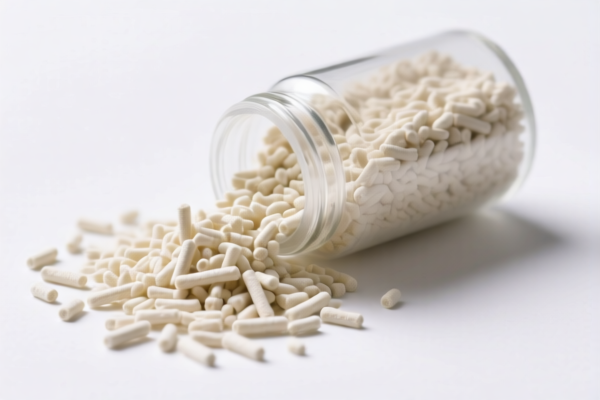
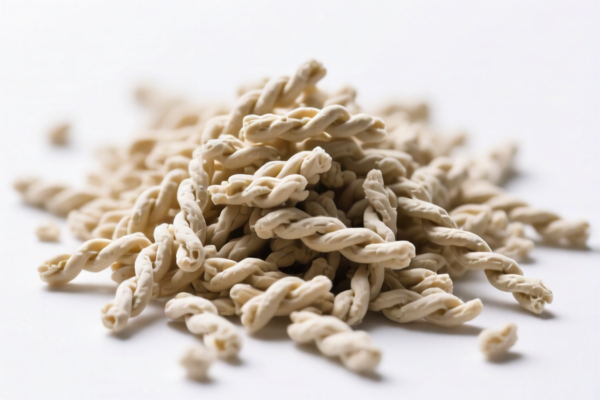
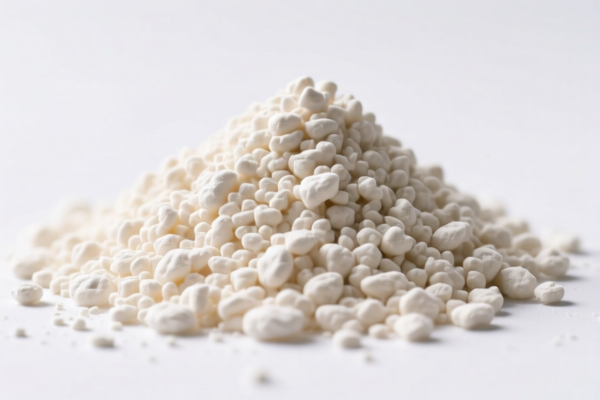
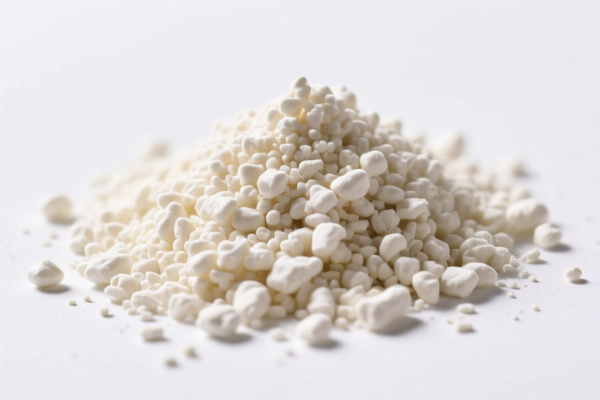
AI Analysis
🌿 Cellulose Filler (纤维素填充剂/纤维素衍生物)
🌐 HS Code Reference & Customs Clearance Guide | 2026 Latest Tariff Analysis | Professional Level通关策略
📌 I. Product Definition & Classification: What Exactly is "Cellulose Filler"?
In the chemical and polymer industry, "Cellulose Filler" is not a single, uniform product. It refers to a broad category of materials derived from cellulose, ranging from chemical derivatives to raw plant fibers. Their classification depends entirely on their chemical structure, degree of refinement, and physical form.
In international trade, these products fall primarily into two chapters: 1. Chapter 39 (Plastics and Articles Thereof): Covers chemical derivatives of cellulose (e.g., Cellulose Acetate, Methyl Cellulose) and natural polymers in primary forms. 2. Chapter 47 (Pulp of Wood or of Other Fibrous Vegetable Material): Covers raw or semi-processed cellulose materials, such as chemical wood pulp or refined vegetable fibers.
⚠️ Critical Distinction Point:
- If the product is a chemically modified polymer (e.g., Acetylated, Methylated) or a purified natural polymer powder → It likely belongs to Chapter 39.
- If the product is crude or semi-refined pulp/fiber (even if chemically treated but retaining fibrous structure) → It likely belongs to Chapter 47.
📦 II. HS Code Classification Matrix (Based on Provided Data)
| HS Code | Summary Description | Key Characteristics | Tax Category |
|---|---|---|---|
3912.90.00.90 |
Cellulose Derivatives, Chemical Additives | Chemically modified cellulose; used as additives/thickeners. | High Tax (40.2%) |
3912.12.00.00 |
Cellulose Acetate - Plasticized, Chemically Treated | Specifically Cellulose Acetate; plasticized for flexibility. | High Tax (40.6%) |
4706.20.00.00 |
Cellulose Fiber Pulp/Material, Primary Form | Raw or semi-refined pulp; no chemical polymerization into plastic. | Moderate Tax (35.0%) |
4706.92.01.00 |
Cellulose Material, Chemical Pulp Category | Chemical wood pulp or similar vegetable fiber pulp. | Moderate Tax (35.0%) |
3913.90.50.00 |
Natural Polymers, Primary Powder Form | Unmodified natural polymers (e.g., raw starch-like cellulose derivatives) in powder. | High Tax (41.5%) |
3913.90.20.90 |
Polysaccharides & Derivatives, Natural Polymer Original Form | Unmodified polysaccharides; retains natural structure. | High Tax (40.8%) |
🔍 Focus Alert:
- Products like Methyl Cellulose or Hydroxypropyl Methylcellulose (HPMC) typically fall under3912.90.00.90due to chemical modification. - Cellulose Acetate (used in films, fibers) falls under3912.12.00.00. - Wood Pulp or Refined Fibrous Material used as a filler base falls under4706...codes. - Raw Natural Polymers (less common for "fillers" but possible for specialized thickeners) fall under3913.90....
💰 III. 2026 Latest Tariff Rate Breakdown (Including Surtaxes & Policy Add-ons)
✅ Applicable Country: United States (US)
✅ Country of Origin: China (CN)
✅ Effective Date: November 10, 2025 (and subsequent imports)
🎯 1. 3912.90.00.90 — Cellulose Derivatives, Chemical Additives
| Item | Content |
|---|---|
| Base Tariff | 5.2% (ad valorem) |
| Section 301 Surtax | +25% (USITC Footnote 9903.88.01) |
| Section 122 Surtax | +10% (Specific to certain chemical/fiber categories) |
| Total Tariff Rate | 40.2% |
| Tax Calculation | CIF Value × 40.2% |
| De Minimis Exemption Eligible | ❌ NO (denied_de_minimis) |
| Legal Basis Path | USITC:3912.90.00.90 → FOOTNOTE:301_25 + SECTION122:10 |
📌 Explanation:
- The 25% Section 301 tariff is the standard punitive tariff on many Chinese chemical imports. - The 10% Section 122 tariff applies specifically to this subheading due to national security or strategic supply chain concerns (often linked to essential chemical inputs). - Total 40.2% is extremely high, significantly impacting cost structures.
🎯 2. 3912.12.00.00 — Cellulose Acetate, Plasticized
| Item | Content |
|---|---|
| Base Tariff | 5.6% |
| Section 301 Surtax | +25% |
| Section 122 Surtax | +10% |
| Total Tariff Rate | 40.6% |
| Tax Calculation | CIF Value × 40.6% |
| De Minimis Exemption Eligible | ❌ NO (denied_de_minimis) |
| Legal Basis Path | USITC:3912.12.00.00 → FOOTNOTE:301_25 + SECTION122:10 |
📌 Note:
- Cellulose Acetate is a high-value engineering material. The slightly higher base rate (5.6%) reflects its processed nature. - Same surtax structure applies.
🎯 3. 4706.20.00.00 & 4706.92.01.00 — Cellulose Pulp/Fiber Materials
| Item | Content |
|---|---|
| Base Tariff | 0.0% |
| Section 301 Surtax | +25% |
| Section 122 Surtax | +10% |
| Total Tariff Rate | 35.0% |
| Tax Calculation | CIF Value × 35.0% |
| De Minimis Exemption Eligible | ❌ NO (denied_de_minimis) |
| Legal Basis Path | USITC:4706.20.00.00 / 4706.92.01.00 → FOOTNOTE:301_25 + SECTION122:10 |
📌 Insight:
- Base tariffs are 0% because raw pulp is often considered a basic industrial raw material. - However, the 35% total rate (25% + 10%) is still substantial.
🎯 4. 3913.90.50.00 — Natural Polymers, Powder Form
| Item | Content |
|---|---|
| Base Tariff | 6.5% |
| Section 301 Surtax | +25% |
| Section 122 Surtax | +10% |
| Total Tariff Rate | 41.5% |
| Tax Calculation | CIF Value × 41.5% |
| De Minimis Exemption Eligible | ❌ NO (denied_de_minimis) |
| Legal Basis Path | USITC:3913.90.50.00 → FOOTNOTE:301_25 + SECTION122:10 |
📌 Warning:
- This has the highest total rate (41.5%) among all listed codes due to the highest base rate (6.5%).
🎯 5. 3913.90.20.90 — Polysaccharides, Natural Polymer Original Form
| Item | Content |
|---|---|
| Base Tariff | 5.8% |
| Section 301 Surtax | +25% |
| Section 122 Surtax | +10% |
| Total Tariff Rate | 40.8% |
| Tax Calculation | CIF Value × 40.8% |
| De Minimis Exemption Eligible | ❌ NO (denied_de_minimis) |
| Legal Basis Path | USITC:3913.90.20.90 → FOOTNOTE:301_25 + SECTION122:10 |
🛠️ IV. Customs Clearance Practical Advice (Avoiding Pitfalls)
✅ 1. Essential Documentation Checklist
| Document | Required? | Description |
|---|---|---|
| ✅ Product Specification Sheet | ✔️ | Must detail chemical composition, CAS numbers, degree of substitution (for derivatives), or pulp type. |
| ✅ Structure Diagram / Chemical Formula | ✔️ | Critical to distinguish between Chapter 39 (polymer) and Chapter 47 (pulp). |
| ✅ Product Photos (Packaging & Label) | ✔️ | Clear label showing brand, model, and exact chemical name (not just "Filler"). |
| ✅ Third-Party Test Report | ✔️ | ISO, MSDS (Material Safety Data Sheet), and composition analysis. |
| ✅ Commercial Invoice | ✔️ | Must explicitly state the HS Code and chemical nature (e.g., "Cellulose Acetate, Plasticized"). |
| ✅ Certificate of Origin (CO) | ✔️ | To prove origin (China) and verify surtax applicability. |
✅ 2. Declaration Strategy (Key Mantra)
🔥 "Chemical Derivatives Go to Ch39, Raw Pulp Goes to Ch47. Be Precise, Avoid Penalties!"
| Scenario | Correct Declaration | Incorrect Practice |
|---|---|---|
| Methyl Cellulose / HPMC | 3912.90.00.90 |
Misdeclare as "Natural Powder" → 3913.90.20.90 (40.8%) or 4706 (35%) → Audit Risk! |
| Cellulose Acetate Film/Fiber | 3912.12.00.00 |
Misdeclare as generic "Plastic" → Wrong Subheading, 40.6% |
| Wood Pulp / Refined Fiber | 4706.20.00.00 or 4706.92.01.00 |
Misdeclare as "Chemical Additive" → 3912 (40.2%) → Overpay Taxes! |
| Natural Polysaccharide Powder | 3913.90.50.00 or 3913.90.20.90 |
Misdeclare as "Filler" → Vague, leads to classification errors |
✅ 3. Special Circumstances Handling
| Situation | Recommendation |
|---|---|
| OEM Custom Derivatives | Provide client-specific formulas and SDS to prove chemical modification. |
| Blended Materials | If filler is mixed with other chemicals, declare based on essential character. If cellulose derivative is dominant, use Ch39. |
| Samples / Small Quantity | No de minimis exemption applies. Even small shipments face 35-41% tariffs. Factor this into costs. |
| Pre-Ruling Application | Highly Recommended! Apply for an Advance Ruling from US Customs and Border Protection (CBP) to confirm the correct HS Code and avoid post-import audits. |
🌍 V. Global Market Comparison (2026)
| Country/Region | Recommended HS Code | Tariff Rate | Certification Requirements | Notes |
|---|---|---|---|---|
| 🇺🇸 USA | 3912.90.00.90 / 4706.20.00.00 |
35.0% – 41.5% | SDS, FDA (if food-contact), EPA | Highest Tariff Burden due to 301 + 122 clauses. |
| 🇨🇳 China | 3912.90.00.90 / 4706.20.00.00 |
0% – 6.5% (Import) | N/A | Low base tariffs for domestic processing. |
| 🇪🇺 EU | 3912.90 / 4706.20 |
0% – 5.6% (Standard MFN) | REACH Registration, CLP | No surtaxes, but REACH compliance is critical and costly. |
| 🇬🇧 UK | 3912.90 / 4706.20 |
0% – 5.6% | UK REACH | Post-Brexit regulations apply. |
| 🇯🇵 Japan | 3912.90 / 4706.20 |
0% – 3.0% | JIS Standards | Low tariffs, high quality control standards. |
📌 Conclusion:
- USA is the most expensive market due to layered surtaxes (301 + 122). - EU and Japan offer lower tariffs but have stringent chemical safety regulations (REACH, JIS). - Supply Chain Strategy: For US-bound cellulose products, consider transshipment or substantial transformation in third countries (if legally compliant) to mitigate tariffs. However, US customs is vigilant against tariff evasion.
📌 VI. Common Errors & Pitfalls (Lessons Learned)
❌ Mistake 1: Using generic term "Cellulose Filler" on the invoice
👉 Consequence: Customs cannot classify → Delay, Inspection, Potential Rejection
❌ Mistake 2: Confusing Cellulose Acetate (3912.12) with Cellulose Fiber (4706)
👉 Consequence: Wrong tariff rate. Acetate is 40.6%, Pulp is 35.0%. While the difference is small, incorrect declaration leads to penalties.
❌ Mistake 3: Ignoring the 10% Section 122 Tariff
👉 Consequence: Underestimating landed cost. Total tax is Base + 25% + 10%. Many importers only account for 25%.
❌ Mistake 4: Assuming small shipments are exempt
👉 Consequence: No de minimis exemption for these HS codes. Even 1 kg sample incurs full tariff.
✅ Correct Practice:
"Cellulose Acetate, Plasticized, Grade XYZ, CAS Number 9004-35-7, For Industrial Film Production"
OR
"Chemical Wood Pulp, Bleached, HS Code 4706.20.00.00"
🎯 VII. Conclusion: Professional Classification Saves Money!
🎯 Remember the Mantra:
🔹 "Derivatives to 39, Pulp to 47. Check CAS Numbers, Avoid Audits!"
🔹 "USA Tariffs are High: 35% to 41.5%. Plan Ahead!"
📌 Pro Tip:
If your cellulose product is originating from Vietnam, Thailand, or Malaysia, and meets Rules of Origin, you may qualify for lower tariffs or exemptions from Section 301/122 tariffs.
Recommendation: Apply for an Advance Ruling before shipment to confirm HS Code and tariff applicability.
📣 Immediate Action:
📞 Contact a licensed Customs Broker + Provide SDS & Chemical Structure + Apply for HS Code Pre-Ruling
🚀 Let your Cellulose Filler clear customs smoothly, efficiently, and cost-effectively!
✨ Professional Clearance Starts with Accurate Classification!
💼 Every cent of your cost deserves precise calculation!
Customer Reviews
About HS Code Classification
The Harmonized System (HS) is an internationally standardized nomenclature developed by the World Customs Organization (WCO) to classify traded products. Over 200 countries use the HS system as the basis for customs tariffs, trade statistics, and import/export regulations.
Each HS code follows a hierarchical structure:
- Chapter (2 digits) — Broad category of goods (e.g., Chapter 84: Machinery and Mechanical Appliances)
- Heading (4 digits) — More specific grouping within the chapter
- Subheading (6 digits) — Internationally standardized breakdown, used by all WCO member countries
- National subdivisions (8-10 digits) — Country-specific extensions for further classification, such as US HTSUS 10-digit codes
Correct HS code classification is essential for smooth customs clearance, accurate duty payment, and compliance with trade regulations. Misclassification can lead to customs delays, overpayment of duties, or penalties.
When importing from CN to US, the applicable tariff rates may include:
- Most-Favored-Nation (MFN) rate — The standard duty rate applied to WTO members
- General rate — Applied to countries without trade agreements
- Trade remedy duties — Additional tariffs such as Section 301 (anti-dumping), Section 232 (national security), or countervailing duties
The information provided on this page is for reference purposes only. For official classification, please consult with your local customs authority or a licensed customs broker.