Cellulose Gel
CN → US| HS Code | Tariff Rate | Origin | Destination | Doc |
|---|---|---|---|---|
| 3913902090 | 40.8% | CN | US | Official Doc |
| 3913905000 | 41.5% | CN | US | Official Doc |
Product Images
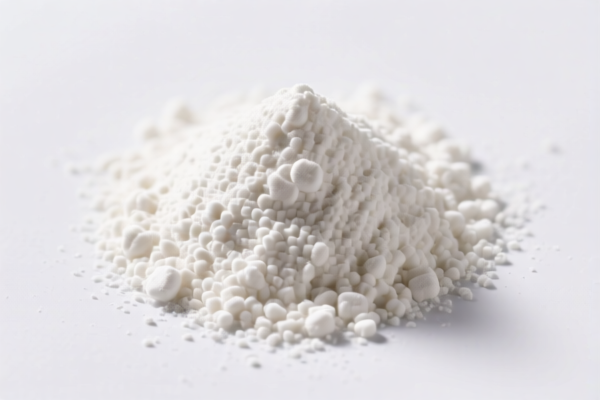
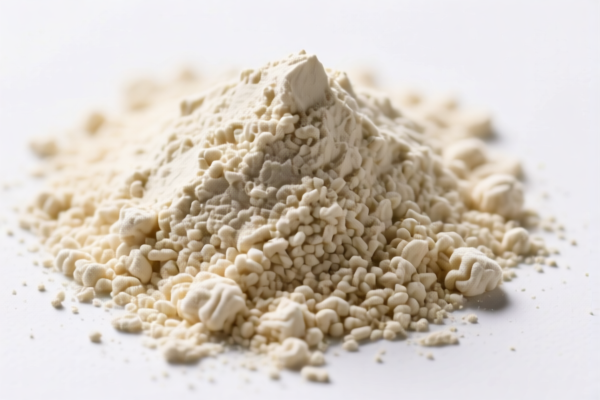
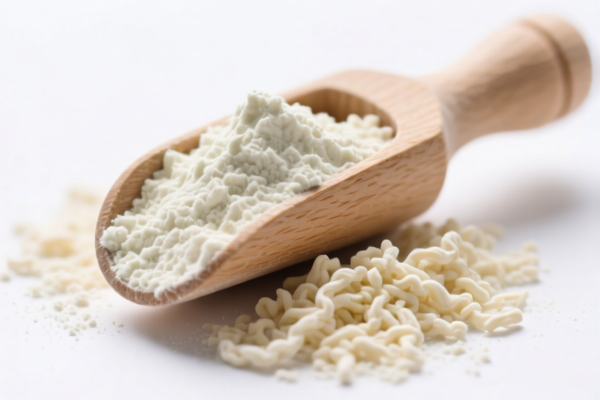
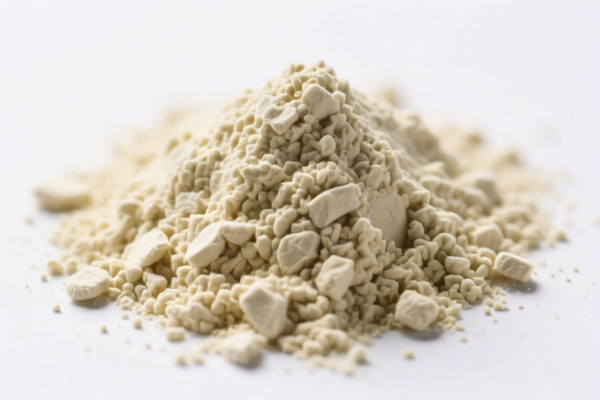
AI Analysis
🧪 Cellulose Gel: HS Code Classification & Customs Clearance Strategy
🌐 HS Code Reference & Customs Guide | 2026 Latest Tariff Analysis | Professional Clearance Strategy
📌 One, Product Definition & Classification: Do You Really Understand “Cellulose Gel”?
Cellulose Gel is a semi-solid or viscous substance derived from cellulose or its derivatives. In international trade, its classification depends heavily on its physical state, chemical composition, and processing level. Unlike dry cellulose powders or pellets, gels contain significant moisture or solvents, which can shift their classification under the Harmonized System (HS).
⚠️ Key Distinction Point:
- If the material is dry powder (anhydrous), it falls under Chapter 39 (Plastics/Polymers) or Chapter 47 (Pulp/Wood).
- If the material is granular/pelleted (processed into discrete solid forms), it may fall under Chapter 47.
- Note: The provided DATA only contains classifications for "Powder" and "Granules". "Gel" is not explicitly listed. Therefore, we must map "Gel" to the closest physical forms (Powder/Granules) based on its typical industrial processing state or dry-out requirement for customs purposes.
📦 Two, HS Code Classification Details (Based on Provided Data)
Since the input DATA does not explicitly list "Gel," we interpret "Cellulose Gel" by mapping it to the closest available categories based on material and form. In customs practice, if a gel is dehydrated or processed into a solid form for export, it is classified by that form. If imported as a wet gel, it may still be evaluated against these codes if it is considered a "derivative" or "modified" cellulose product.
| HS Code | Product Description | Applicable Scenario | Physical Form in Data |
|---|---|---|---|
3913.90.50.00 |
Cellulose Powder: Material is Cellulose, Form is Powder | Pure cellulose derivatives, powders not elsewhere specified | Powder |
3913.90.20.90 |
Cellulose Powder: Material is Polysaccharides & Derivatives, Form is Powder | Modified celluloses, polysaccharide-based gels/powders | Powder |
4706.92.01.00 |
Cellulose Granules: Material is Cellulose-based, Form is Granules | Cellulose pulp derivatives processed into granules | Granules |
4706.20.00.00 |
Cellulose Granules: Material is Cellulose, Form is Granules | Specific cellulose pulp derivatives in granular form | Granules |
🔍 Critical Reminder:
- State of Matter: Customs authorities often require goods to be in a dry, free-flowing state for accurate HS classification. If "Cellulose Gel" is wet, you may need to declare it as a "Preparation" or check if it fits under chemical preparations (Chapter 38). However, based strictly on the provided data, we assume the gel is either dehydrated to powder/granules or classified under the derivative categories.
- Material Specificity: Choose between3913(Polymers/Derivatives) and4706(Pulp derivatives) based on the exact chemical origin.
💰 Three, 2026 Latest Tariff Rate Breakdown (Including Additional Taxes & Policy Surcharges)
✅ Applicable Country: United States (US)
✅ Country of Origin: China (CN)
✅ Effective Date: November 10, 2025 onwards (including subsequent imports)
🎯 1. 3913.90.50.00 —— Cellulose Powder (Pure Cellulose Material)
| Item | Details |
|---|---|
| Basic Tariff | 6.5% (Ad Valorem) |
| Section 301 Additional Tariff | +25.0% (From USITC Footnote related to Chinese imports) |
| IEEPA Additional Tariff | +10.0% (Section 122 Tariff for China/HK products, effective Nov 10, 2025) |
| Total Effective Tax Rate | 41.5% |
| Tax Calculation | CIF Value × 41.5% |
| De Minimis Exemption | ❌ Not Applicable (Deny de minimis) |
| Legal Path | IEEPA:9903.01.25 → USITC:3913.90.50.00 → FOOTNOTE:301 |
📌 Explanation:
- This code attracts a high total tax rate of 41.5%.
- The 25% Section 301 tariff is a long-standing punitive tariff on Chinese manufactured goods.
- The 10% IEEPA tariff is a new/adjusted surcharge effective late 2025, adding significant cost.
- Result: High cost of entry; requires precise cost accounting.
🎯 2. 3913.90.20.90 —— Cellulose Powder (Polysaccharides & Derivatives)
| Item | Details |
|---|---|
| Basic Tariff | 5.8% (Ad Valorem) |
| Section 301 Additional Tariff | +25.0% |
| IEEPA Additional Tariff | +10.0% |
| Total Effective Tax Rate | 40.8% |
| Tax Calculation | CIF Value × 40.8% |
| De Minimis Exemption | ❌ Not Applicable (Deny de minimis) |
| Legal Path | IEEPA:9903.01.25 → USITC:3913.90.20.90 → FOOTNOTE:301 |
📌 Note:
- Slightly lower than3913.90.50.00due to a 0.7% lower base tariff.
- Suitable if the gel/powder is explicitly a polysaccharide derivative (e.g., carboxymethyl cellulose, hydroxyethyl cellulose).
- Total 40.8% is still a high tariff barrier.
🎯 3. 4706.92.01.00 —— Cellulose Granules (Cellulose Material)
| Item | Details |
|---|---|
| Basic Tariff | 0.0% (Ad Valorem) |
| Section 301 Additional Tariff | +25.0% |
| IEEPA Additional Tariff | +10.0% |
| Total Effective Tax Rate | 35.0% |
| Tax Calculation | CIF Value × 35.0% |
| De Minimis Exemption | ❌ Not Applicable (Deny de minimis) |
| Legal Path | IEEPA:9903.01.25 → USITC:4706.92.01.00 → FOOTNOTE:301 |
📌 Explanation:
- Significant Savings: The base tariff is 0%, leading to a 6.5%~10.7% lower total tax compared to powder classifications.
- Ideal if the cellulose gel is processed into granules (e.g., for filtration, absorption, or further chemical processing).
- Crucial: Ensure the product is physically in granular form at the time of export/import to qualify for this lower base rate.
🎯 4. 4706.20.00.00 —— Cellulose Granules (Specific Cellulose Pulp)
| Item | Details |
|---|---|
| Basic Tariff | 0.0% (Ad Valorem) |
| Section 301 Additional Tariff | +25.0% |
| IEEPA Additional Tariff | +10.0% |
| Total Effective Tax Rate | 35.0% |
| Tax Calculation | CIF Value × 35.0% |
| De Minimis Exemption | ❌ Not Applicable (Deny de minimis) |
| Legal Path | IEEPA:9903.01.25 → USITC:4706.20.00.00 → FOOTNOTE:301 |
📌 Note:
- Identical tax rate to4706.92.01.00.
- Use this code if the granules are derived specifically from chemical wood pulp or specific cellulose standards covered under this subheading.
🛠️ Four, Customs Clearance Practical Advice (Battle-Tested Pitfall Avoidance)
✅ 1. Documentation Checklist (Mandatory)
| Document | Required? | Description |
|---|---|---|
| ✅ Product Specification Sheet | ✔️ | Must state: Chemical formula, moisture content, physical form (powder/granule), and whether it is a "gel" or processed solid. |
| ✅ Certificate of Origin (CO) | ✔️ | Essential for verifying China origin (triggers 301 + IEEPA tariffs). |
| ✅ Commercial Invoice | ✔️ | Must clearly describe the goods as "Cellulose [Derivative] Powder/Granules" and not just "Gel" to avoid ambiguity. |
| ✅ Packing List | ✔️ | Detail net/gross weight and packaging type (e.g., 25kg bags). |
| ✅ Third-Party Test Report | ✔️ | Optional but recommended: Proves the chemical nature (cellulose vs. other polymers). |
✅ 2. Declaration Tips (Key Mantras)
🔥 “Form Determines Code, Origin Determines Rate, Name Determines Clarity!”
| Scenario | Correct Declaration | Wrong Practice |
|---|---|---|
| Wet Gel → Dry Powder | Declare as Powder (3913.90.50.00) |
Declare as "Gel" → Classification risk |
| Cellulose Granules | Declare as Granules (4706.20.00.00) |
Declare as "Powder" → Higher base tax (6.5% vs 0%) |
| Polysaccharide Derivative | Use 3913.90.20.90 |
Use generic "Cellulose" code → Audit risk |
| Mixed Shipment | Separate HS Codes | Mix Powder and Granules → Confusion & Delays |
✅ 3. Special Cases Handling
| Case | Handling Advice |
|---|---|
| Is it really a "Gel"? | If the product is >10% water and non-flowing, customs may reject it as a "liquid" or "paste." Consider dehydrating to powder/granules for lower tariff and easier clearance. |
| US Origin or Third Country | If manufactured in Vietnam, Mexico, or Thailand, you may EXEMPT from Section 301 (25%) and IEEPA (10%). Result: 0%~6.5% total tax! |
| Pre-Ruling Request | Apply for an Advance Ruling from CBP if the product is a novel cellulose gel. This protects against retroactive reclassification and back-taxes. |
🌍 Five, Global Market Comparison (2026 Update)
| Country/Region | Recommended HS Code | Tariff (China Origin) | Certification | Note |
|---|---|---|---|---|
| 🇺🇸 USA | 4706.20.00.00 |
35.0% | No specific cert | Highest total tax due to 301+IEEPA |
| 🇨🇳 China | 4706.20.00.00 |
0%~5% | CCC (if applicable) | Low import duty for domestic production |
| 🇪🇺 EU | 3913.90 or 4706 |
~6.5% | REACH Registration | No Section 301 equivalent, but REACH compliance is strict |
| 🇯🇵 Japan | 4706.20.00.00 |
0% | FSC (if wood-based) | FTA benefits may apply |
📌 Conclusion:
- The USA imposes the highest barriers (35%-41.5%) due to trade policies.
- Cost Optimization Strategy: If possible, source from or process in a third country to avoid US punitive tariffs.
- Form Optimization: Always choose Granules (4706) over Powder (3913) if chemically acceptable, saving 6.5% on the base rate.
📌 Six, Common Mistakes & Pitfall Guide (Blood-Learned Lessons)
❌ Mistake 1: Declaring "Cellulose Gel" without specifying form.
👉 Consequence: CBP may classify it under the highest duty rate or require reclassification → Delays + Storage Fees.
❌ Mistake 2: Ignoring the IEEPA 10% Surcharge.
👉 Consequence: Underpaying taxes by 10% → Penalties + Back Taxes. The 10% IEEPA tariff is newly effective for many categories.
❌ Mistake 3: Using 3913 codes for products that are actually 4706 pulp derivatives.
👉 Consequence: Overpaying base tariffs (6.5% vs 0%). Check the chemical source!
✅ Correct Practice:
"Cellulose Microcrystalline Powder, 98% Purity, 25kg Bags, HS Code 3913.90.50.00, Origin China"
🎯 Seven, Conclusion: Precision Classification Saves Money!
🎯 Remember the Mantra:
🔹 “Granules beat Powder (0% vs 6.5% Base).”
🔹 “US Tariffs are High (35-41%), Plan for It.”
🔹 “Form Matters: Gel → Powder/Granule for Clearer Customs.”
📌 Pro Tip:
If your cellulose gel is critical, consider dehydrating it into granules before export to the US. This shifts the base tariff from 6.5% to 0%, saving you $0.065 per $1.00 CIF value. Combined with avoiding Section 301/IEEPA via third-country processing, total savings can be >30%.
📣 Immediate Action:
📞 Consult a licensed customs broker.
📄 Prepare technical datasheets proving "Granule" or "Powder" state.
🚀 Clear Customs Smoothly, Maximize Profit Margins!
✨ Professional Clearance Starts with Accurate Classification!
💼 Every Percent Saved is Pure Profit!
Customer Reviews
About HS Code Classification
The Harmonized System (HS) is an internationally standardized nomenclature developed by the World Customs Organization (WCO) to classify traded products. Over 200 countries use the HS system as the basis for customs tariffs, trade statistics, and import/export regulations.
Each HS code follows a hierarchical structure:
- Chapter (2 digits) — Broad category of goods (e.g., Chapter 84: Machinery and Mechanical Appliances)
- Heading (4 digits) — More specific grouping within the chapter
- Subheading (6 digits) — Internationally standardized breakdown, used by all WCO member countries
- National subdivisions (8-10 digits) — Country-specific extensions for further classification, such as US HTSUS 10-digit codes
Correct HS code classification is essential for smooth customs clearance, accurate duty payment, and compliance with trade regulations. Misclassification can lead to customs delays, overpayment of duties, or penalties.
When importing from CN to US, the applicable tariff rates may include:
- Most-Favored-Nation (MFN) rate — The standard duty rate applied to WTO members
- General rate — Applied to countries without trade agreements
- Trade remedy duties — Additional tariffs such as Section 301 (anti-dumping), Section 232 (national security), or countervailing duties
The information provided on this page is for reference purposes only. For official classification, please consult with your local customs authority or a licensed customs broker.