Cellulose Powder (Cosmetics)
CN → USProduct Images
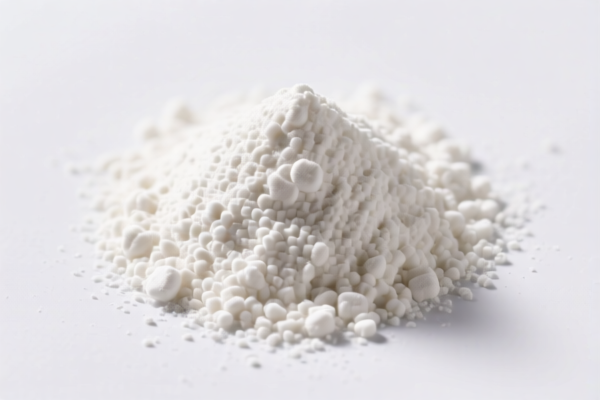
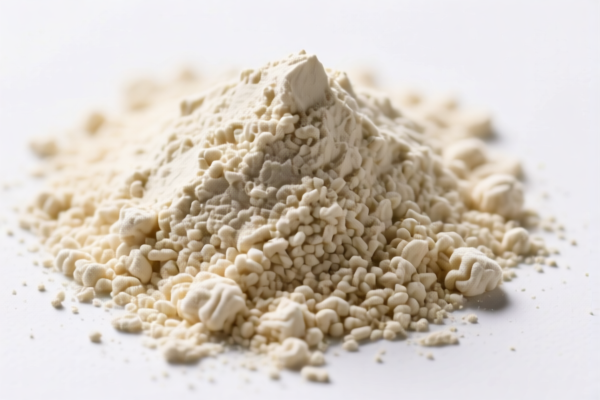
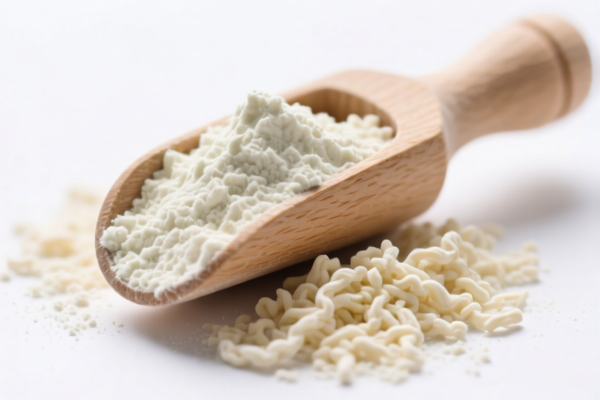
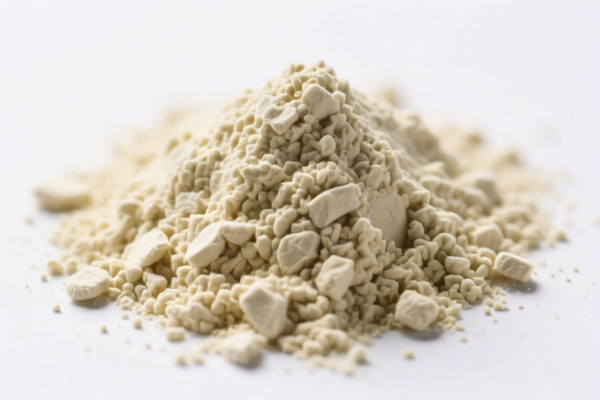
AI Analysis
🌿 Cellulose Powder (Cosmetics / Pharmaceutical Grade)
🌐 HS Code Reference & Customs Clearance Guide | 2026 Latest Tariff Analysis | Professional Clearance Strategy
📌 Part I: Product Definition & Classification: What is "Cellulose Powder"?
Cellulose powder, in the context of cosmetics and pharmaceuticals, refers to modified cellulose derivatives such as Microcrystalline Cellulose (MCC), Carboxymethyl Cellulose (CMC), or Cellulose Nanocrystals. It serves as a binder, thickener, emulsifier, or anti-caking agent in skincare, makeup, and oral care products.
In international trade, it is NOT classified as a simple agricultural product or raw plant fiber. It is a chemically modified or mechanically processed chemical product.
⚠️ Critical Distinction:
- If it is raw, unbleached, or merely ground plant fiber without chemical modification → May fall under Chapter 14 (Vegetable products) or 4705 (Wood pulp waste).
- If it is refined, bleached, microcrystalline, or chemically modified (e.g., MCC, CMC) → Must fall under Chapter 35 or 39.
- Most cosmetic-grade cellulose powder (MCC/CMC) is classified under HS Code 3505 (Dextrans, gums, mucilages...).📌 Key Clarification:
- Microcrystalline Cellulose (MCC) is the most common form in cosmetics. It is defined under 3505.10.
- Carboxymethyl Cellulose (CMC) salts are also classified under 3505.20.
- Do NOT misclassify as "Plastics" (Chapter 39) unless it is in pellet form for extrusion. Powder form for binding/thickening is 3505.
📦 Part II: HS Code Classification Details (2026 Official Tariff)
| HS Code | Product Description | Application in Cosmetics | Chemical State |
|---|---|---|---|
| 3505.10.10.00 | Dextrins and other modified starches; glues... | Not applicable | — |
| 3505.10.90.00 | Other dextrans, gums, mucilages... (e.g., Microcrystalline Cellulose) | Binder in pills, thickener in lotions, anti-caking agent in powders | Modified Cellulose (MCC) |
| 3505.20.00.00 | Carboxymethyl cellulose and its salts | Emulsifier in creams, stabilizer in shampoos | CMC (Chemically Modified) |
| 3906.90.80.00 | Acrylic polymers in primary forms | Incorrect | Only if it's acrylic powder, not cellulose |
| 4705.00.00.00 | Wood pulp other than chemical, mechanical... | Rarely used in high-end cosmetics | Raw/Pulp form, not refined powder |
🔍 Focus for Cosmetics:
- Primary Code:3505.10.90.00(Microcrystalline Cellulose)
- Secondary Code:3505.20.00.00(Carboxymethyl Cellulose)
- Why Chapter 35? These are "prepared binders" and "mucilages," which are chemical preparations used in cosmetics, distinct from raw materials.
💰 Part III: 2026 Latest Tariff Rate Details (Including Surcharges & Policy Add-ons)
✅ Applicable Country: United States (US)
✅ Origin: China (CN)
✅ Effective Date: November 10, 2025 onwards (Includes subsequent imports)
🎯 1. 3505.10.90.00 — Microcrystalline Cellulose (MCC)
| Item | Content |
|---|---|
| Base Tariff Rate | 5.3% (ad valorem) |
| USITC Surcharge (Section 301) | +25% (Footnote 9903.88.01) |
| IEEPA Surcharge | +10% (On Chinese/HK products, effective Nov 2025) |
| Total Tariff Rate | 40.3% |
| Tax Calculation | CIF Value × 40.3% |
| De Minimis Exemption | ❌ Not Eligible (deny_de_minimis) |
| Legal Basis Path | IEEPA:9903.01.25 → IEEPA:9903.01.24 → USITC:3505.10.90.00 → FOOTNOTE:9903.88.01 |
📌 Explanation:
- MCC is considered a "chemical product" under Section 301.
- The 40.3% rate is high and significantly impacts cost margins.
- No de minimis exemption applies, meaning even small samples are taxed.
🎯 2. 3505.20.00.00 — Carboxymethyl Cellulose (CMC)
| Item | Content |
|---|---|
| Base Tariff Rate | 5.3% (ad valorem) |
| USITC Surcharge (Section 301) | +25% |
| IEEPA Surcharge | +10% |
| Total Tariff Rate | 40.3% |
| Tax Calculation | CIF Value × 40.3% |
| De Minimis Exemption | ❌ Not Eligible |
| Legal Basis Path | IEEPA:9901.25 → IEEPA:9903.01.24 → USITC:3505.20.00.00 → FOOTNOTE:9903.88.01 |
📌 Note:
- CMC and MCC share the same tariff structure for cosmetic/pharmaceutical grade.
- Both are subject to the 40.3% total duty.
🛠️ Part IV: Customs Clearance Practical Advice (Battle-Tested Pitfall Guide)
✅ 1. Required Documentation Checklist (Non-negotiable)
| Document | Mandatory | Description |
|---|---|---|
| ✅ Certificate of Analysis (COA) | ✔️ | Must specify: Particle size, pH, viscosity, heavy metals, microbial limits. |
| ✅ Cosmetic GMP Certificate | ✔️ | Proof of manufacturing under ISO 22716 or similar standards. |
| ✅ Ingredient Declaration | ✔️ | Explicitly state "Microcrystalline Cellulose" or "Carboxymethyl Cellulose." Avoid vague terms like "Natural Powder." |
| ✅ Safety Data Sheet (SDS) | ✔️ | Must comply with OSHA/GHS standards. |
| ✅ Commercial Invoice | ✔️ | Must include HS Code 3505.10.90.00 and clear description. |
| ✅ Certificate of Origin (CO) | ✔️ | Essential for proving origin to avoid misclassification. |
| ✅ FDA Prior Notice | ✔️ | Required for all food/cosmetic ingredients entering the US. |
✅ 2. Declaration Tips (Key Mantra)
🔥 “Specify Grade, Declare Function, Avoid ‘Natural’ Ambiguity!”
| Situation | Correct Declaration | Incorrect Practice |
|---|---|---|
| MCC for cosmetics | Microcrystalline Cellulose, Pharmaceutical/Cosmetic Grade, for use as binder/thickener |
"Plant Powder," "Cellulose" |
| CMC for skincare | Sodium Carboxymethyl Cellulose, Cosmetic Grade, emulsifier |
"Thickener," "Chemical Powder" |
| Raw Wood Pulp | Wood Pulp, Unbleached |
"Cellulose Powder" (Misleading) |
⚠️ Warning:
- Using vague terms like "Natural Fiber Powder" may lead to classification under Chapter 14 or 4601, triggering different duties and import restrictions.
- Always specify Chemical Grade (Pharmaceutical/Cosmetic) to justify HS Code 3505.
✅ 3. Special Scenarios
| Scenario | Handling Advice |
|---|---|
| Bulk Powder vs. Small Packets | Both are taxed equally. Do not split shipments to avoid detection; it raises red flags. |
| Mixture with other actives | If mixed with active ingredients (e.g., Vitamin C), classify based on essential character. If cellulose is just a carrier, still 3505. |
| Origin: Non-China (e.g., Vietnam) | Can apply for IEEPA Exemption, reducing rate to 5.3%. Must provide proof of substantial transformation. |
| FDA Registration | Ensure facility is FDA-registered. Non-compliance leads to detention at port. |
🌍 Part V: Global Customs Comparison (2026 Latest)
| Country/Region | Recommended HS Code | Tariff (China Origin) | Certification Required | Notes |
|---|---|---|---|---|
| 🇺🇸 USA | 3505.10.90.00 |
40.3% | FDA Prior Notice + GMP | High tariff; no de minimis |
| 🇪🇺 EU | 3505.10.00.00 |
0% | REACH Compliance | Free trade under GSP for some, but check REACH registration |
| 🇨🇳 China | 3505.10.00.00 |
5% | CCC (if applicable) | Low tariff; domestic supply chain mature |
| 🇯🇵 Japan | 3505.10.10.00 |
0% | Japan FSC | Free under JETP if certified |
| 🇦🇺 Australia | 3505.10.00.00 |
5% | AICIS Registration | Chemical inventory check required |
📌 Conclusion:
- USA is the most expensive market due to 301/IEEPA surcharges.
- EU/Japan are favorable if REACH/FSC compliance is met.
- Supply Chain Strategy: Consider sourcing from Vietnam or Malaysia for US exports to avoid the 40.3% tariff.
📌 Part VI: Common Errors & Pitfall Guide (Lessons Learned)
❌ Error 1: Declaring as "Vegetable Fiber" (HS 1404)
👉 Consequence: Misclassification leads to penalties + back taxes. Cosmetics-grade cellulose is chemically processed, not raw fiber.
❌ Error 2: Omitting "Cosmetic/Pharmaceutical Grade" in description
👉 Consequence: Customs may suspect industrial-grade use (e.g., for paper), leading to audit.
❌ Error 3: Ignoring FDA Prior Notice
👉 Consequence: Goods detained at US port for weeks. FDA requires notice 2-4 hours before arrival.
❌ Error 4: Using "Cellulose" as sole product name
👉 Consequence: Ambiguity leads to random inspection. Always use INCI Name (e.g., "Cellulose" or "Microcrystalline Cellulose").
✅ Correct Practice:
"Microcrystalline Cellulose (MCC), USP Grade, Cosmetic Use, E460, Batch No. XYZ, FDA Prior Notice Submitted"
🎯 Part VII: Conclusion: Precision in Declaration, Savings in Cost!
🎯 Remember Mantra:
🔹 "MCC is 3505, not 1404 or 4705!"
🔹 "40.3% in USA, 0% in EU, 5.3% if Vietnam-made!"
🔹 "FDA Prior Notice is mandatory for US!"
📌 Pro Tip:
If you are importing into the USA, consider supply chain diversification to Vietnam or Thailand to benefit from IEEPA Exemption.
Always request CoA and GMP Certificate from suppliers to speed up customs clearance.
📣 Immediate Action:
📞 Consult with a customs broker specializing in cosmetics.
📄 Prepare SDS + COA + GMP Certificate before shipment.
🚀 Optimize HS Code Declaration to avoid delays and excessive duties!
✨ Professional Customs Clearance Starts with Accurate Classification!
💼 Your Margin Depends on Your HS Code Choice!
Customer Reviews
About HS Code Classification
The Harmonized System (HS) is an internationally standardized nomenclature developed by the World Customs Organization (WCO) to classify traded products. Over 200 countries use the HS system as the basis for customs tariffs, trade statistics, and import/export regulations.
Each HS code follows a hierarchical structure:
- Chapter (2 digits) — Broad category of goods (e.g., Chapter 84: Machinery and Mechanical Appliances)
- Heading (4 digits) — More specific grouping within the chapter
- Subheading (6 digits) — Internationally standardized breakdown, used by all WCO member countries
- National subdivisions (8-10 digits) — Country-specific extensions for further classification, such as US HTSUS 10-digit codes
Correct HS code classification is essential for smooth customs clearance, accurate duty payment, and compliance with trade regulations. Misclassification can lead to customs delays, overpayment of duties, or penalties.
When importing from CN to US, the applicable tariff rates may include:
- Most-Favored-Nation (MFN) rate — The standard duty rate applied to WTO members
- General rate — Applied to countries without trade agreements
- Trade remedy duties — Additional tariffs such as Section 301 (anti-dumping), Section 232 (national security), or countervailing duties
The information provided on this page is for reference purposes only. For official classification, please consult with your local customs authority or a licensed customs broker.