Cellulose Stabilizer
CN → US| HS Code | Tariff Rate | Origin | Destination | Doc |
|---|---|---|---|---|
| 2942003500 | 41.5% | CN | US | Official Doc |
| 2942005000 | 38.7% | CN | US | Official Doc |
| 3809100000 | 0.0% | CN | US | Official Doc |
| 3809910000 | 41.0% | CN | US | Official Doc |
Product Images
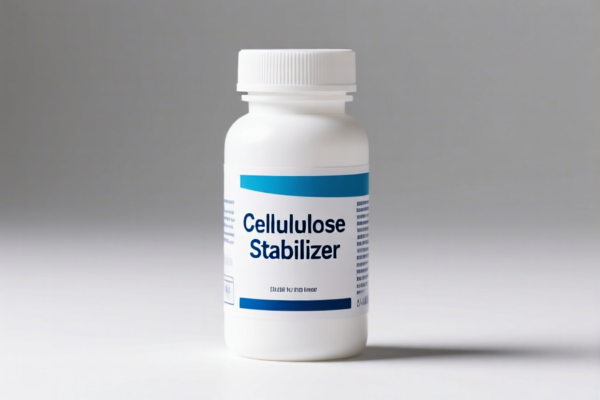
AI Analysis
🧪 Cellulose Stabilizer (Cellulose Derivative Stabilizers)
🌐 HS Code Reference & Customs Clearance Guide | 2026 Latest Tariff Analysis | Professional Clearance Strategy
📌 I. Product Definition & Classification: What is a "Cellulose Stabilizer"?
Cellulose stabilizers are chemical additives derived from cellulose (typically methylcellulose, hydroxypropyl methylcellulose, or carboxymethyl cellulose) used to improve the stability, viscosity, texture, or shelf-life of various products. In international trade, their classification depends heavily on chemical nature vs. functional use.
Key Distinction: - Chemical Additives (Raw Materials): Pure or modified organic compounds used as building blocks. → Classified under Chapter 29. - Formulated Preparations (Finished Additives): Mixtures prepared for specific industrial uses (e.g., textiles, paper, food processing) with binding agents or specific functional formulations. → Classified under Chapter 38.
⚠️ Critical Classification Point:
- If the product is a single defined chemical substance (e.g., pure Methylcellulose) → Chapter 29 (Organic Chemicals).
- If the product is a mixture/formulation designed for industrial application (e.g., textile sizing agents, paper coating stabilizers) → Chapter 38 (Miscellaneous Chemical Products).
📦 II. HS Code Classification Details (2026 Latest Tariff Authority Comparison)
Based on the provided data, here are the four most likely HS Codes and their rationales:
| HS Code | Product Description | Application Scenario | Classification Logic |
|---|---|---|---|
| 2942.00.35.00 | Organic Additive, Aromatic/Modified Aromatic | Pure cellulose derivative, chemically modified, no specific industrial formulation | Based on summary: "Infers organic chemical additive, fits aromatic or modified aromatic organic compounds." |
| 2942.00.50.00 | Other Organic Compounds (Residual) | Cellulose derivative not fitting other specific organic headings | Based on summary: "Residual logic for other organic compounds, chemical additive with no material/shape conflict." |
| 3809.10.00.00 | Industrial Finishing Agent for Textiles | Formulated stabilizer for textile processing (starch/polymer base) | Based on summary: "Matches textile use, falls under industrial finishing agents, usually starch/polymer based." |
| 3809.91.00.00 | Formulated Preparation for Textiles | Specific formulation for textile field, carrier/dye stabilizer | Based on summary: "Matches textile field use, formulated product matching finishing agents and dye carriers." |
🔍 Key Reminder:
- Chapter 29 (2942): Applies if the product is sold as a chemical raw material (pure substance).
- Chapter 38 (3809): Applies if the product is sold as a functional formulation (mixture) specifically for textile processing.
- Do NOT classify under food additives (Chapter 21) or general chemicals (Chapter 39) unless explicitly confirmed by MSDS and usage.
💰 III. 2026 Latest Tariff Rate Breakdown (Including Additional Taxes & Policy Surcharges)
✅ Applicable Country: United States (US)
✅ Origin: China (CN)
✅ Effective Date: From Nov 10, 2025 (including subsequent imports)
🎯 1. 2942.00.35.00 —— Organic Chemical Additive (Modified Aromatic)
| Item | Content |
|---|---|
| Base Tariff | 6.5% (ad valorem) |
| Section 301 Additional Tariff | +25.0% |
| Section 122 Tariff | +10.0% |
| Total Tariff Rate | 41.5% |
| Tax Calculation | CIF Value × 41.5% |
| De Minimis Exemption | ❌ Not Available (deny_de_minimis) |
| Legal Basis Path | Base: 6.5% → USITC Footnote 9903.88.01 (301 Tariff) → IEEPA (Section 122) |
📌 Explanation:
- This code falls under "Other organic compounds."
- Total 41.5% is a high tariff. It applies to pure cellulose derivatives classified as modified aromatic organic compounds.
- No de minimis exemption for Section 301/122 tariffs.
🎯 2. 2942.00.50.00 —— Other Organic Compounds (Residual)
| Item | Content |
|---|---|
| Base Tariff | 3.7% (ad valorem) |
| Section 301 Additional Tariff | +25.0% |
| Section 122 Tariff | +10.0% |
| Total Tariff Rate | 38.7% |
| Tax Calculation | CIF Value × 38.7% |
| De Minimis Exemption | ❌ Not Available |
| Legal Basis Path | Base: 3.7% → USITC Footnote 9903.88.01 (301 Tariff) → IEEPA (Section 122) |
📌 Note:
- Slightly lower base rate (3.7%) than 2942.35 (6.5%), but still subject to full additional tariffs.
- Used when the cellulose derivative doesn't fit more specific organic chemical headings.
- Total 38.7% is still very high.
🎯 3. 3809.10.00.00 —— Textile Finishing Agent (Industrial Preparation)
| Item | Content |
|---|---|
| Base Tariff | 2.2 ¢/kg + 3% (ad valorem) |
| Section 301 Additional Tariff | +7.5% |
| Section 122 Tariff | +10.0% |
| Total Tariff Rate | 2.2 ¢/kg + 3% + 17.5% |
| Tax Calculation | (Weight × 2.2¢) + (CIF × 3%) + (CIF × 17.5%) |
| De Minimis Exemption | ❌ Not Available for 301/122 portions |
| Legal Basis Path | Base: 2.2¢/kg + 3% → USITC Footnote (301 Tariff 7.5%) → IEEPA (Section 122 10%) |
📌 Explanation:
- This code is for formulated textile finishing agents.
- If your cellulose stabilizer is mixed with other agents and marketed specifically for textile processing, this code may apply.
- Note: The 301 tariff here is only 7.5% (not 25%), which is significantly lower than Chapter 29.
- Total effective rate depends on weight vs. value, but generally much lower than 38-41% if weight is low per value.
🎯 4. 3809.91.00.00 —— Formulated Preparation for Textiles (Other)
| Item | Content |
|---|---|
| Base Tariff | 6.0% (ad valorem) |
| Section 301 Additional Tariff | +25.0% |
| Section 122 Tariff | +10.0% |
| Total Tariff Rate | 41.0% |
| Tax Calculation | CIF Value × 41.0% |
| De Minimis Exemption | ❌ Not Available |
| Legal Basis Path | Base: 6.0% → USITC Footnote (301 Tariff 25%) → IEEPA (Section 122 10%) |
📌 Note:
- Applies to textile preparations not specifically listed under 3809.10.
- Total 41.0% is comparable to Chapter 29 rates.
- Only use if the product is a textile formulation but doesn't fit the "finishing agent" definition of 3809.10.
🛠️ IV. Customs Clearance Practical Advice (Avoiding Pitfalls)
✅ 1. Documentation Checklist (All Required)
| Document | Required | Explanation |
|---|---|---|
| ✅ MSDS/SDS | ✔️ | Must confirm chemical composition. Critical for distinguishing between Chapter 29 (pure) and Chapter 38 (mixture). |
| ✅ Certificate of Analysis (COA) | ✔️ | Shows purity % and ingredient list. If >1 component, lean towards Chapter 38. |
| ✅ Product Description | ✔️ | Must specify: "Pure Methylcellulose" (Ch29) OR "Textile Finishing Agent Containing Methylcellulose" (Ch38). |
| ✅ Commercial Invoice | ✔️ | Clear HS Code and description. Avoid vague terms like "Chemical Additive." |
| ✅ Usage Declaration | ✔️ | State final use: "Raw material for polymer synthesis" (Ch29) or "For textile processing" (Ch38). |
| ✅ Packing List | ✔️ | Net weight is critical for 3809.10.00.00 (2.2¢/kg component). |
✅ 2. Classification Strategy (Key Rules)
🔥 "Purity Determines Chapter, Usage Determines Duty!"
| Scenario | Correct HS Code | Duty Implication |
|---|---|---|
| Pure Cellulose Ether (e.g., 99% pure Methylcellulose) | 2942.00.35.00 or 2942.00.50.00 | High Tariff: 38.7% – 41.5% |
| Formulated Textile Agent (Mixed with surfactants, specific for textiles) | 3809.10.00.00 | Lower Tariff: 2.2¢/kg + 3% + 17.5% (Check weight/value ratio) |
| Formulated Non-Textile Agent | 3809.91.00.00 | High Tariff: 41.0% |
📌 Strategy:
- If possible, ensure the product is formulated and sold as a textile finishing agent (Chapter 38) to potentially benefit from lower Section 301 tariffs (7.5% vs 25%).
- However, if it's a pure chemical, you cannot misclassify it as a formulation. This is customs fraud.
✅ 3. Special Case Handling
| Situation | Handling Advice |
|---|---|
| OEM Private Label | Provide customer spec sheet proving it's a textile formulation if claiming 3809.10.00.00. |
| Food-Grade Cellulose | Do NOT use these HS codes. Use Chapter 21 (Food preparations) or Chapter 29 if pure. The provided data is for industrial/textile use. |
| Paper Industry Stabilizer | Likely 3809.91.00.00 or 3809.10.00.00 if formulated. Pure cellulose is 2942. |
| Low Value Shipment (< $800) | ❌ No De Minimis Exemption for Section 301/122 tariffs. Even $100 shipment is taxed at 38-41%. |
🌍 V. Global Market Comparison (2026 Latest)
| Country/Region | Recommended HS Code | Tariff (China Origin) | Notes |
|---|---|---|---|
| 🇺🇸 USA | 3809.10.00.00 (if formulated) |
2.2¢/kg + 3% + 17.5% | Best option if eligible (lower 301 tariff). |
| 🇺🇸 USA | 2942.00.35.00 (if pure) |
41.5% | Highest tariff. Avoid if possible. |
| 🇨🇳 China | 2942.00.50.00 |
~3-6% | No additional tariffs. |
| 🇪🇺 EU | 3824.60.00.00 |
0% - 6% | No Section 301/122. |
| 🇬🇧 UK | 3809.10.00.00 |
3-6% | Post-Brexit rules apply. |
📌 Conclusion:
- USA has the highest risk due to Section 301 and Section 122 tariffs.
- Chapter 38 formulations (3809.10.00.00) offer a significant savings (7.5% vs 25% additional tariff) if the product qualifies as a textile finishing agent.
- Do NOT misclassify pure chemicals as formulations. Customs audits are strict on SDS vs. Invoice description.
📌 VI. Common Mistakes & Pitfalls (Lessons Learned)
❌ Mistake 1: Using "Cellulose Stabilizer" on invoice without specifying purity or formulation.
👉 Consequence: Customs may default to 2942 (highest tariff) due to lack of proof for Chapter 38.
❌ Mistake 2: Claiming 3809.10.00.00 for a pure chemical product.
👉 Consequence: Customs rejection, penalties, and potential fraud investigation.
❌ Mistake 3: Ignoring Section 122 Tariff.
👉 Consequence: Underpayment of 10% tax. All Chapter 29 and 38 imports from China are subject to this.
❌ Mistake 4: Assuming de minimis exemption applies.
👉 Consequence: Small shipments (e.g., samples < $800) are still taxed at 38-41%.
✅ Correct Practice:
"Cellulose Ether-Based Textile Finishing Agent, Formulated Preparation, Net Weight: 25kg, HS Code: 3809.10.00.00"
(Only if it is indeed a mixture for textile use)
🎯 VII. Conclusion: Professional Classification Saves Money!
🎯 Key Takeaway:
🔹 "Pure = Chapter 29 (High Tariff 38-41%)"
🔹 "Formulated Textile Agent = Chapter 38 (Lower 301 Tariff 7.5%)"
🔹 "Check SDS! Check Formulation! Check Usage!"
📌 Tip:
If your product is 100% pure cellulose ether, you must pay 38.7% - 41.5%.
If it is a textile finishing formulation, try to classify under 3809.10.00.00 to reduce the additional tariff burden.
📣 Immediate Action:
📞 Consult a customs broker to review your MSDS.
📦 Ensure your invoice description matches the HS Code logic.
🚀 Clearance Speed & Cost Efficiency start with accurate classification!
✨ Professional Customs Clearance Starts with Precise Classification!
💼 Every Percentage Point of Tariff Affects Your Bottom Line!
Customer Reviews
About HS Code Classification
The Harmonized System (HS) is an internationally standardized nomenclature developed by the World Customs Organization (WCO) to classify traded products. Over 200 countries use the HS system as the basis for customs tariffs, trade statistics, and import/export regulations.
Each HS code follows a hierarchical structure:
- Chapter (2 digits) — Broad category of goods (e.g., Chapter 84: Machinery and Mechanical Appliances)
- Heading (4 digits) — More specific grouping within the chapter
- Subheading (6 digits) — Internationally standardized breakdown, used by all WCO member countries
- National subdivisions (8-10 digits) — Country-specific extensions for further classification, such as US HTSUS 10-digit codes
Correct HS code classification is essential for smooth customs clearance, accurate duty payment, and compliance with trade regulations. Misclassification can lead to customs delays, overpayment of duties, or penalties.
When importing from CN to US, the applicable tariff rates may include:
- Most-Favored-Nation (MFN) rate — The standard duty rate applied to WTO members
- General rate — Applied to countries without trade agreements
- Trade remedy duties — Additional tariffs such as Section 301 (anti-dumping), Section 232 (national security), or countervailing duties
The information provided on this page is for reference purposes only. For official classification, please consult with your local customs authority or a licensed customs broker.