Cellulose Thickener Paint
CN → US| HS Code | Tariff Rate | Origin | Destination | Doc |
|---|---|---|---|---|
| 3210000000 | 36.8% | CN | US | Official Doc |
| 3209900000 | 40.9% | CN | US | Official Doc |
| 3824405000 | 40.0% | CN | US | Official Doc |
| 3824991100 | 35.0% | CN | US | Official Doc |
| 3912900090 | 40.2% | CN | US | Official Doc |
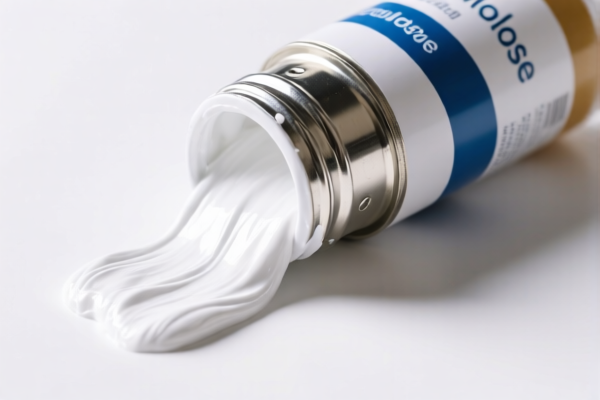
Product Images



AI Analysis
🎨 Cellulose Thickener for Paint
🌐 HS Code Reference & Customs Clearance Guide | 2026 Latest Tariff Analysis | Professional Import Strategy
📌 I. Product Definition & Classification: Do You Really Understand “Cellulose Thickener for Paint”?
Cellulose Thickener for Paint is a specialized chemical additive used to modify the viscosity, rheology, and stability of paint formulations. In international trade, it is primarily classified based on its chemical nature (cellulose derivative) and industrial application (paint additive).
⚠️ Key Classification Logic:
- Is it a finished paint? ❌ No.
- Is it a raw chemical material? ✅ Yes, but processed as an additive.
- Does it conflict with paint classification? ⚖️ Depends on whether it’s viewed as a “paint component” or a “general chemical reagent.”
📦 II. HS Code Classification Details (2026 Latest Tariff Authority Comparison)
Based on the provided data, here are the five most likely HS Code classifications with detailed tariff breakdowns for imports into the United States (US) from China (CN).
| HS Code | Product Description | Matching Logic | Total Tax Rate |
|---|---|---|---|
3210.00.00.00 |
Other paints and varnishes (including distemper) | Matches “Paint” usage; Cellulose as additive doesn’t conflict with paint attributes. | 36.8% |
3209.90.00.00 |
Paints and varnishes based on synthetic polymers (other than emulsions) | Matches “Paint” usage; Cellulose as chemical modifier fits polymer-based logic. | 40.9% |
3824.40.50.00 |
Prepared binders for foundry molds/core; Other chemical products | Matches “Chemical preparation” nature; Cellulose fits “additive/preparation” category for cement/concrete/paint industries. | 40.0% |
3824.99.11.00 |
Other chemical products and preparations (not elsewhere specified) | Matches “Chemical industry product”; Paint additive fits general chemical preparation scope. | 35.0% |
3912.90.00.90 |
Cellulose and its chemical derivatives (other than esters) | Matches “Cellulose derivative” material; Fits “Other” category for chemical additives. | 40.2% |
🔍 Critical Insight:
- Lowest Duty Option:3824.99.11.00(35.0%)
- Most Accurate Functional Fit:3210.00.00.00or3209.90.00.00(if viewed as paint component)
- Material-Based Fit:3912.90.00.90(if viewed as pure cellulose derivative)
- All options include USITC 25% Section 301 + IEEPA 10% China-specific tariffs.
💰 III. 2026 Latest Tariff Rate Breakdown (Including Surtaxes & Policy Surcharges)
✅ Applicable Country: United States (US)
✅ Country of Origin: China (CN)
✅ Effective Date: November 10, 2025 (and subsequent imports)
🎯 1. 3210.00.00.00 — Other Paints and Varnishes
| Item | Content |
|---|---|
| Base Tariff | 1.8% (ad valorem) |
| USITC Surcharge | +25% (Section 301, Footnote 9903.88.01) |
| IEEPA Surcharge | +10% (China-specific, effective Nov 10, 2025) |
| Total Rate | 36.8% |
| Tax Calculation | CIF Value × 36.8% |
| De Minimis Exemption | ❌ Not Eligible (deny_de_minimis) |
| Legal Basis Path | IEEPA:9903.01.25 → IEEPA:9903.01.24 → USITC:3210.00.00.00 → FOOTNOTE:9903.88.01 |
📌 Explanation:
- Although classified under “Paints,” this item is an additive. However, CBP may still apply paint-based rates if functionally linked.
- 36.8% is high but lower than3209.90.00.00.
🎯 2. 3209.90.00.00 — Paints Based on Synthetic Polymers
| Item | Content |
|---|---|
| Base Tariff | 5.9% |
| USITC Surcharge | +25% |
| IEEPA Surcharge | +10% |
| Total Rate | 40.9% |
| Tax Calculation | CIF × 40.9% |
| De Minimis Exemption | ❌ Not Eligible |
| Legal Basis Path | IEEPA:9901.25 → IEEPA:9903.01.24 → USITC:3209.90.00.00 → FOOTNOTE:9903.88.01 |
📌 Note:
- This rate is the highest among paint-related classifications.
- Only recommend if the product is definitively classified as a “finished paint component” rather than a general chemical additive.
🎯 3. 3824.40.50.00 — Prepared Chemical Products for Industrial Use
| Item | Content |
|---|---|
| Base Tariff | 5.0% |
| USITC Surcharge | +25% |
| IEEPA Surcharge | +10% |
| Total Rate | 40.0% |
| Tax Calculation | CIF × 40.0% |
| De Minimis Exemption | ❌ Not Eligible |
| Legal Basis Path | IEEPA:9903.01.25 → IEEPA:9903.01.24 → USITC:3824.40.50.00 |
📌 Explanation:
- Suitable if the product is marketed as a “chemical preparation” for industrial coating systems.
- Slightly lower than3209.90.00.00but higher than3824.99.11.00.
🎯 4. 3824.99.11.00 — Other Chemical Products and Preparations
| Item | Content |
|---|---|
| Base Tariff | 0.0% |
| USITC Surcharge | +25% |
| IEEPA Surcharge | +10% |
| Total Rate | 35.0% |
| Tax Calculation | CIF × 35.0% |
| De Minimis Exemption | ❌ Not Eligible |
| Legal Basis Path | IEEPA:9903.01.25 → IEEPA:9903.01.24 → USITC:3824.99.11.00 |
📌 Recommendation:
- Lowest total duty rate (35.0%).
- Best if the product can be clearly described as a “general chemical additive” rather than a “paint component.”
- Requires strong justification in commercial invoice and specification sheets.
🎯 5. 3912.90.00.90 — Cellulose and Its Chemical Derivatives
| Item | Content |
|---|---|
| Base Tariff | 5.2% |
| USITC Surcharge | +25% |
| IEEPA Surcharge | +10% |
| Total Rate | 40.2% |
| Tax Calculation | CIF × 40.2% |
| De Minimis Exemption | ❌ Not Eligible |
| Legal Basis Path | IEEPA:9901.25 → IEEPA:9903.01.24 → USITC:3912.90.00.90 |
📌 Note:
- Accurate for material-based classification but higher duty than3824.99.11.00.
- Use only if cellulose derivative status is undeniable and no chemical preparation classification applies.
🛠️ IV. Customs Clearance Practical Advice (Real-World Pitfall Avoidance Guide)
✅ 1. Required Documentation Checklist (None Can Be Omitted)
| Document | Required? | Notes |
|---|---|---|
| ✅ Product Specification Sheet | ✔️ | Must include CAS number, viscosity range, pH, solubility |
| ✅ Commercial Invoice | ✔️ | Must state “Cellulose Thickener for Paint – Chemical Additive” |
| ✅ Certificate of Origin (CO) | ✔️ | Essential for tracking origin; does NOT reduce tariff for China-origin |
| ✅ Safety Data Sheet (SDS) | ✔️ | Required for chemical products |
| ✅ Test Report (Third-Party) | ✔️ | ISO, ASTM, or similar standards |
| ✅ Packing List | ✔️ | Clearly distinguish from finished paint products |
✅ 2. Declaration Tips (Key Mnemonic)
🔥 “Chemical Additive, Not Paint; Specify Use, Reduce Rate!”
| Scenario | Correct Declaration | Wrong Approach |
|---|---|---|
| Pure cellulose thickener | 3824.99.11.00 (35.0%) |
Declare as “Paint” → 40.9% |
| Mixed with binders/resins | 3209.90.00.00 (40.9%) |
Declare as “Additive” → Risk of misclassification |
| For concrete/mortar use | 3824.40.50.00 (40.0%) |
Declare as “Paint additive” → Inconsistent |
| Raw cellulose derivative | 3912.90.00.90 (40.2%) |
Declare as “Finished product” → High duty |
📌 Key Strategy:
- Emphasize “Chemical Additive” in all documentation.
- Avoid words like “Paint,” “Varnish,” or “Coating” in the product name unless it’s a pre-mixed product.
- Provide SDS and Technical Data Sheets to prove it’s an additive, not a final coating.
✅ 3. Special Case Handling
| Scenario | Handling Advice |
|---|---|
| OEM Branded Thickener | Provide client order + formulation specs to prove it’s an additive |
| Multi-Purpose Additive (Paint + Concrete) | Declare based on primary intended use; provide technical justification |
| Bulk Liquid vs. Powder | Ensure packaging description matches chemical form; avoid ambiguity |
| Sample Shipment | Still subject to full tariffs; declare accurately to avoid delays |
🌍 V. Global Market Customs Comparison (2026 Latest)
| Country/Region | Recommended HS Code | Tariff | Certification | Notes |
|---|---|---|---|---|
| 🇺🇸 USA | 3824.99.11.00 |
35.0% (China-origin) | SDS + ASTM | Highest surcharges globally |
| 🇨🇳 China | 3824.99.11.00 |
0% | GB/T Standards | No surcharges for domestic trade |
| 🇪🇺 EU | 3824.99.11.00 |
4.5% (if non-Chinese) | REACH + CLP | China-origin: 4.5% + VAT |
| 🇦🇺 Australia | 3824.99.11.00 |
5.0% | AICIS | No surcharges |
| 🇯🇵 Japan | 3824.99.11.00 |
6.0% | JIS | No surcharges |
📌 Conclusion:
- USA is the most expensive market due to Section 301 + IEEPA surcharges.
- China-origin goods face 25%+10%=35% minimum duty even with 0% base tariff.
- EU/Australia/Japan offer lower duties but require REACH/AICIS/JIS compliance.
📌 VI. Common Errors & Pitfall Avoidance (Lessons Learned)
❌ Error 1: Declaring “Cellulose Thickener” as “Paint”
👉 Consequence: Misclassification → 40.9% instead of 35.0% → Overpayment + Audit Risk
❌ Error 2: Omitting SDS or Technical Data Sheets
👉 Consequence: CBP questions chemical nature → Delay or Rejection
❌ Error 3: Using vague terms like “Thickener” without specifying “Chemical Additive”
👉 Consequence: Ambiguity → Higher duty classification
❌ Error 4: Assuming de minimis exemption applies
👉 Consequence: All shipments from China are subject to full tariffs → Seizure if under-declared
✅ Correct Declaration Example:
“Cellulose Ether Thickener for Paint Applications, Chemical Additive, CAS No. XXX-XX-X, Powder Form, Net Weight 25kg, SDS Provided”
🎯 VII. Conclusion: Professional Declaration, Cost Optimization
🎯 Remember the Mnemonic:
🔹 “Additive, Not Paint; 35% is Sweet Spot!”
🔹 “SDS + Spec Sheet = Smooth Customs!”
🔹 “China Origin = 35% Min; Plan Ahead!”
📌 Pro Tip:
- If your cellulose thickener is originating from Vietnam, Mexico, Thailand, or Malaysia, you may qualify for IEEPA exemption, reducing duties to 0%~5%.
- Apply for Advance Ruling (CBP Form 5106) before shipment to lock in the 35.0% rate for 3824.99.11.00.
📣 Immediate Action:
📞 Contact a licensed customs broker + Provide SDS + Apply for CBP Advance Ruling
🚀 Ensure smooth clearance, lower costs, and faster delivery for your cellulose thickener!
✨ Professional Clearance Starts with Accurate Classification!
💼 Every percent saved is pure profit!
Customer Reviews
About HS Code Classification
The Harmonized System (HS) is an internationally standardized nomenclature developed by the World Customs Organization (WCO) to classify traded products. Over 200 countries use the HS system as the basis for customs tariffs, trade statistics, and import/export regulations.
Each HS code follows a hierarchical structure:
- Chapter (2 digits) — Broad category of goods (e.g., Chapter 84: Machinery and Mechanical Appliances)
- Heading (4 digits) — More specific grouping within the chapter
- Subheading (6 digits) — Internationally standardized breakdown, used by all WCO member countries
- National subdivisions (8-10 digits) — Country-specific extensions for further classification, such as US HTSUS 10-digit codes
Correct HS code classification is essential for smooth customs clearance, accurate duty payment, and compliance with trade regulations. Misclassification can lead to customs delays, overpayment of duties, or penalties.
When importing from CN to US, the applicable tariff rates may include:
- Most-Favored-Nation (MFN) rate — The standard duty rate applied to WTO members
- General rate — Applied to countries without trade agreements
- Trade remedy duties — Additional tariffs such as Section 301 (anti-dumping), Section 232 (national security), or countervailing duties
The information provided on this page is for reference purposes only. For official classification, please consult with your local customs authority or a licensed customs broker.