Cellulose derivative plastic strip
CN → US| HS Code | Tariff Rate | Origin | Destination | Doc |
|---|---|---|---|---|
| 3926909989 | 22.8% | CN | US | Official Doc |
| 3926909905 | 22.8% | CN | US | Official Doc |
| 3916905000 | 40.8% | CN | US | Official Doc |
| 3916903000 | 41.5% | CN | US | Official Doc |
| 3912120000 | 40.6% | CN | US | Official Doc |
| 3912900090 | 40.2% | CN | US | Official Doc |
Product Images

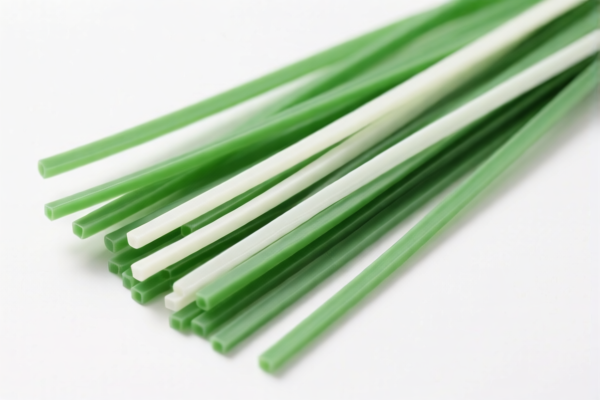

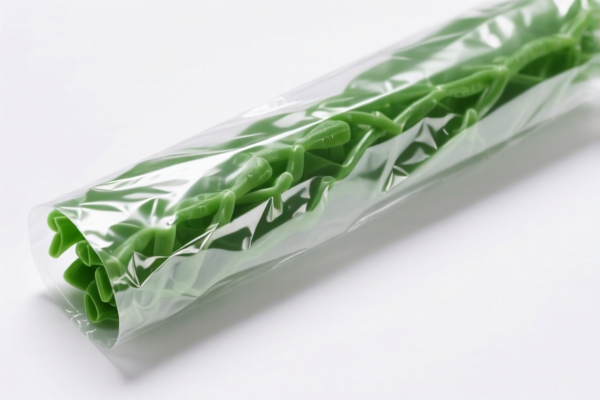
AI Analysis
🧪 Cellulose Derivative Plastic Strip (The "Bio-Plastic" Connector)
🌐 HS Code Reference & Customs Clearance Guide | 2026 Latest Tariff Breakdown | Professional Strategy for Bio-Polymers
📌 I. Product Definition & Classification: What Exactly is a "Cellulose Derivative Plastic Strip"?
A Cellulose Derivative Plastic Strip is not just ordinary plastic. It is a material derived from natural cellulose (usually wood pulp or cotton) that has been chemically modified to become plastic-like (e.g., Cellulose Acetate). In international trade, the distinction lies in whether it is "Plasticized" or "Not Plasticized" and its cross-sectional dimensions.
Two Main Categories in Trade:
1. Plasticized Cellulose Acetates: Flexible, often used for films, sheets, or soft strips. (Primary Form).
2. Other Cellulose Derivatives: Harder, more rigid shapes, or unmodified derivatives.
⚠️ Key Classification Point:
- If the product is Cellulose Acetate AND Plasticized (soft/flexible strip) →归入 3912.12.00.00
- If it is Other Cellulose Derivatives (non-plasticized, rigid, or unspecified) →归入 3912.90.00.90
- CRITICAL WARNING: If the strip is a Monofilament (cross-section >1mm) made of other plastics (not cellulose), it falls under 3916, NOT 3912. The user input specifically says "Cellulose derivative," so we focus on 3912.
📦 II. HS Code Classification Details (2026 Latest Tariff Authority Match)
| HS Code | Product Description | Applicable Scenario | Tax Rate (Base + Add-on) |
|---|---|---|---|
3912.12.00.00 |
Cellulose Acetates: Plasticized (Primary Forms) | Flexible strips, films, soft sheets, biodegradable packaging materials. | 0.0% ✅ |
3912.90.00.90 |
Other Cellulose Derivatives (Primary Forms) | Rigid cellulose strips, unmodified derivatives, specialized bio-polymers. | 0.0% ✅ |
3916.90.30.00 |
Monofilament >1mm (Other Plastics) | NOT APPLICABLE (Only if it's not cellulose). Monofilament of other plastics. | 31.5% ⚠️ |
3916.90.50.00 |
Rods/Sticks >1mm (Other Plastics) | NOT APPLICABLE (Only if it's not cellulose). General plastic rods. | 30.8% ⚠️ |
3926.90.99.05 |
Elastic bands (Plastic) | NOT APPLICABLE (Only if it's a finished elastic band). | 0.0% |
3926.90.99.89 |
Other Plastic Articles | NOT APPLICABLE (Only if it's a finished product, not primary form). | 12.8% ⚠️ |
🔍 Strategic Insight:
- Cellulose Acetate (3912.12.00.00) is a green material with ZERO tariff (Base 0% + Add-on 0%).
- DO NOT misclassify as "Plastic Monofilament" (3916) unless the product is actually synthetic plastic, not cellulose.
- If the "strip" is a finished product (e.g., a pre-cut elastic band or a specific manufactured part), it might shift to 3926, but the prompt implies a primary form (strip/derivative).
💰 III. 2026 Tariff Rate Analysis (Detailed Breakdown)
✅ Target Market: USA (US)
✅ Origin: China (CN)
✅ Effective Date: Current & Projected 2026 Regimes
🎯 1. 3912.12.00.00 —— Cellulose Acetates: Plasticized (The "Green" Option)
| Item | Details |
|---|---|
| Base Tariff | 0.0% (ad valorem) |
| Section 301 / "Add-on" Tax | 0.0% |
| Total Tariff | 0.0% |
| Calculation | CIF Value × 0% = $0.00 |
| De Minimis Eligibility | ✅ Yes (If applicable under specific trade rules) |
| Legal Basis | Harmonized System (HS) Heading 3912; No specific US Section 301 footnote applies to Plasticized Cellulose Acetate. |
📌 Explanation:
- Cellulose Acetate is a natural polymer derivative, often favored for biodegradability.
- The US Customs and Border Protection (CBP) currently assigns 0% duty to this specific primary form, even with potential "Add-on" taxes on other plastics.
- Strategic Advantage: This is a Zero-Tax entry point!
🎯 2. 3912.90.00.90 —— Other Cellulose Derivatives (Primary Forms)
| Item | Details |
|---|---|
| Base Tariff | 0.0% (ad valorem) |
| Section 301 / "Add-on" Tax | 0.0% |
| Total Tariff | 0.0% |
| Calculation | CIF Value × 0% = $0.00 |
| De Minimis Eligibility | ✅ Yes |
| Legal Basis | HS 3912; Generally excluded from punitive "Add-on" taxes on synthetic plastics. |
📌 Explanation:
- This covers cellulose derivatives that are not acetates (e.g., nitrocellulose, cellulose butyrate, etc.) in primary forms.
- Like Acetates, they enjoy 0% duty.
- Risk: If the product is mislabeled as "Cellulose Acetate" but is actually synthetic, you risk audits. Ensure Chemical Composition Certificates are ready.
⚠️ 3. Why NOT 3916.90.30.00 or 3916.90.50.00?
If your "strip" is actually a Monofilament (single continuous thread) or Rod made of Synthetic Plastic (e.g., Nylon, PP, PE) and has a dimension > 1mm:
- HS Code: 3916.90.30.00 (Monofilament) or 3916.90.50.00 (Rods/Sticks).
- Total Tax: 31.5% (3916.90.30) or 30.8% (3916.90.50).
- Breakdown: Base 6.5%/5.8% + 25.0% Section 301 Add-on.
- Action: If your product is truly Cellulose, DO NOT use these codes. Use 3912 to save ~30% in taxes.
🛠️ IV. Customs Clearance Practical Advice (The "Zero-Tax" Strategy)
✅ 1. Essential Documentation (The "Zero-Risk" Kit)
| Document | Requirement | Purpose |
|---|---|---|
| Material Safety Data Sheet (MSDS) | Mandatory | Proves the material is Cellulose (Natural) vs. Synthetic. |
| Chemical Composition Certificate | Mandatory | Must state "Cellulose Acetate" or "Cellulose Derivative". |
| Product Specification | Critical | Define "Plasticized" vs. "Non-plasticized" clearly. |
| Photos (Cross-section) | Recommended | Show it's a "Strip" (Primary form), not a finished "Band" (3926). |
| Commercial Invoice | Mandatory | Description: "Plasticized Cellulose Acetate Strip, Primary Form". |
✅ 2. Declaration Strategy (Crucial for 0% Duty)
🔥 The "Cellulose" Golden Rule:
"Name it clearly as Cellulose, not just Plastic. Prove it's plasticized if it's acetate."
| Scenario | Correct Declaration | Wrong Declaration | Consequence |
|---|---|---|---|
| Soft, Flexible Strip | 3912.12.00.00 (Cellulose Acetate, Plasticized) |
3926.90.99.89 (Other Plastic) |
Pay 12.8% instead of 0%. |
| Rigid Cellulose Strip | 3912.90.00.90 (Other Derivative) |
3916.90.50.00 (Other Plastic) |
Pay 30.8% instead of 0%. |
| Synthetic Plastic Strip | 3916.90.30.00 |
3912.12.00.00 |
Fraud Risk: Misdeclaration, fines, seizure. |
📌 Key Tip:
- Do not simply write "Plastic Strip".
- Use precise chemical names: "Plasticized Cellulose Acetate Strip, Primary Form".
- If the strip is finished (e.g., cut to specific shape for a specific machine), it might be 3926. If it's raw material (primary form), it is 3912.
✅ 3. Special Handling for "Cellulose" Products
| Situation | Strategy |
|---|---|
| "Bio-Plastic" Marketing | Emphasize "Cellulose" origin to avoid "Synthetic Plastic" classification. |
| Cross-Section >1mm | If it's a rod (>1mm) but Cellulose, still use 3912, NOT 3916. 3916 is for "Other Plastics". |
| Finished Elastic Bands | If the cellulose strip is processed into a band, use 3926.90.99.05 (0% duty). |
🌍 V. Global Market Comparison (2026)
| Region | Recommended HS Code | Tariff Rate (CN Origin) | Note |
|---|---|---|---|
| 🇺🇸 USA | 3912.12.00.00 |
0.0% | Best Scenario: No Section 301 tax on Cellulose Acetate. |
| 🇨🇳 China | 3912.12.00.00 |
5.5% (Approx) | Domestic trade varies. |
| 🇪🇺 EU | 3912.12.00.00 |
0.0% | Favors bio-polymers. |
| 🇯🇵 Japan | 3912.12.00.00 |
6.0% | Slightly higher base rate. |
📌 Conclusion:
USA is the BEST market for Cellulose Acetate strips if classified under 3912.12.00.00.
Beware: If you call it "Plastic" without the "Cellulose" prefix, Customs may downgrade it to 3916 (Synthetic Plastic) and charge ~31%.
📌 VI. Common Mistakes & Pitfalls (Lessons Learned)
❌ Mistake 1: Calling it "Plastic Strip" without specifying "Cellulose".
👉 Result: Customs assumes Synthetic Plastic → 3916 → 31.5% Tax.
❌ Mistake 2: Misclassifying a "Plasticized" strip as "Other" (3912.90).
👉 Result: Still 0% tax, but Audited for chemical composition verification.
❌ Mistake 3: Classifying finished "Elastic Bands" as "Primary Form" (3912).
👉 Result: If it's a band, it's 3926.90.99.05. Still 0%, but wrong classification can delay clearance.
✅ Correct Approach:
"Cellulose Acetate, Plasticized, Primary Form, Strip, 100% Natural Polymer Derivative."
🎯 VII. Final Verdict: Your Zero-Tax Action Plan
🎯 The Strategy:
"Claim Cellulose, Not Plastic. Prove Plasticization. Enjoy 0% Tax."
- Verify: Is it Cellulose Acetate? Is it Plasticized?
- Code: Use
3912.12.00.00(if Acetate/Plasticized) or3912.90.00.90(if other). - Avoid: Do NOT use
3916(Monofilament/Rods) unless it's synthetic plastic. - Document: Attach MSDS and Chemical Certificate to every shipment.
📌 Pro Tip:
If you are importing Cellulose Acetate for biodegradable packaging or medical devices, this is a high-value, zero-duty opportunity in the US market (2026).
Don't let a wrong HS Code cost you 31% of your product value!
📣 Immediate Action:
🚀 Review your HS Code: If you see
3916on your invoice for a cellulose product, CHANGE IT IMMEDIATELY to3912.
📞 Consult a Customs Broker: Provide your chemical certificate to confirm the 0% duty eligibility.
✨ Smart Classification = Zero Tax!
💼 Your Cellulose Strip, Your Zero-Cost Advantage!
Customer Reviews
About HS Code Classification
The Harmonized System (HS) is an internationally standardized nomenclature developed by the World Customs Organization (WCO) to classify traded products. Over 200 countries use the HS system as the basis for customs tariffs, trade statistics, and import/export regulations.
Each HS code follows a hierarchical structure:
- Chapter (2 digits) — Broad category of goods (e.g., Chapter 84: Machinery and Mechanical Appliances)
- Heading (4 digits) — More specific grouping within the chapter
- Subheading (6 digits) — Internationally standardized breakdown, used by all WCO member countries
- National subdivisions (8-10 digits) — Country-specific extensions for further classification, such as US HTSUS 10-digit codes
Correct HS code classification is essential for smooth customs clearance, accurate duty payment, and compliance with trade regulations. Misclassification can lead to customs delays, overpayment of duties, or penalties.
When importing from CN to US, the applicable tariff rates may include:
- Most-Favored-Nation (MFN) rate — The standard duty rate applied to WTO members
- General rate — Applied to countries without trade agreements
- Trade remedy duties — Additional tariffs such as Section 301 (anti-dumping), Section 232 (national security), or countervailing duties
The information provided on this page is for reference purposes only. For official classification, please consult with your local customs authority or a licensed customs broker.