Cellulosic Sausage Casing Tubing
CN → US| HS Code | Tariff Rate | Origin | Destination | Doc |
|---|---|---|---|---|
| 3917109000 | 39.2% | CN | US | Official Doc |
| 3917101000 | 41.5% | CN | US | Official Doc |
| 3926904000 | 12.8% | CN | US | Official Doc |
| 3926901000 | 20.9% | CN | US | Official Doc |
Product Images


AI Analysis
🌭 Cellulosic Sausage Casing Tubing (Cellulosic Sausage Casing Tubing)
🌐 HS Code Reference & Customs Clearance Guide | 2026 Latest Tariff Analysis | Professional Customs Strategy
📌 I. Product Definition & Classification: Do You Really Understand "Cellulosic Casing"?
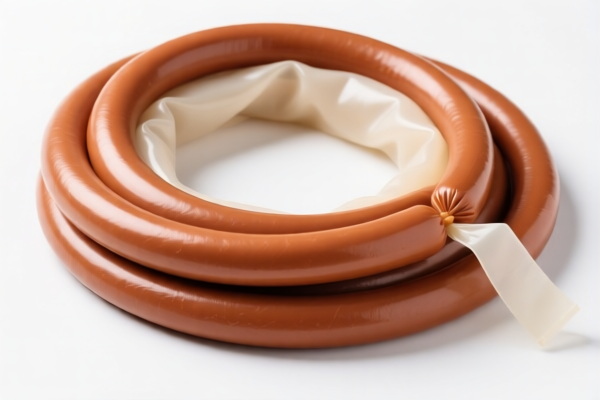
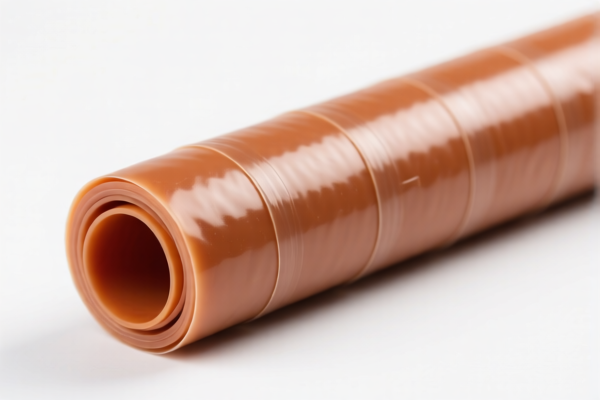
Cellulosic sausage casing tubing, made from regenerated cellulose plastic, is a critical packaging material in the meat processing industry. It serves as an artificial intestinal tube for filling sausages, providing shape, protection, and a barrier against oxygen and moisture.
In international trade, these tubes are classified differently based on their specific application (artificial casing vs. general industrial tubing) and structural characteristics. Misclassification can lead to significant tariff discrepancies, ranging from 12.8% to 41.5%.
⚠️ Key Distinction Point:
- If the tubing is specifically matched for artificial sausage casings (medical/food-grade application) → It often falls under higher-duty categories due to specific trade measures.
- If it is classified as general industrial plastic tubing or other plastic articles → It may benefit from lower base tariffs, though still subject to Section 301/122 tariffs.
📦 II. HS Code Classification Details (Latest Tariff Authority Comparison)
| HS Code | Product Description | Application Scenario | Key Characteristics |
|---|---|---|---|
3917.10.90.00 |
Transparent cellulose sausage casing tubing, material: cellulose plastic, shape: tubular, matched for artificial casing. | Specific use in artificial sausage casing production. | ✅ High-duty category (Food-grade/Specific use) |
3917.10.10.00 |
Transparent cellulose sausage casing tubing, material: cellulose plastic, shape: tubular, matched for pipes/tubing systems. | General plumbing or industrial piping applications. | ✅ High-duty category (Industrial piping) |
3926.90.40.00 |
Industrial-grade cellulose plastic sausage casing tubing, material: cellulose plastic, shape: other articles in plastics. | Industrial-grade sausage casings (general plastic category). | ✅ Lower base duty (12.8% Total) |
3926.90.10.00 |
Industrial-grade cellulose plastic sausage casing tubing, material: plastic, shape: tubular structures among other articles. | Industrial plastic tubing not specifically classified elsewhere. | ⚠️ Mid-duty category (20.9% Total) |
🔍 Key Reminder:
- HS 3917 covers "Plastics tubes, pipes and hoses, with or without their fittings." This category is often scrutinized for specific uses like sausage casings. - HS 3926 covers "Other articles of plastics and articles of other materials of headings 3901 to 3914." This is a "basket" category for plastic products that don't fit specifically in earlier headings. - Crucial Note: The distinction between3917(tubes/pipes) and3926(other articles) depends on whether the product is primarily defined by its form (tube) or its function (artificial casing article). In this specific dataset, "matched for artificial casing" pushes it to3917, while "industrial-grade" may allow3926.
💰 III. 2026 Latest Tariff Rate Breakdown (Including Surtaxes & Policy Add-ons)
✅ Applicable Country: USA (US)
✅ Origin: China (CN)
✅ Effective Time: As per current Section 301 and Section 122 tariff schedules.
🎯 1. 3917.10.90.00 —— Transparent Cellulose Casing Tubing (Artificial Casing Matched)
| Item | Content |
|---|---|
| Base Tariff | 4.2% (ad valorem) |
| Section 301 Surtax | +25.0% (Section 301 List 4B/Other) |
| Section 122 Surtax | +10.0% (Specific Chinese Import Measures) |
| Total Tariff Rate | 39.2% |
| Tax Calculation | CIF Value × 39.2% |
| De Minimis Exemption | ❌ Not Available (Section 301/122 tariffs apply to all imports) |
| Legal Basis Path | HTSUS:3917.10.90.00 → USITC:301_FOOTNOTE_3917 → IEEPA:SECTION_122 |
📌 Explanation:
- This code is for transparent cellulose tubing specifically matched for artificial casings.
- It carries a high total duty of 39.2% due to the combination of base tariff, Section 301 (25%), and Section 122 (10%).
- This is one of the most expensive classifications for this product type.
🎯 2. 3917.10.10.00 —— Transparent Cellulose Casing Tubing (Matched for Pipes/Tubing)
| Item | Content |
|---|---|
| Base Tariff | 6.5% (ad valorem) |
| Section 301 Surtax | +25.0% |
| Section 122 Surtax | +10.0% |
| Total Tariff Rate | 41.5% |
| Tax Calculation | CIF Value × 41.5% |
| De Minimis Exemption | ❌ Not Available |
| Legal Basis Path | HTSUS:3917.10.10.00 → USITC:301_FOOTNOTE_3917 → IEEPA:SECTION_122 |
📌 Caution:
- This is the highest tariff rate in the dataset at 41.5%.
- Even though it is also "tubing," the specific matching for "pipes/tubing systems" rather than "artificial casing" does not reduce the duty; in fact, the base rate is higher (6.5% vs 4.2%).
- Avoid this code unless the product is explicitly for industrial piping and not food casing.
🎯 3. 3926.90.40.00 —— Industrial-Grade Cellulose Plastic Sausage Casing Tubing (Other Articles)
| Item | Content |
|---|---|
| Base Tariff | 2.8% (ad valorem) |
| Section 301 Surtax | +0.0% |
| Section 122 Surtax | +10.0% |
| Total Tariff Rate | 12.8% |
| Tax Calculation | CIF Value × 12.8% |
| De Minimis Exemption | ❌ Not Available |
| Legal Basis Path | HTSUS:3926.90.40.00 → IEEPA:SECTION_122 |
📌 Strategic Advantage:
- This is the lowest duty rate at 12.8%.
- The key here is the Section 301 surtax is 0%. This classification treats the product as "other articles of plastics" rather than "tubes/pipes."
- Recommendation: If your product qualifies as "industrial-grade" and can be described as "other articles" rather than "tubing," this code offers massive savings (26.4% lower than the highest rate).
🎯 4. 3926.90.10.00 —— Industrial-Grade Cellulose Plastic Sausage Casing Tubing (Other Articles)
| Item | Content |
|---|---|
| Base Tariff | 3.4% (ad valorem) |
| Section 301 Surtax | +7.5% |
| Section 122 Surtax | +10.0% |
| Total Tariff Rate | 20.9% |
| Tax Calculation | CIF Value × 20.9% |
| De Minimis Exemption | ❌ Not Available |
| Legal Basis Path | HTSUS:3926.90.10.00 → USITC:301_FOOTNOTE_3926 → IEEPA:SECTION_122 |
📌 Middle Ground:
- This code has a Section 301 surtax of 7.5%, which is lower than the 25% in the 3917 codes.
- Total duty is 20.9%, significantly lower than the 3917 codes but higher than3926.90.40.00.
- Use this if the product is "tubular structure" but not specifically "transparent cellulose casing" under 3917.
🛠️ IV. Customs Clearance Practical Advice (Avoid Pitfalls)
✅ 1. Document Checklist (Must-Have)
| Document | Required | Description |
|---|---|---|
| ✅ Product Specification Sheet | ✔️ | Must detail material (cellulose plastic), dimensions, and intended use (industrial vs. food casing). |
| ✅ Material Safety Data Sheet (MSDS) | ✔️ | For cellulose-based plastics to confirm composition. |
| ✅ Commercial Invoice | ✔️ | Clearly state "Cellulosic Sausage Casing Tubing" and specify "Industrial Grade" if claiming 3926. |
| ✅ Packing List | ✔️ | Ensure quantity and weight match invoice. |
| ✅ Certificate of Origin | ✔️ | To verify Chinese origin for tariff calculation. |
| ✅ Product Photos | ✔️ | Show transparency, tube shape, and any labeling. |
✅ 2. Declaration Strategy (Key Mnemonic)
🔥 "Function Over Form, Industrial Saves Cost!"
| Scenario | Correct Declaration | Wrong Practice |
|---|---|---|
| Specific Artificial Casing Use | 3917.10.90.00 (39.2%) |
Do NOT try to force 3926 if it's clearly food-grade casing. |
| Industrial-Grade, General Use | 3926.90.40.00 (12.8%) |
Avoid 3917 if possible; use "other articles" to bypass 25% surtax. |
| Tubing for Piping Systems | 3917.10.10.00 (41.5%) |
Only use if explicitly for industrial pipes, not sausage casings. |
| General Plastic Tubing | 3926.90.10.00 (20.9%) |
Use if it doesn't fit 3917 but isn't "other articles" under 3926.40. |
✅ 3. Special Case Handling
| Scenario | Handling Advice |
|---|---|
| OEM Custom Casings | Provide end-user contract showing "industrial" vs. "food-grade" use. |
| Transparent vs. Opaque | Transparency is key for 3917.10.x.x. If opaque, consider 3926. |
| Mixed Shipments | Separate food-grade casings (3917) from industrial tubing (3926) in documentation to avoid misclassification risks. |
| Section 122 Exemption | No exemptions available for Section 122 tariffs. Plan costs accordingly. |
🌍 V. Global Market Comparison (2026 Update)
| Country/Region | Recommended HS Code | Total Tariff | Notes |
|---|---|---|---|
| 🇺🇸 USA | 3926.90.40.00 |
12.8% | Best rate for industrial-grade; avoid 3917 if possible. |
| 🇨🇳 China | 3926.90.40.00 |
~5-10% | Import duties vary; no Section 301/122. |
| 🇪🇺 EU | 3926.90.97 |
~3-6% | Different HS system; check EC tariff for "other plastic articles." |
| 🇬🇧 UK | 3926.90.90 |
~3-6% | Post-Brexit tariff; similar to EU but independent. |
| 🇯🇵 Japan | 3926.90.99 |
~3-6% | No Section 301/122; favorable for plastic articles. |
📌 Conclusion:
- USA is the most challenging market due to Section 301 and 122 tariffs.
- Strategic Shift: If possible, reclassify products as "industrial-grade plastic articles" (3926.90.40.00) to save 26.4% in duties.
- Documentation is Key: Clearly define "industrial-grade" and "non-food-grade" in all shipping documents to support the3926classification.
📌 VI. Common Mistakes & Pitfalls (Lessons Learned)
❌ Mistake 1: Declaring "Industrial" casings as "Artificial Casing" (3917)
👉 Consequence: Pay 39.2% instead of 12.8%.
👉 Fix: Ensure product is marked "Not for Human Consumption" or "Industrial Use Only."
❌ Mistake 2: Using 3917.10.10.00 for Sausage Casings
👉 Consequence: Pay 41.5% due to higher base rate and 25% surtax.
👉 Fix: Only use this code if the tubing is for industrial piping, not food production.
❌ Mistake 3: Ignoring Section 122 Tariffs
👉 Consequence: Unexpected 10% cost increase on all classifications.
👉 Fix: Factor 10% into all cost calculations regardless of HS code.
❌ Mistake 4: Vague Product Description
👉 Consequence: Customs delays, potential reclassification to higher duty.
👉 Fix: Use precise terms: "Cellulose Plastic Tubing, Industrial Grade, Non-Food Contact."
✅ Correct Approach:
"Cellulosic Plastic Tubing, Industrial Grade, Non-Transparent, For Mechanical Use Only, Model XYZ"
🎯 VII. Conclusion: Professional Declaration, Cost Savings!
🎯 Remember the Mnemonic:
🔹 "Industrial Grade, 3926 Wins, 12.8% is the Target!"
🔹 "Artificial Casing, 3917 Stings, 39.2% is the Cost!"
🔹 "Section 301, 25% Hits Hard, Section 122, 10% Never Pardons!"
📌 Pro Tip:
- If your cellulosic casing is not for food contact, emphasize "Industrial Use" in all documents to qualify for 3926.90.40.00.
- Apply for Advance Ruling from US Customs (CBP) if the product use is ambiguous. This provides legal certainty for your tariff classification.
📣 Immediate Action:
📞 Contact your customs broker + Provide product specs + Verify "Industrial Grade" status
🚀 Save 26.4% in tariffs by choosing the right HS Code!
✨ Professional Clearance Starts with Accurate Classification!
💼 Every Percent of Duty Matters!
Customer Reviews
About HS Code Classification
The Harmonized System (HS) is an internationally standardized nomenclature developed by the World Customs Organization (WCO) to classify traded products. Over 200 countries use the HS system as the basis for customs tariffs, trade statistics, and import/export regulations.
Each HS code follows a hierarchical structure:
- Chapter (2 digits) — Broad category of goods (e.g., Chapter 84: Machinery and Mechanical Appliances)
- Heading (4 digits) — More specific grouping within the chapter
- Subheading (6 digits) — Internationally standardized breakdown, used by all WCO member countries
- National subdivisions (8-10 digits) — Country-specific extensions for further classification, such as US HTSUS 10-digit codes
Correct HS code classification is essential for smooth customs clearance, accurate duty payment, and compliance with trade regulations. Misclassification can lead to customs delays, overpayment of duties, or penalties.
When importing from CN to US, the applicable tariff rates may include:
- Most-Favored-Nation (MFN) rate — The standard duty rate applied to WTO members
- General rate — Applied to countries without trade agreements
- Trade remedy duties — Additional tariffs such as Section 301 (anti-dumping), Section 232 (national security), or countervailing duties
The information provided on this page is for reference purposes only. For official classification, please consult with your local customs authority or a licensed customs broker.