Cement Concrete Products
CN → US| HS Code | Tariff Rate | Origin | Destination | Doc |
|---|---|---|---|---|
| 6810191200 | 39.9% | CN | US | Official Doc |
| 6810990080 | 35.0% | CN | US | Official Doc |
Product Images
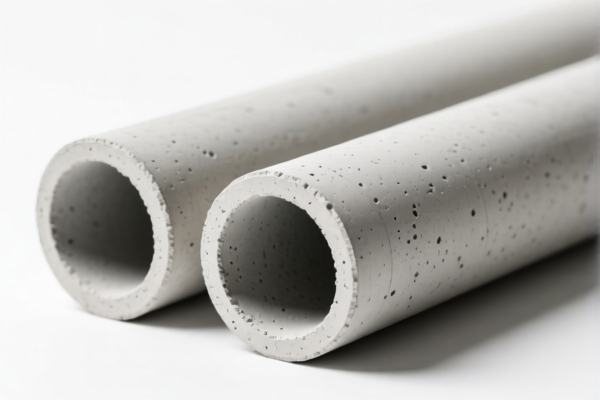
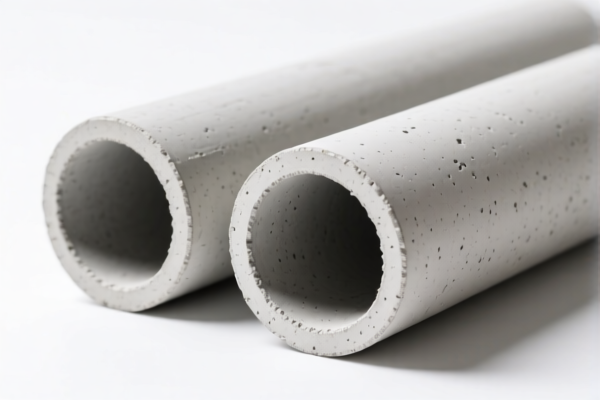
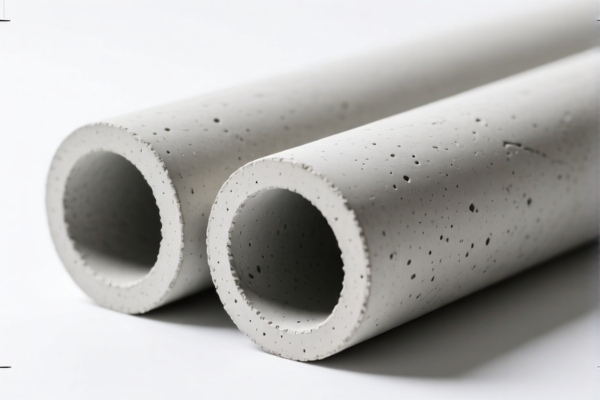
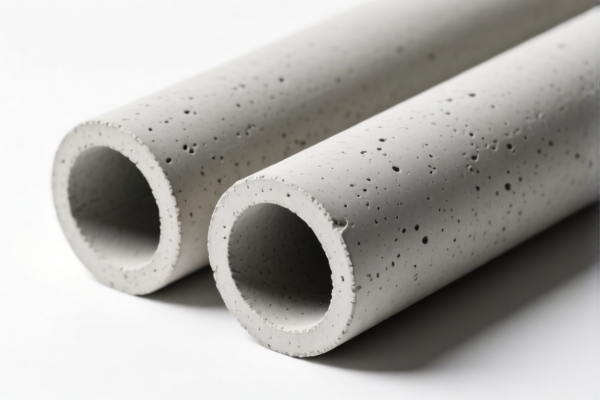
AI Analysis
🧱 Cement Concrete Products
🌐 HS Code Reference & Customs Clearance Guide | 2026 Latest Tariff Analysis | Professional Compliance Strategy
📌 1. Product Definition & Classification: Do You Really Understand "Cement Concrete Products"?
Cement, concrete, and artificial stone articles are foundational building materials used in construction, infrastructure, and architectural applications. In international trade, they are broadly categorized by their form (tiles vs. other articles) and binding material. The key distinction lies in whether the product is a floor/wall tile agglomerated with non-cement binders or other general articles made of cement/concrete.
⚠️ Key Distinction Point:
- If the product is a tile/flagstone/brick made with binders other than cement (e.g., synthetic resins, polymers), it falls under 6810.19.12.00.
- If the product is a general article (pipes, ornaments, precast elements, etc.) made of cement, concrete, or artificial stone (including those reinforced), it falls under 6810.99.00.80.
📦 2. HS Code Classification Details (2026 Latest Tariff Authority Comparison)
| HS Code | Product Description | Application Scenario | Key Characteristics |
|---|---|---|---|
6810.19.12.00 |
Floor and wall tiles, flagstones, bricks... of stone agglomerated with binders other than cement | Decorative tiles, terrazzo tiles, resin-bound stone aggregates | ✅ Not cement-based binder; ✅ Agglomerated stone |
6810.99.00.80 |
Other articles of cement, concrete, or artificial stone | Pipes, manhole covers, decorative statues, precast concrete blocks, reinforced concrete elements | ✅ Cement/concrete based; ✅ Not tiles; ✅ General purpose |
🔍 Critical Reminder:
- Tiles with Cement Binder: If the tile is made with cement as the binder, it is NOT included in6810.19.12.00. It would likely fall under a different subheading not listed in the provided data (typically 6810.19.10.00 or similar, depending on the country's tariff schedule). However, the provided data only covers non-cement binder tiles (6810.19.12.00) and other general articles (6810.99.00.80).
- "Other Articles": This is a catch-all for any cement/concrete product that is not a tile or brick. This includes structural components, decorative items, and utilities.
💰 3. 2026 Latest Tariff Rate Breakdown (Detailed Tax Clauses)
✅ Applicable Country: United States (US)
✅ Country of Origin: China (CN)
✅ Effective Date: 2025-11-10 (and subsequent imports)
🎯 1. 6810.19.12.00 —— Floor/Wall Tiles (Stone Agglomerated with Non-Cement Binders)
| Item | Content |
|---|---|
| Base Tariff | 0.0% (Ad Valorem) |
| Additional Tariff | 0.0% |
| Total Tariff Rate | 0.0% |
| Tax Calculation | CIF Value × 0% = $0 |
| De Minimis Eligibility | ✅ Yes (Generally eligible if value is below $800) |
| Legal Basis | Standard USHTS classification for non-cement agglomerated stone tiles |
📌 Explanation:
- This category enjoys a 0% total tariff rate, making it highly competitive for importers.
- The key is proving the binder is not cement (e.g., epoxy, polyester, acrylic resins). Misclassification here can lead to severe penalties.
🎯 2. 6810.99.00.80 —— Other Articles of Cement/Concrete/Artificial Stone
| Item | Content |
|---|---|
| Base Tariff | 0.0% (Ad Valorem) |
| Additional Tariff | +25.0% (Section 301 Tariff) |
| Total Tariff Rate | 25.0% |
| Tax Calculation | CIF Value × 25% |
| De Minimis Eligibility | ❌ No (Section 301 tariffs generally do not apply to de minimis, but the high rate makes small shipments costly if not exempt) |
| Legal Basis Path | USITC:6810.99.00.80 → Section 301 Footnote: 9903.88.01 |
📌 Critical Warning:
- The 0% base tariff is misleading. The 25% additional tariff applies to most Chinese-origin cement/concrete products under Section 301.
- This makes general cement/concrete articles significantly more expensive to import than non-cement agglomerated tiles.
- Compliance Note: If your product is a cement-based tile, it may fall into a different HTS code not listed here, but if it is classified under6810.99.00.80, the 25% rate is mandatory.
🛠️ 4. Customs Clearance Operational Advice (Practical Pitfall Avoidance Guide)
✅ 1. Documentation Checklist (Essential for Clearance)
| Document | Must Provide | Purpose |
|---|---|---|
| ✅ Product Specification Sheet | ✔️ | Details binder type (cement vs. resin), dimensions, weight |
| ✅ Material Safety Data Sheet (MSDS) | ✔️ | Confirms chemical composition, especially for agglomerated stones |
| ✅ Product Photos (Clear) | ✔️ | Shows texture, packaging, and any labeling indicating binder type |
| ✅ Commercial Invoice | ✔️ | Clearly states "Agglomerated Stone Tile" or "Concrete Article" with HS Code |
| ✅ Certificate of Origin (CO) | ✔️ | Proves Chinese origin for Section 301 tariff assessment |
| ✅ Packing List | ✔️ | Matches invoice and helps verify quantity/weight |
✅ 2. Declaration Strategy (Key Mnemonics)
🔥 "Binder Defines Code, Cement Pays 25%, Non-Cement Is Free!"
| Scenario | Correct HS Code | Incorrect Approach | Consequence |
|---|---|---|---|
| Tile with Resin/Epoxy Binder | 6810.19.12.00 |
Classify as "Concrete Tile" | Overpay 25% tariff |
| Tile with Cement Binder | Not in provided data (Likely 6810.19.10.00) | Classify as 6810.19.12.00 |
Underpayment + Penalty |
| Concrete Pipe/Statue/Block | 6810.99.00.80 |
Classify as "Tile" | Misdeclaration, Seizure Risk |
| Artificial Stone Countertop | 6810.99.00.80 |
Classify as "Tile" | Incorrect tariff application |
✅ 3. Special Case Handling
| Situation | Handling Advice |
|---|---|
| Agglomerated Stone with Mixed Binders | Provide chemical analysis report to prove non-cement binder is the primary binding agent. |
| Reinforced Concrete Products | Must declare under 6810.99.00.80. Include steel reinforcement details in specs. |
| Decorative vs. Structural | Customs focuses on HS Code description, not function. A decorative concrete vase is still 6810.99.00.80. |
| Misclassification Risk | If unsure, apply for Advance Ruling from CBP. Misclassifying 6810.99.00.80 as 6810.19.12.00 to save 25% is considered fraud. |
🌍 5. Global Market Comparison (2026 Latest)
| Country/Region | Recommended HS Code | Tariff Rate (China Origin) | Notes |
|---|---|---|---|
| 🇺🇸 USA | 6810.19.12.00 |
0% | Non-cement tiles are tax-free |
| 🇺🇸 USA | 6810.99.00.80 |
25% | Cement/concrete articles face Section 301 |
| 🇨🇳 China | 6810.19.12.00 |
0% | Export-friendly |
| 🇨🇳 China | 6810.99.00.80 |
0% | Export-friendly |
| 🇪🇺 EU | 6810.19.12.00 |
0% (if CE compliant) | No Section 301 equivalent |
| 🇪🇺 EU | 6810.99.00.80 |
0% | No Section 301 equivalent |
📌 Conclusion:
- USA is the only major market with a 25% punitive tariff on general cement/concrete articles (6810.99.00.80).
- Non-cement agglomerated tiles (6810.19.12.00) are tariff-free in the US, providing a strong competitive advantage.
- Strategy: If your product can be formulated with non-cement binders, classify it under6810.19.12.00to save 25% in the US market.
📌 6. Common Errors & Pitfall Guide (Lessons Learned)
❌ Error 1: Classifying cement-based tiles as 6810.19.12.00
👉 Consequence: Underpayment of 25% tariff → CBP audit, back duties, penalties.
👉 Fix: Verify binder type. If it’s cement, it’s not 6810.19.12.00.
❌ Error 2: Classifying concrete statues/pipes as "Tiles"
👉 Consequence: Wrong HS Code → Customs rejection, delay, or reclassification with 25% rate.
👉 Fix: Use 6810.99.00.80 for non-tile cement/concrete articles.
❌ Error 3: Ignoring Section 301 on general articles
👉 Consequence: Unexpected 25% cost erodes profit margins.
👉 Fix: Always include 25% in cost calculations for 6810.99.00.80.
✅ Correct Declaration Example:
"Agglomerated Stone Floor Tile, 12x12 inch, Binder: Epoxy Resin, Model XYZ, Origin: China"
→ HS Code:6810.19.12.00→ Tax: 0%
🎯 7. Conclusion: Precision Classification for Cost Savings
🎯 Remember the Motto:
🔹 "Binder Type is King: Non-Cement Tiles = 0%, Cement/Concrete = 25%!"
🔹 "Tiles vs. Articles: If it’s not a tile, it’s ‘Other’ – and ‘Other’ costs you 25% in the US!"
📌 Pro Tip:
- If you are importing cement-based tiles, check if they fall under a different HTS code (e.g., 6810.19.10.00) which may have a different tariff structure. The provided data only covers non-cement tiles and general articles.
- For agglomerated stones, always provide technical data sheets to prove the binder is not cement. This is your best defense against misclassification disputes.
📣 Immediate Action:
📞 Consult a customs broker to verify binder type and HS Code classification.
🚀 Optimize product formulation if possible to qualify for 0% tariff under6810.19.12.00.
✨ Professional Clearance Starts with Accurate Classification!
💼 Every 25% saved is pure profit!
Customer Reviews
About HS Code Classification
The Harmonized System (HS) is an internationally standardized nomenclature developed by the World Customs Organization (WCO) to classify traded products. Over 200 countries use the HS system as the basis for customs tariffs, trade statistics, and import/export regulations.
Each HS code follows a hierarchical structure:
- Chapter (2 digits) — Broad category of goods (e.g., Chapter 84: Machinery and Mechanical Appliances)
- Heading (4 digits) — More specific grouping within the chapter
- Subheading (6 digits) — Internationally standardized breakdown, used by all WCO member countries
- National subdivisions (8-10 digits) — Country-specific extensions for further classification, such as US HTSUS 10-digit codes
Correct HS code classification is essential for smooth customs clearance, accurate duty payment, and compliance with trade regulations. Misclassification can lead to customs delays, overpayment of duties, or penalties.
When importing from CN to US, the applicable tariff rates may include:
- Most-Favored-Nation (MFN) rate — The standard duty rate applied to WTO members
- General rate — Applied to countries without trade agreements
- Trade remedy duties — Additional tariffs such as Section 301 (anti-dumping), Section 232 (national security), or countervailing duties
The information provided on this page is for reference purposes only. For official classification, please consult with your local customs authority or a licensed customs broker.