Cement Fiber Sheets
CN → US| HS Code | Tariff Rate | Origin | Destination | Doc |
|---|---|---|---|---|
| 6810990080 | 35.0% | CN | US | Official Doc |
| 6810990020 | 35.0% | CN | US | Official Doc |
| 4411131000 | 35.0% | CN | US | Official Doc |
Product Images
AI Analysis
🧱 Cement Fiber Sheets (水泥纤维板)
🌐 HS Code Reference & Customs Clearance Guide | 2026 Latest Tariff Analysis | Professional Clearance Strategy
📌 I. Product Definition & Classification: What Are "Cement Fiber Sheets"?
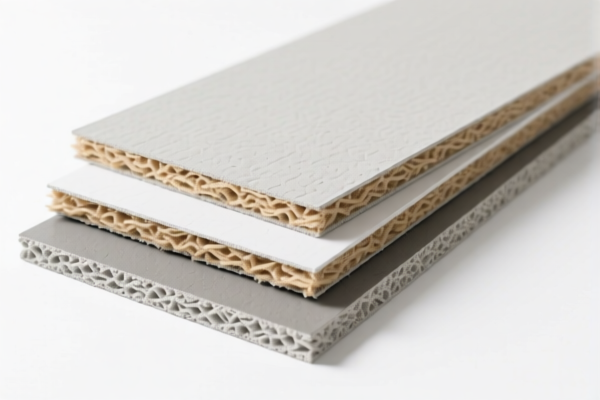
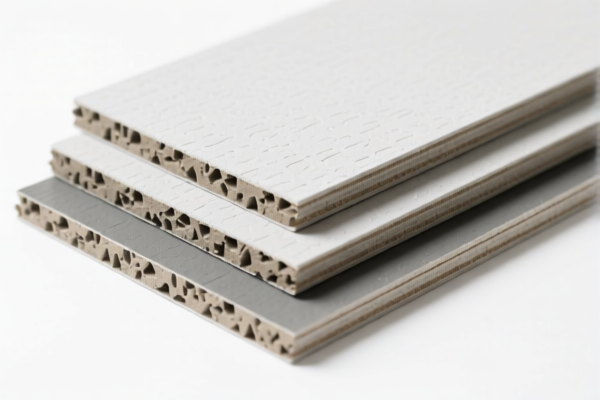
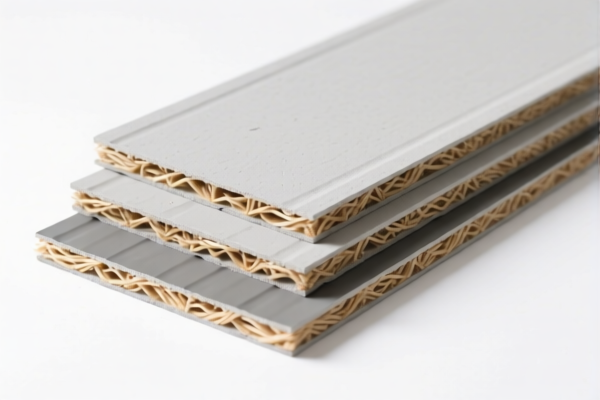
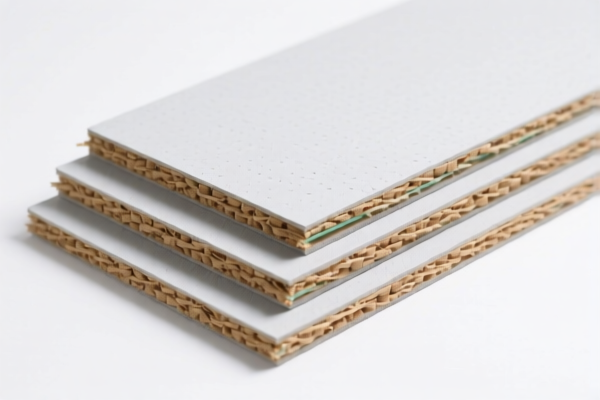
Cement fiber sheets (also known as fiber cement boards or panels) are composite building materials made from a mixture of cement, sand, and cellulosic fibers. They are widely used in construction for siding, roofing, flooring, and interior wall cladding due to their durability, fire resistance, and weather resistance.
In international trade, the critical distinction for classification is the primary material: * Cement-Based: If the binder is predominantly cement, regardless of the fiber reinforcement, it falls under Chapter 68 (Articles of Stone, Plaster, Cement, Asbestos, Mica, or Similar Materials). * Wood-Based: If the binder were wood chips or lignin, it would fall under Chapter 44 (Wood and Articles of Wood).
⚠️ Critical Distinction:
- Despite the name "Fiber," if the matrix/binder is cement, it is NOT wood fiberboard (Chapter 44). It must be classified under Chapter 68.
- Confusing "Cement Fiber" with "Wood Fiber" is a common customs error that leads to significant tariff discrepancies and potential penalties.
📦 II. HS Code Classification Details (2026 Latest Tariff Authority Comparison)
| HS Code | Product Description | Material Type | Application/Notes |
|---|---|---|---|
6810.99.00.80 |
Cement Fiber Boards - Other plates/sheets | Cement-Based | General-purpose fiber cement panels. Classified under "Other" articles of cement. |
6810.99.00.20 |
Cement Fiber Boards - Specific Cement/Concrete/Artificial Stone Category | Cement-Based | Classified explicitly within the cement/concrete/artificial stone product category. |
4411.13.10.00 |
Fiberboard - Wood-Based | Wood-Based | ⚠️ WARNING: This code applies ONLY if the board is made of wood fibers bonded with resin. Do NOT use for cement-based boards. |
🔍 Key Insight:
- Both6810.99.00.80and6810.99.00.20apply to cement-based fiber sheets. The choice between them often depends on specific manufacturing standards or national sub-heading nuances, but both are correct for cement fiber.
-4411.13.10.00is INCORRECT for cement fiber sheets. It is for Medium Density Fiberboard (MDF) or High Density Fiberboard (HDF) made from wood. Using this code for cement products is a misdeclaration.
💰 III. 2026 Latest Tariff Rate Breakdown (Including Surtaxes & Policy Surcharges)
✅ Applicable Country: USA (US)
✅ Country of Origin: China (CN)
✅ Effective Date: November 10, 2025 onwards (for subsequent imports)
🎯 1. 6810.99.00.80 —— Cement Fiber Boards (Other)
| Item | Content |
|---|---|
| Base Tariff | 0% (ad valorem) |
| Section 301 Surcharge | +25% (Additional Tariff) |
| Section 122 Tariff | +10% (Specific 122 Clause Tariff) |
| Total Tariff Rate | 35.0% |
| Tax Calculation | CIF Value × 35% |
| De Minimis Exemption | ❌ Not Eligible (Deny De Minimis) |
| Legal Basis Path | Section 301 → Section 122 → USITC:6810.99.00.80 |
📌 Explanation:
- Base Rate (0%): Cement products typically have a low base MFN tariff.
- Section 301 (25%): Applies to many Chinese-origin industrial goods, including certain construction materials.
- Section 122 (10%): Additional surcharge applied to specific categories.
- Total (35%): A significant burden for importers. This rate applies uniformly to both cement-based HS codes listed in your data.
🎯 2. 6810.99.00.20 —— Cement Fiber Boards (Cement/Concrete Category)
| Item | Content |
|---|---|
| Base Tariff | 0% (ad valorem) |
| Section 301 Surcharge | +25% (Additional Tariff) |
| Section 122 Tariff | +10% (Specific 122 Clause Tariff) |
| Total Tariff Rate | 35.0% |
| Tax Calculation | CIF Value × 35% |
| De Minimis Exemption | ❌ Not Eligible (Deny De Minimis) |
| Legal Basis Path | Section 301 → Section 122 → USITC:6810.99.00.20 |
📌 Note:
- The tariff structure is identical to6810.99.00.80.
- Importers should choose the sub-code that best matches their specific product certification or manufacturing process description to ensure consistency with commercial invoices and packing lists.
🚫 3. 4411.13.10.00 —— Wood Fiberboard (Incorrect Classification for Cement)
| Item | Content |
|---|---|
| Base Tariff | 0% (ad valorem) |
| Section 301 Surcharge | +25% (Additional Tariff) |
| Section 122 Tariff | +10% (Specific 122 Clause Tariff) |
| Total Tariff Rate | 35.0% |
| Tax Calculation | CIF Value × 35% |
| Risk | High - Misclassification |
⚠️ Critical Warning:
- Although the tariff rate is the same (35%), classifying cement fiber as wood fiber (4411.13.10.00) is legally incorrect.
- Customs may reject the declaration, demand re-classification, and impose penalties for misdeclaration.
- Always use Chapter 68 codes (6810...) for cement-based products.
🛠️ IV. Customs Clearance Practical Advice (Combat Pitfalls Guide)
✅ 1. Preparation Checklist (Indispensable)
| Document | Mandatory? | Description |
|---|---|---|
| ✅ Product Spec Sheet | ✔️ | Must clearly state: Binder: Cement, Reinforcement: Fibers (Cellulose/Synthetic). |
| ✅ Material Composition | ✔️ | Percentage breakdown (e.g., 50% Cement, 20% Sand, 30% Fibers). Proves it’s NOT wood-based. |
| ✅ Product Photos | ✔️ | Clear images showing texture and density. Avoid looking like wood veneer. |
| ✅ Commercial Invoice | ✔️ | Description: "Cement Fiber Board", NOT "Wood Fiberboard" or "MDF". |
| ✅ Packing List | ✔️ | Weight and dimensions. |
| ✅ FSC/PEFC Cert | ❌ | Not required if not wood-based. Do not provide fake wood certs. |
✅ 2. Declaration Tips (Key Mantra)
🔥 “Cement Matrix, Chapter 68; Wood Matrix, Chapter 44. Name it Right, Avoid the Fight!”
| Scenario | Correct Declaration | Wrong Declaration |
|---|---|---|
| Standard Cement Fiber Board | 6810.99.00.80 or 6810.99.00.20Desc: "Cement Fiber Sheet" |
4411.13.10.00Desc: "Fiberboard" |
| Pre-painted Cement Board | 6810.99.00.80Desc: "Painted Cement Fiber Panel" |
4411.13.10.00Desc: "Laminated Wood Board" |
| Sample for Testing | 6810.99.00.80Desc: "Sample Cement Board" |
No declaration |
📌 Note:
- Even if the sheet looks like wood (textured), if it is cement-based, it MUST go under Chapter 68.
- Do not use vague terms like "Building Board." Be specific: "Cement Fiber Board."
✅ 3. Special Circumstances Handling
| Situation | Handling Advice |
|---|---|
| Mixed Shipment (Cement + Wood) | Split Declaration! Do not combine. Cement under 6810, Wood under 4411. Mixing leads to full shipment rejection. |
| Import from Non-China Countries | Check FTAs (e.g., USMCA, KORUS). If originating in Canada/Mexico/Korea, 301/122 surcharges may not apply. |
| Small Sample Shipments | Still subject to 35% tariff. No de minimis exemption for Section 301/122 goods. |
🌍 V. Global Market Comparison (2026 Latest)
| Country/Region | Recommended HS Code | Tariff Rate | Remarks |
|---|---|---|---|
| 🇺🇸 USA | 6810.99.00.80 / .20 |
35% (China Origin) | High surcharge due to 301 & 122. |
| 🇨🇳 China | 6810.99.00.90 (Local) |
~20% (Import) | Domestic production is common. |
| 🇪🇺 EU | 6810.99.90 |
0% - 5% | No equivalent 301/122 surcharges. |
| 🇬🇧 UK | 6810.99.90 |
0% - 5% | Post-Brexit tariff structure. |
| 🇮🇳 India | 6810.99.90 |
7.5% - 15% | Varies by specific type. |
📌 Conclusion:
- The USA is the most expensive market for Chinese-origin cement fiber sheets due to Section 301 and Section 122 tariffs.
- For the EU and UK, the tariff burden is significantly lower. Consider sourcing from or routing through these regions if possible (subject to rules of origin).
📌 VI. Common Errors & Pitfalls (Lessons Learned)
❌ Error 1: Declaring "Cement Fiber" as "Wood Fiberboard" (4411.13.10.00)
👉 Consequence: Customs audit, penalties for misclassification, even if the rate is similar. Accuracy is key.
❌ Error 2: Using vague description "Building Material"
👉 Consequence: Delayed clearance, request for additional documentation, potential detention.
❌ Error 3: Ignoring Section 122 Tariff
👉 Consequence: Underpayment of 10%. Customs will assess back-taxes + interest.
❌ Error 4: Assuming De Minimis Exemption Applies
👉 Consequence: Small shipments are NOT exempt from 301/122 tariffs. Budget accordingly.
✅ Correct Practice:
"Cement Fiber Board, 12mm, Fire-Rated, Made of Cement and Cellulose Fibers, Not Wood-Based, Model XYZ, HS 6810.99.00.80"
🎯 VII. Conclusion: Professional Classification Saves Money and Time
🎯 Remember the Mantra:
🔹 "Cement = Chapter 68, Wood = Chapter 44. Don't mix them up!"
🔹 "35% Total Tariff for China Origin. Plan your cost accordingly!"
🔹 "Specify 'Cement-Based' in every document to avoid ambiguity!"
📌 Pro Tip:
If your cement fiber sheets are originating from Vietnam, Thailand, or other non-China sources, you may avoid the 25% Section 301 and 10% Section 122 surcharges, reducing the total tariff to the base rate (0%).
✅ Recommendation: Apply for a Certificate of Origin and consult a customs broker for Pre-Ruling to confirm eligibility for tariff exemptions.
📣 Immediate Action:
📞 Contact a Licensed Customs Broker
📄 Provide Product Composition Report (Cement % vs. Wood %)
🚀 Ensure HS Code 6810.99.00.80 or .20 is used for all Chinese-origin shipments!
✨ Professional Clearance Starts with Accurate Classification!
💼 Your Profit Margin Depends on Precise Tariff Calculation!
Customer Reviews
About HS Code Classification
The Harmonized System (HS) is an internationally standardized nomenclature developed by the World Customs Organization (WCO) to classify traded products. Over 200 countries use the HS system as the basis for customs tariffs, trade statistics, and import/export regulations.
Each HS code follows a hierarchical structure:
- Chapter (2 digits) — Broad category of goods (e.g., Chapter 84: Machinery and Mechanical Appliances)
- Heading (4 digits) — More specific grouping within the chapter
- Subheading (6 digits) — Internationally standardized breakdown, used by all WCO member countries
- National subdivisions (8-10 digits) — Country-specific extensions for further classification, such as US HTSUS 10-digit codes
Correct HS code classification is essential for smooth customs clearance, accurate duty payment, and compliance with trade regulations. Misclassification can lead to customs delays, overpayment of duties, or penalties.
When importing from CN to US, the applicable tariff rates may include:
- Most-Favored-Nation (MFN) rate — The standard duty rate applied to WTO members
- General rate — Applied to countries without trade agreements
- Trade remedy duties — Additional tariffs such as Section 301 (anti-dumping), Section 232 (national security), or countervailing duties
The information provided on this page is for reference purposes only. For official classification, please consult with your local customs authority or a licensed customs broker.