Cement Flowability Enhancer
CN → US| HS Code | Tariff Rate | Origin | Destination | Doc |
|---|---|---|---|---|
| 3910000000 | 38.0% | CN | US | Official Doc |
| 3824405000 | 40.0% | CN | US | Official Doc |
| 3824401000 | 41.5% | CN | US | Official Doc |
Product Images
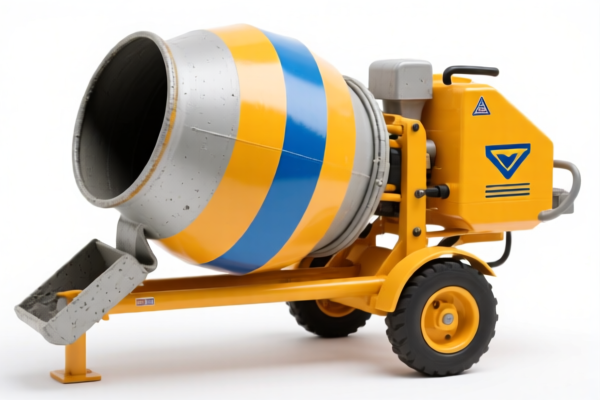
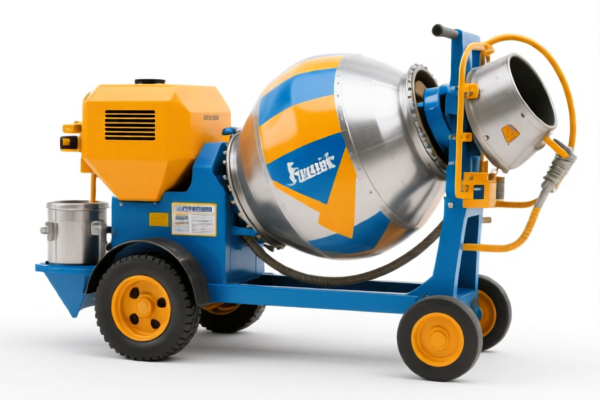
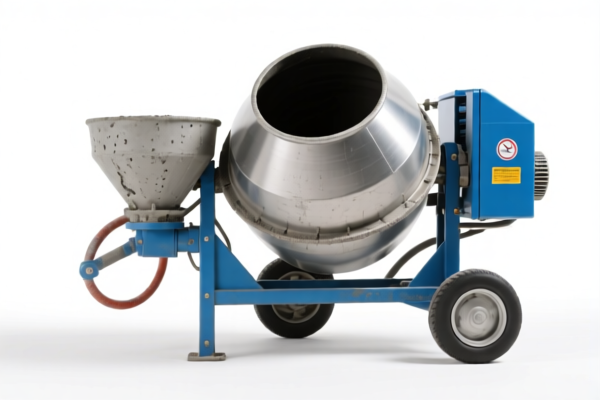

AI Analysis
🏗️ Cement Flowability Enhancer (Cement Admixtures)
🌐 HS Code Reference & Customs Clearance Guide | 2026 Latest Tariff Breakdown | Professional Clearance Strategy
📌 I. Product Definition & Classification: What is a "Cement Flowability Enhancer"?
A Cement Flowability Enhancer is a chemical additive used in concrete, mortar, and cementitious materials to improve workability, reduce water demand, and prevent segregation. In international trade, these products are classified based on their chemical composition and specific end-use.
⚠️ Key Classification Logic:
- If the product is a general chemical agent without specific mention of construction use → It may fall under Chapter 39 (Plastics/Resins in primary forms) if it’s a polymer-based raw material.
- If the product is specifically formulated for cement, mortar, or concrete → It must fall under Chapter 38, specifically heading 3824 (Prepared Binders for Foundry Molds; Chemical Products and Preparations of the Chemical or Allied Industries, Not Elsewhere Specified or Included).
📦 II. HS Code Classification Details (2026 Latest Tariff Authority Comparison)
Based on the provided data, here are the three most relevant HS Codes for "Cement Flowability Enhancer," ranked by matching accuracy.
| HS Code | Product Description | Matching Logic | Tax Rate (Total) |
|---|---|---|---|
3824.40.10.00 |
Prepared additives for cement, mortar, or concrete | ✅ Best Match. The term "Cement Flowability Enhancer" directly corresponds to "prepared additives for cement." High alignment with usage and material attributes. | 41.5% |
3824.40.50.00 |
Other prepared additives for cement, mortar, or concrete | ✅ Good Match. Explicitly covers additives for cement applications. Slightly broader category than 3824.40.10. | 40.0% |
3910.00.00.00 |
Silicones in primary forms or in plates, sheets, or strip (General Chemical Preparation) | ⚠️ Inference Only. Based on common sense, if the enhancer is a silicone-based polymer in raw form, it might fall here. However, lacks specific "cement additive" designation, creating potential attribute conflicts. | 38.0% |
🔍 Critical Reminder:
-3824.40series is preferred because the product is explicitly designed for construction materials (cement/concrete).
-3910is risky unless you can prove it is a raw silicone polymer not yet prepared as a construction additive. Customs often reclassify generic chemicals into 3824 if their primary use is construction.
💰 III. 2026 Latest Tariff Rate Breakdown (Including Surcharge & Policy Add-ons)
✅ Applicable Country: United States (US)
✅ Country of Origin: China (CN)
✅ Effective Date: November 10, 2025 (and subsequent imports)
🎯 1. 3824.40.10.00 —— Prepared Additives for Cement, Mortar, or Concrete (Best Fit)
| Item | Detail |
|---|---|
| Base Tariff | 6.5% (ad valorem) |
| Section 301 Surcharge | +25% (From USITC Footnote 9903.88.01) |
| IEEPA Surcharge | +10% (Against Chinese/HK products, effective from Nov 10, 2025) |
| Total Tax Rate | 41.5% |
| Tax Calculation | CIF Value × 41.5% |
| De Minimis Eligibility | ❌ Not Eligible (deny_de_minimis) |
| Legal Path | IEEPA:9903.01.25 → IEEPA:9903.01.24 → USITC:3824.40.10.00 → FOOTNOTE:9903.88.01 |
📌 Explanation:
- Base Rate (6.5%): Standard MFN rate for prepared chemical products.
- Section 301 (25%): Applied to all Chinese-origin goods under this heading due to trade tensions.
- IEEPA (10%): Additional levy under the International Emergency Economic Powers Act targeting specific Chinese chemical imports.
- Total: 41.5%. This is a high-cost category. Proper documentation is essential to avoid misclassification penalties.
🎯 2. 3824.40.50.00 —— Other Prepared Additives for Cement, Mortar, or Concrete
| Item | Detail |
|---|---|
| Base Tariff | 5.0% |
| Section 301 Surcharge | +25% |
| IEEPA Surcharge | +10% |
| Total Tax Rate | 40.0% |
| Tax Calculation | CIF × 40.0% |
| De Minimis Eligibility | ❌ Not Eligible |
| Legal Path | IEEPA:9901.25 → IEEPA:9903.01.24 → USITC:3824.40.50.00 → FOOTNOTE:9903.88.01 |
📌 Note:
- Savings: $1.5%$ lower than3824.40.10.00.
- Risk: Customs may argue that if your product is a "standard" cement additive, it should fall under3824.40.10(more specific). Misclassification here could lead to underpayment penalties.
🎯 3. 3910.00.00.00 —— Silicones in Primary Forms (Inference Only)
| Item | Detail |
|---|---|
| Base Tariff | 3.0% |
| Section 301 Surcharge | +25% |
| 122 Clause Surcharge | +10% (Specific to certain chemical preparations) |
| Total Tax Rate | 38.0% |
| Tax Calculation | CIF × 38.0% |
| De Minimis Eligibility | ❌ Not Eligible |
| Legal Path | IEEPA:9903.01.25 → IEEPA:9903.01.24 → USITC:3910.00.00.00 |
📌 Warning:
- This code applies only if the product is a raw silicone polymer (e.g., silane/siloxane) not yet prepared for cement use.
- If labeled as "Cement Additive," customs will likely reject this code and reclassify to 3824, resulting in higher taxes (41.5%) + penalties.
🛠️ IV. Customs Clearance Practical Advice (Avoid Pitfalls)
✅ 1. Required Documentation Checklist (Non-Negotiable)
| Document | Must Provide? | Notes |
|---|---|---|
| ✅ Product Specification Sheet | ✔️ | Must state: "Chemical Admixture for Concrete/Cement," CAS number, concentration. |
| ✅ Formula/Composition Breakdown | ✔️ | Detailed % of each ingredient to justify classification (e.g., Polycarboxylate Ether vs. Silicone). |
| ✅ Product Photo (Label & Container) | ✔️ | Must clearly show "Cement Additive" or "Concrete Admixture." |
| ✅ Third-Party Test Report | ✔️ | ASTM C494 or EN 934 compliance test results. |
| ✅ Commercial Invoice | ✔️ | Description must include: "Prepared Additive for Cement/Concrete, Model XYZ, Origin: China." |
| ✅ Certificate of Origin (CO) | ✔️ | Required for proving Chinese origin (to calculate 301 + IEEPA). |
| ✅ Packing List | ✔️ | Ensure net weight vs. gross weight is clear. |
✅ 2. Declaration Strategy (Key Mantra)
🔥 "Name it right, Classify it tight, avoid 3910, save the fight!"
| Scenario | Correct Declaration | Wrong Action |
|---|---|---|
| Ready-to-use Liquid Additive | 3824.40.10.00 |
❌ Declare as "Chemical Raw Material" → Risk of reclassification & penalty. |
| Powdered Cement Additive | 3824.40.50.00 or 3824.40.10.00 |
❌ Declare as "Building Material" (Chapter 68) → Incorrect chapter. |
| Raw Silicone Fluid (Not for cement) | 3910.00.00.00 |
❌ Label as "Cement Enhancer" → Misdeclaration. |
| Additive + Cement Mix (Pre-mixed) | 3824.40 or 6810 (if cement-based) |
❌ Split into parts → Complex & risky. |
💡 Pro Tip:
If your product is Polycarboxylate Superplasticizer (PCE), it is almost always classified under 3824.40. Do not try to classify it as a plastic resin (3910) unless it is a pure, unformulated polymer in bulk tankers.
✅ 3. Special Circumstances Handling
| Situation | Recommendation |
|---|---|
| OEM/Private Label | Provide client agreement + formula sheet. Ensure label matches declared use. |
| Multi-use Additive | If it works for both plastic and cement, declare primary use (cement) → 3824.40. |
| Small Sample Shipment | Still subject to 41.5% tax. No de minimis exemption for China-origin chemicals. |
| Origin Diversification | If sourced from Vietnam, Malaysia, or Thailand, apply for preferential tariff or IEEPA exemption. Tax may drop to 5%~10%. |
🌍 V. Global Market Comparison (2026 Latest)
| Country/Region | Recommended HS Code | Tariff (China Origin) | Certification | Notes |
|---|---|---|---|---|
| 🇺🇸 USA | 3824.40.10.00 |
41.5% | ASTM C494, SDS | High tax due to 301 + IEEPA. |
| 🇨🇳 China | 3824.40.10.00 |
5% (Import) | GB/T 8077 | No surcharges for domestic trade. |
| 🇪🇺 EU | 3824.40 |
6.5% (Most Favored Nation) | REACH, CLP | No Section 301. Lower barrier. |
| 🇬🇧 UK | 3824.40 |
6.5% | UK REACH | Post-Brexit rules apply. |
| 🇦🇺 Australia | 3824.40 |
5% | ACCC | FTA may reduce to 0%. |
📌 Conclusion:
- USA is the most expensive market for Chinese-made cement additives due to 41.5% total tax.
- EU and Australia offer more favorable rates (5%~6.5%).
- Consider supply chain rerouting (e.g., mixing raw materials in Vietnam) if targeting the US market heavily.
📌 VI. Common Mistakes & Pitfalls (Lessons from Experience)
❌ Mistake 1: Declaring "Cement Flowability Enhancer" as "Silicone Oil" (3910) to save tax.
👉 Consequence: Customs audit finds it’s a prepared mixture for concrete → Reclassified to 3824 → Back taxes + 10% penalty.
❌ Mistake 2: Ignoring IEEPA 10% surcharge.
👉 Consequence: Underpayment by 10% → Seizure or delay at US port.
❌ Mistake 3: Providing only a generic SDS without formula breakdown.
👉 Consequence: Customs cannot verify use → Assumes worst-case classification → Higher tax or hold.
❌ Mistake 4: Using "Building Material" as a generic name.
👉 Consequence: Vague description → Customs Request for Information (RFI) → 7–14 day delay.
✅ Correct Approach:
"Liquid Chemical Admixture for Concrete, Polycarboxylate Ether Based, ASTM C494 Type F, HS 3824.40.10, CAS 9003-11-6"
🎯 VII. Conclusion: Precision Declaration Saves Money!
🎯 Remember the Mantra:
🔹 "If it’s for Cement, it’s 3824. Don’t guess, get it assessed."
🔹 "41.5% is the US price, 6.5% is the EU prize."
🔹 "Declare the use, disclose the formula, avoid the fuss."
📌 Pro Tip:
If your product is exported to the US, consider applying for an HTS Code Exclusion (if available for your specific product code) or sourcing origin-neutral components to reduce surcharge impact.
📣 Action Now:
📞 Consult a Customs Broker + Provide Formula + Apply for Advance Ruling
🚀 Clear Your Cement Additives, Avoid Delays, Maximize Profit!
✨ Professional Clearance Starts with Accurate Classification!
💼 Every Percent of Tax Saved is Pure Profit!
Customer Reviews
About HS Code Classification
The Harmonized System (HS) is an internationally standardized nomenclature developed by the World Customs Organization (WCO) to classify traded products. Over 200 countries use the HS system as the basis for customs tariffs, trade statistics, and import/export regulations.
Each HS code follows a hierarchical structure:
- Chapter (2 digits) — Broad category of goods (e.g., Chapter 84: Machinery and Mechanical Appliances)
- Heading (4 digits) — More specific grouping within the chapter
- Subheading (6 digits) — Internationally standardized breakdown, used by all WCO member countries
- National subdivisions (8-10 digits) — Country-specific extensions for further classification, such as US HTSUS 10-digit codes
Correct HS code classification is essential for smooth customs clearance, accurate duty payment, and compliance with trade regulations. Misclassification can lead to customs delays, overpayment of duties, or penalties.
When importing from CN to US, the applicable tariff rates may include:
- Most-Favored-Nation (MFN) rate — The standard duty rate applied to WTO members
- General rate — Applied to countries without trade agreements
- Trade remedy duties — Additional tariffs such as Section 301 (anti-dumping), Section 232 (national security), or countervailing duties
The information provided on this page is for reference purposes only. For official classification, please consult with your local customs authority or a licensed customs broker.