Cement Grade Limestone
CN → USProduct Images
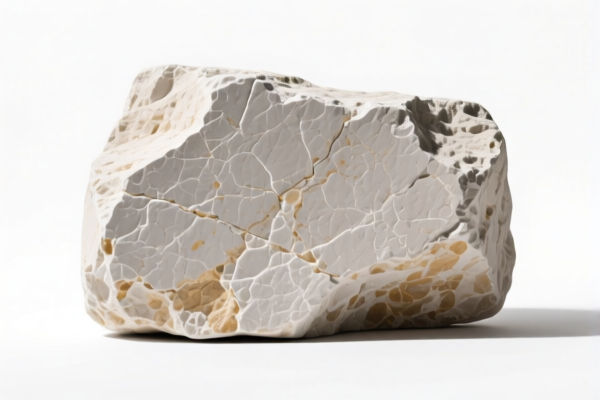
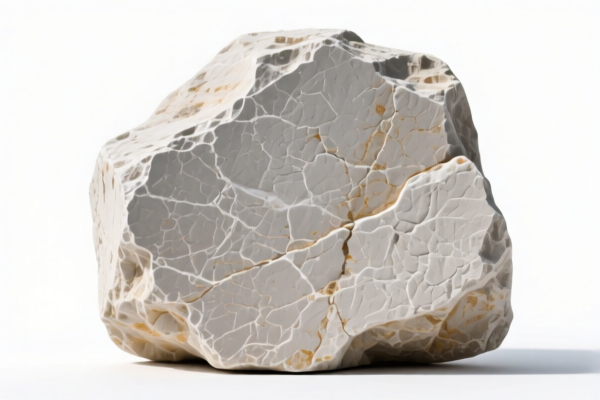
AI Analysis
🏭 Cement Grade Limestone (The Backbone of Concrete & Infrastructure)
🌐 HS Code Reference & Customs Clearance Guide | 2026 Latest Tariff Analysis | Professional Clearance Strategy
📌 I. Product Definition & Classification: Do You Truly Understand "Limestone"?
Cement-grade limestone is not merely "stone"; it is the primary raw material for Portland cement production. In international trade, its classification hinges strictly on its chemical composition (Calcium Carbonate, CaCO₃) and physical processing state.
Key Distinctions: 1. Raw Material (Natural State/Minimal Processing): Crushed or screened limestone with high CaCO₃ content (>50-70%), suitable directly for cement kilns. * HS Category: Generally falls under Chapter 25 (Salt; Sulfurs; Earths and Stone...). 2. Processed/Chemical Grade: If chemically treated, precipitated, or ground to a specific fine powder for industrial chemical use (not primarily for cement), it may fall under Chapter 28 or 29. 3. Building Stone: If cut into slabs or blocks for construction (flooring, cladding), it falls under Chapter 68 or 2515/2516.
⚠️ Critical Classification Point:
- If the limestone is crushed, ground, or simply screened and intended specifically for cement manufacturing or general industrial use as a raw material → HS 2521 or 2522.
- If it is quarried and cut into blocks/slabs for construction → HS 2515 or 2516.
- Note: "Cement Grade" implies the chemical/physical properties for clinker production, not aesthetic construction stone.
📦 II. HS Code Classification Details (2026 Latest Tariff Authority Alignment)
| HS Code | Product Description | Application Scenario | Processing Level |
|---|---|---|---|
2521.00.00.00 |
Limestone and other calcareous stone, whether or not cracked or crushed, for the manufacture of lime or cement | Raw cement feedstock; high CaCO₃; bulk transport; mining output | ✅ Raw/Crushed |
2522.10.00.00 |
Quicklime (Calcium Oxide, CaO) | Pre-calcined limestone; used in steel making or soil stabilization | ✅ Calcined |
2522.20.00.00 |
Hydrated lime | Slaked lime for construction/municipal use | ✅ Hydrated |
2523.21.00.00 to 2523.29.00.00 |
Portland Cement, Slag Cement, etc. | If the product is already cement, not limestone | ❌ Wrong Category |
2515.12.00.00 |
Marble, travertine, alabaster, in blocks, roughly squared | Building stone (if limestone is used architecturally) | ✅ Cut/Polished |
2516.12.00.00 |
Granite, in blocks, roughly squared | Building stone (granite, not limestone) | ✅ Cut/Polished |
🔍 Key Reminder:
- HS 2521.00.00.00 is the standard code for unprocessed/crushed limestone destined for cement plants.
- Do NOT confuse with HS 2523 (which is for Cement, the final product). Limestone is the input; Cement is the output.
- If the limestone is whitened, bleached, or chemically purified for non-cement uses (e.g., paper filler, paint), it may fall under 2524 or 2836, but "Cement Grade" specifically points to 2521.
💰 III. 2026 Latest Tariff Rate Details (Including Surtaxes & Policy Add-ons)
✅ Applicable Country: United States (US)
✅ Origin: China (CN)
✅ Effective Date: November 10, 2025 onwards (Including subsequent imports)
🎯 1. 2521.00.00.00 —— Limestone & Calcareous Stone (For Lime/Cement)
| Item | Content |
|---|---|
| Base Tariff Rate | 0% (ad valorem) |
| USITC Surtax | 0% (Most stone products are exempt from Section 301 tariffs) |
| IEEPA Surtax | 0% (Generally not applied to raw stone/cement feedstocks) |
| Total Tariff Rate | 0% |
| Tax Calculation | CIF Value × 0% = $0 |
| De Minimis Eligibility | ✅ Yes (Under $800, may qualify for duty-free entry if documentation is clean) |
| Legal Basis Path | HTSUS:2521.00.00.00 → Exempt from 301/IEEPA |
📌 Explanation:
- Unlike electronics or steel, raw limestone is considered a non-strategic bulk commodity in most trade agreements.
- Zero Duty is a significant advantage. However, Anti-Dumping (AD) / Countervailing Duties (CVD) may apply in specific cases.
- ⚠️ CRITICAL WARNING: Check for Section 201 or AD/CVD orders. While rare for raw limestone, some countries have AD duties on cement or grinding media. For limestone, it is usually safe, but verify with the CBP (Customs and Border Protection) ruling.
🎯 2. 2522.10.00.00 —— Quicklime (Calcined Limestone)
| Item | Content |
|---|---|
| Base Tariff Rate | 0% |
| USITC Surtax | 0% |
| IEEPA Surtax | 0% |
| Total Tariff Rate | 0% |
| De Minimis Eligibility | ✅ Yes (if value < $800) |
📌 Note:
- Quicklime is also duty-free. However, it requires MSDS (Material Safety Data Sheet) and hazardous material declaration if classified as a hazardous substance (caustic).
- Ensure the declaration specifies "Calcium Oxide, Technical Grade" and not "Hazardous Chemical" unless required.
🛠️ IV. Customs Clearance Practical Advice (实战避坑指南)
✅ 1. Documentation Checklist (Mandatory)
| Document | Must Provide | Notes |
|---|---|---|
| ✅ Commercial Invoice | ✔️ | Clearly state: "Cement Grade Limestone, Crushed, CaCO3 > 90%" |
| ✅ Packing List | ✔️ | Weight (Gross/Net), Container Number |
| ✅ Certificate of Origin (CO) | ✔️ | Essential for proving origin (China/US/etc.) to claim 0% duty if FTA applies |
| ✅ Product Specification Sheet | ✔️ | Include CaCO₃ %, MgO %, SiO₂ %, Moisture Content, Particle Size (Mesh) |
| ✅ MSDS (if Quicklime) | ✔️ | For 2522.10, Quicklime is corrosive. MSDS is mandatory for safety clearance |
| ✅ Bill of Lading (B/L) | ✔️ | Standard shipping document |
✅ 2. Declaration Tips (Key Mnemonics)
🔥 "Raw Stone is 2521, Cement is 2523, Quicklime is 2522. Don't Mix Up!"
| Scenario | Correct HS Code | Error if Misdeclared |
|---|---|---|
| Crushed limestone for cement kiln | 2521.00.00.00 |
Misdeclare as 2523 (Cement) → 25%+ Duty |
| Pre-calcined/Quicklime for steel/soil | 2522.10.00.00 |
Misdeclare as 2521 → Rejection due to chemical hazard |
| Cut stone for building façade | 2515.12.00.00 (Marble/Limestone) |
Misdeclare as 2521 → Undervaluation/Duty Evasion |
| Powdered limestone for paper filler | 2524.00.00.00 (Mica) or 2836 |
Misdeclare as 2521 → Wrong Classification |
✅ 3. Special Considerations
| Scenario | Handling Advice |
|---|---|
| Anti-Dumping (AD) Check | Although rare for raw limestone, check CBP AD Lists. Some Chinese limestone producers may face AD on related products. |
| Hazardous Material (Quicklime) | If shipping 2522.10, ensure UN Number (e.g., UN1910) is declared on B/L and MSDS is provided. |
| Contamination | Ensure no clay, soil, or foreign debris exceeds limits. High impurities can lead to rejection or re-inspection. |
| Packaging | Bulk shipments (containers/bulk carriers) should be clean. Bagged shipments must use PP bags with clear labeling. |
🌍 V. Global Market Comparison (2026 Latest)
| Country/Region | Recommended HS Code | Tariff (China Origin) | Certification Required | Notes |
|---|---|---|---|---|
| 🇺🇸 USA | 2521.00.00.00 |
0% | MSDS (if Quicklime), CO | Duty-free, but check AD/CVD |
| 🇨🇳 China | 2521.00.00.00 |
0% | N/A | Major importer of limestone |
| 🇪🇺 EU | 2521.00.00 |
0% | REACH, SDS | Strict chemical registration if >1 ton/year |
| 🇮🇳 India | 2521.00.00 |
0% | BIS (if for construction) | Check Basic Customs Duty changes |
| 🇦🇺 Australia | 2521.00.00 |
0% | WERIS (if Quicklime) | Environmental regulations strict |
📌 Conclusion:
- USA, EU, China, Australia generally apply 0% duty on raw limestone (2521).
- Key Risk: Not tariff, but regulatory compliance (MSDS, REACH, AD/CVD).
- Quicklime (2522) is also 0% but requires hazardous material handling.
📌 VI. Common Mistakes & Pitfalls (Blood & Tears Lessons)
❌ Mistake 1: Declaring "Limestone" as "Cement" (2523)
👉 Consequence: Duty jumps from 0% to ~25% + Potential fraud suspicion.
👉 Fix: Clearly distinguish: Limestone = Raw Material; Cement = Finished Product.
❌ Mistake 2: Failing to declare Quicklime as Hazardous (2522.10)
👉 Consequence: Cargo held at port, fines, or return. Quicklime reacts with water and releases heat.
👉 Fix: Provide MSDS, UN Number, and Hazard Class label on B/L.
❌ Mistake 3: Ignoring Anti-Dumping (AD) Orders
👉 Consequence: If your supplier is under AD order, you may pay 100%+ duty.
👉 Fix: Verify supplier's AD status with CBP or your customs broker.
❌ Mistake 4: Vague Description
👉 Consequence: Customs inspection delay, possible reclassification.
👉 Fix: Use precise terms: "Crushed Limestone, CaCO3 > 90%, for Cement Manufacture."
✅ Correct Practice:
"Cement Grade Limestone, Crushed, Calcium Carbonate Content: 92%, Moisture: < 2%, Bulk in Container, HS 2521.00.00.00"
🎯 VII. Conclusion: Professional Declaration, Zero Duty, Smooth Clearance!
🎯 Remember the Mnemonic:
🔹 "Raw Stone 2521, Zero Duty; Quicklime 2522, MSDS Required; Cement 2523, 25% Duty!"
🔹 "Limestone is not Cement! Don't misdeclare!"
📌 Tips:
- If importing Quicklime, always include MSDS and UN Number.
- For Raw Limestone, ensure Certificate of Origin is accurate to maintain 0% duty status.
- Consider HS Code Ruling from CBP if volume is high, to confirm classification and duty status.
📣 Immediate Action:
📞 Contact your customs broker + Provide Spec Sheet + Confirm Supplier AD Status
🚀 Let your limestone clear smoothly, duty-free, and on time!
✨ Professional Customs Clearance Starts with Precise Classification!
💼 Your Cost, Calculated Accurately!
Customer Reviews
About HS Code Classification
The Harmonized System (HS) is an internationally standardized nomenclature developed by the World Customs Organization (WCO) to classify traded products. Over 200 countries use the HS system as the basis for customs tariffs, trade statistics, and import/export regulations.
Each HS code follows a hierarchical structure:
- Chapter (2 digits) — Broad category of goods (e.g., Chapter 84: Machinery and Mechanical Appliances)
- Heading (4 digits) — More specific grouping within the chapter
- Subheading (6 digits) — Internationally standardized breakdown, used by all WCO member countries
- National subdivisions (8-10 digits) — Country-specific extensions for further classification, such as US HTSUS 10-digit codes
Correct HS code classification is essential for smooth customs clearance, accurate duty payment, and compliance with trade regulations. Misclassification can lead to customs delays, overpayment of duties, or penalties.
When importing from CN to US, the applicable tariff rates may include:
- Most-Favored-Nation (MFN) rate — The standard duty rate applied to WTO members
- General rate — Applied to countries without trade agreements
- Trade remedy duties — Additional tariffs such as Section 301 (anti-dumping), Section 232 (national security), or countervailing duties
The information provided on this page is for reference purposes only. For official classification, please consult with your local customs authority or a licensed customs broker.