Cement Mixer
CN → US| HS Code | Tariff Rate | Origin | Destination | Doc |
|---|---|---|---|---|
| 8474310000 | 35.0% | CN | US | Official Doc |
| 8474390000 | 35.0% | CN | US | Official Doc |
Product Images
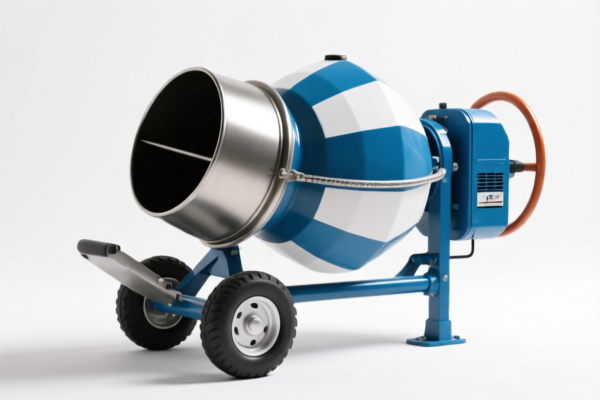
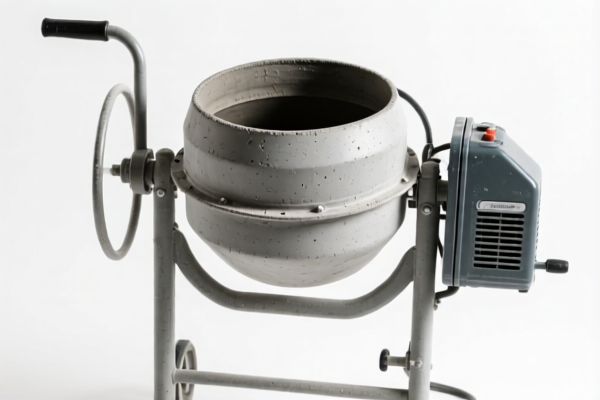
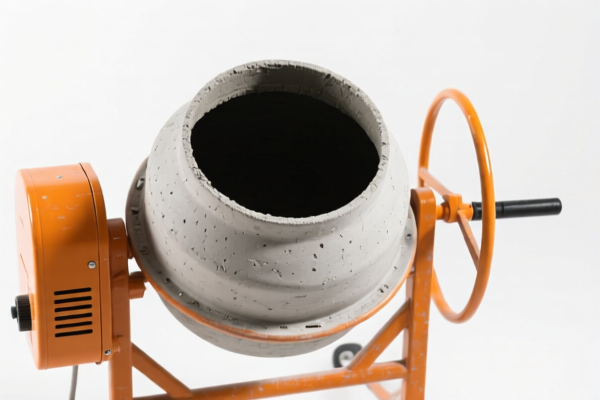
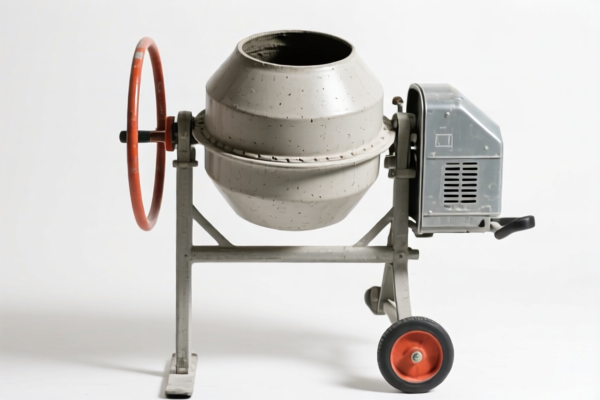
AI Analysis
🚜 Cement Mixers & Concrete Mixing Machinery (HS Code 8474.31.00.00)
🌐 HS Code Reference & Customs Clearance Guide | 2026 Latest Tariff Analysis | Professional Clearance Strategy 📌 I. Product Definition & Classification: Do You Really Know "Cement Mixers"?
In international trade, "cement mixer" is not a single HS code but falls under Chapter 84: Nuclear Reactors, Boilers, Machinery and Mechanical Appliances; Parts Thereof. Specifically, it belongs to Heading 8474: Machinery for sorting, screening, separating, washing, crushing, grinding, mixing or kneading earth, stone, ores or other mineral substances...
These machines are primarily divided into two categories based on their specific function and design:
- Concrete or Mortar Mixers (8474.31.00.00): Dedicated machines designed specifically for mixing concrete or mortar. These often include drum mixers, pan mixers, or forced-action mixers.
- Other Mixing or Kneading Machines (8474.39.00.00): Industrial mixing equipment used for similar mineral substances (earth, stone, ores, plaster) that do not fit the specific definition of a "concrete or mortar mixer." This is a "catch-all" for other industrial kneading/mixing machinery in this category.
⚠️ Key Distinction Point: - If the machine is explicitly designed for concrete or mortar → Go to 8474.31.00.00 - If it is for other mineral pastes, plasters, or industrial kneading and not strictly concrete/mortar → Go to 8474.39.00.00
📦 II. HS Code Classification Details (2026 Latest Tariff Authority Comparison)
| HS Code | Product Description | Application Scenario | Tax Rate (US Import from CN) |
|---|---|---|---|
8474.31.00.00 |
Concrete or Mortar Mixers | Dedicated concrete mixing drums, mortar mixers for construction sites, small to medium industrial concrete mixers | 25.0% |
8474.39.00.00 |
Other Mixing or Kneading Machines | Industrial kneaders for plaster, ceramic paste mixers, other mineral substance mixers not specified elsewhere | 25.0% |
🔍 Important Note: - Both codes carry the same total tax rate of 25% under current US trade policies for Chinese-origin goods. - The distinction is primarily for customs statistics and regulatory compliance. Misclassification can lead to audits, even if the duty rate is identical. - Parts of these machines are classified under 8474.90, not the mixer codes above. Ensure you are classifying the machine, not just a spare part.
💰 III. 2026 Latest Tariff Rate Breakdown (Detailed Tax Clauses)
✅ Applicable Country: United States (US)
✅ Country of Origin: China (CN)
✅ Effective Time: Current (Based on Section 301 Tariffs)
🎯 1. 8474.31.00.00 —— Concrete or Mortar Mixers
| Item | Content |
|---|---|
| Base Tariff | 0.0% (Most Favored Nation rate) |
| Section 301 Additional Tariff | +25.0% (Specifically targeting industrial machinery from China) |
| Total Effective Rate | 25.0% |
| Tax Calculation | CIF Value × 25% |
| De Minimis Exemption | ❌ Not Applicable (Goods subject to Section 301 tariffs generally do not qualify for the $800 de minimis exemption) |
| Legal Basis | USITC:8474.31.00.00 → Section 301: HTSUS 8474.31.00.00 |
📌 Explanation: - The 0% base tariff reflects the standard WTO Most Favored Nation (MFN) rate. - The 25% additional tariff is imposed under Section 301 of the Trade Act of 1974 due to unfair trade practices. This applies to all concrete/mortar mixers originating in China. - No exemptions are currently available for these specific machinery types under the de minimis rule (Section 321).
🎯 2. 8474.39.00.00 —— Other Mixing or Kneading Machines
| Item | Content |
|---|---|
| Base Tariff | 0.0% |
| Section 301 Additional Tariff | +25.0% |
| Total Effective Rate | 25.0% |
| Tax Calculation | CIF Value × 25% |
| De Minimis Exemption | ❌ Not Applicable |
| Legal Basis | USITC:8474.39.00.00 → Section 301: HTSUS 8474.39.00.00 |
📌 Note: - Even though this is a "broader" category, the tariff burden is identical to the concrete mixer category. - Ensure your product description clearly distinguishes between "concrete/mortar" and "other mineral/plaster mixers" to avoid customs queries, even if the tax is the same.
🛠️ IV. Customs Clearance Practical Advice (Pitfall Avoidance Guide)
✅ 1. Required Documentation Checklist (Non-Negotiable)
| Document | Must Provide | Description |
|---|---|---|
| ✅ Product Specification Sheet | ✔️ | Must clearly state: "Concrete Mixer" or "Industrial Kneader," capacity (kg/liters), power (kW), weight, and dimensions. |
| ✅ Commercial Invoice | ✔️ | Must include HS Code 8474.31.00.00 or 8474.39.00.00, CIF value, and country of origin (China). |
| ✅ Bill of Lading (B/L) | ✔️ | Must match invoice details. |
| ✅ Manufacturer’s Declaration | ✔️ | Confirming country of origin and that no further substantial transformation occurs after leaving China. |
| ✅ Photos of Equipment | ✔️ | Clear images of the machine, nameplate, and any labels indicating model number and function. |
| ✅ Parts List | ✔️ | If shipping spare parts separately, declare them under 8474.90.00.00 with separate invoicing. |
✅ 2. Declaration Tips (Key Mnemonics)
🔥 "Specify Function, Origin China, 25% Tax, No De Minimis!"
| Scenario | Correct Declaration | Incorrect Practice |
|---|---|---|
| Standard Concrete Drum Mixer | 8474.31.00.00 - Concrete Mixer |
Mislabeling as "Industrial Blender" → May trigger audit |
| Industrial Plaster Kneader | 8474.39.00.00 - Other Mixing Machine |
Mislabeling as "Concrete Mixer" → Minor classification error, same tax but compliance risk |
| Spare Parts (Gears, Blades) | 8474.90.00.00 - Parts |
Declaring parts under main machine code → Misclassification |
| Shipment under $800 (De Minimis) | N/A | Trying to use de minimis → Customs will seize if Section 301 applies |
✅ 3. Special Cases Handling
| Case | Handling Advice |
|---|---|
| OEM Custom Mixers | Provide original design drawings and customer contracts to prove functionality. Ensure the nameplate matches the declared function. |
| Fully Assembled vs. Knocked Down (CKD/SKD) | If shipped in parts, ensure the principal component determines the HS code. If it’s clearly a mixer, use 8474.31/39. Parts may be declared under 8474.90 if shipped separately. |
| Used Equipment | Must declare as "Used." Provide photos showing condition. Some ports require additional inspection for used machinery. |
| Mixed Shipment (Mixer + Accessories) | Declare the mixer as the main item. Accessories (hoses, nozzles) should be included in the same invoice line or separately if significant value. |
🌍 V. Global Market Clearance Comparison (2026 Latest)
| Country/Region | Recommended HS Code | Tariff (CN Origin) | Certification Requirements | Notes |
|---|---|---|---|---|
| 🇺🇸 USA | 8474.31.00.00 |
25% | No specific US certification required for simple mixers; ensure electrical compliance if plugged in | Section 301 tariff applies |
| 🇨🇳 China | 8474.31.00.00 |
5-8% (Import) | CCC (if electrical) | Low entry barrier |
| 🇪🇺 EU | 8474.31.00.00 |
2.5-3% | CE Marking, Machinery Directive 2006/42/EC | High safety standards |
| 🇦🇺 Australia | 8474.31.00.00 |
5% | RCM (if electrical), GMEC | No additional duties |
| 🇯🇵 Japan | 8474.31.00.00 |
0-3.5% | JIS Mark (if applicable) | Competitive market |
📌 Conclusion: - The US is the most expensive market due to the 25% Section 301 tariff. - EU, Japan, and Australia offer more favorable tariff structures but have stricter safety and environmental certifications (CE, JIS). - Consider supply chain diversification (e.g., manufacturing in Vietnam or Mexico) if targeting the US market to avoid the 25% tariff.
📌 VI. Common Mistakes & Pitfall Guide (Lessons Learned)
❌ Mistake 1: Shipping under $800 to avoid tariffs (De Minimis Abuse)
👉 Consequence: CBP strictly enforces Section 301 tariffs on machinery. Shipment will be seized or assessed with full duty + penalties.
❌ Mistake 2: Mislabeling "Concrete Mixer" as "Food Mixer"
👉 Consequence: HS Code 8474 vs. 8438. Incorrect classification leads to penalties, back taxes, and blacklisting.
❌ Mistake 3: Ignoring "Parts" Classification
👉 Consequence: Shipping spare blades/gears under the main machine code. Customs may audit and demand separate classification (8474.90).
❌ Mistake 4: Failing to Declare Country of Origin Correctly
👉 Consequence: If origin is not clearly marked as "China," customs may assume other origins and apply wrong tariffs, leading to underpayment penalties.
✅ Correct Approach:
"Concrete Mixer, Drum Type, Electric, 500L Capacity, Model XYZ, Made in China, HS Code 8474.31.00.00"
🎯 VII. Conclusion: Professional Declaration for Cost Efficiency
🎯 Remember the Mnemonic:
🔹 "Machine = 25%, Parts = 8474.90, No De Minimis, Origin China."
🔹 "HS Code 8474.31 for Concrete, 8474.39 for Other. 25% Tax is Inevitable for US."
📌 Pro Tip:
If your cement mixers are assembled in Vietnam, Thailand, or Mexico, you may be eligible for lower or zero tariffs in the US under existing FTA or tariff exclusion lists.
Recommendation:
1. Apply for a Tariff Exclusion if available for your specific model.
2. Consider Supply Chain Restructuring to assemble final units in a non-China country.
3. Pre-clearance: Use CBP’s ACE Portal for electronic filing and get a Binding Ruling if unsure about classification.
📣 Immediate Action:
📞 Contact a licensed US customs broker.
📄 Prepare detailed specs and origin certificates.
🚀 Ensure your cement mixers clear customs smoothly, avoid seizures, and protect your profit margins.
✨ Professional Clearance Starts with Accurate Classification!
💼 Every dollar saved in tariffs is pure profit!
Customer Reviews
About HS Code Classification
The Harmonized System (HS) is an internationally standardized nomenclature developed by the World Customs Organization (WCO) to classify traded products. Over 200 countries use the HS system as the basis for customs tariffs, trade statistics, and import/export regulations.
Each HS code follows a hierarchical structure:
- Chapter (2 digits) — Broad category of goods (e.g., Chapter 84: Machinery and Mechanical Appliances)
- Heading (4 digits) — More specific grouping within the chapter
- Subheading (6 digits) — Internationally standardized breakdown, used by all WCO member countries
- National subdivisions (8-10 digits) — Country-specific extensions for further classification, such as US HTSUS 10-digit codes
Correct HS code classification is essential for smooth customs clearance, accurate duty payment, and compliance with trade regulations. Misclassification can lead to customs delays, overpayment of duties, or penalties.
When importing from CN to US, the applicable tariff rates may include:
- Most-Favored-Nation (MFN) rate — The standard duty rate applied to WTO members
- General rate — Applied to countries without trade agreements
- Trade remedy duties — Additional tariffs such as Section 301 (anti-dumping), Section 232 (national security), or countervailing duties
The information provided on this page is for reference purposes only. For official classification, please consult with your local customs authority or a licensed customs broker.