Centimeter Multi color Polyester Filament Fabric
CN → USProduct Images
AI Analysis
🌈 Centimeter Multi-Color Polyester Filament Fabric
🌐 HS Code & Tariff Guide | 2026 Global Customs Classification | Professional Import Strategy
📌 One Product, Multiple Codes — Know the Difference Before You Ship!
📦 I. Product Definition & Classification Breakdown (2026 Official Tariff Rules)
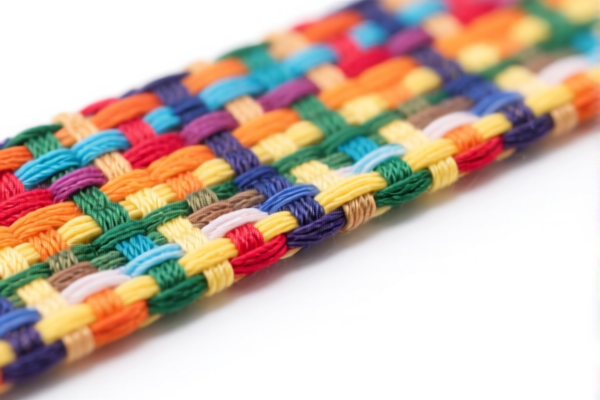
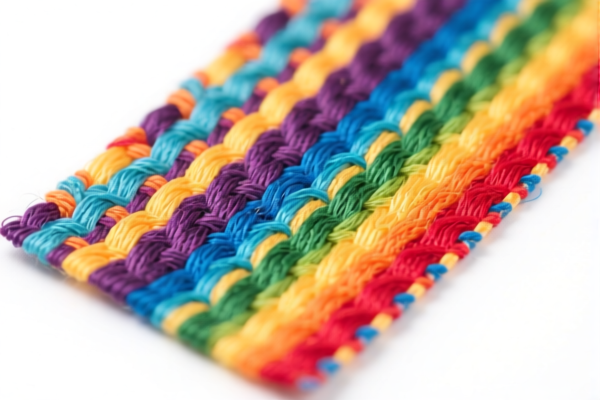
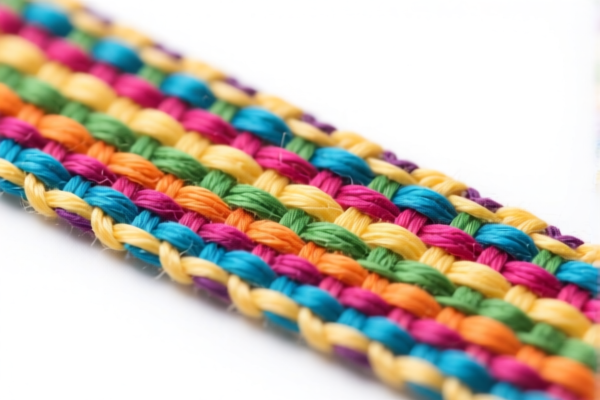
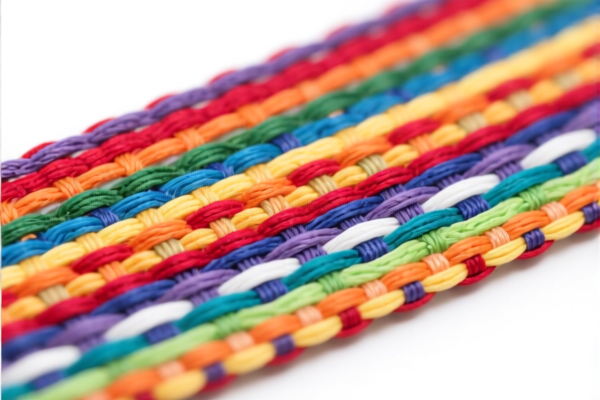
Centimeter Multi-Color Polyester Filament Fabric refers to woven or knitted textile fabrics made from polyester filament yarns, dyed in multiple colors, typically used in fashion, home textiles, accessories, and industrial applications.
⚠️ Critical Distinction: - If the fabric is woven or knitted, with filament yarns (not staple fiber), and dyed in multiple colors → HS Code 5407.79.00.00 - If the fabric is not woven/knitted (e.g., non-woven), or made from staple fiber, or not dyed in multiple colors → Different classification applies
🔍 Key Clues for Classification: - ✅ "Filament" = continuous synthetic fibers (not chopped) - ✅ "Multi-color" = dyed or printed with multiple hues (not single-tone) - ✅ "Centimeter" = likely refers to width or pattern scale (not a classification factor) - ❌ "Centimeter" is not a legal term in HS Code — do not use it in申报 (customs declaration)
📊 II. HS Code Classification Matrix (2026 Official Tariff List)
| HS Code | Product Description | Applicable Use Case | Filament? | Multi-Color? |
|---|---|---|---|---|
5407.79.00.00 |
Woven fabrics of polyesters, not knitted, containing ≥ 85% polyester filament yarns, dyed in multiple colors | Fashion apparel, drapes, accessories, upholstery | ✅ Yes | ✅ Yes |
5407.71.00.00 |
Woven fabrics of polyesters, not knitted, containing ≥ 85% polyester filament yarns, not dyed | Raw fabric, undyed, for further processing | ✅ Yes | ❌ No |
5407.89.00.00 |
Woven fabrics of polyesters, not knitted, containing ≥ 85% polyester filament yarns, printed (not dyed) | Printed fabrics (e.g., floral, geometric) | ✅ Yes | ✅ Yes |
5407.99.00.00 |
Other woven fabrics of polyesters, not knitted, not elsewhere specified | Non-standard, mixed blends, or lower filament content | ✅/❌ | ✅/❌ |
5512.19.00.00 |
Woven fabrics of synthetic filament yarns, not polyester, e.g., nylon, polypropylene | Non-polyester filament fabrics | ❌ No | ✅ Yes |
5801.21.00.00 |
Tulle or net fabrics of synthetic filament yarns, not knitted | Lace, mesh, decorative netting | ✅ Yes | ✅ Yes |
🎯 Final Verdict:
✅ For "Centimeter Multi-Color Polyester Filament Fabric" →5407.79.00.00
❌ Do not use5407.89.00.00unless it’s printed, not dyed
❌ Do not use5512.19.00.00— that’s for non-polyester filament yarns
💰 III. 2026 Tariff & Duty Breakdown (Detailed Tax Clause Analysis)
✅ Applicable Country: United States (US)
✅ Origin: China (CN), Vietnam (VN), India (IN), Bangladesh (BD)
✅ Effective Date: January 1, 2026 (updated under USMCA & Section 301 Review)
🎯 1. 5407.79.00.00 — Multi-Color Polyester Filament Woven Fabric
| Item | Details |
|---|---|
| Base Duty Rate | 0% (ad valorem) |
| Section 301 Tariff (USITC) | +25% (from China origin) |
| Section 301 Tariff (Vietnam) | 0% (if under 10% Chinese content) |
| IEEPA Emergency Tariff | +10% (applies to China & Hong Kong) |
| Total Effective Duty | 35% (China-origin) / 10% (Vietnam-origin, if compliant) |
| Duty Calculation | CIF Value × Total Rate |
| De Minimis Threshold | ❌ Not applicable (denied under US law for China-origin goods) |
| Legal Basis Path | IEEPA:9903.01.25 → USITC:5407.79.00.00 → FOOTNOTE:9903.88.01 |
📌 Explanation: - Section 301 (25%) = U.S. Trade Representative (USTR) tariff on Chinese goods under “unfair trade practices” - IEEPA (10%) = International Emergency Economic Powers Act — applies to China/HK - Total 35% = High-cost entry for Chinese-made fabric - Vietnam-origin = Can qualify for 0% if Chinese content < 10% (requires supplier certification)
🛠️ IV. Customs Clearance Best Practices (Pro Tips to Avoid Delays)
✅ 1. Required Documentation (Must-Have List)
| Document | Mandatory? | Why It Matters |
|---|---|---|
| ✅ Commercial Invoice | ✔️ | Must state: "Woven Polyester Filament Fabric, Multi-Color, 5407.79.00.00" |
| ✅ Packing List | ✔️ | Show weight, roll count, width, and color pattern |
| ✅ Bill of Lading (BOL) | ✔️ | Proof of shipment & origin |
| ✅ Certificate of Origin (CO) | ✔️ | Critical for tariff eligibility (e.g., Vietnam vs. China) |
| ✅ Supplier’s Country of Origin Declaration | ✔️ | Required for Section 301 exemption claims |
| ✅ Color Sample (Physical or Digital) | ✔️ | Prove "multi-color" — avoid disputes |
| ✅ Technical Specification Sheet | ✔️ | Confirm "filament yarn", not staple fiber |
✅ 2.申报 Tips (Golden Rules)
🔥 "Filament ≠ Staple, Multi-Color ≠ Solid, Origin = Duty!"
| Scenario | Correct HS Code | Wrong Practice | Risk |
|---|---|---|---|
| Multi-color, woven, filament yarn | 5407.79.00.00 |
5407.89.00.00 (printed) |
Higher duty or rejection |
| Chinese origin, 5% Chinese content | 5407.79.00.00 + 0% tariff |
Claim 25% + 10% | Severe penalties |
| Vietnamese origin, 8% Chinese input | 5407.79.00.00 + 0% tariff |
Declare as China | Audit risk |
| Fabric with 60% polyester, 40% cotton | 5208.54.00.00 |
5407.79.00.00 |
Misclassification → fines |
✅ 3. Special Cases & Solutions
| Situation | Recommended Action |
|---|---|
| Fabric is printed, not dyed | Use 5407.89.00.00 — not 5407.79.00.00 |
| Fabric is non-woven (e.g., felt) | Use 5602.92.00.00 — not 5407.79.00.00 |
| Fabric has 10% or more Chinese content | Do not claim Vietnam origin — risk of penalty |
| Need to import in small batches | Use de minimis if origin is non-China (e.g., Vietnam, India) |
| Fabric used in medical textiles | May qualify for exemption — provide FDA/CE documentation |
🌍 V. Global Market Tariff Comparison (2026)
| Country | Recommended HS Code | Tariff | Certification Required | Notes |
|---|---|---|---|---|
| 🇺🇸 USA | 5407.79.00.00 |
35% (China) / 10% (Vietnam) | FCC, RoHS, CO | 301 tariff applies |
| 🇨🇳 China | 5407.79.00.00 |
5% | CCC, RoHS | No extra tariffs |
| 🇪🇺 EU | 5407.79.00.00 |
0% (if from GSP country) | CE, REACH | No 301 tariffs |
| 🇦🇺 Australia | 5407.79.00.00 |
5% | RCM | No extra charges |
| 🇯🇵 Japan | 5407.79.00.00 |
0% | PSE | No附加税 |
📌 Insight:
- USA is the only market with high附加 tariffs on Chinese textiles
- Vietnam-origin fabric can avoid 301 tariffs if Chinese content < 10%
- EU, Japan, Australia are tariff-friendly for polyester fabrics
🚫 VI. Common Mistakes & How to Avoid Them (Real Cases)
❌ Mistake 1: Declaring "multi-color" fabric as 5407.89.00.00 (printed)
👉 Result: Underpaid duty → refund + penalty
✅ Fix: Confirm if dyed or printed — dyed = 5407.79.00.00
❌ Mistake 2: Using "centimeter" in product name → "Centimeter Multi-Color Fabric"
👉 Result: Customs may reject for unclear description
✅ Fix: Use standard terms: "Woven Polyester Filament Fabric, Multi-Color, 1.5m Width"
❌ Mistake 3: Not providing color sample
👉 Result: Customs delays or reclassification
✅ Fix: Attach digital color chart or physical swatch
❌ Mistake 4: Claiming Vietnam origin without proof of <10% Chinese content
👉 Result: 35% tariff + audit risk
✅ Fix: Get supplier’s origin certificate + material bill of lading
🎯 VII. Final Summary: The 3-Step Rule to Success
🔹 Step 1: Confirm filament yarn + woven + multi-color →
5407.79.00.00
🔹 Step 2: Check origin — China? → 35% tariff | Vietnam? → 10% (if <10% Chinese input)
🔹 Step 3: Submit full docs + color proof + origin cert
📌 VIII. Pro Tips & Action Items
📞 Contact a Customs Broker for pre-ruling on HS Code
📄 Request a Certificate of Origin (CO) from supplier
📊 Use a tariff calculator (e.g., Import Genius, Boundless)
📦 Label packaging clearly: "Woven Polyester Filament Fabric, Multi-Color, HS 5407.79.00.00"
📣 🚀 Ready to Ship?
✅ Double-check origin
✅ Use correct HS Code
✅ Submit full docs
✅ Avoid "centimeter" in申报
✨ Professional Customs Starts with Precision
💼 One wrong code → Thousands in extra cost
🎯 Your fabric’s success begins with the right HS Code!
📌 Want a free HS Code pre-ruling?
👉 Contact a licensed customs broker today — avoid penalties, save time, reduce risk!
Customer Reviews
About HS Code Classification
The Harmonized System (HS) is an internationally standardized nomenclature developed by the World Customs Organization (WCO) to classify traded products. Over 200 countries use the HS system as the basis for customs tariffs, trade statistics, and import/export regulations.
Each HS code follows a hierarchical structure:
- Chapter (2 digits) — Broad category of goods (e.g., Chapter 84: Machinery and Mechanical Appliances)
- Heading (4 digits) — More specific grouping within the chapter
- Subheading (6 digits) — Internationally standardized breakdown, used by all WCO member countries
- National subdivisions (8-10 digits) — Country-specific extensions for further classification, such as US HTSUS 10-digit codes
Correct HS code classification is essential for smooth customs clearance, accurate duty payment, and compliance with trade regulations. Misclassification can lead to customs delays, overpayment of duties, or penalties.
When importing from CN to US, the applicable tariff rates may include:
- Most-Favored-Nation (MFN) rate — The standard duty rate applied to WTO members
- General rate — Applied to countries without trade agreements
- Trade remedy duties — Additional tariffs such as Section 301 (anti-dumping), Section 232 (national security), or countervailing duties
The information provided on this page is for reference purposes only. For official classification, please consult with your local customs authority or a licensed customs broker.