Centimeter Ruler
CN → USProduct Images
AI Analysis
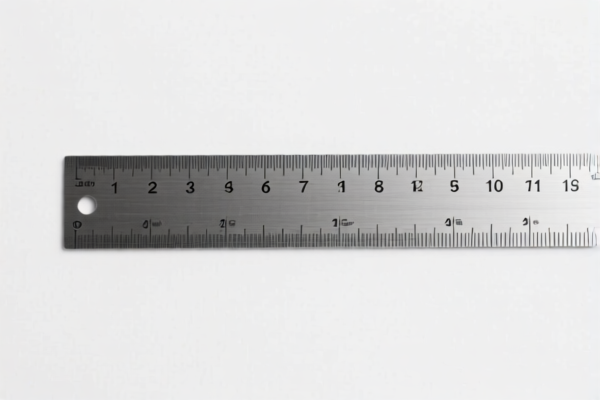
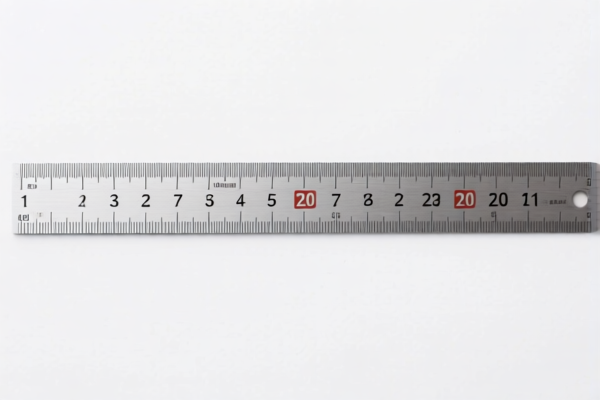
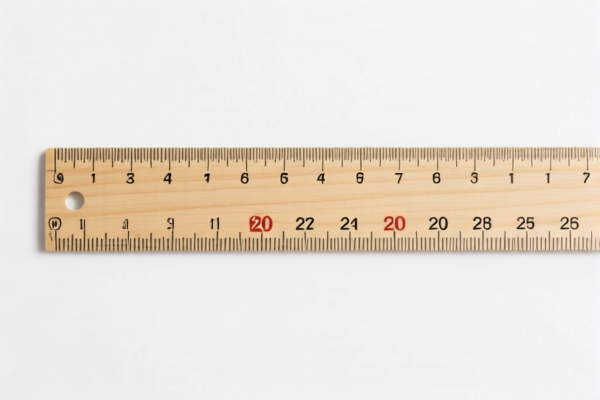
📏 Centimeter Ruler (Measuring Instruments)
🌐 HS Code Reference & Customs Clearance Guide | 2026 Latest Tariff Analysis | Professional Strategy
📌 I. Product Definition & Classification: What Exactly is a "Centimeter Ruler"?
A "Centimeter Ruler" is a fundamental measuring instrument used in education, engineering, construction, and daily life to determine linear distance. In international trade, it is classified not as a simple "tool," but specifically as an instrument for measuring length.
Key Distinctions: * Standard Ruler (Rigid/Flexible): Simple measuring tape, steel rule, or plastic straight edge → 9017.20. * Specialized Measuring Devices: If it includes electronic sensors, laser measurement, or complex mechanical adjustment mechanisms (e.g., Vernier calipers, micrometers), it may fall under different subheadings, but for standard visual measuring rulers, 9017.20 is the gold standard. * Office Supplies? ❌ NO. Do not classify as "Office Supplies" (Chapter 96). Chapter 90 takes precedence for precision instruments.
⚠️ Critical Distinction:
- If it is a simple visual scale (no electronic components, no complex mechanics) → 9017.20.00.00
- If it is an electronic measuring tape (with LCD display, sensors) → May fall under 9031.80 or 9032.89, but typically still treated as a measuring instrument. For standard "Centimeter Rulers," stick to 9017.
📦 II. HS Code Classification Details (2026 Latest Tariff Authority)
| HS Code | Product Description | Application Scenario | Electronic Components? |
|---|---|---|---|
9017.20.00.00 |
Drawing, marking-out or mathematical calculating instruments; measuring or checking instruments, appliances and instruments, not elsewhere specified or included; profile projectors | Standard rigid rulers, flexible tape measures, steel rules, plastic scales, yardsticks | ❌ No (Standard visual rulers) |
9017.90.00.00 |
Parts and accessories of instruments falling in heading 9017 | Ruler cases, protective covers, specific calibration tools for 9017 instruments | N/A |
8206.00.00.00 |
Hand tools (if considered a simple utility tool without precision measurement intent) | Low-quality, non-calibrated plastic sticks sold as toys or generic tools | ❌ No |
9608.10.00.00 |
Ball-point pens (if ruler is combined with a pen) | Ruler-pen hybrids | ❌ No |
🔍 Key Reminder:
- Chapter 90 (Optical, Photographic, Cinematographic, Measuring, Checking, Precision, Medical or Surgical Instruments) takes precedence over Chapter 82 (Tools) or Chapter 96 (Miscellaneous Manufactured Articles) for items intended for measurement.
- Even if the ruler is made of steel, it is 9017.20, not 7326 (Steel articles), because its primary function is measurement, not structural support.
💰 III. 2026 Latest Tariff Rate Breakdown (Including Additional Taxes)
✅ Applicable Country: United States (US)
✅ Country of Origin: China (CN)
✅ Effective Date: Post-November 10, 2025 (including subsequent imports)
🎯 1. 9017.20.00.00 —— Measuring Instruments (Standard Rulers, Tape Measures)
| Item | Content |
|---|---|
| Base Rate | 2.0% (ad valorem) |
| USITC Additional Tariff (Section 301) | +7.5% (Applicable to many measuring instruments from China) |
| IEEPA Additional Tariff | +10% (China-specific additional duty, effective Nov 10, 2025) |
| Total Tariff Rate | 19.5% |
| Tax Calculation | CIF Value × 19.5% |
| De Minimis Eligibility | ❌ No (Section 301 and IEEPA duties generally do not apply to de minimis shipments below $800, but for formal entries, the full rate applies. For small parcels under $800, they may enter duty-free under current Section 321, but this is a high-risk area for enforcement changes.) |
| Legal Authority Path | IEEPA:9903.01.25 → USITC:9017.20.00.00 → FOOTNOTE:301 |
📌 Explanation:
- Base Rate (2%): Standard MFN rate for measuring instruments.
- Section 301 (7.5%): Many measuring instruments are included in the 301 tariff list.
- IEEPA (10%): The new 10% surcharge on Chinese goods effective Nov 10, 2025.
- Total: 19.5%. This is a moderate-to-high tariff for a low-value item, significantly impacting profit margins for bulk imports.
🎯 2. 9017.90.00.00 —— Parts and Accessories of Measuring Instruments
| Item | Content |
|---|---|
| Base Rate | 2.0% |
| USITC Additional Tariff | +7.5% (if classified as parts) |
| IEEPA Additional Tariff | +10% |
| Total Tariff Rate | 19.5% |
| Tax Calculation | CIF Value × 19.5% |
| De Minimis Eligibility | ❌ No |
📌 Note:
- Ruler cases, calibration standards, or special attachments are also subject to the same 19.5% rate if imported from China.
🛠️ IV. Customs Clearance Practical Advice (Battle-Tested Pitfall Avoidance)
✅ 1. Documentation Checklist (Non-Negotiable)
| Document | Required | Explanation |
|---|---|---|
| ✅ Product Specification Sheet | ✔️ | Must state material (plastic/steel/wood), length, graduation precision, and that it is a measuring instrument. |
| ✅ Product Photos | ✔️ | Clear images showing the scale, markings, and any brand/model info. |
| ✅ Commercial Invoice | ✔️ | Must clearly describe item as "Centimeter Ruler" or "Measuring Instrument," NOT "Plastic Stick" or "Office Supply." |
| ✅ Material Declaration | ✔️ | Specify if made of plastic, steel, or wood (affects Chapter 39, 73, or 44, but Chapter 90 prevails). |
| ✅ Packaging List | ✔️ | Indicate quantity per box and total boxes. |
✅ 2. Declaration Tips (Critical Mantra)
🔥 "Function over Form, Measurement over Material!"
| Scenario | Correct Declaration | Wrong Practice |
|---|---|---|
| Plastic Ruler | 9017.20.00.00 - "Plastic Centimeter Ruler for Measurement" |
"Plastic Toy" → Chapter 95 (Different tariff, potential misclassification penalty) |
| Steel Ruler | 9017.20.00.00 - "Steel Measuring Ruler" |
"Steel Bar" → Chapter 73 (Wrong duty rate, audit risk) |
| Ruler + Pen Combo | 9017.20.00.00 or 9608.10.00.00 |
Split declaration → Administrative penalty |
| Electronic Laser Ruler | 9031.80.00.00 or 9017.20.00.00 |
"Electronic Device" → Chapter 85 (Wrong classification) |
✅ 3. Special Circumstances
| Situation | Handling Advice |
|---|---|
| De Minimis Shipments (<$800) | Currently, Section 321 allows duty-free entry for most goods under $800, BUT Section 301 and IEEPA duties are being scrutinized. Recommendation: For large volumes, declare formally to avoid seizure. For small samples, it may slip through, but risks are increasing. |
| Educational Kits | If rulers are part of a larger "Science Kit," the entire kit may be classified under 9017.20 if measurement is the primary function. |
| OEM Custom Rulers | Provide the OEM agreement and design drawings to prove they are standard measuring instruments, not toys. |
| Multi-Purpose Tools | If the ruler has a bottle opener, level, or screwdriver attached, it may still be 9017.20 if measurement is the primary function. If not, it may be 8205 (Hand Tools). |
🌍 V. Global Market Clearance Comparison (2026 Latest)
| Country/Region | Recommended HS Code | Tariff (China Origin) | Certification Requirements | Notes |
|---|---|---|---|---|
| 🇺🇸 USA | 9017.20.00.00 |
19.5% (2% + 7.5% + 10%) | None specific | High tariff due to IEEPA/301. Watch de minimis changes. |
| 🇨🇳 China | 9017.20.00.00 |
0% (Exported) | CCC (if sold domestically in China) | Low duty for domestic sale. |
| 🇪🇺 EU | 9017.20.00.00 |
0% | CE (if electronic), General Safety | Free trade agreement may apply. |
| 🇬🇧 UK | 9017.20.00.00 |
0% | UKCA | Post-Brexit, general 0% for many instruments. |
| 🇦🇺 Australia | 9017.20.00.00 |
5% | RCM (if electronic) | Moderate duty. |
| 🇯🇵 Japan | 9017.20.00.00 |
0% | PSE (if electronic) | Free trade via CPTPP/JETEA. |
📌 Conclusion:
- The US is the most expensive market for Chinese-made rulers due to the叠加 (stacking) of IEEPA and Section 301 tariffs.
- Other markets are significantly cheaper or duty-free.
- Strategy: Consider routing non-US shipments through Southeast Asia (Vietnam/Malaysia) if supply chain allows, to avoid "Country of Origin: China" penalties in the US, but be cautious of "Substantial Transformation" rules.
📌 VI. Common Mistakes & Pitfall Guide (Lessons from the Field)
❌ Mistake 1: Classifying rulers as "Office Supplies" (HS 9608 or 8305)
👉 Consequence: Incorrect HS Code. Customs may reclassify to 9017.20, leading to 19.5% duty instead of 0-2%, plus penalties.
❌ Mistake 2: Declaring as "Plastic Toy" to avoid tariff
👉 Consequence: Fraud Allegation. If the item has centimeter markings and is used for measurement, it is a measuring instrument. Penalties can be 100-200% of the duty evaded.
❌ Mistake 3: Ignoring IEEPA 10% Surcharge
👉 Consequence: Underpayment of duties. CBP (Customs and Border Protection) audits will catch this post-November 2025. Back duties + Interest + Penalties.
❌ Mistake 4: Splitting Ruler + Pen into separate items to confuse classification
👉 Consequence: "Gross Misrepresentation." Customs can combine them for valuation and classification.
✅ Correct Practice:
"Plastic Centimeter Ruler, 30cm, Graduated in Millimeters and Centimeters, for Educational/Engineering Measurement, Model XYZ."
🎯 VII. Conclusion: Precision in Classification, Savings in Tariffs
🎯 Remember the Mantra:
🔹 "Rulers are Measuring Instruments (9017), not Office Supplies (9608)."
🔹 "US Duty is 19.5%, not 0%."
🔹 "De Minimis is Risky, Declare Formally if in Doubt."
📌 Pro Tip:
If your rulers are originally produced in Vietnam, Mexico, or Thailand, you MAY avoid the 10% IEEPA and 7.5% Section 301 tariffs, reducing the total rate to just the 2% base rate (if no other additional duties apply).
Recommendation:
📞 Consult a customs broker for Pre-Export Tariff Engineering
🚀 Optimize your supply chain to leverage Free Trade Agreements (FTAs) where possible.
📣 Take Action Now:
📞 Review your current HS Code classification.
📊 Calculate the impact of 19.5% duty on your US shipments.
🌍 Explore alternative sourcing or tariff engineering strategies.
✨ Professional Clearance Starts with Accurate Classification!
💼 Every Cent Saved is Profit Gained!
Customer Reviews
About HS Code Classification
The Harmonized System (HS) is an internationally standardized nomenclature developed by the World Customs Organization (WCO) to classify traded products. Over 200 countries use the HS system as the basis for customs tariffs, trade statistics, and import/export regulations.
Each HS code follows a hierarchical structure:
- Chapter (2 digits) — Broad category of goods (e.g., Chapter 84: Machinery and Mechanical Appliances)
- Heading (4 digits) — More specific grouping within the chapter
- Subheading (6 digits) — Internationally standardized breakdown, used by all WCO member countries
- National subdivisions (8-10 digits) — Country-specific extensions for further classification, such as US HTSUS 10-digit codes
Correct HS code classification is essential for smooth customs clearance, accurate duty payment, and compliance with trade regulations. Misclassification can lead to customs delays, overpayment of duties, or penalties.
When importing from CN to US, the applicable tariff rates may include:
- Most-Favored-Nation (MFN) rate — The standard duty rate applied to WTO members
- General rate — Applied to countries without trade agreements
- Trade remedy duties — Additional tariffs such as Section 301 (anti-dumping), Section 232 (national security), or countervailing duties
The information provided on this page is for reference purposes only. For official classification, please consult with your local customs authority or a licensed customs broker.